

Germany Steps Up With Netherlands And More In Assisting Stranded Travellers As Saudi Airspace Uncertainty Deepens And Riyadh Airport Closure Continues

Published
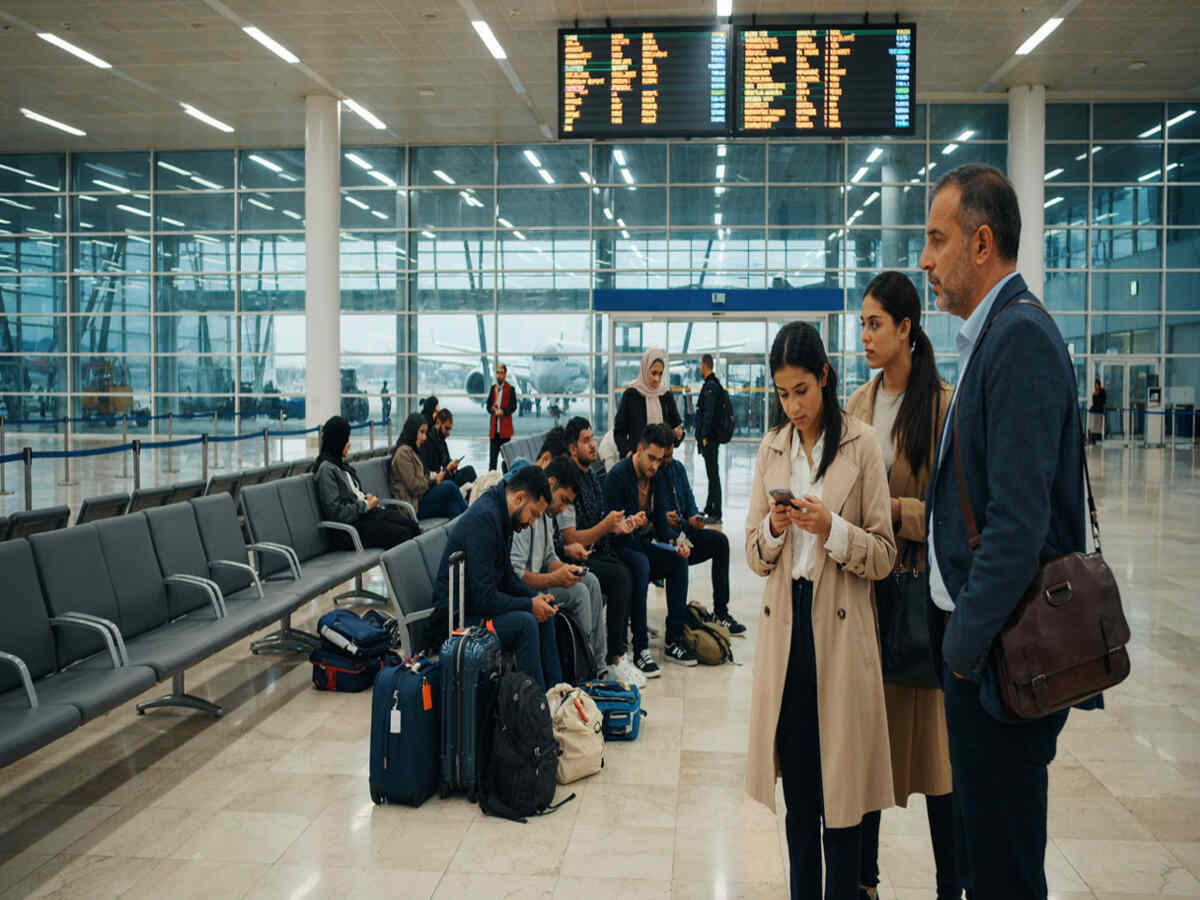
International countries such as Germany, The Netherlands among others assist stranded travelers due to the closure of the Riyadh Airport. Closure of King Khalid International Airport in Riyadh has gone from being a domestic aviation issue to becoming a worldwide travel dilemma. In the aftermath of the tragic events of 10 and 11 October 2026, the operation of the airport in Saudi Arabia has been suspended till 17 October at 21:00 GMT due to increased security threats, affecting thousands of international travelers with cancellation of flights and delayed journeys among other challenges. Countries in Europe, Asia, North America, and the Gulf region have reacted differently. While some countries have assisted their citizens with provision of accommodation, transport and cash, other countries have taken steps of assisting through their embassies, issuance of travel advisories among others.
Riyadh Airport Closure Sends Shockwaves Across Global Travel
The shutdown of Riyadh’s main international airport immediately disrupted passenger traffic across several continents.
Advertisement
Advertisement
Instead of being an issue limited to Saudi Arabia, the crisis quickly spread through global airline networks.
What makes this disruption significant?
- Riyadh Airport suspended commercial operations after the attacks.
- Safety inspections and infrastructure assessments delayed reopening.
- Nearly every major international carrier serving Riyadh revised schedules.
- Holidaymakers, business travellers, migrant workers and pilgrims all experienced disruption.
Airlines began rerouting aircraft while passengers searched for alternative routes.
Advertisement
Advertisement
The disruption also affected conferences, business meetings and tourism activities planned in Saudi Arabia during October.
Although Jeddah continued operating, the closure of Riyadh created a major gap in the Kingdom’s aviation network.
Advertisement
Advertisement
Aviation Numbers Reveal the Scale of the Crisis
The aviation statistics illustrate how rapidly operations collapsed.
| Key aviation indicator | Reported figure |
|---|---|
| Riyadh flight cancellations (11 October) | 99.7% |
| Riyadh cancellations (12 October assessment) | 82% |
| Saudi nationwide cancellation rate | 46.4% |
| Airport closure notice | Until 17 October, 21:00 GMT |
These figures represent different reporting periods but collectively demonstrate the extraordinary scale of disruption affecting travellers worldwide.
Advertisement
Advertisement
Germany Responds Through Embassy Support and Passenger Guidance
Germany has become one of the European countries actively helping its citizens navigate the uncertainty.
Rather than organising a special evacuation programme, Germany has concentrated on diplomatic support and passenger guidance.
Germany’s response includes
- Advising travellers to avoid Riyadh Airport.
- Encouraging citizens to follow embassy updates.
- Providing consular assistance for stranded nationals.
- Supporting passengers seeking documentation and emergency advice.
- Germany’s response also coincides with Lufthansa Group’s suspension of Riyadh flights until 16 October.
For German travellers, the priority has become obtaining updated airline information and arranging alternative travel plans.
Business travellers have been particularly affected because Riyadh remains an important destination for corporate meetings and commercial partnerships.
Advertisement
Advertisement
Although flights have been cancelled, Germany’s established diplomatic network continues assisting citizens requiring urgent support.
Netherlands Maintains Continuous Consular Assistance
The Netherlands has adopted a similar approach centred on continuous diplomatic assistance.
Dutch citizens affected by cancelled flights can contact the NetherlandsWorldwide emergency service at any time.
Dutch support focuses on
- Emergency travel documentation.
- Consular guidance.
- Assistance during travel emergencies.
- Information about alternative travel arrangements.
The Air France-KLM suspension has affected Dutch passengers travelling to Riyadh.
Many travellers have needed to postpone journeys or identify new commercial routes.
The Dutch response demonstrates how established consular systems become critical during sudden international aviation disruptions.
Advertisement
Advertisement
Rather than introducing extraordinary emergency measures, the Netherlands has strengthened communication with affected travellers.
India Combines Emergency Communication With Medical Coordination
India’s response reflects the large number of Indian citizens living and working in Saudi Arabia.
The Indian Embassy in Riyadh immediately strengthened communication with nationals after the attacks.
India’s assistance includes
- A 24-hour emergency helpline.
- Embassy support for affected travellers.
- Coordination with Saudi hospitals.
- Monitoring injured Indian nationals.
The embassy also contacted Saudi authorities to determine the condition of eleven injured Indians following the attacks.
Indian airlines have experienced extensive disruption.
- Air India and IndiGo cancelled Riyadh services until 15 October.
- Air India Express and Akasa Air also adjusted operations.
One Air India aircraft carrying more than 150 passengers returned to Delhi after departing for Riyadh.
Advertisement
Advertisement
Passengers received full refunds after the unexpected return.
For Indian travellers, embassy guidance remains an important source of reliable information while commercial services remain uncertain.
Bangladesh Introduces Practical Alternative Travel Solutions
Bangladesh has introduced one of the most passenger-focused responses among affected countries.
Instead of limiting assistance to travel advice, authorities created alternative routing arrangements.
Bangladesh’s measures include
- Alternative travel through Dammam.
- Alternative travel through Madinah.
- No additional ticket charges for eligible passengers.
- Airline coordination to reduce inconvenience.
Officials reported that 5,418 passengers were affected across 51 disrupted flights, including direct and connecting services.
These arrangements are particularly important for Bangladeshi migrant workers travelling between Saudi Arabia and Bangladesh.
Advertisement
Advertisement
Alternative routes reduce the financial burden created by unexpected cancellations.
However, the availability of replacement flights depends on seat availability and operational conditions.
Bangladesh has also demonstrated the importance of cooperation between governments, airlines and airport authorities during aviation emergencies.
Embassy Assistance Extends Beyond Flight Changes
Bangladesh’s embassy also played a direct role in helping stranded travellers.
Additional assistance reportedly included
- Helping hundreds of stranded passengers.
- Coordinating with Saudi immigration officials.
- Arranging accommodation.
- Providing buses for Umrah travellers.
- Supporting passengers travelling through Dammam.
These practical measures highlight how embassy coordination can become just as valuable as airline assistance during a prolonged airport closure.
Philippines Places Passenger Welfare at the Centre of Its Response
The Philippines has introduced perhaps the most comprehensive welfare programme among the affected countries.
Advertisement
Advertisement
Recognising the importance of protecting overseas Filipino workers, authorities quickly activated emergency support.
Assistance provided
- Government-funded hotel accommodation.
- Temporary financial support.
- Meals.
- Ground transportation.
- Replacement-flight assistance.
Authorities reported that:
- 30 stranded Filipinos received assistance in Riyadh.
- Twenty stayed in government-funded hotels.
- Eighty-seven diverted workers received accommodation and transport in Jeddah.
- Seven stranded passengers at Jeddah Airport received food and replacement-flight assistance.
- Thirty-seven affected workers in Manila also received onward travel support.
Funding came through the DMW-OWWA AKSYON Fund and Emergency Repatriation Fund.
This response reduces the financial pressure on overseas workers facing unexpected delays and accommodation expenses.
Unlike many countries that relied mainly on embassy guidance, the Philippines combined diplomatic assistance with direct financial support.
Different Governments, Different Priorities
One of the most noticeable features of the Riyadh airport disruption is that countries have responded according to the needs of their citizens.
Advertisement
Advertisement
The emerging pattern
- Germany prioritises consular communication.
- Netherlands focuses on continuous diplomatic assistance.
- India combines emergency communication with medical coordination.
- Bangladesh concentrates on alternative travel routes.
- Philippines provides direct welfare assistance.
- Saudi Arabia focuses on helping its citizens return home safely.
Although the approaches differ, the shared objective remains the same—help stranded travellers return safely while minimising disruption.
Saudi Arabia Organised Ground Transport for Citizens Abroad
While working to restore operations at King Khalid International Airport, Saudi Arabia also introduced measures to assist its own citizens stranded outside the Kingdom.
Instead of relying solely on airlines, Saudi diplomatic missions arranged practical alternatives for eligible nationals.
Saudi Arabia’s assistance includes
- Bus transportation from Qatar for Saudi citizens whose Riyadh-bound flights were cancelled.
- Ground transport arrangements through the Saudi diplomatic mission in the United Arab Emirates.
- Twenty-four-hour embassy support through the Saudi Embassy in London.
- Continuous coordination between embassies and affected travellers.
Passengers using these services were required to provide proof of cancelled flights before travelling.
These arrangements were designed specifically for Saudi nationals and should not be interpreted as transport services for all international passengers.
Saudi authorities have also continued airport safety inspections before allowing commercial operations to restart.
Advertisement
Advertisement
United States Focuses on Aviation Safety
The United States has concentrated on protecting travellers through security guidance rather than organising emergency transport.
The US Department of State maintained its Level 3 – Reconsider Travel advisory for Saudi Arabia.
The American response includes
- Updated travel advisory.
- Federal Aviation Administration caution for airlines.
- Embassy and consular assistance.
- Passenger guidance regarding regional security.
- The FAA also advised US airlines to exercise caution while operating in Saudi airspace.
A longer-term aviation impact also emerged when Delta Air Lines postponed its planned Atlanta–Riyadh route launch until March 2027.
Although no dedicated evacuation programme has been announced, American travellers continue receiving assistance through normal diplomatic channels.
United Kingdom Highlights Safety and Insurance
The United Kingdom has strengthened travel advice while warning passengers about financial risks.
The Foreign, Commonwealth and Development Office advised against all but essential travel to several Saudi destinations.
Advertisement
Advertisement
British travellers have been advised to
- Follow airline announcements.
- Monitor official travel guidance.
- Contact consular services if necessary.
- Review travel insurance conditions carefully.
- One particularly important warning concerns travel insurance.
Passengers travelling against official government advice may discover that their insurance no longer provides cover.
For travellers facing hotel costs, cancelled flights and replacement tickets, this advice has become especially important.
Australia Issues Airport-Specific Warning
Australia adopted a highly targeted approach.
Rather than issuing only general travel guidance, authorities specifically advised Australians to avoid King Khalid International Airport.
Australian recommendations include
- Confirm flights before travelling.
- Avoid unnecessary time inside airports.
- Follow instructions issued by Saudi authorities.
- Monitor official travel updates regularly.
The guidance reflects ongoing security concerns while helping travellers make informed decisions.
France, Spain and Canada Strengthen Diplomatic Guidance
Several other countries have also relied on their diplomatic networks.
Advertisement
Advertisement
France
French travellers have been affected by Air France-KLM’s suspension of Riyadh services.
Embassies remain available to assist citizens experiencing travel difficulties.
Spain
Spanish diplomatic representatives advised travellers to remain alert and follow official instructions regarding airport operations.
Canada
Canadian diplomatic officials also encouraged citizens to monitor developments closely while using airline rebooking services whenever possible.
Although these countries have not introduced separate emergency evacuation programmes, their diplomatic networks continue supporting travellers who require assistance.
Gulf Countries Experience Major Airline Disruption
The crisis has also disrupted aviation across the Gulf region.
Advertisement
Advertisement
Several important regional airlines have suspended or cancelled Saudi services.
United Arab Emirates
Passengers travelling through Dubai, Abu Dhabi and Sharjah have experienced widespread disruption.
Affected airlines include:
- Emirates
- Etihad Airways
- flydubai
- Air Arabia
Etihad extended cancellations on its Abu Dhabi–Riyadh route until 19 October.
Thousands of connecting passengers have therefore needed to modify travel plans.
Qatar
Qatar Airways temporarily suspended services involving Riyadh and Dammam.
Advertisement
Advertisement
Travellers connecting through Doha have faced revised itineraries and longer journeys.
Bahrain
Gulf Air cancelled Riyadh flights between 12 and 17 October.
Passengers have been encouraged to seek rebooking through airline customer service teams.
Türkiye, Egypt, Oman and Sri Lanka Face Similar Challenges
Several countries have experienced disruption primarily through airline schedule changes.
Türkiye
Turkish Airlines and AJet adjusted Riyadh operations because of airport conditions.
Egypt
EgyptAir revised selected Saudi services.
Advertisement
Advertisement
Oman
Oman Air also experienced operational changes involving Saudi destinations.
Sri Lanka
SriLankan Airlines passengers have encountered schedule adjustments affecting travel plans.
What these countries are doing
- Maintaining embassy assistance.
- Providing normal consular services.
- Advising travellers to remain in contact with airlines.
- Offering emergency documentation where required.
Although dedicated evacuation operations have not been announced, travellers continue receiving support through standard diplomatic channels.
Singapore and Hong Kong Experience Longer-Term Aviation Effects
The Riyadh crisis has also influenced future airline planning.
Instead of affecting only immediate departures, several airlines postponed long-term expansion.
Singapore
Singapore Airlines delayed its planned Saudi Arabia service launch.
Advertisement
Advertisement
Hong Kong
Cathay Pacific postponed the planned resumption of Hong Kong–Riyadh and Hong Kong–Dubai services until January 2027.
These decisions affect future connectivity rather than passengers already travelling.
Nevertheless, they demonstrate how security concerns can influence airline planning long after an airport reopens.
Country Comparison: How Governments Are Supporting Stranded Travellers
| Country | Type of assistance | Main traveller benefit |
|---|---|---|
| Germany | Embassy guidance and consular support | Passenger information and diplomatic assistance |
| Netherlands | 24-hour emergency assistance | Continuous consular guidance |
| India | Emergency helpline and hospital coordination | Medical support and traveller assistance |
| Bangladesh | Alternative flights via Dammam and Madinah | Reduced financial burden |
| Philippines | Hotels, financial aid, meals and transport | Direct welfare support |
| Saudi Arabia | Bus transport and embassy assistance | Safe return for eligible citizens |
| United States | Travel advisory and FAA guidance | Security information |
| United Kingdom | Safety guidance and insurance advice | Financial awareness |
| Australia | Airport-specific warning | Passenger safety |
| France | Consular assistance | Embassy support |
| Spain | Security guidance | Traveller information |
| Canada | Diplomatic assistance | Emergency support |
| UAE | Airline coordination | Alternative travel arrangements |
| Qatar | Airline coordination | Route management |
| Bahrain | Airline rebooking support | Flight alternatives |
| Türkiye | Consular assistance | Passenger guidance |
| Egypt | Embassy support | Emergency assistance |
| Oman | Consular services | Traveller advice |
| Sri Lanka | Embassy assistance | Passenger support |
| Singapore | Monitoring future connectivity | Route planning |
| Hong Kong | Future airline adjustments | Long-term travel planning |
Tourism and Business Travel Feel the Impact
The airport closure has affected far more than airline schedules.
International conferences, corporate meetings and tourism activities have all experienced disruption.
Immediate consequences include
- Cancelled holidays.
- Delayed business meetings.
- Missed international conferences.
- Additional accommodation costs.
- Reduced traveller confidence.
- Hotels, transport companies and tourism businesses may also experience lower demand while uncertainty continues.
Although the total financial impact has not yet been fully measured, restoring confidence will become an important priority once airport operations resume.
Advertisement
Advertisement
Essential Advice for Stranded Travellers
Passengers affected by the disruption should remain proactive rather than waiting for automatic updates.
Important steps
- Confirm flight status directly with the airline.
- Contact your embassy if emergency assistance is required.
- Keep receipts for hotels, meals and transport.
- Check visa validity before accepting alternative routes.
- Review travel insurance conditions.
- Follow official government advice instead of relying on social media rumours.
- Careful planning can reduce additional costs and minimise further disruption.
International Cooperation Becomes the Strongest Response
The Riyadh airport crisis has demonstrated that no single country can manage a major aviation disruption alone.
- Each government has adopted an approach reflecting the needs of its citizens.
- Some have prioritised welfare support.
- Others have focused on diplomatic communication.
- Several have introduced alternative transport or rerouting options.
- Together, these measures highlight the importance of international cooperation during aviation emergencies.
While travellers continue waiting for Riyadh Airport to reopen, the combined efforts of governments, airlines and embassies are helping thousands of passengers navigate one of the region’s most significant aviation disruptions in recent years.
Germany, the Netherlands, and many others are now offering assistance to passengers affected by the closure of Riyadh International Airport.
As Saudi Arabia continues to try and get things back to normal at the airports, coordination and assistance will be needed to help rebuild confidence among travelers.
Advertisement
