
Netherlands Unleashes a Spectacular Arctic Travel Triumph as Holland America’s 28-Night Solar Eclipse Cruise Conquers Iceland, Greenland, Norway, Scotland and the Faroe Islands

Published
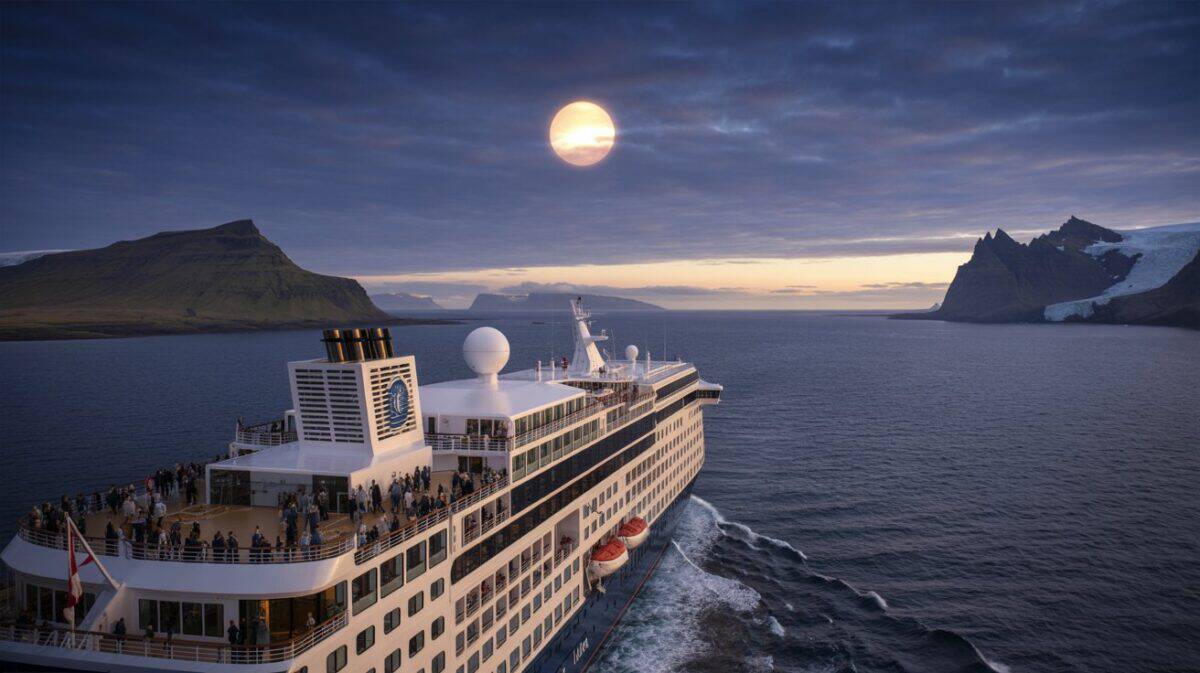
A remarkable 28-night solar eclipse cruise has been launched by Holland America Line, bringing together celestial observation, remote North Atlantic landscapes and culturally rich European ports. Operated aboard Nieuw Statendam, the extended voyage was started from Dover, England, on 24 July 2026, with embarkation also provided at Rotterdam, the Netherlands, on 25 July. A carefully planned route through Norway, Iceland, Greenland, the Faroe Islands and Scotland is being followed before the ship is returned to Dover. The experience has been centred on the total solar eclipse scheduled for 12 August 2026.
By this Holland America solar eclipse voyage, travellers are being offered considerably more than a conventional European cruise. An unusual combination of astronomical programming, Arctic scenery, historic cities, overnight port time and remote coastal communities has been assembled. The eclipse is expected to be viewed at sea off the northwest coast of Iceland, where Nieuw Statendam is intended to be positioned inside the path of totality. Urban light and many land-based viewing obstructions are consequently expected to be avoided, although visibility will remain dependent on weather and cloud conditions.
Advertisement
Advertisement
A Rare Celestial Event Is Being Placed at the Centre of the Journey
The total solar eclipse on 12 August 2026 is being treated as the defining moment of the itinerary. Nieuw Statendam is scheduled to be positioned off Iceland as the Moon passes between Earth and the Sun. During totality, daylight will briefly be replaced by darkness and the solar corona may become visible. By viewing the event from open water, a wide horizon and reduced artificial light are expected to be provided. Expansive exterior decks aboard the Pinnacle Class ship are also being used to give passengers multiple observation areas.
The experience cannot be guaranteed by the cruise line because cloud cover, sea conditions and other operational factors may affect visibility. Nevertheless, mobility is considered one of the strongest advantages offered by eclipse cruising. Unlike a fixed viewing location, a ship may be repositioned when maritime conditions and operational requirements permit.
Advertisement
Advertisement
Iceland Is Being Explored Beyond the Eclipse Zone
A substantial part of the itinerary is being devoted to Iceland. Calls are scheduled at Seydisfjördur, Djúpivogur, Akureyri, Isafjördur, Grundarfjördur, Heimaey and Reykjavík. Through this broad selection, eastern fjords, northern landscapes, western fishing communities, volcanic islands and the Icelandic capital are all being connected within one journey.
Smaller communities are being paired with major visitor centres, allowing Iceland to be viewed from contrasting perspectives. Waterfalls, geothermal areas, volcanic formations, wildlife habitats and rugged coastlines may be encountered through available excursions. In Reykjavík, additional time is being provided so that museums, restaurants, galleries and geothermal attractions can be visited at a less hurried pace.
Advertisement
Advertisement
Grundarfjördur is particularly significant because it is located near the eclipse-viewing portion of the voyage. The settlement is surrounded by mountainous scenery and is widely associated with Kirkjufell. However, the main eclipse observation is intended to be conducted at sea, where the ship can be placed away from crowded land-based sites and artificial illumination.
Greenland Is Being Connected With the Wider Arctic Experience
Greenland forms another major element of the cruise, with Paamiut, Nuuk, Nanortalik and Qaqortoq included. The calls are being used to introduce travellers to settlements where colourful buildings, rocky coastlines and vast natural spaces dominate the visual experience.
Nuuk, Greenland’s capital, is being presented as an important cultural stop. Museums, local art, modern civic life and Greenlandic heritage can be encountered there. A quieter atmosphere is likely to be found in Paamiut, Nanortalik and Qaqortoq, where smaller communities are set against mountains, fjords and open water.
Shore access in remote regions may be influenced by weather, harbour conditions and local operational requirements. Flexibility is therefore required from passengers. Those practical uncertainties are also part of the character of Arctic cruising, where routes are shaped by conditions that cannot always be controlled.
The Greenland calls add considerable travel value to the itinerary because several remote destinations are being linked without separate flights, hotel arrangements or repeated long-distance transfers. A single floating base is maintained while dramatically different places are visited.
The Faroe Islands and Scotland Add Cultural Depth
Runavík in the Faroe Islands is being included as the voyage turns towards the British Isles. A landscape of green slopes, compact villages and deeply indented coastlines is presented across the archipelago. Faroese culture, maritime traditions and North Atlantic scenery can be experienced through local touring.
Advertisement
Advertisement
In Scotland, calls are being made at Stornoway on the Isle of Lewis, Invergordon for Inverness and South Queensferry for Edinburgh. Through Stornoway, access can be provided to the Outer Hebrides and their archaeological sites, beaches and Gaelic heritage. Invergordon can be used as a gateway to the Scottish Highlands, including lochs, castles and rural landscapes.
An overnight stay is being provided in the Edinburgh area. More time can therefore be spent exploring the Scottish capital after the busiest daytime period. The Old Town, New Town, museums, historic streets and dining areas can be experienced without an immediate return being required after a standard daytime call.
Specialist Programming Is Being Added On Board
Astronomy-focused activities are being incorporated into the sailing so that the eclipse can be understood as well as observed. Educational sessions and expert-led programming are being used to explain solar science, eclipse mechanics and safe observation practices.
A culinary component is also being included. Chef David Burke is being hosted aboard the voyage as part of Holland America Line’s Culinary Ambassador programme. Cooking presentations, a special dinner and featured culinary experiences are scheduled to be delivered during the cruise.
These activities are especially important on a 28-night itinerary because several sea days are required between distant North Atlantic destinations. Time aboard is being converted into an educational and gastronomic extension of the destination experience rather than being treated solely as transit.
Nieuw Statendam Provides a Large Viewing Platform
Nieuw Statendam belongs to Holland America Line’s Pinnacle Class and accommodates approximately 2,650 guests. Spacious exterior decks and broad sea views are provided, making the vessel suitable for a large-scale observational event.
Advertisement
Advertisement
A variety of restaurants, lounges, entertainment spaces and wellness facilities is available. Dedicated solo Ocean View staterooms are also provided aboard the ship, allowing the itinerary to be considered by independent travellers as well as couples and groups.
For eclipse observation, approved eye protection must be used whenever the Sun is not fully covered. Direct viewing through cameras, binoculars or telescopes without certified solar filters can cause serious eye damage. Instructions supplied aboard should be followed carefully throughout the event.
The Cruise Reflects Growing Demand for Experience-Led Travel
A broader change in cruise tourism is being reflected by the itinerary. Longer voyages are increasingly being designed around a defining natural, cultural or scientific event. Instead of being treated as an additional attraction, the eclipse has been used as the central framework around which the route has been constructed.
Northern European cities, isolated Greenlandic settlements, Icelandic landscapes and Scottish heritage locations have consequently been connected by a single astronomical theme. Travel time has been transformed into part of the experience through lectures, dining events and extended scenic cruising.
The voyage also demonstrates how ships can be used for event-based tourism in locations where land accommodation may be limited. Thousands of visitors do not need to be concentrated within one small town because accommodation, dining and viewing facilities are carried aboard the vessel.
A Month-Long Voyage Is Being Turned Into a Singular Travel Event
Holland America Line’s 28-night sailing is being positioned as both an extensive Northern European holiday and a rare celestial expedition. The eclipse provides its emotional centre, but the itinerary is strengthened by Norway’s fjords, Iceland’s volcanic environment, Greenland’s remote communities, the Faroe Islands and Scotland’s historical attractions.
Advertisement
Advertisement
For passengers, careful preparation remains essential. Layered waterproof clothing, suitable footwear, sun protection, certified eclipse glasses and travel insurance should be considered. Port schedules may be altered when safety or weather conditions require changes.
Even with those uncertainties, a distinctive form of travel is being delivered. A natural event lasting only minutes is being surrounded by four weeks of exploration, education and cultural discovery. The result is a voyage in which the journey has been made as important as the moment of totality.
[Source:- Cruise Industry News]
Advertisement
