
A Complete Guide to Semnan: How Iran’s Historic Water Heritage is Transforming Cultural Tourism

Published
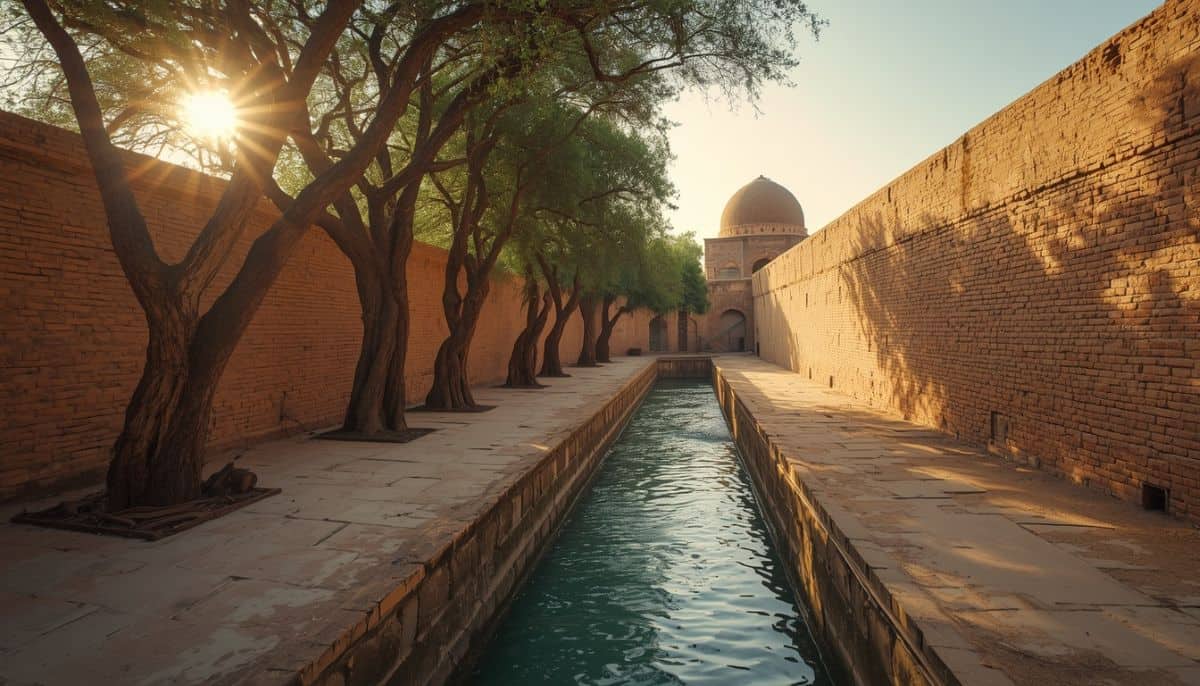
Image generated with Ai
As the landscape of modern travel has shifted dramatically towards sustainable exploration and deep historical immersion, historic destinations are unearthing smart legacy infrastructure. Among them, Semnan has harnessed the water heritage to develop cultural tourism and turn ancient survival strategies into vibrant attractions for global visitors. Located on the fringe of arid zones along the historical Silk Road, this central Iranian region depends on centuries-old civil engineering to tell a compelling story of resilience, community organisation and adaptation.
What is the Semnan Water Distribution System?
The system is a sophisticated historical network of pools (Estaleh) and open channels designed to direct scarce river water from the Alborz slopes down into regional orchards and agricultural fields with minimal waste.
Historically, survival in this desert-adjacent terrain depended entirely on the efficient management of scarce liquid assets. By elevating these ancient hydrological networks into protected national landmarks, regional authorities have successfully curated immersive itineraries that appeal strongly to environmentally conscious and history-focused travelers alike. Visitors are increasingly drawn to destinations that demonstrate how past societies managed natural resources without modern mechanical interventions.
Advertisement
Advertisement
The Historical Significance and Genius of Ala al-Dawla Semnani
The origins of this intricate infrastructure are frequently attributed to the renowned Ilkhanid-era mystic, philosopher, and scholar Ala al-Dawla Semnani. During his lifetime in the thirteenth and fourteenth centuries, his administrative and environmental insights fundamentally reshaped local agriculture and urban development.
Who was Ala al-Dawla Semnani?
Advertisement
Advertisement
He was a prominent 13th-century Sufi master, writer, and scholar from Semnan who contributed significantly to regional engineering, mysticism, and the equitable structuring of local water resources.
Rather than viewing water management merely as a strict utility, historical records indicate that early scholars integrated social equity into the flow of resources. The layout ensured that water from the Golrudbar River was meticulously divided at distribution nodes known as Abpakhsh, apportioning precise, mathematically calculated shares to designated community pools—such as Zavaghan, Kushamghan, Kadivar, Nasar, and Shahjoy—and historic garden alleys. This fusion of spiritual stewardship and practical civil engineering established a blueprint that continues to fascinate architectural historians and heritage tourists visiting the area today.
Advertisement
Advertisement
Modern Preservation and Tourism Integration Strategies
In recent years, dedicated regional preservation efforts have brought these subterranean and surface networks back into the global spotlight.
How is Semnan’s water system utilized for tourism today?
Guided heritage walks now lead visitors through historic garden alleys, traditional distribution pools, and restored qanat systems, highlighting ancient desert-adaptation strategies.
Specialized walking tours now weave through ancient mud-brick garden walls, traditional brick architecture, and shaded lanes fed by the historic stream network. According to cultural heritage data from the Iranian Ministry of Cultural Heritage, Handicrafts and Tourism, safeguarding these intangible heritage assets has directly increased regional foot traffic. Travelers can observe the historic role of the Barjomdar—the traditional water guardian—whose regulated scheduling methods maintained ecological balance for generations without modern electronic intervention.
Physically there is a striking transition of climates in a very small geographic area. Visitors come down from the cool shaded canopy of the orchard to the southern agricultural borders, after which the vast desert begins. Semnan offers a nice change of pace from mass sightseeing with its emphasis on these engineering wonders. It calls for global explorers to plunge into sustainable ancient traditions that are fiercely relevant today in times of ecological crises.
Advertisement
