
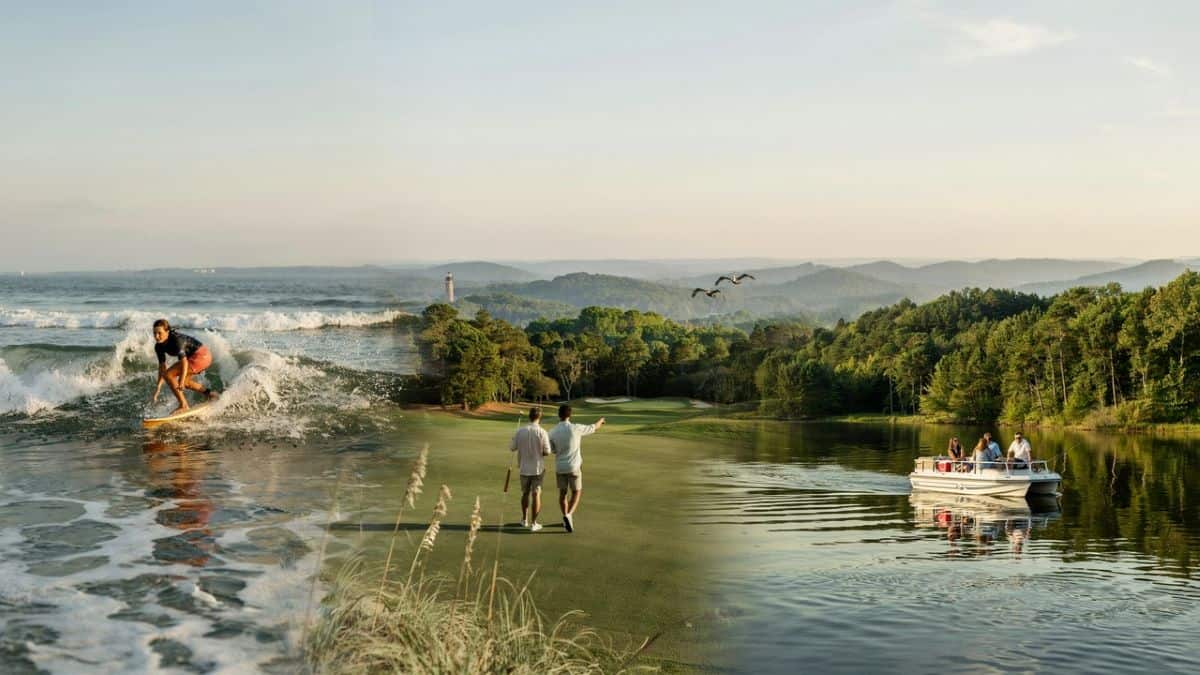
Image generated with Ai
A new travel trend is changing the way people plan summer holidays across the USA. Instead of asking where they should go, many travellers are starting with a different question: what do I want to do?
This change is helping the rise of the “playcation”. The term describes a trip built around an activity or hobby. Surfing, golf, boating and other outdoor activities can become the main reason for travelling. The destination comes next.
Advertisement
Airbnb highlighted playcations in its 2026 summer travel research. The company found growing interest in short trips linked to outdoor activities. At the same time, wider industry and government data show strong demand for domestic trips and outdoor recreation across the United States.
Together, these trends suggest that activity-led holidays could become an important part of the American tourism market.
Advertisement
Advertisement
Americans still want to travel. However, many are changing how they spend their holidays.
Expedia’s summer 2026 research found that 63% of US travellers planned to take a domestic trip. This creates an important opportunity for destinations closer to home.
Airbnb has also identified interest in short-haul trips centred on activities. Its playcation research highlights stays near golf courses, lakefronts and surfing locations.
The idea is simple.
A traveller may not begin by saying, “I want to visit North Carolina.”
They may say, “I want to surf.”
They then look for a place where surfing is possible.
This small change could have a large impact on tourism. Activities can start driving destination choices.
North Carolina provides a strong example of this new travel pattern.
Airbnb’s summer research highlighted Holden Beach and Nags Head for travellers interested in surfing and coastal recreation.
Nags Head sits on North Carolina’s famous Outer Banks. The area already has a strong connection with beach holidays and water activities.
But the playcation idea changes how travellers can discover such places.
Instead of visiting the coast first and then deciding to surf, travellers may choose the coast because they want to surf.
That creates opportunities for accommodation providers, surf schools, restaurants, equipment rental businesses and other tourism operators.
A recreational activity therefore becomes more than entertainment. It can become the reason for the whole journey.
Golf is another important part of the playcation trend.
Airbnb’s research points towards destinations in Michigan, Wyoming and Idaho for activity-led escapes, including golf-focused trips.
This could benefit smaller communities that do not have world-famous tourist attractions.
A traveller may simply want a quiet three-day golf break. They need a good course, comfortable accommodation, food and easy access. They do not necessarily need a major city.
Michigan has another advantage. Its lakes allow travellers to combine golf with boating, fishing and other outdoor activities.
Wyoming and Idaho can also combine recreational trips with mountains, open landscapes and outdoor experiences.
Playcations could therefore help destinations sell what visitors can do, rather than relying only on what visitors can see.
Boating and fishing already have enormous economic importance in the United States.
The US Bureau of Economic Analysis reported that boating and fishing generated $38.4 billion in value added in 2024. It was the country’s largest conventional outdoor recreation activity by this measure.
Florida contributed about $4.4 billion, followed by California at $3.3 billion and Texas at $3 billion.
Airbnb’s summer trend research also points towards boating and sailing opportunities in states including Michigan, Missouri and Washington.
This makes water-based playcations especially interesting.
A boating holiday can generate spending far beyond the water. Travellers may book hotels or holiday rentals. They can eat in restaurants. They may hire equipment, buy fuel and visit local shops.
One activity can therefore spread tourism spending across an entire local economy.
Playcations are emerging within a much bigger outdoor recreation market.
The Outdoor Industry Association’s 2026 Participation Trends Report says a record 183.2 million Americans participate in outdoor recreation. That represents around 59% of Americans aged six and older covered by the study.
The number is important because it shows the huge potential audience for activity-led travel.
However, another finding makes the story even more interesting.
Outdoor participants now average five fewer outings each year than in 2019.
This could create favourable conditions for shorter recreational holidays. A casual golfer may prefer a weekend golf trip. A family may book two nights beside a lake. A surfer may drive to the coast instead of taking a long-distance holiday.
Playcations fit naturally into this shorter-trip model.
Activity holidays are not only for young adventure travellers.
Outdoor participation among American children aged six to 12 increased 5% to 22.6 million, according to the Outdoor Industry Association. Around two-thirds of households with children participate in outdoor recreation.
Older Americans are also becoming more active.
The 65-plus group added around 800,000 outdoor participants in one year and 12.1 million since 2016.
This creates a broad tourism market.
Families can choose lake holidays, easy hikes and paddling trips. Older travellers can plan golf, fishing, boating or accessible outdoor breaks.
The playcation can therefore work across generations.
America’s outdoor recreation economy is already huge.
The US Bureau of Economic Analysis estimates that outdoor recreation produced approximately $696.7 billion in value added in 2024, equal to about 2.4% of US GDP.
This figure covers the whole outdoor recreation economy. It does not represent the value of playcations alone.
However, it shows why activity-led travel matters.
Hotels, restaurants and transportation are among the supporting industries that benefit from outdoor recreation spending. Local guides, rental businesses and recreational operators can benefit too.
Smaller destinations could gain especially strongly because they do not need internationally famous landmarks to compete.
They need an experience worth travelling for.
That may be the biggest question.
Traditional tourism starts with a place.
Where should I go?
Playcation travel can start with an experience.
Where can I surf? Where can I golf? Where can I boat?
That simple change could reshape how destinations promote themselves.
North Carolina can sell surfing. Michigan can promote lakes and golf. Missouri can attract boating holidays. Wyoming and Idaho can build trips around outdoor recreation. Washington can combine sailing, water and nature.
Playcations remain an emerging trend rather than a replacement for traditional holidays. Yet the conditions behind them are powerful.
Domestic travel remains important. Outdoor participation has reached record levels. Americans have thousands of recreational destinations within driving distance.
For tourism communities across the USA, the next big visitor may not arrive because they want to see a famous place. They may arrive because they simply want to play.
Advertisement
Tags: Idaho, Michigan, north carolina, usa, Wyoming
Advertisement
Advertisement













Friday, September 4, 2026

Friday, September 4, 2026

Friday, September 4, 2026

Friday, September 4, 2026

Thursday, September 3, 2026

Wednesday, September 2, 2026

Friday, September 4, 2026

Friday, September 4, 2026


