
Southwest Airlines Flight WN4761, a Boeing 737-800 from Orlando to Manchester Diverts to Charleston International Airport, United States on 20 July: What Travel News You Need To Know

Updated
Published
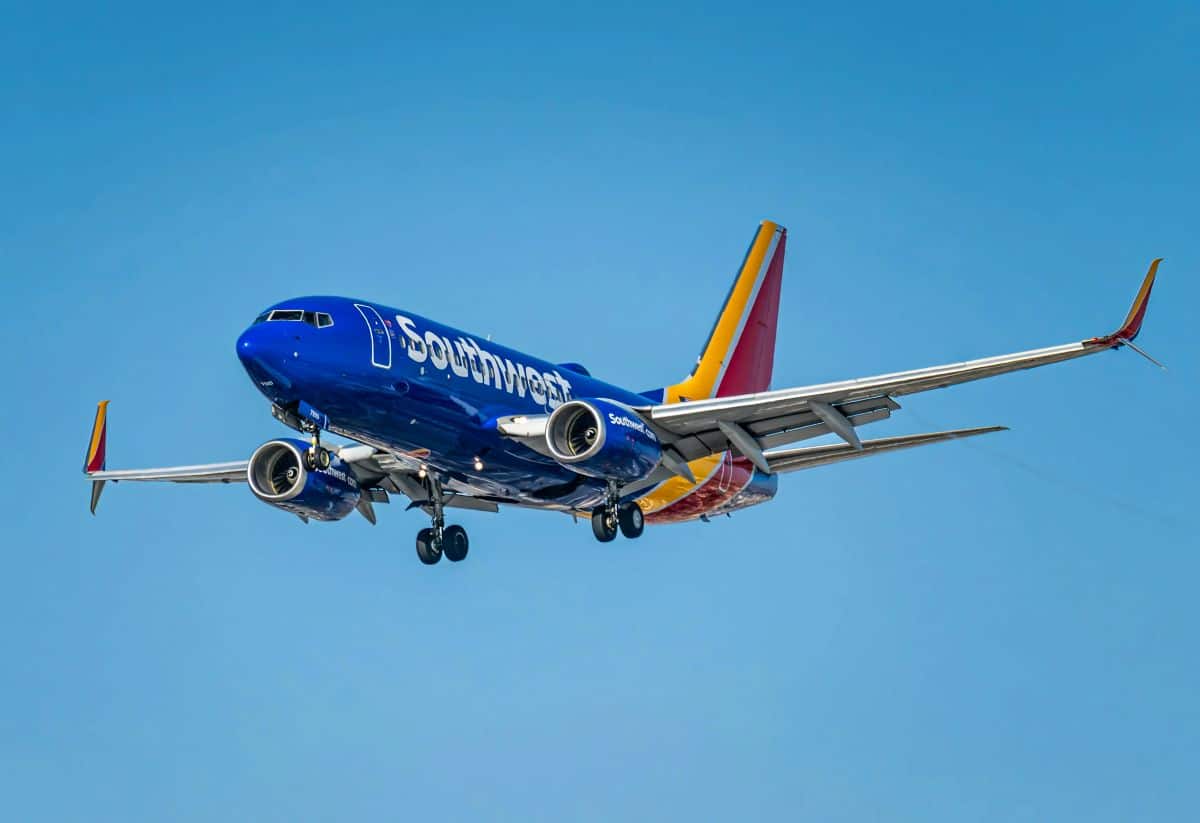
A Southwest Airlines flight travelling from Orlando, Florida to Manchester, New Hampshire was forced to make an unexpected diversion to Charleston, South Carolina following an in-flight technical issue.
On 20 July, a dramatic mid-air emergency forced a Southwest Airlines jet to make a sudden landing. Here is what travel news you need to know about Flight WN4761 from Orlando to Manchester and why it diverted to Charleston, United States.
Advertisement
Advertisement
Drama unfolded in the skies on 20 July. Suddenly, Southwest Airlines Flight WN4761, a Boeing 737-800 travelling from Orlando to Manchester, diverts to Charleston International Airport in the United States. Passengers experienced sudden shock as pilots declared an urgent mid-flight emergency. What travel news do you need to know about this alarming diversion? Consequently, air traffic controllers prioritized the jet for an immediate, unexpected landing. Fortunately, ground teams responded instantly, ensuring all travelers landed safely without injury. Nevertheless, this startling incident quickly raised questions among holidaymakers regarding mid-air safety protocols, routing updates, and eventual arrival times.

On 20 July 2026, Southwest Airlines Flight WN4761 departed Orlando International Airport (MCO) bound for Manchester-Boston Regional Airport (MHT). The aircraft, a Boeing 737-800 bearing registration N8662F, safely redirected to Charleston International Airport (CHS) after declaring a mid-air emergency. Although initial reports misidentified the jet as an Airbus, Southwest operates an all-Boeing fleet, and ground crews in Charleston managed the arrival according to standard safety protocols.
Advertisement
Advertisement
What triggered the sudden diversion of Flight WN4761?
Flight WN4761 departed Orlando shortly after its scheduled morning slot, climbing toward its cruising altitude for the northbound journey to New Hampshire. While en route over the south-eastern coast, the flight crew detected an operational anomaly—reported in preliminary air traffic logs as a technical system warning—prompting them to transmit a transponder emergency code.
By squawking the standard emergency code 7700, the pilots immediately alerted air traffic controllers of an urgent situation requiring priority handling. Following established aviation safety protocols, the flight crew selected Charleston International Airport as the most suitable divert field due to its immediate geographical proximity, favorable runway lengths, and robust emergency response capabilities.
Advertisement
Advertisement
Why do commercial aircraft divert mid-flight?
Flight diversions represent one of aviation’s most fundamental safety nets, allowing flight crews to land safely whenever continued flight presents an unacceptable risk. Commercial aircraft divert for several primary reasons, including mechanical or technical anomalies, sudden adverse weather conditions at the destination, and urgent medical emergencies involving passengers or crew members.
When a technical warning light illuminates or a mechanical parameter strays outside normal tolerances, pilots rely on strict procedural checklists that often dictate landing at the nearest suitable airport. While unexpected diversions invariably disrupt travel schedules and create logistics challenges for airlines, aviation safety regulations dictate that resolving potential technical issues on the ground remains the absolute operational priority.
How do flight crews and ground teams manage an emergency landing?
The moment a flight crew decides to divert and transmits an emergency squawk, air traffic control clears surrounding airspace to give the affected aircraft an unimpeded path to the runway. Controllers maintain continuous communications with the cockpit, gathering critical details regarding fuel levels, remaining flight time, and the precise nature of the onboard emergency.
Simultaneously, dispatchers notify ground crews at the diversion airport, prompting local airport fire services and emergency teams to position themselves along the designated runway. Once the aircraft lands safely, fire trucks inspect the fuselage and landing gear using thermal imaging equipment before ground crews tow the plane to a gate, ensuring passengers disembark safely while technicians begin detailed mechanical evaluations.
What happens to passengers following an unscheduled diversion?
When an aircraft makes an unscheduled landing at a divert airport, the primary logistical objective shifts immediately toward passenger care and journey completion. Customer service teams at the receiving terminal coordinate temporary gate accommodation, provide complimentary refreshments, and establish dedicated updates regarding the status of the interrupted flight.
If technicians resolve the underlying technical issue quickly, the original aircraft may be cleared to resume its journey after necessary safety inspections and refuelling. Alternatively, the airline will dispatch a replacement aircraft or rebook passengers on alternative flights, ensuring that every traveler reaches their final destination with minimal lingering delay.
Advertisement
Advertisement
Why did the plane land unexpectedly? The primary cause involved a mid-flight technical system alert inside the cockpit. Consequently, the flight crew transmitted an emergency code to air traffic control. The answer lies in strict aviation procedures that prioritize safety over original flight schedules. Furthermore, the main reason for selecting Charleston as the alternate site was its close proximity along the coastal route. The facility features expansive runways and emergency fire response capabilities. Therefore, landing immediately allowed mechanics to inspect the Boeing jet safely on the ground, preventing any potential danger to passengers or crew members during flight.
In conclusion, the successful emergency landing highlights the absolute efficiency of modern aviation protocols during unexpected technical glitches. Although the sudden detour disrupted passenger travel schedules and caused temporary confusion, safety measures functioned exactly as designed. Ground teams evaluated the Boeing aircraft thoroughly upon arrival, whilst customer service representatives managed passenger logistics and onward arrangements. Fortunately, no injuries occurred during the incident. This event serves as a clear reminder that airline safety rules always take priority over timing. Passengers eventually reached their final destination safely, proving that prompt pilot action and effective ground coordination prevent minor technical issues from escalating.
Advertisement
