
Child Among Six Killed in Wisconsin Dells Small Plane Crash

Updated
Published
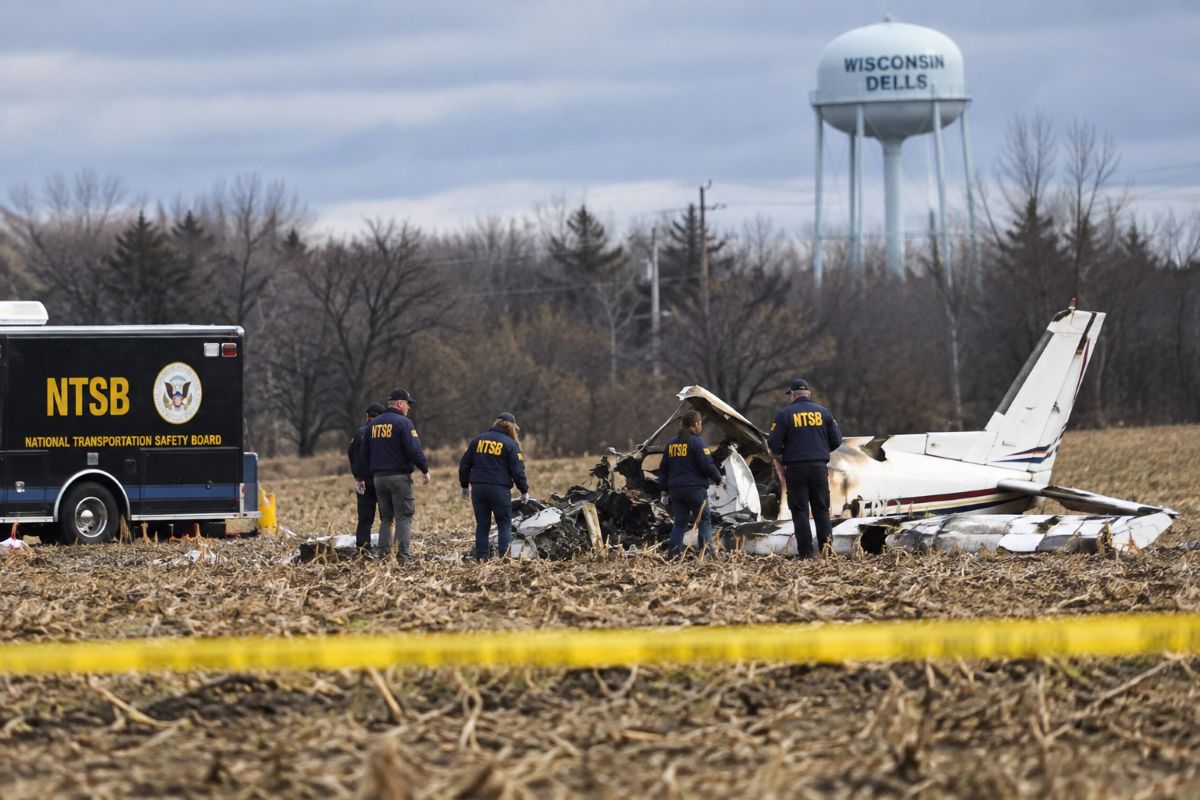
Child Among Six Killed in Wisconsin Dells Small Plane Crash after a fatal general-aviation accident claimed the lives of everyone aboard the aircraft near Wisconsin Dells. The tragedy has triggered a federal investigation, with aviation authorities examining the wreckage, flight information, weather conditions, aircraft systems and other operational evidence. While the death toll of Six, including a Child, has been confirmed, investigators have not yet established why the Small Plane Crash occurred. That distinction remains critical. Any explanation involving weather, icing, mechanical failure or pilot action would be premature until the investigation produces verified findings. For now, the focus remains on the victims, their families and the evidence that may eventually explain the accident.
What Is Confirmed About the Wisconsin Plane Crash?
The accident involved a small general-aviation aircraft near Wisconsin Dells in south-central Wisconsin. Six people on board died, including one child.
Federal aviation authorities have begun the investigative process. The FAA explains that preliminary accident information can change as investigators gather additional evidence, while the NTSB becomes the principal source for investigative findings when it takes charge of an accident.
That distinction matters in the hours immediately after a fatal aviation accident.
Advertisement
Advertisement
Early reports can identify the aircraft type, location, people on board and initial flight circumstances, but they should not be confused with a determination of cause.
The NTSB routinely documents wreckage, gathers electronic and air-traffic information, evaluates the aircraft and its maintenance records, examines weather and operational conditions and interviews relevant witnesses before reaching conclusions.
Advertisement
Advertisement
The identities of the victims should also be treated carefully until released through authorised local channels.
Why Is the Cause of the Crash Not Yet Known?
Aviation accident investigations are deliberately methodical.
The NTSB says preliminary information is subject to change, while the probable cause and contributing factors are normally reserved for the final report.
In another current major aviation investigation, the agency explains that investigators first document wreckage, gather evidence and conduct interviews. A preliminary report is generally expected within around 30 days, while a final report establishing probable cause can take approximately 12 to 24 months.
That process means investigators may consider many areas simultaneously:
- weather conditions;
- air-traffic-control communications;
- aircraft systems;
- pilot qualifications and experience;
- maintenance history;
- flight path and altitude information;
- structural or engine evidence;
- human-performance factors.
None of those factors should be described as the cause simply because it is being investigated.
Advertisement
Advertisement
For readers, this is the most important distinction between an early news report and a completed aviation safety investigation.
Why Could Weather and Icing Become Important Investigative Areas?
Weather-related icing is a recognised aviation hazard, particularly for smaller aircraft operating in cloud or precipitation at freezing temperatures.
The NTSB has issued a dedicated safety alert on flying in icing conditions, warning that ice accumulation can affect aircraft performance and instruments and can contribute to loss-of-control events if not properly managed.
The agency’s historical material concerning the Piper PA-46 family also shows that icing protection has been the subject of previous safety recommendations.
After earlier investigations, Piper revised procedures for PA-46-series aircraft to specify use of ice-protection systems when known icing is anticipated or encountered during climb, cruise or descent.
This information provides safety context only.
Advertisement
Advertisement
It does not establish that icing caused the Wisconsin crash. Investigators must determine whether icing existed, how severe conditions were, what systems were operating and whether any weather-related factor contributed.
Until the NTSB issues findings, causal claims remain speculative.
How Significant Is General Aviation in the United States?
The crash occurred within America’s enormous general-aviation system.
The FAA says the U.S. general-aviation community includes more than 275,000 aircraft, ranging from piston-powered aeroplanes to helicopters, balloons and sophisticated business jets. Those aircraft account for more than 90% of U.S.-registered aircraft.
U.S. General Aviation in Numbers
| Indicator | FAA figure |
|---|---|
| General-aviation aircraft | More than 275,000 |
| Share of U.S.-registered aircraft | More than 90% |
| Economic activity generated annually | More than $247 billion |
| Jobs supported | About 1.2 million |
| FY2024 fatal accidents | 195 |
| FY2024 fatalities | 337 |
| FY2024 fatal accident rate | 0.68 per 100,000 flight hours |
The scale matters because general aviation covers an enormous range of operations, from personal flights and business aviation to training, medical transport and specialist services.
The FAA therefore tracks accident rates in relation to estimated flight hours rather than relying solely on the raw number of crashes.
Advertisement
Advertisement
Are General-Aviation Fatal Accident Rates Improving?
Yes, according to FAA data.
The FAA says 2024 produced the lowest general-aviation fatal accident rate since it began tracking the measure in 2009.
The estimated rate was 0.68 fatal accidents per 100,000 flight hours, with 195 fatal accidents and 337 deaths.
The longer-term figures show improvement:
| Fiscal year | Fatal accidents | Fatalities | Fatal rate per 100,000 hours |
|---|---|---|---|
| 2019 | 243 | 426 | 0.95 |
| 2020 | 211 | 377 | 0.91 |
| 2021 | 192 | 323 | 0.75 |
| 2022 | 242 | 376 | 0.90 |
| 2023 | 200 | 335 | 0.71 |
| 2024 | 195 | 337 | 0.68 |
The FAA later reported that fiscal 2025 was tracking even lower, at around 0.61 fatal accidents per 100,000 flight hours.
These improving national statistics do not lessen the severity of individual accidents, but they provide important context.
Advertisement
Advertisement
What Will Federal Investigators Look at Next?
The NTSB’s role is to establish what happened and why, then use those findings to improve transportation safety.
Modern aviation investigations can draw on a wide range of evidence, including:
- radar and flight-track information;
- air-traffic-control recordings;
- weather records;
- engine and aircraft components;
- maintenance documents;
- pilot records;
- onboard electronic equipment;
- witness observations.
The NTSB has also expanded its Civil Aviation Accident Dashboard, allowing investigators, researchers and the public to examine accident findings, phases of flight and contributing factors across U.S. civil aviation.
The FAA, meanwhile, collects accident and incident information through its safety databases and works with the NTSB where both agencies are involved.
Any meaningful explanation of the Wisconsin crash should therefore wait for verified investigative evidence.
What Is Known About the Piper PA-46 Family?
The PA-46 is a single-engine fixed-wing aircraft family produced by Piper.
Advertisement
Advertisement
FAA aircraft-registry records for PA-46-350P examples classify the model as a fixed-wing, single-engine aircraft with a reciprocating engine.
The PA-46 family has existed for decades and has been the subject of normal FAA and NTSB safety oversight, including historical guidance relating to operations in icing conditions.
The existence of previous safety material should not be interpreted as evidence of a design problem in this accident.
Investigators will need to identify the exact aircraft configuration, equipment installed, maintenance history and operating circumstances before drawing any conclusions.
That is particularly important because aircraft within the same broad model family can differ by year, equipment, upgrades and certification status.
Why Does This Accident Matter Beyond Wisconsin?
Fatal general-aviation accidents often produce safety lessons that extend well beyond the location where they occur.
Advertisement
Advertisement
The FAA describes general aviation as an industry generating more than $247 billion in annual economic activity and supporting around 1.2 million jobs.
Because the sector is so large, investigators focus not only on explaining one event but also on identifying broader patterns that could affect other aircraft or pilots.
The FAA and its General Aviation Joint Safety Committee use accident information to develop safety strategies addressing risks such as loss of control, weather, training and aircraft operation.
The agency says the number of fatal general-aviation accidents has fallen substantially over the longer term, dropping from nearly 400 annually in the late 1990s to fewer than 200 by 2024.
Every completed investigation therefore contributes to the larger aviation-safety database.
Comment From Anup Keshan, Founder and Editor-in-Chief of Travel And Tour World
“Any aviation accident involving loss of life is deeply distressing, and the immediate focus should remain on the families and communities affected. It is equally important that conclusions are not reached before federal investigators complete their work. Aviation safety improves when evidence is carefully examined, causes are established through a transparent investigative process and lessons are shared across the wider industry. The United States has made measurable progress in reducing the general-aviation fatal accident rate, but incidents such as this are a reminder that continuous improvement remains essential. Travellers should rely on verified FAA and NTSB findings rather than speculation while this investigation remains active.”
Advertisement
Advertisement
Conclusion: What Happens After the Wisconsin Dells Plane Crash?
Six people, including a child, died in the small-aircraft crash near Wisconsin Dells, and the next stage is a detailed federal investigation into the circumstances surrounding the accident.
The cause cannot responsibly be stated yet.
The NTSB investigation will examine the available aircraft, operational, weather and flight information before eventually determining probable cause and any contributing factors. Preliminary information can emerge much sooner, but a final accident report can take many months.
The wider context is important: U.S. general aviation comprises more than 275,000 aircraft, while the fatal accident rate has been trending downward and reached historically low levels in recent years.
For now, the most accurate approach is to report the confirmed loss of life, recognise the ongoing investigation and avoid presenting any early theory as established fact.
Advertisement
