
Bali in Crisis: Storms Devastate Airport, Trigger Floods and Tsunami-Height Waves as Indonesia Issues Urgent Travel Warning, Here’s What You Need to Know
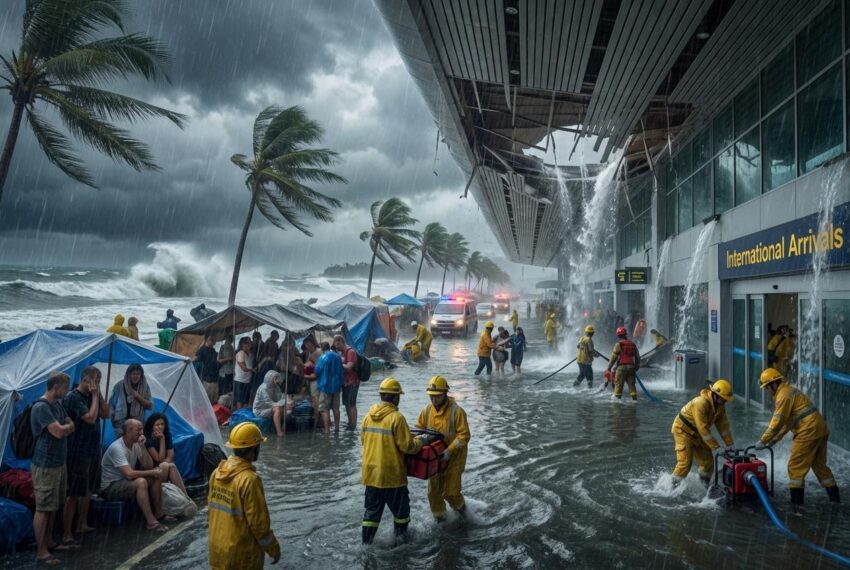 Image generated with Ai
Bali, Indonesia, is under an extreme weather alert until March 8, 2026, as local authorities forecast heavy rains and powerful winds to continue impacting the island. The storm’s effects have already been felt across Bali, including its capital Denpasar and the popular international gateway, Bali Airport. The recent weather events, including flooding and high winds, have prompted safety warnings for both locals and travelers in the region.
Bali is grappling with significant challenges from the rainy season, which has arrived earlier than usual this year. Typically expected to end by March or early April, the ongoing downpours have caused widespread damage, with floodwaters inundating streets, triggering landslides, and causing sinkholes in various areas. Bali’s well-known tourist destinations such as Uluwatu, Seminyak, and Kuta are among the hardest hit, with flooding disrupting travel plans.
Bali Airport Faces Minor Damage Amid Torrential Rains
One of the most notable incidents occurred early on Thursday, when a section of the ceiling at the international arrivals terminal of I Gusti Ngurah Rai Airport collapsed due to the extreme weather conditions. The incident, though non-threatening to passengers, caused damage to a wide corridor leading to the online taxi counter. Fortunately, no injuries were reported, and the airport authorities were quick to assure that services at the terminal continued without major disruptions.
The collapse of the ceiling served as a stark reminder of the impact of heavy rains and high winds across the island, emphasizing the need for caution, particularly in outdoor and public spaces.
Advertisement
Advertisement
Flooding, Landslides, and Strong Winds Continue to Affect Bali’s Landscape
The ongoing extreme weather conditions, attributed to Cyclone Seed 90S in the Southern Indian Ocean, have led to flash floods and landslides in several regions of Bali. Some of Bali’s most popular tourist spots, such as Tanah Lot and Jimbaran, have experienced flooding, and the adverse weather conditions have significantly altered travel schedules.
The heavy rainfall is expected to cause dangerous conditions in many parts of Bali, including Badung Regency, Denpasar City, and Tabanan Regency, as well as coastal areas like Nusa Dua, Sanur, and Canggu. The Bali Meteorology, Climatology, and Geophysics Agency (BMKG) has advised residents and visitors to remain vigilant and take necessary precautions, such as avoiding flood-prone areas and being aware of potential landslides on slopes.
Advertisement
Advertisement
Bali’s beaches, particularly in the South, are also at risk, with wave heights expected to exceed 5 meters. This could affect surf spots like Uluwatu, Canggu, and Seminyak, which are typically bustling with tourists, especially surfers. The BMKG has issued advisories for travelers to stay updated on weather conditions and to exercise caution when venturing near the coast.
Local Authorities Take Proactive Measures to Ensure Safety
Local authorities are doing everything they can to mitigate the effects of the extreme weather. Bali’s Disaster Management Agency, along with the BMKG, has been working to monitor the situation closely. They are coordinating emergency responses, including evacuation plans if necessary, and ensuring that safety protocols are followed in affected areas.
Meanwhile, Bali’s transport infrastructure remains largely operational, with authorities advising tourists to stay in communication with local authorities regarding road conditions, airport operations, and potential changes to ferry and public transport services. The situation remains fluid, and tourists should be prepared for possible disruptions.
Travel Advisory and Safety Precautions for Tourists in Bali
Given the current storm activity and the likelihood of continued heavy rains and strong winds, travelers are urged to remain flexible with their plans. The BMKG and other local agencies have stressed the importance of keeping a close watch on weather forecasts, particularly if travel routes involve areas that are prone to flooding or landslides.
Visitors should take necessary precautions when moving around the island. Tourists are advised to stay indoors during heavy rainfall, avoid rivers and beaches, and be alert to the risk of falling trees. Those exploring the island should consult with local tour guides and be prepared for sudden changes in conditions that may affect transportation or outdoor activities.
Additionally, Bali’s infrastructure has shown resilience despite the ongoing weather challenges. The airport, while temporarily affected, is operational, and most services have resumed in the international arrivals terminal. Nevertheless, travelers should remain informed through official channels, particularly via the BMKG’s official social media accounts and website for real-time weather updates.
Advertisement
Advertisement
Cyclone Seed 90S: A Disruption to Bali’s Rainy Season
Cyclone Seed 90S has disrupted Bali’s typical rainy season pattern, bringing early monsoon rains and unseasonable storm activity. The storm’s unpredictable movement could prolong the rainy season, affecting daily life and tourism on the island. While Bali’s dry season is due to start at the end of March, the continued presence of the cyclone suggests that more inclement weather could follow, making it essential for tourists and residents to stay prepared for potential delays or cancellations.
This year’s rainy season has already seen some of the worst flooding in decades, with flash floods that have affected nearly every part of the island. The worst flooding in over 70 years was recorded as early as September 2026, and more heavy rainfalls are expected over the coming weeks, making it crucial to remain cautious when traveling around Bali.
Conclusion: Stay Safe and Updated While in Bali
As Bali continues to face extreme weather challenges, both locals and tourists must take proactive steps to stay safe. Authorities have provided detailed weather updates and warnings through official channels, urging vigilance while traveling. By staying informed, making necessary adjustments to travel plans, and prioritizing safety, visitors to Bali can continue to enjoy the island’s beauty while minimizing risk during this turbulent weather period.
With continued heavy rains, high winds, and flooding expected, travelers to Bali are advised to be alert, flexible with their plans, and cooperate with local response teams should the situation require any emergency measures.
Advertisement
