
Bali’s I Gusti Ngurah Rai International Airport To Scale New Heights With Plans To Accommodate Thirty-Two Million Passengers, Propelling Indonesia’s Tourism To Unprecedented Levels By 2026

Published
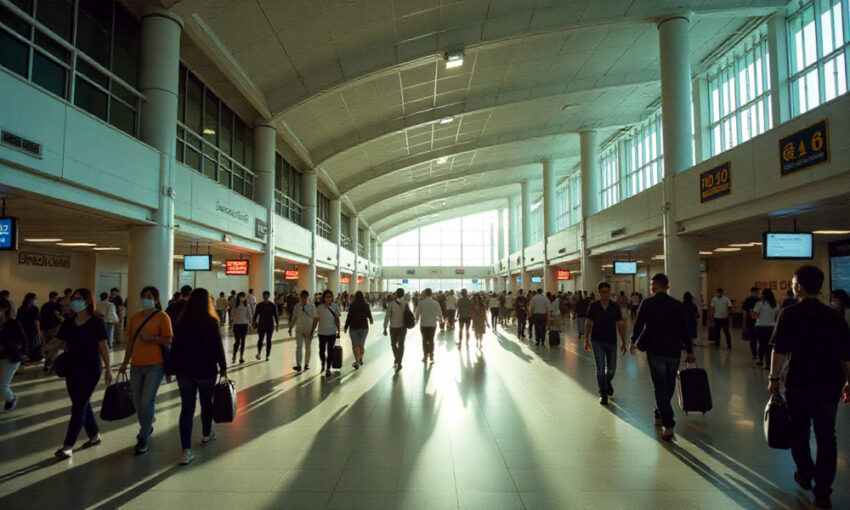 Image generated with Ai
I Gusti Ngurah Rai International Airport in Bali is embarking on an ambitious expansion to accommodate the growing demand from international tourists. With plans to increase its annual capacity to thirty-two million passengers by 2026, the airport is responding to the surge in global travel, particularly to Bali, one of Southeast Asia’s top destinations. This strategic move is crucial for meeting the island’s rising tourism goals, ensuring a seamless experience for travelers, and boosting Indonesia’s economy in the process.
After welcoming more than seven million international visitors in 2025, Bali is already preparing for the next phase of its tourism journey. The island’s focus is now firmly on 2026 and beyond, with aviation capacity emerging as one of the biggest priorities. Authorities are laying the groundwork for a major expansion of I Gusti Ngurah Rai International Airport, aiming to support ambitious visitor targets while addressing long-standing pressure on infrastructure.
Advertisement
Advertisement
Bali’s only commercial airport currently has the capacity to handle around twenty-four million passengers a year across its domestic and international terminals. That figure, however, is no longer seen as sufficient for the island’s growth plans. National tourism targets point toward an annual capacity of thirty-two million passengers in the medium term, reflecting strong global demand for Bali as a leisure, business, and cultural destination.
Transport officials have confirmed that detailed planning is already underway to make this leap possible. The airport has undergone revitalisation work in recent years, and further upgrades are expected to follow. These efforts are designed not only to expand physical capacity but also to improve efficiency, passenger flow, and operational resilience during peak travel periods.
Advertisement
Advertisement
Looking further ahead, projections suggest that Bali’s aviation demand could eventually rise far beyond thirty-two million passengers. Based on current travel trends and long-term forecasts, passenger numbers could reach forty-two million in the near future, with the potential to climb as high as fifty-five million annually over time. Such figures would place Bali among the busiest aviation hubs in Southeast Asia.
Reaching those numbers, however, would require more than incremental upgrades. Officials have openly acknowledged that accommodating tens of millions of additional passengers will demand structural changes, including the possibility of an additional runway or even an entirely new airport. Comparisons have been drawn with Jakarta’s main airport, where a large-scale revitalisation programme dramatically increased passenger capacity over a relatively short period.
Advertisement
Advertisement
Despite Indonesia having several international airports capable of expansion, demand continues to concentrate heavily around Jakarta and Bali. Flight services to and from these two gateways remain the most sought-after, driven by tourism, business travel, and international connectivity. As a result, Bali is expected to hit the thirty-two-million-passenger mark within the next three to four years, regardless of broader national capacity.
Safety and operational reliability are central to the expansion discussion. Handling a higher volume of aircraft movements, passengers, and airport staff requires robust systems and upgraded infrastructure. Aviation planners have stressed that safety standards must improve alongside capacity growth, particularly as congestion increases on runways, taxiways, and in terminal areas.
While specific upgrade details have not yet been publicly outlined, it is clear that changes would need to extend beyond the terminal buildings themselves. Airside operations, ground handling facilities, navigation systems, and passenger processing areas would all need to evolve to cope with higher volumes without compromising safety or service quality.
One of the most pressing challenges linked to Bali’s airport expansion lies outside the airport perimeter. Road congestion around the airport and across southern Bali has long been a pain point for visitors and residents alike. Traffic bottlenecks regularly affect access to the airport, especially during peak tourism seasons, raising concerns that simply expanding the terminal could worsen existing problems.
This reality has fuelled long-standing calls for the development of a second international airport in northern Bali. Supporters argue that rather than concentrating even more traffic and tourism infrastructure in the island’s already crowded south, a new airport would help rebalance development across the province. Northern Bali, which remains less developed than the south, is often cited as having untapped potential for sustainable tourism growth.
Plans for a North Bali International Airport have surfaced repeatedly over the years, only to stall due to challenges around land acquisition, financing, and coordination. Despite these setbacks, the project remains alive. Political commitments have been made to deliver the airport within the current leadership term, signalling renewed momentum behind the idea.
Advertisement
Advertisement
The proposed North Bali airport is envisioned as a large-scale facility, capable of handling more than twenty-four million international passengers in its initial phase. The design allows for further expansion as demand grows, positioning the airport as a long-term solution rather than a short-term fix. The project is being developed through a partnership between domestic and international firms, combining local expertise with global design experience.
Even with renewed optimism, progress on the northern airport is expected to be gradual. Large infrastructure projects of this scale require time, careful planning, and sustained investment. In the meantime, Ngurah Rai International Airport will continue to shoulder the bulk of Bali’s air traffic.
For travellers, the immediate reality remains unchanged. Visitors flying in and out of Bali are advised to allow extra time for airport transfers, as road congestion can significantly exceed GPS estimates. Queues at check-in counters, immigration desks, and baggage claim areas are common during busy periods, particularly during holidays and major events.
As Bali looks to the future, airport expansion has become a defining issue for the island’s tourism strategy. Balancing growth with safety, infrastructure limits, and regional development goals will shape how the island evolves as one of the world’s most popular travel destinations in the years ahead.
Advertisement
