
Egypt Protects Tourism Growth as Airports Face Stronger Pressure to Support Travellers

Published
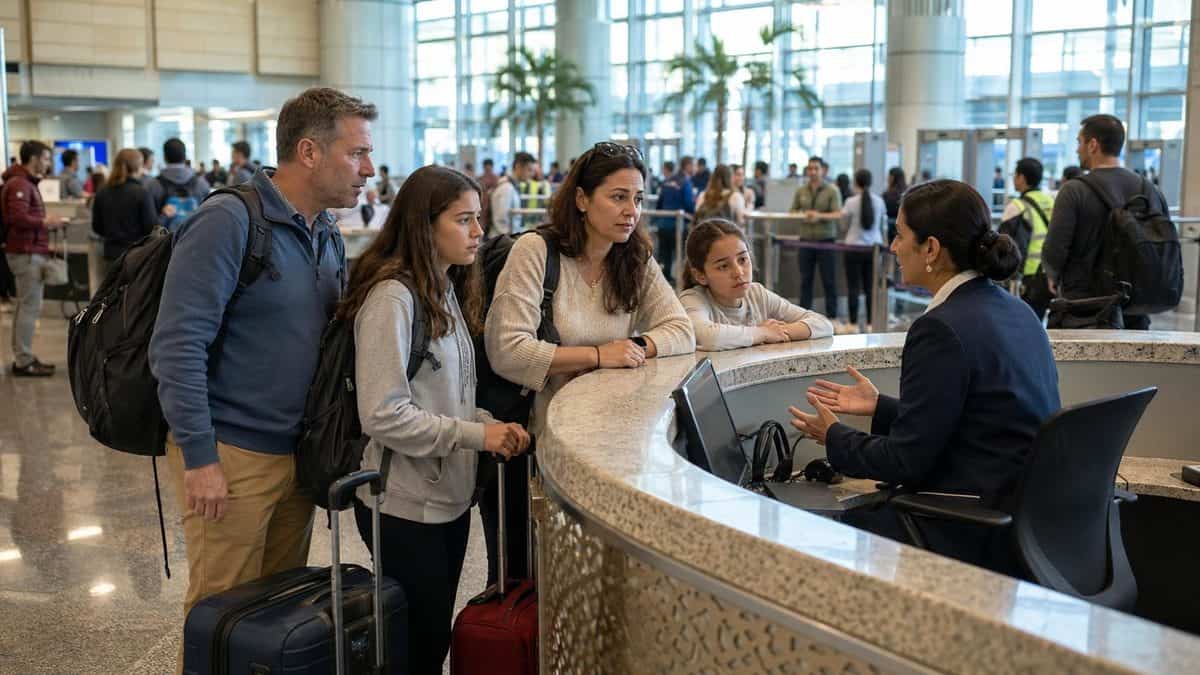
Image generated with Ai
Cairo has instructed aviation administrators to track and address service complaints made at Egyptian airports with more efficiency and urgency following President El-Sisi’s review on August 31st, 2026. This adds passenger experience at Egyptian airports to the front and center of modernization efforts in Egypt’s overall aviation sector. The significance of this is seen in the soaring demand of tourists putting added stress to terminals, staff, baggage systems and other remaining ground services. The directive for Egypt airport passenger complaints is devoid of any travel compensation plan or system with time limits for response, but it does put an emphasis on speed, responsibility and ultimately travel confidence as passenger numbers increase during 2026.
Egypt Places Airport Service Accountability Under National Scrutiny
Egypt has placed airport service quality under direct national scrutiny as the country attempts to manage rising tourism and aviation demand without weakening the experience delivered to passengers.
Advertisement
Advertisement
The Egyptian Presidency announced on 31 August 2026 that complaints concerning service quality at the country’s airports should be monitored and addressed seriously and promptly. The stated aim is to improve journeys and reinforce passenger confidence.
The direction is important because it moves service complaints beyond routine customer-care work. It identifies passenger feedback as an issue connected to the competitiveness and reputation of the national aviation system.
Advertisement
Advertisement
However, the announcement should be interpreted carefully. Egypt has issued a high-level direction for better monitoring and quicker action, but it has not announced a new passenger-rights law, independent aviation ombudsman or statutory compensation programme.
Advertisement
Advertisement
No common response deadline was published. No financial penalty for poor complaint handling was disclosed either.
What the Official Direction Covers
The announcement formed part of a broader review of Egypt’s civil aviation system. That review covered airport infrastructure, capacity, passenger services, investment and operational efficiency.
The principal areas include:
Advertisement
Advertisement
- Monitoring complaints about airport service quality
- Addressing reported problems promptly and seriously
- Improving the confidence of domestic and international passengers
- Modernising airport infrastructure
- Increasing passenger-handling capacity
- Raising service efficiency
- Maintaining high safety and security standards
- Expanding private-sector participation
- Using digital and artificial intelligence technology
- Developing investment areas around airports
The direction applies broadly to services at Egyptian airports. The official statement did not identify particular airports as performing poorly or publish a ranking of passenger complaints.
It also did not specify which types of complaints are most common. Reports concerning queues, cleanliness, terminal facilities or baggage should not be presented as official complaint trends unless supporting data are released.
Advertisement
Advertisement
Why Passenger Complaints Matter to Egypt’s Tourism Economy
Airports are the first and last major point of contact for many international visitors. A smooth arrival can build confidence, while poor communication or unresolved service problems can damage the wider impression of a destination.
That relationship is especially important in Egypt. International tourism depends heavily on gateways serving Cairo, the Red Sea, South Sinai, the Mediterranean coast and the Nile Valley.
Cairo International Airport supports the capital, the pyramids region, the Grand Egyptian Museum and connecting journeys across the country. Hurghada and Sharm El Sheikh serve major resort markets, while Luxor and Aswan support cultural itineraries and Nile tourism.
An airport complaint can therefore affect more than the traveller’s time inside a terminal. It can disrupt hotel transfers, guided tours, cruise departures, domestic connections and scheduled visits to attractions.
Tour operators also depend on predictable processing times. Delayed baggage delivery, unclear passenger information or congestion can create additional costs for representatives, transfer providers and hotels waiting for guests.
Advertisement
Advertisement
Airport Experience Is Part of Destination Competition
Egypt competes with destinations offering beaches, heritage, winter sunshine, resorts and cultural attractions. Many of these competing countries are also investing in terminals, biometric processing and digital travel services.
Attractions can draw visitors, but the complete journey influences whether those travellers return. Airport service is one part of that journey and can influence destination recommendations after a holiday.
The August direction recognises this relationship. Improving complaint management will matter most if authorities can identify recurring failures, assign responsibility and confirm when corrective action has been completed.
Simply recording complaints will not improve the experience. Authorities need consistent handling, accurate information and visible service recovery when something goes wrong.
Record Tourism Growth Raises the Service Challenge
The complaint directive comes during a period of strong tourism expansion. Egypt received 19 million international tourists in 2025, according to official figures published through the State Information Service.
Advertisement
Advertisement
That represented approximately 20% growth over 2024, although different official releases have rounded the increase to between 20% and 21%. The difference reflects rounding and should not be treated as conflicting tourism trends.
The 2025 result surpassed the 15.78 million visitors recorded in 2024. Egypt had already described the 2024 performance as a record before the stronger 2025 total established another high.
Growth continued in 2026. During the first four months, Egypt welcomed 6.1 million tourists, up from 5.7 million during the comparable period of 2025, according to an official Cabinet-linked tourism update.
That produced year-on-year growth of approximately 7%.
| Tourism indicator | Official period | Reported result |
|---|---|---|
| International arrivals | 2024 | 15.78 million |
| International arrivals | 2025 | 19 million |
| Annual arrival growth | 2025 | Approximately 20% |
| International arrivals | January–April 2025 | 5.7 million |
| International arrivals | January–April 2026 | 6.1 million |
| Arrival growth | First four months of 2026 | 7% |
| Tourism revenue | 2024 | US$15.3 billion |
| Revenue growth | 2024 | 9% |
These figures explain why service quality has become more urgent. More visitors mean heavier demand at passport control, security areas, baggage belts, information desks, transport zones and airline counters.
Advertisement
Advertisement
Growth can expose weaknesses that remain less visible when passenger volumes are lower. Service systems must expand alongside arrival numbers if Egypt wants growth to remain sustainable.
Tourism Revenue Makes Traveller Confidence Economically Important
Egyptian tourism revenue reached approximately US$15.3 billion in 2024, according to official figures. That represented growth of about 9% from the previous year.
Tourism is a major source of foreign currency. It supports accommodation, aviation, food services, retail, tour operations, road transport, cruise activity and cultural attractions.
The International Monetary Fund has also described Egypt’s tourism receipts as robust and important to the country’s external financial position. This matters because foreign-currency income from tourism supports the wider economy during periods of pressure on other revenue sources.
Poor airport experiences do not automatically cause visitors to cancel trips. However, unresolved problems can affect online reviews, repeat visits and confidence among travel organisers.
Advertisement
Advertisement
Protecting tourism revenue therefore requires more than attracting additional visitors. It also requires reliable services throughout the journey.
Employment Effects Extend Beyond Airport Terminals
The government has not attached a new employment estimate to the complaint directive. It would therefore be misleading to claim that faster complaint resolution will directly create a particular number of jobs.
Its potential employment effect is indirect. Better airport performance can support the continued growth of businesses that depend on visitor movement.
These include:
- Airport and ground-handling services
- Hotels and holiday resorts
- Tour operators and travel agencies
- Tourist transport companies
- Restaurants and entertainment venues
- Retailers and local suppliers
- Cultural attractions and museums
- Conference and event organisers
- Cruise and river-tourism operators
Tourism has historically supported millions of direct and indirect jobs in Egypt. Current employment should be assessed through updated labour data rather than older estimates, particularly because the sector has expanded sharply since the pandemic.
Advertisement
Advertisement
Cairo Terminal 4 Forms the Largest Infrastructure Element
The passenger-service order was announced alongside an update on the proposed Terminal 4 at Cairo International Airport. The terminal is planned to handle approximately 40 million passengers annually.
The project is intended to expand Cairo Airport’s capacity substantially and support Egypt’s ambition to become a major regional aviation, transport and logistics centre.
Official plans call for modern airport-design principles, digital transformation and artificial intelligence. The terminal is also expected to use a smart operational model designed to improve efficiency and environmental performance.
The government has directed that the development meet international standards in:
- Design
- Technology
- Sustainability
- Operational efficiency
- Passenger service
- Safety and security
The 40-million figure represents planned annual terminal capacity. It is not a forecast that the terminal will immediately process 40 million passengers after opening.
Advertisement
Advertisement
The latest announcement also did not give a confirmed construction timetable, opening date or final project cost. Those details should not be inferred from older proposals unless authorities reconfirm them.
New Capacity Must Be Matched by Better Service
A larger terminal can reduce capacity pressure, but infrastructure alone cannot guarantee a better experience. Passenger satisfaction also depends on staffing, training, information and coordination.
Complaint management can help identify where physical expansion does not solve operational problems. A modern building can still deliver a poor journey if communication is unclear or responsibility is fragmented.
The strongest model would connect complaint information with airport-performance management. Recurring issues could then guide changes in staffing, terminal layouts, training and technology.
Egypt has not yet disclosed whether it will introduce a central national complaint dashboard. It has also not confirmed whether airport-level results will become public.
Advertisement
Advertisement
Artificial Intelligence Could Support Faster Responses
Egypt intends to apply artificial intelligence and digital transformation within its airport-modernisation programme. The official statement connects these technologies with service quality, operational efficiency and sustainability.
AI could help authorities classify large numbers of passenger reports and identify recurring themes. It could also direct cases to the responsible airport, airline, handler or service provider.
That remains a potential application rather than a confirmed feature of the complaint directive. The government did not announce a specific AI complaint-processing platform.
Any future system would need accurate data and clear human oversight. Automated classification should support staff, not prevent passengers from reaching a responsible official.
Privacy would also matter. Complaint systems may collect names, booking information, travel dates and contact details, making secure handling essential.
Advertisement
Advertisement
Private-Sector Participation Will Increase Accountability Questions
Egypt also wants stronger private-sector participation in airport management and operation. This policy is intended to attract expertise, investment and more competitive services while airports remain strategic national infrastructure.
Private participation can bring international operating experience and commercial knowledge. It can also introduce measurable service targets through management or concession agreements.
However, responsibility must remain clear. Travellers should know whether a complaint concerns the airport authority, airline, security service, immigration process, ground handler or commercial contractor.
Fragmented responsibility can leave passengers moving between organisations without receiving an answer. A credible complaint system should provide a clear first point of contact even when several parties are involved.
Contracts with private operators can include standards for queues, cleanliness, baggage delivery, accessibility and complaint response. The August announcement did not disclose whether uniform benchmarks will be required.
Advertisement
Advertisement
Airport Investment Zones Could Support Regional Development
The government has directed authorities to strengthen strategic partnerships and attract foreign investment through integrated zones around Egyptian airports.
Such zones can support logistics, hospitality, retail, maintenance, training and other aviation-related activities. They can also create commercial opportunities outside terminal buildings.
Airport-linked development may benefit regional destinations by encouraging businesses to locate closer to transport gateways. This can reduce logistical barriers and support local employment.
The scale and locations of these zones have not been detailed in the latest announcement. It is therefore too early to assign investment values or employment numbers.
Their tourism relevance will depend on whether development improves visitor services and destination access rather than focusing only on cargo or industrial activity.
Advertisement
Advertisement
Visa Facilitation Supports the Wider Growth Strategy
Egypt has previously simplified entry through electronic visas and visa-on-arrival access for eligible nationalities. These measures form part of a broader effort to make travel easier and attract visitors from more markets.
The August airport directive does not introduce a new visa policy. It does not change passport validity requirements, visa fees or eligible nationalities.
Travellers must continue checking requirements according to their citizenship and journey. Airport service reform should not be confused with immigration reform.
Entry facilitation and airport service nevertheless support the same objective. A simpler visa process has limited value if arrival procedures remain difficult, while a modern terminal cannot remove the need for correct travel documents.
Impact on Airlines and Airport Operators
Airlines may benefit if airport complaints are handled more consistently. Better coordination can reduce confusion over missed connections, baggage cases and terminal information.
Advertisement
Advertisement
The announcement does not place every complaint under airline responsibility. Many airport problems involve other organisations.
Airport operators may face greater pressure to track:
- Complaint volumes
- Response times
- Repeated service failures
- Corrective action
- Accessibility concerns
- Passenger communication
- Contractor performance
Ground handlers could also face closer scrutiny because they manage baggage, ramp services and several passenger-facing functions.
Travel companies may gain clearer escalation routes if implementation produces stronger accountability. That would help agents and tour operators resolve problems for customers more efficiently.
Impact on Hotels, Tour Operators and Local Businesses
Hotels often experience the secondary effects of airport disruption. Guests may arrive late, miss transfers or begin holidays frustrated by unresolved problems.
Advertisement
Advertisement
Tour operators face similar exposure. Representatives must adjust transport, excursions and accommodation arrangements when airport processing becomes unpredictable.
Local businesses benefit when visitors move efficiently between gateways and destinations. Reliable arrival services can help tourists spend more time at hotels, restaurants, shops and attractions.
Complaint data may also help destination managers understand where the visitor journey breaks down. This is particularly important when the issue occurs before a tourist reaches the hotel or attraction.
What International Travellers Need to Know
The directive signals stronger official attention to airport services, but travellers should not expect an immediate new compensation or claims system.
Passengers should continue using the appropriate channel for each problem:
Advertisement
Advertisement
- Contact the airline for ticketing, cancellations and airline-controlled baggage cases.
- Contact the airport for terminal facilities and airport-managed services.
- Keep baggage receipts and property reports.
- Record dates, times, locations and flight numbers.
- Retain photographs and written communication where relevant.
- Ask for a complaint reference number.
- Check visa and passport rules before departure.
- Allow sufficient processing time during busy travel periods.
Travellers should avoid assuming that every airport complaint creates a legal right to payment. Compensation depends on the applicable law, contract and cause of the problem.
What Has Not Changed
The official development has not introduced:
- A new tourist visa
- A passport-rule change
- A national compensation tariff
- A guaranteed complaint response period
- A new aviation ombudsman
- Automatic refunds for airport-service failures
- A published league table of Egyptian airports
- A confirmed opening date for Cairo Terminal 4
These distinctions are necessary for accurate reporting. The policy direction is meaningful, but implementation details remain limited.
Future Outlook Based on Published Plans
Egypt’s published direction is clear: airport infrastructure and passenger services must improve together. Authorities are expected to continue modernising facilities, expanding capacity and strengthening service oversight.
Cairo Terminal 4 remains the largest announced capacity project. Its proposed smart and sustainable systems are intended to support Egypt’s regional aviation ambitions.
Advertisement
Advertisement
Private-sector involvement and airport investment zones will also remain part of the development strategy. Future official announcements may clarify operating models, investment values and project schedules.
For passengers, the next important development would be publication of practical complaint procedures. Response standards, escalation routes and performance reporting would show how the August direction will work in daily airport operations.
The government’s tourism objective also creates pressure for delivery. Rising arrivals require more than marketing and additional rooms; they require airports capable of moving people reliably and responding when service fails.
Frequently Asked Questions
Has Egypt introduced a new airport compensation scheme?
No. The government has ordered closer monitoring and prompt handling of airport service complaints, but it has not announced automatic compensation, fixed payments or a new statutory redress programme.
Does the directive change Egyptian visa or passport requirements?
No. The announcement concerns airport services, infrastructure and passenger confidence. Travellers must continue checking visa eligibility, passport validity and entry conditions separately before departure.
Advertisement
Advertisement
How should a traveller report an airport problem?
Use the channel responsible for the service. Contact the airline for flight or ticket problems and the airport for terminal-related matters. Keep documents, photographs, times and reference numbers to support the complaint.
Conclusion
Egypt’s airport complaint directive incorporates passenger experience with airport capacity and investment and technology in aviation. This is important, given that the number of international travelers reached 19 million in 2025 and continued to grow in 2026. However, the directive is still only a direction and not a complete passenger rights compensation and redress framework. Passengers have not received the right to compensation, a guaranteed response time, or changes to visa requirements. The directive will be put to the test once it is implemented at each individual airport and service provider. Currently, the only way for passengers to experience visible improvements is for them to document their problems thoroughly and reach out to the responsible airline or airport quickly.
Advertisement
