
Kosovo Restores Mother Teresa Trail for Slow Travellers

Published
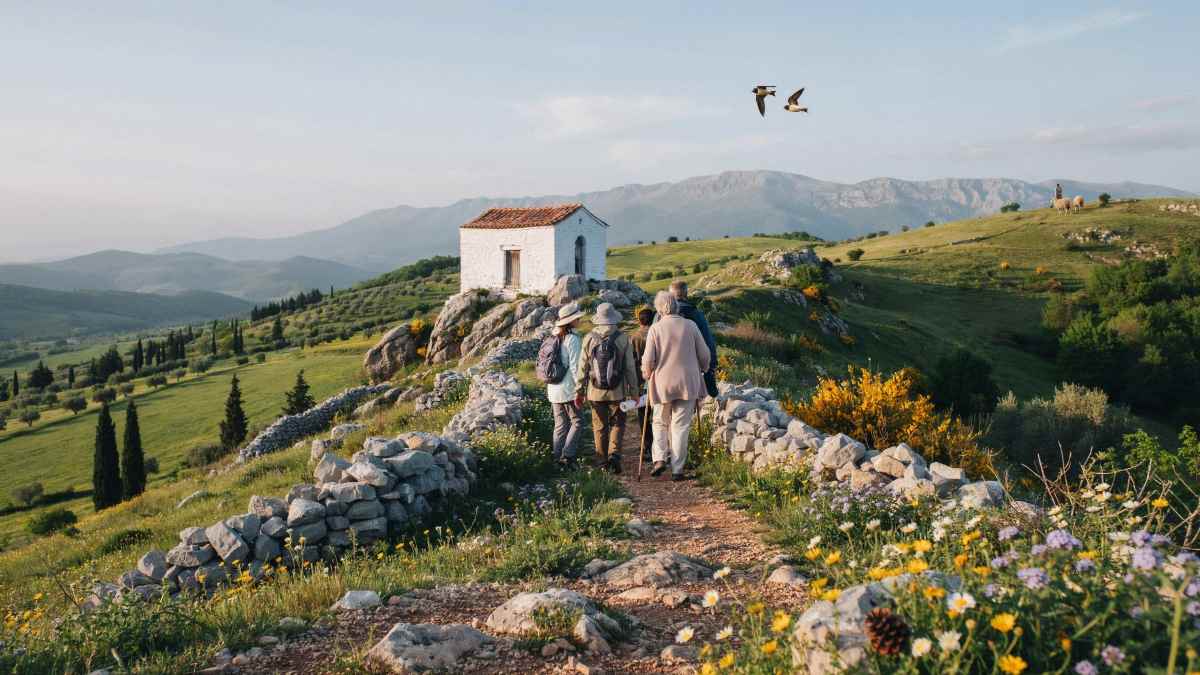
Image generated with Ai
In fact, Kosovo is restoring its link with North Macedonia through the reconstruction of the “Paths of Mother Teresa”, a cross-border cultural walking route that connects an integral part of the childhood days of Gonxhe Bojaxhiu, who went on to become Mother Teresa in her later years. In terms of EU cross-border cooperation, the restoration of this path has already begun between southeastern Kosovo and North Macedonia, following the historical journey from Skopje all the way to the sanctuary town of Letnicë, which marks the place where young Gonxhe Bojaxhiu decided to devote herself to religious life in 1928.
Paths of Mother Teresa Reconnect Historic Routes
The trail is being restored through rural areas that have traditionally received less attention from conventional Balkan tourism itineraries.
Overgrown footpaths have been reconnected and signposted, creating a clearer route for visitors travelling between heritage locations.
The cross-border character of the trail allows travellers to experience the journey as a continuous cultural route rather than separate attractions divided by a national boundary.
Advertisement
Advertisement
For walkers, the route provides an opportunity to explore the landscape at a slower pace while visiting communities and heritage locations along the way.
Advertisement
Advertisement
Letnicë Becomes a Pilgrimage Destination
Letnicë, also known as Letnica, is one of the most important locations on the Kosovo section of the route.
The village is associated with Mother Teresa’s early spiritual journey and contains the Sanctuary of the Black Madonna, an established religious site.
Its inclusion within the restored route gives visitors a clear destination for pilgrimage and heritage travel while connecting the sanctuary with the wider rural landscape.
Advertisement
Advertisement
Travellers can approach Letnicë as part of a walking itinerary rather than visiting the village solely as an isolated religious attraction.
Skopje Anchors the Northern End
The route begins its historical journey in Skopje, where Gonxhe Bojaxhiu was born in 1910.
Advertisement
Advertisement
Skopje provides the urban and cultural starting point for travellers following the wider heritage story before continuing towards the rural landscapes of southeastern Kosovo.
The connection between the two destinations creates a cross-border itinerary that combines city heritage with mountain walking and village tourism.
Visitors can therefore experience two very different environments within one historical journey.
Rural Hamlets Become Part of the Experience
One of the distinctive features of the renewed route is its connection with rural settlements.
The trail passes through mountain hamlets with Albanian, Croat and Serb heritage, creating a geographically concentrated route through communities with different cultural backgrounds.
Advertisement
Advertisement
For travellers, these settlements provide opportunities to experience local architecture, food traditions and rural landscapes away from the principal tourist centres.
Family-run guesthouses can provide overnight accommodation along the route, allowing walkers to divide the journey into manageable stages.
Local Guesthouses Support Walking Tourism
Community accommodation is becoming an important part of the tourism offer around the trail.
Family-run guesthouses can provide walkers with places to stay, eat and rest between sections of the route. This creates a direct connection between visitor arrivals and rural household income.
Long-distance walking tourism can also encourage visitors to spend several nights in the region rather than making short day visits.
Advertisement
Advertisement
For local businesses, this creates demand for accommodation, meals, transport services and other visitor needs associated with multi-day journeys.
Agricultural Producers Join the Tourism Route
Local agricultural producers are also positioned to benefit from the renewed visitor flow.
Travellers moving through rural areas can encounter locally produced food and agricultural products as part of their journey.
Food experiences can complement the spiritual and cultural aspects of the route while providing additional opportunities for local producers to participate in tourism.
This creates a broader rural tourism economy around the trail instead of limiting revenue to accommodation and guiding.
Advertisement
Advertisement
Walking Creates a Slower Balkan Journey
The Paths of Mother Teresa is particularly suited to slow travel.
Walking allows visitors to move through the countryside at a pace that brings greater attention to villages, landscapes and cultural sites between major destinations.
The route can appeal to pilgrims, heritage travellers, hikers and visitors interested in exploring lesser-known parts of Kosovo and North Macedonia.
Its rural setting also provides an alternative to conventional Balkan tours that concentrate on major cities, famous monuments and established tourist centres.
Kosovo Broadens Its Cultural Tourism Offer
The restored route is adding another dimension to Kosovo tourism, connecting spiritual heritage with rural travel and cross-border exploration.
Advertisement
Advertisement
For visitors, the journey combines Mother Teresa’s early life story with mountain landscapes, village communities, religious heritage and locally operated tourism services.
The route also creates a framework for visitors to spend more time in southeastern Kosovo, an area that has traditionally attracted fewer international tourists than the country’s better-known destinations.
A New Cross-Border Tourism Corridor
The renovated Paths of Mother Teresa will help establish a unique tourism trail between Kosovo and North Macedonia. Via the renovation of historic trails as well as through their integration with rural hospitality options and producers, the initiative will enable tourists to have a tangible opportunity to travel through this destination via hiking. The nature of this trail, which combines spirituality, multi-ethnicity and rurality, makes it very well-suited for slow tourism and pilgrimage tourism. With an increase in accessibility along the cross-border trail, Kosovo tourism will have a new heritage trail that links Letnicë with Skopje.
Advertisement
