
Switzerland Warns Of Rail Disruptions Across Europe As Travellers Must Now Plan Better For The Next Trip

Published
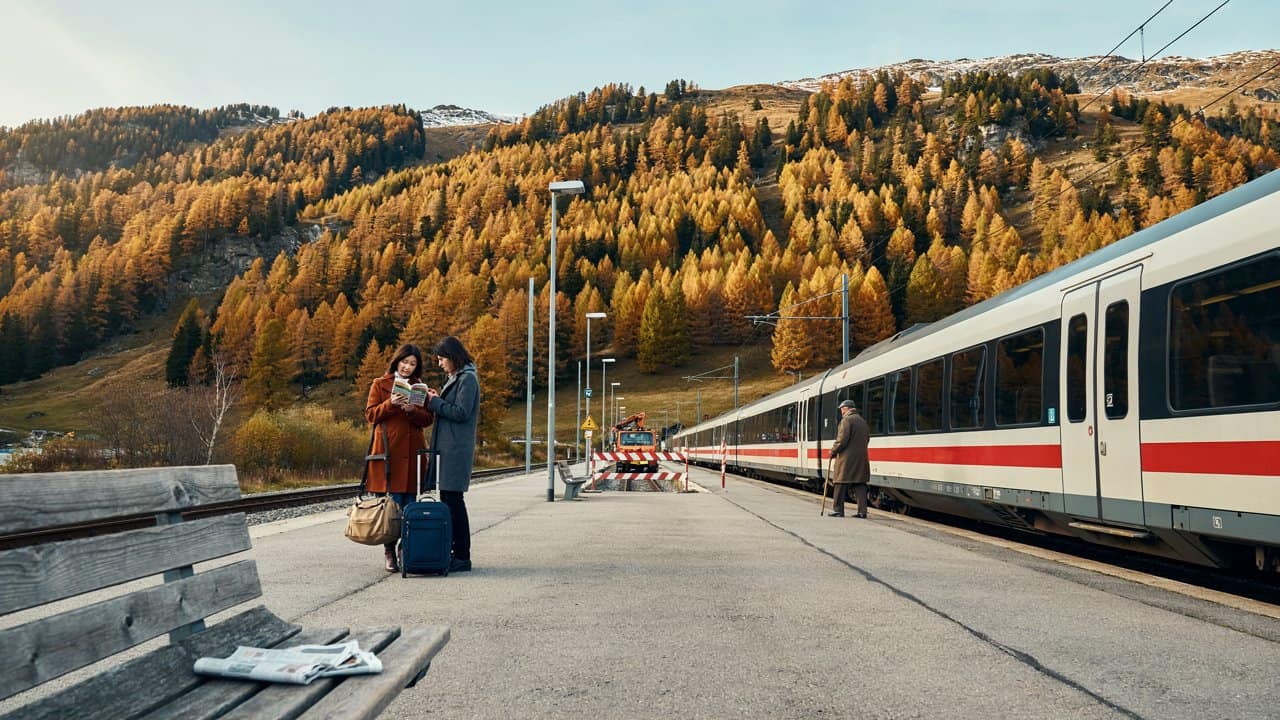
Image generated with Ai
Switzerland’s international rail passengers face cancellations, replacement buses and altered boarding stations during autumn and early winter 2026. Rail Disruptions affect selected connections with Germany, Austria, Italy, the Netherlands and other destinations as planned engineering works restrict services. Official railway notices checked on 1 October 2026 describe separate construction periods, rather than a network-wide closure. Holidaymakers, business travellers and overnight passengers should check their complete itineraries. Some destinations remain accessible through alternative connections, but journeys may require additional transfers, earlier departures or boarding at another station.
What the Evidence Shows About Rail Disruptions Across Europe
The central development concerns transport operations. Official notices identify affected railway sections, cancellation periods, diverted services and replacement arrangements. They also explain how passengers can complete certain journeys despite losing their original direct connection. These details establish changes to transport availability and journey times. They do not establish a measured decline in tourism, hotel bookings or visitor spending. The percentages below represent an editorial assessment of the story’s focus, rather than official statistics, passenger shares or estimates of economic damage.
Advertisement
Advertisement
The evidence shows why travellers need route-specific information. A cancelled departure, a diverted sleeper and a reduced weekday timetable create different problems. Their significance depends on the booked journey, travel direction and onward connection. The notices contain no new visa or passport policy. They also provide no basis for claiming that national borders have closed. Tourism relevance comes from the practical task of adjusting affected itineraries, rather than an officially measured change in destination demand.
| News component | Share of story | Officially verified finding | Relevance to travellers | Official source |
|---|---|---|---|---|
| Daytime international services | 65% | Selected routes face cancellations, longer journeys and replacement buses. | Check departures and onward connections. | Official European railway engineering advisory |
| Overnight connections | 25% | Certain sleepers are cancelled or diverted, with usual boarding stops omitted. | Confirm whether and where the train can be boarded. | Official overnight-service notices |
| Infrastructure background | 10% | Engineering programmes temporarily restrict railway capacity. | Restrictions have separate operating periods. | Official railway construction information |
| Total | 100% | Editorial assessment only | No measured tourism-loss estimate | Official operational evidence |
German Rail Disruptions Bring Immediate October Changes
The first major October restriction affects the line between Basel Badischer Bahnhof and Freiburg im Breisgau. From 2 October at 21:00 until 5 October at 06:00, ICE services face cancellations, with hourly replacement buses serving Basel SBB, Basel Badischer Bahnhof and Freiburg. A small number of through-trains divert between Offenburg and Zurich, stopping only at Singen along the diverted section. Their journeys can take up to 60 minutes longer. Passengers should distinguish these limited alternatives from the services removed from the normal route.
Advertisement
Advertisement
Zurich–Munich connections face further works between 5 and 12 October. From 5–11 October, EuroCity trains do not operate between Lindau-Reutin and Munich, with buses replacing most affected services to Munich’s central bus station at Hackerbrücke. Further cancellation periods follow on 18–20 October, 31 October–5 November, 13–16 November and 25–29 November. Individual departures are also cancelled on surrounding dates. Rail Disruptions Across Europe therefore require checks against the actual travel day. Separately, speed restrictions extend Zurich–Munich journeys by around ten minutes through 12 December, with some reverse-direction departures leaving earlier.
Austrian, Croatian and Italian Routes Follow Different Timetables
The Buchs–Feldkirch closure runs until 14 October 2026. Selected international trains divert through St. Margrethen, while other services are cancelled. Replacement buses operate between Sargans and Feldkirch, and diverted journeys take approximately one additional hour. Connections towards Graz remain available through Innsbruck, while Budapest and Bratislava journeys can involve changes in Vienna. Croatia-bound overnight services have direction-specific cancellations: Zagreb–Zurich departures are cancelled through the evening of 13 October, while Zurich–Zagreb departures are cancelled through the evening of 14 October.
Advertisement
Advertisement
From 15 October–12 December, Zurich–Salzburg journeys take up to one hour longer. Certain international services have revised Zurich timings, while some daytime trains start or finish at Sargans. Another closure affects the Arlberg line from 18–23 November. Overnight trains divert, and replacement buses operate between Sargans and Ötztal for affected daytime connections. Italy has a different restriction: during 2026, one fewer weekday train operates per direction on both Basel–Bern–Milan and Geneva–Brig–Milan. The associated Domodossola–Milan freight-corridor upgrade continues at least until the end of 2028, but that does not establish identical passenger reductions throughout that period.
Night Trains Show Why Rail Disruptions Across Europe Require Boarding Checks
Zurich–Amsterdam overnight trains are cancelled in both directions on 2/3, 3/4 and 4/5 October. Affected passengers may cancel their journeys. Zurich–Hamburg departures divert on those same nights and omit their usual Basel and Freiburg stops. Zurich–Berlin/Prague services divert in both directions on 3/4 and 4/5 October, bypassing several normal stations. Hamburg–Zurich and Prague/Berlin–Zurich departures have separate diversions on 2/3 and 3/4 October. The skipped stations differ by service and direction, making an individual departure check essential.
Advertisement
Advertisement
For specified affected departures, Basel passengers should use regular trains to reach Zurich and board their overnight service there. Their tickets are valid on those connecting trains under the published arrangements. This illustrates the difference between a train cancellation and a changed boarding point. A sleeper may continue operating while no longer visiting the passenger’s original station. Travellers should confirm both the connecting journey and the overnight departure. The published ticket permission applies to the identified arrangements and should not be treated as blanket acceptance on every alternative train.
How Travellers Should Respond to Rail Disruptions
The confirmed impact concerns journey availability, timings and transfers. For tourism and business travel, the practical implication is a need to review time-sensitive plans. A revised arrival may leave less time before an excursion, meeting or flight. Replacement buses can also complicate journeys involving luggage, children or mobility assistance. However, the notices do not quantify accommodation losses, higher fares or reduced visitor arrivals. Passengers should verify accessibility for their actual replacement connection rather than assume every vehicle offers identical facilities. Alternative transit routes may also require a nationality-specific document check.
Affected travellers should take the following steps before departure. The published advice emphasises updated journey planners because some operating changes can appear at short notice. These checks help establish whether the original itinerary remains workable or needs an officially available alternative.
- Confirm the travel date, direction and train number.
- Verify the boarding station, especially for overnight departures.
- Locate replacement-bus stops and onward railway connections.
- Review revised arrival times before flights, meetings or activities.
- Confirm mobility assistance and transfer accessibility.
- Check cancellation, rebooking and alternative-ticket conditions.
- Review entry requirements if another transit country is introduced.
The next milestones are successive October closures, November construction periods and December timetable changes. Each corridor has its own schedule. Travellers should continue monitoring their individual services rather than expect one restoration date for every international connection.
What Rail Disruptions Across Europe Mean for the Months Ahead
Switzerland’s affected international journeys require careful planning through autumn and early winter. Confirmed restrictions change selected departures, journey times, transfers and overnight boarding stations. Alternative connections remain available on several corridors, but passengers must verify their individual services. Tourism businesses should review affected itineraries without claiming economic losses that official notices have not measured. The announcements introduce no new visa or passport policy. October closures lead into November works and December timetable changes, with separate schedules for each route. Travellers should follow updated official information before departure and confirm the complete journey, including every connection and the correct boarding point.
Advertisement
