
Bolivia Is Seeing Millions Of Explorers Fuel A Massive Travel Revival, But Here Is The Truth Behind The Record Hospitality Revenue In La Paz And Beyond

Published
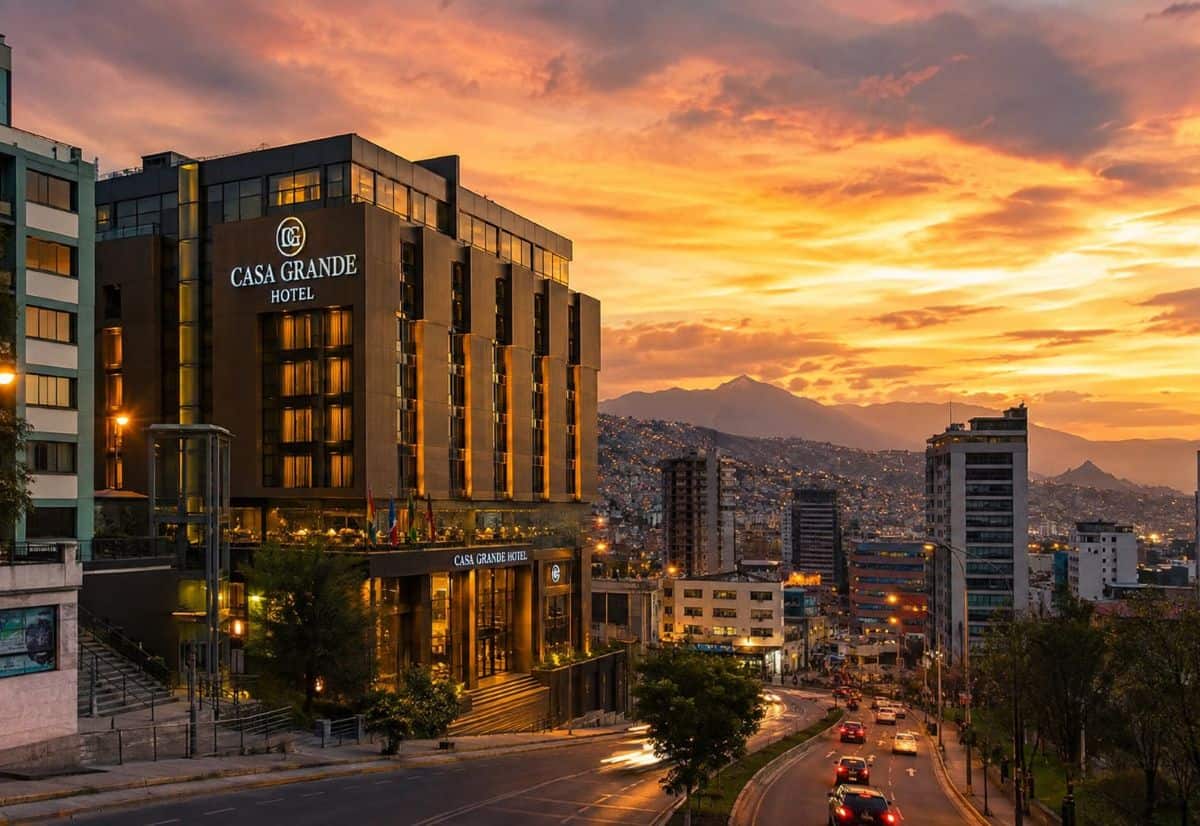
Image generated with Ai
The Andes carry mist into La Paz, and there is a strange energy in the air. In the mist, you want to let your mind go. No one can fully capture the magic of being in Bolivia. The blinding salt flats, the colonial streets, and the spirit of the altiplano are all sources of inspiration. However, they are all an emotional expression of the pain that has happened in the past year. By the end of summer when travelers came back to Bolivia and brought $502 million with them to spend, it brought a bit of hope and relief to families. But the conference attendees were faced the unfortunate realities of the situation.
The famous warmth of the Bolivian hospitality couldn’t hide that behind the traditional inns and the newest hotels, there was a 20.40% inflation problem. The economy burdened Sucre’s colonial quatres and weighed down all historic commercial buildings. The spirit of Bolivian tourism was formed by local travelers, who filled the void. The determination and the spirit of a country is reflected in the changing journeys of travelers.
Advertisement
Advertisement
Unlocking Bolivia’s Hidden Hotel Economy: Reconstructing the 2025 Performance
In 2025, Bolivia witnessed an astonishing surge in foreign visitor expenditure reaching $us 502 million by August, projecting a record full-year tourism influx despite intense macroeconomic pressures. Consequently, the national government highlighted a pivotal 9% year-on-year increase in receptive travel receipts, proving that international wanderlust for South America’s most rugged destinations remains fiercely alive. Meanwhile, domestic travel provided an indispensable economic cushion as over 3.6 million internal trips generated essential liquidity for local communities across the high altiplano and tropical lowlands. Nevertheless, hospitality operators in La Paz, Santa Cruz, and Sucre navigated steep cost increases due to 20.40% cumulative national inflation, making pricing adjustments mandatory to keep doors open.
Advertisement
Advertisement
Unlocking Bolivia’s hidden hotel economy requires reconstructing the 2025 performance through a thorough examination of official government datasets and economic proxies. Consequently, this detailed report reveals how changing visitor flows and inflation metrics interact across key departmental capital cities.
Advertisement
Advertisement
How Did Bolivia Reconstruct Its Complete 2025 Hotel Performance Without Official RevPAR Metrics?
The Instituto Nacional de Estadística (INE) and the Viceministerio de Turismo gather daily operational data via Formulario 6 across the nine departmental capitals plus El Alto, yet they intentionally omit direct RevPAR and ADR figures from public dissemination. To uncover the true operational health of the country’s accommodation sector, researchers must utilise official proxy indicators such as total foreign lodging expenditure per arrival alongside departmental entry registers. By combining these governmental datasets with the Consumer Price Index (IPC) for restaurants and hotels, an accurate picture emerges regarding revenue health and room yield dynamics across the entire nation.
Because official room inventory totals remain unpublished, analyzing foreign lodging expenditure, which climbed to 20.4% of total visitor spend in 2024, provides the most reliable gauge for room yield across commercial hubs. By examining these proxy figures against historical 2019 benchmarks, analytical models show that while total national lodging demand has recovered to roughly 80% of pre-pandemic volumes, nominal pricing power has been heavily inflated by general economic conditions. Consequently, hotel owners are earning higher nominal revenues per guest stay, but real operational profitability remains under pressure due to elevated operational overheads and rising food supply costs.
What Do National Visitor Flows Reveal About Domestic Resilience in La Paz and Santa Cruz?
During 2025, international visitor arrivals by land reached 786,134 travellers, complementing the 359,031 foreign arrivals by air who landed primarily at Viru Viru International Airport in Santa Cruz and El Alto International Airport serving La Paz. While foreign entries into urban hotels stabilized at 352,882 persons, internal travel exploded as 1,327,967 domestic overnight guests checked into registered lodging establishments nationwide. This strong domestic movement demonstrates how local holidaymakers and business travellers actively sustained regional economies during periods when international long-haul travel experienced seasonal fluctuations.
Advertisement
Advertisement
The urban center of La Paz (alongside El Alto) captured 33.8% of all foreign hotel guests, registering an impressive 9.9% year-on-year growth in international bookings due to steady diplomatic, corporate, and leisure traffic. Meanwhile, Santa Cruz solidified its position as the ultimate commercial powerhouse, recording 219,182 domestic guest arrivals—a massive 14.4% increase over 2024 figures. Together, these two primary economic zones account for nearly 78% of foreign accommodation stays, illustrating a clear geographical concentration of hotel revenue within major commercial corridors.
Why Did Foreign Expenditure Surge While Heritage Hubs in Sucre and Potosí Suffered Sharp Drops?
Despite overall receptive tourism revenues climbing past $us 800 million for the full year 2025, iconic cultural destinations such as Sucre and Potosí experienced dramatic double-digit declines in foreign guest stays. Specifically, foreign lodging entries in Sucre plummeted by 18.0% to 29,342 persons, while historic Potosí suffered a 22.8% fall down to 13,874 foreign guests. This severe drop indicates that international itineraries are increasingly compressed, with long-haul travelers prioritizing rapid transit trips to the iconic Salar de Uyuni over extended stays in southern colonial cities.
Conversely, domestic travelers stepped in to partially cushion the impact in colonial cities, with Sucre hosting 150,807 national hotel guests a welcome 21.2% rise compared to the previous year. However, because domestic tourists typically exhibit lower average daily accommodation spend than international visitors, overall RevPAR health in these historical zones remains fragile. Accommodation providers in Potosí and Cochabamba have consequently struggled to maintain baseline margins, requiring creative packaging and local festival promotions to drive weekend occupancy.
How Is Skyrocketing Double-Digit Inflation Eroding Real Revenue Across Hotel Operations in El Alto and Tarija?
Advertisement
Advertisement
Bolivia concluded 2025 with a cumulative annual inflation rate of 20.40%, representing the highest general price increase recorded in the country since 1988. The IPC Restaurants and Hotels division tracked closely with this upward spiral, experiencing an approximate 19.8% annual price surge driven largely by escalating costs for imported amenities, energy, and food supplies. Consequently, while nominal room rates were forced upward across boutique properties in Tarija and high-altitude business hotels in El Alto, real inflation-adjusted room yields actually stagnated or declined.
In regional centers such as Tarija renowned for its wine valleys and the carnival hub of Oruro, foreign guest stays managed modest gains of 7.0% and 8.4% respectively. However, regional inflation variations hit inland cities unevenly, with Cobija recording monthly price spikes as high as 4.44% in May 2025 alone. Hoteliers throughout Kanata (Cochabamba) and Trinidad found it increasingly difficult to fully pass these inflated operating expenses onto price-sensitive guests, leading to compressed operational margins despite higher top-line room rates.
What Does the Future Hold for Travel and Tourism Impact Across the Vast Landscapes of Bolivia?
The total travel and tourism sector generated Bs 24,469 million ($us 3,512 million) in 2025, contributing an impressive 4.9% to national Gross Domestic Product (GDP). This substantial economic footprint demonstrates that tourism remains one of Bolivia’s most crucial non-extractive industries, directly supporting thousands of jobs across transportation, gastronomy, artisanal craft production, and family-run guest houses. From the Amazonian riverways of Cobija and Trinidad to the high-altitude trails surrounding La Paz, sustainable travel continues to empower remote indigenous communities.
Looking ahead, establishing official room occupancy and ADR tracking through Formulario 6 will be critical for enabling institutional hotel investment and precise revenue management. As international visitor numbers approach pre-pandemic highs of 1.4 million annual arrivals, expanding direct air connectivity into Santa Cruz and upgrading road infrastructure toward Uyuni will determine whether regional destinations can capture a larger share of tourist spend. By balancing price adjustments against service quality, Bolivia’s hospitality sector is well-positioned to convert raw geographic allure into long-term economic prosperity.
Advertisement
Advertisement
Departmental Hospitality Performance
The following breakdown illustrates foreign and national lodging entries across all official urban zones defined by the Instituto Nacional de Estadística:
| Departmental Zone | 2024 Foreign Stays | 2025 Foreign Stays | Foreign YoY Change | 2024 Domestic Stays | 2025 Domestic Stays | Domestic YoY Change |
| La Paz | 108,492 | 119,200 | +9.9% | 364,961 | 361,378 | -1.0% |
| Santa Cruz | 122,133 | 120,908 | -1.0% | 191,549 | 219,182 | +14.4% |
| El Alto | 35,250 | 37,269 | +5.7% | 127,446 | 153,096 | +20.1% |
| Sucre | 35,768 | 29,342 | -18.0% | 124,451 | 150,807 | +21.2% |
| Potosí | 17,976 | 13,874 | -22.8% | 45,943 | 46,204 | +0.6% |
| Cochabamba | 13,180 | 10,318 | -21.7% | 111,017 | 101,881 | -8.2% |
| Oruro | 9,236 | 10,014 | +8.4% | 141,126 | 149,678 | +6.1% |
| Tarija | 8,542 | 9,137 | +7.0% | 78,822 | 55,306 | -29.8% |
| Trinidad | 1,397 | 1,409 | +0.9% | 64,540 | 62,462 | -3.2% |
| Cobija | 1,428 | 1,411 | -1.2% | 27,279 | 27,973 | +2.5% |
The Final Verdict
Compared to the statistics offered by the government, Bolivia’s tourism is not focused on the economy or room prices. It is the guest house owner in Sucre, who smiles and places breakfast on the tables of his guests from the old hotels in the face of high prices on food, and the family hotels that, to assist travelers who have crossed the Altiplano, welcome the people who have made the long journey and charged the high crossing prices.
2025 was the time when Bolivia’s long inflation and change in travel patterns did not dull the Bolivian spirit of welcome, when the slow season saw the heritage towns receive the much-needed assistance of local families that took trips. While people around the world keep seeking the Andes and the great Salt Flats, Bolivia is in its most difficult period. This year presents the greatest test of the Bolivian spirit of welcome versus the economics of hospitality. There has never been a better time for travelers to come to Bolivia, to witness what they have yet to write, and to help in strengthening the story that needs to be told.
Advertisement
