
Netherlands Advances With Norway and Others as EPI–ESI Measures Cruise Port Calls for Cleaner Travel

Published
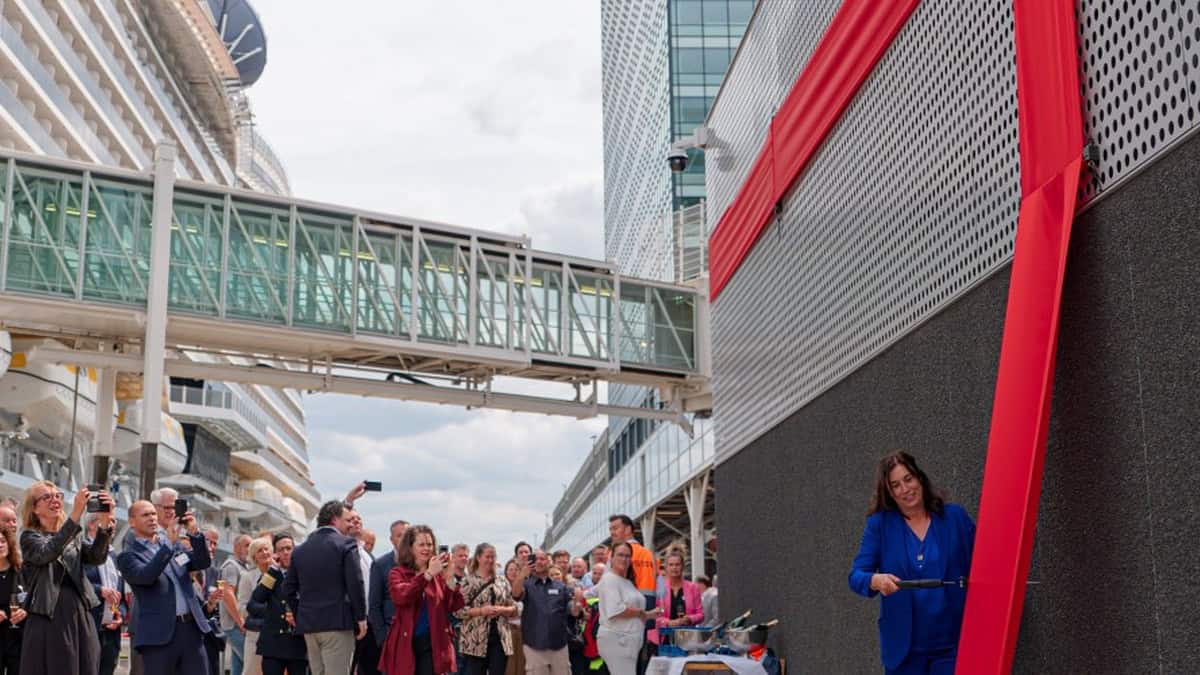
The Netherlands is moving into a potentially important new phase of cruise-port economics as actual environmental performance during individual vessel calls becomes more closely connected with the global Environmental Ship Index framework. From January 2027, the Environmental Port Index and Environmental Ship Index will operate as complementary modules under the International Association of Ports and Harbors framework. The change does not create a new passenger tax or compulsory Europe-wide port discount. However, it could give ports a more consistent mechanism for rewarding cleaner calls, while cruise lines face increasingly strict shore-power and emissions requirements.
Why the Netherlands is central to the 2027 cruise-port scoring story
The Netherlands has an unusually strong position in this development because different Dutch ports illustrate different parts of the emerging environmental-incentive model.
Advertisement
Advertisement
Amsterdam participated directly in the technical work that aligned EPI and ESI approaches for evaluating actual emissions from cruise vessels while at berth. The IAPH technical advisory group met on 16 and 17 April 2026 and included Amsterdam alongside Antwerp-Bruges, Barcelona, Hamburg, HAROPA, Long Beach, Los Angeles, New York/New Jersey and Vancouver. Agreement was reached on the technical alignment as well as the revised ESI Core formula planned for 2027.
Rotterdam, meanwhile, already demonstrates how ESI performance can acquire direct financial value. Its current seaport-dues system gives qualifying vessels discounts on the sustainability component according to their ESI score. The discount scale ranges from 5% at the lower qualifying end to as much as 120% of the sustainability component for vessels achieving the highest ESI band together with the required NOx performance.
Advertisement
Advertisement
That makes the Dutch case important for the cruise industry. Amsterdam illustrates the development of call-specific environmental measurement and shore-power policy, while Rotterdam demonstrates how an international environmental index can already feed directly into port pricing.
The exclusive cruise angle is not another sustainability pledge
The significant development is the potential convergence of three factors:
Advertisement
Advertisement
- a vessel’s overall environmental profile;
- its actual behaviour during an individual port stay; and
- the financial or operational rules imposed by the port receiving it.
ESI traditionally evaluates whether participating ships outperform prevailing emissions standards. EPI goes deeper into what happens during the actual stay alongside. It calculates emissions per port call from reported consumption figures and information about the ship’s equipment and operations.
EPI produces a score between zero and 100 against a vessel-specific baseline. Its current composite methodology weights NOx at 40%, SOx at 20%, particulate matter at 20% and CO₂ at 20%. Ports can then use this information for environmentally differentiated dues, planning and environmental reporting.
That difference matters commercially. A vessel may have modern equipment, but port-call performance can also depend on how it operates while alongside, what energy it consumes, which equipment is running and whether shore power is used where available.
Why 2027 could become a commercial transition year
The EPI–ESI agreement does not establish a single international tariff.
Ports remain responsible for determining whether they provide discounts, impose environmental surcharges, establish access conditions or use environmental scores purely for monitoring.
Nevertheless, bringing EPI into the wider ESI framework can reduce fragmentation between vessel-level environmental scoring and call-level performance data.
Advertisement
Advertisement
IAPH already describes ESI as a port-industry incentive framework. Its established system includes thousands of cargo and passenger vessels and dozens of incentive providers. OceanScore, which administers ESI from 2026, currently reports more than 7,200 registered vessels and more than 100 ports or maritime administrations offering the scheme.
EPI, meanwhile, reports that 111 cruise ships belonging to 18 shipowners have registered technical configurations in its database.
The 2027 integration therefore connects a cruise-focused, port-call measurement methodology with a considerably larger international environmental-incentive architecture.
Netherlands cruise policy shows how environmental performance can move from data to money
Amsterdam offers one of the clearest examples of why cruise companies should treat the development as more than an environmental reporting exercise.
According to the Port of Amsterdam, its cruise policy for 2026 differentiates charges according to engine-emission tier and whether the vessel uses onshore power.
For 2026, its published framework provides the following structure:
Advertisement
Advertisement
| Cruise vessel category | Without onshore power in 2026 | With onshore power in 2026 |
|---|---|---|
| Tier I | 30% extra fee | 10% extra fee |
| Tier II | 20% extra fee | No discount |
| Tier III | 10% extra fee | 10% discount |
Amsterdam has also introduced shore power for sea-cruise ships at its passenger terminal. Its official policy states that from 2027 bookings will only be possible for ships capable of connecting to shore power at that location. Port information also states that shore-power use there becomes mandatory in 2027, ahead of the wider European timetable.
This is precisely why the EPI–ESI change deserves attention from cruise planners. Environmental information is increasingly interacting with access conditions, port charges and infrastructure availability rather than sitting separately inside sustainability reporting.
Belgium, Germany, Spain, France, Norway, US and Canada share the same cruise-port connection
The story extends well beyond the Netherlands.
The commonality is not that the eight national governments signed one cruise agreement. Instead, port institutions in these countries are connected through the development, application or expansion of environmental ship-performance systems.
| Country | Direct connection | Relevance to cruise-port economics |
|---|---|---|
| Netherlands | Amsterdam joined ESI–EPI technical alignment; Dutch ports already use environmental charging mechanisms | Shows how environmental performance can affect admission, shore-power use and dues |
| Belgium | Antwerp-Bruges participated in technical alignment; Zeebrugge was also involved in the earlier ESI At-Berth cruise pilot | Connects a major cruise gateway with call-specific emissions evaluation |
| Germany | Hamburg participated and hosted the April 2026 technical meeting | Already uses ESI-based environmental discounts |
| Spain | Barcelona participated in technical alignment | Brings a major Mediterranean cruise market into development of the common methodology |
| France | HAROPA participated | Adds a major French port system already engaged in shore-power and clean-call incentives |
| Norway | EPI was established by Norwegian cruise ports and is owned by twelve Norwegian cruise-port organisations | Provides the operating foundation for actual port-call environmental scoring |
| United States | Long Beach, Los Angeles and New York/New Jersey participated | Demonstrates that the model is becoming transatlantic rather than purely European |
| Canada | Vancouver participated | Extends technical alignment into another major North American cruise market |
The participating-port list is confirmed by IAPH’s record of the April technical meeting. Norway has a separate foundational role: EPI states that it was established by Norwegian cruise ports in 2019 and remains owned by twelve Norwegian cruise-port organisations.
Germany and the US show that environmental scores already have a cash value
Hamburg’s 2026 tariff system provides additional evidence that ESI scoring is already a commercial instrument.
Advertisement
Advertisement
The Hamburg Port Authority applies ESI Air discounts to the environmental component of port charges. Current discounts range from 0.35% for scores between 20 and 25 to 7% for scores of at least 50, with maximum benefits ranging from €175 to €1,050 depending on the score band.
Across the Atlantic, the Port of Los Angeles operates a voluntary ESI incentive programme. An eligible ocean-going vessel with an ESI score between 40 and 49 receives $750 per call, while a score of 50 or above qualifies for $2,500 per call. Los Angeles also approved measures in August 2026 to enhance its clean-ship incentive programme.
These programmes differ in design and do not automatically apply to every cruise vessel. Nevertheless, they show why standardised environmental scores can carry genuine balance-sheet implications.
Norway provides evidence that environmental rules can influence actual cruise calls
Norway supplies perhaps the most important evidence for itinerary planners.
According to EPI’s own impact assessment, environmental policy affecting Flåm has restricted access for ships with poor environmental performance. EPI states that some vessels with weaker environmental performance subsequently call at nearby Vik, with passengers transferred to Flåm overland.
EPI reports an overall score of 60% for Flåm compared with 25% for Vik in its example and attributes part of the difference to local policy and the use of environmental incentives.
Advertisement
Advertisement
This is not proof that EPI–ESI integration will automatically redirect European cruises in 2027.
It is, however, a documented example showing that environmental performance requirements can alter where a cruise ship calls and how passengers ultimately reach a destination.
That distinction is crucial for travel sellers.
Europe’s 2030 shore-power law gives the 2027 change greater significance
The new framework is arriving only three years before a major change in European maritime regulation.
According to the European Union’s Alternative Fuels Infrastructure Regulation, qualifying TEN-T maritime ports must by 31 December 2029 have sufficient shore-side electricity capacity for at least 90% of relevant port calls.
For seagoing passenger ships other than ro-ro and high-speed passenger vessels, the requirement applies to qualifying TEN-T ports averaging more than 25 relevant calls annually over the previous three years, subject to the Regulation’s conditions and exclusions.
Advertisement
Advertisement
FuelEU Maritime then adds the ship-side requirement.
According to the European Commission, from 1 January 2030, passenger ships and container ships within the Regulation’s scope that are moored at covered EU ports must connect to onshore power and use it for their electrical demand at berth, subject to the Regulation’s exceptions. The Commission explicitly confirms that cruise passenger ships fall within the passenger-ship requirement.
That makes 2027 strategically interesting.
The industry will have a more integrated environmental-scoring framework at precisely the period when cruise lines and ports are preparing fleets, terminals, electrical infrastructure and operating practices for 2030.
What makes this different from EU ETS or FuelEU Maritime
The distinction is important because these systems should not be combined into one concept.
EU ETS prices greenhouse-gas emissions through carbon allowances.
Advertisement
Advertisement
FuelEU Maritime regulates the greenhouse-gas intensity of energy used aboard ships and introduces berth-power requirements.
AFIR establishes infrastructure obligations for qualifying ports.
ESI and EPI, by contrast, are environmental-performance and incentive mechanisms.
The undercovered commercial question is therefore not whether EPI creates another European regulation. It does not.
The question is whether a common international system for measuring how a cruise vessel actually performs during an individual port call makes it easier for ports to construct financial incentives and operational policies around that performance.
That is where the travel-industry significance sits.
Advertisement
Advertisement
What travellers could notice — and what they should not expect
Passengers should not expect a new universal EPI charge to appear on cruise bookings in January 2027.
No such passenger levy has been announced through the EPI–ESI agreement.
The traveller impact would be indirect.
If ports increasingly differentiate charges or access according to environmental performance, cruise companies could have stronger reasons to deploy shore-power-capable or cleaner vessels on environmentally demanding itineraries.
Some ships could become economically more attractive for particular routes than others.
In the longer term, that may affect vessel deployment, port selection, itinerary substitutions and the commercial attractiveness of particular calls.
Advertisement
Advertisement
Travellers may also experience quieter stays alongside and lower local air emissions where ships connect to shore power.
Travel agents and tour operators should treat port environmental performance as an emerging itinerary risk variable
For cruise sellers, the immediate priority is not recalculating fares. It is improving forward itinerary awareness.
- Do not describe EPI–ESI as a new passenger tax. The framework itself does not impose one.
- Watch 2027 ship substitutions carefully. Environmental capability may become increasingly relevant when lines assign vessels to European itineraries.
- Check shore-power capability where a port has announced future access conditions. Amsterdam is especially relevant because its published 2027 policy restricts bookings to ships capable of connecting.
- Monitor port-specific incentive structures rather than assuming one European tariff. Rotterdam, Hamburg and Los Angeles already demonstrate materially different ESI incentive models.
- Treat long-lead cruise itineraries as operationally conditional. The Norwegian EPI experience shows that local environmental rules can influence which port receives the ship.
- Separate port costs from passenger taxes. Environmental vessel incentives, local tourism levies and EU maritime compliance costs are distinct mechanisms.
- Watch the period from 2027 to 2030 closely. It is likely to be a critical implementation window for shore-power infrastructure, fleet preparation and port environmental policy.
The longer-term cruise significance
The January 2027 EPI–ESI integration is unlikely to transform European cruising overnight.
Its importance lies in infrastructure.
Cruise ports are moving from broad descriptions of cleaner ships towards systems capable of measuring actual performance during particular calls. At the same time, environmental scores already generate monetary incentives in several international ports, Amsterdam is tightening cruise shore-power requirements, and European regulation is moving towards mandatory berth electrification from 2030.
The Netherlands therefore provides a useful early view of where cruise-port management may be heading.
Advertisement
Advertisement
A vessel’s environmental specification will still matter. But increasingly, how that vessel behaves during the hours it spends in each destination could matter commercially as well.
For cruise companies, this creates another variable in fleet deployment and itinerary economics.
For ports, it offers a potential method of rewarding better-performing calls.
And for travellers, the eventual consequence may be visible not as a new scoring system on a ticket, but through the ship assigned to an itinerary, the ports it can access and the way it operates while passengers are ashore.
FAQs
1. What changes for cruise ships from January 2027?
EPI and ESI will operate as complementary modules under the IAPH framework from January 2027. EPI specialises in actual environmental performance during individual port calls, while ESI provides broader vessel environmental assessment. The agreement itself does not introduce mandatory port fees.
2. Is the EPI–ESI system a new cruise passenger tax?
No. It is an environmental ship-performance framework. Individual ports can decide whether and how environmental scores feed into discounts, incentives, reporting or other port policies.
Advertisement
Advertisement
3. Why is the Netherlands particularly important?
Amsterdam participated in the EPI–ESI technical alignment and is moving to mandatory cruise shore-power use at its passenger terminal in 2027. Rotterdam already operates an ESI-linked discount system for the sustainability component of seaport dues.
4. Which countries are directly associated with the technical development?
Ports from the Netherlands, Belgium, Germany, Spain, France, the United States and Canada participated in the April 2026 IAPH technical work. Norway is central because Norwegian cruise ports created EPI and twelve Norwegian cruise-port organisations own the methodology.
5. Could environmental scoring actually change cruise itineraries?
The 2027 agreement does not require itinerary changes. However, EPI’s Norwegian experience provides evidence that environmental access policies and differentiated charging can affect where poorly performing ships call. That makes environmental performance increasingly relevant to itinerary risk assessment and fleet deployment.
Advertisement
