
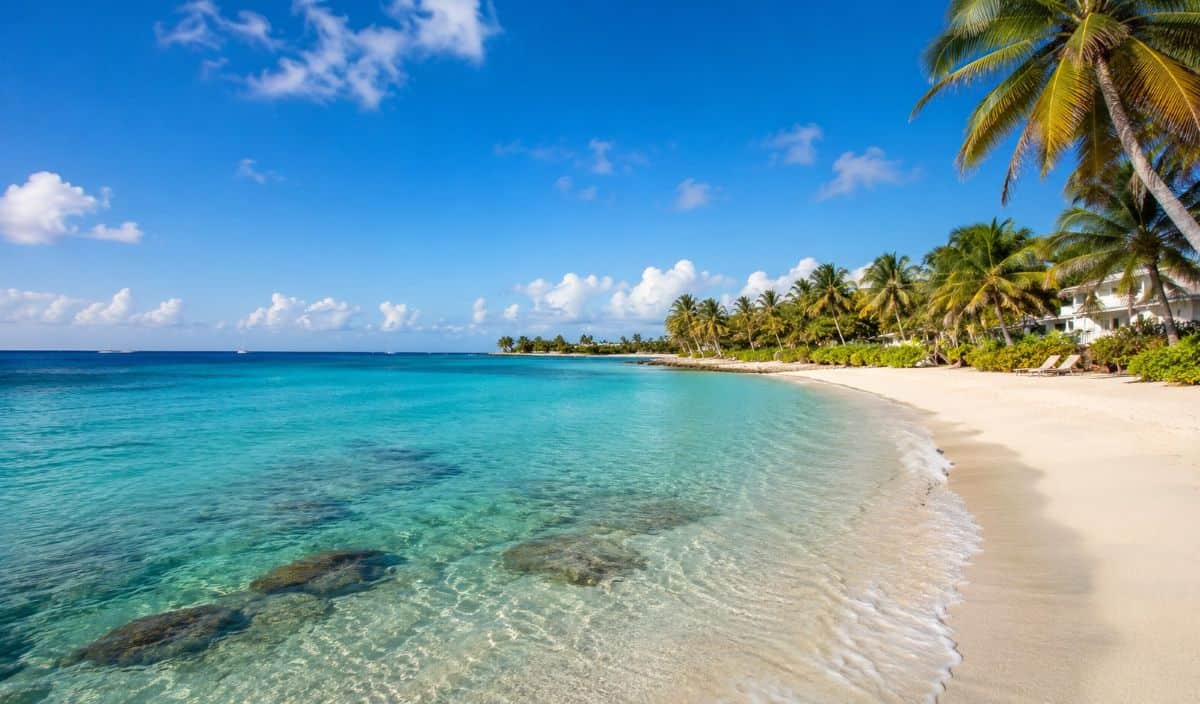
Image generated with Ai
The Caribbean is paradise on earth. However, that’s not the case if you are in Aruba or Jamaica standing on a beach. The large cruise ships plopped off the coast, and the death of the community due to population overload becomes apparent. Small communities of the Cayman Islands and the British Virgin Islands are now petitioning to have cruise ships stop because of overpopulation. It’s not known who these ‘high-value’ and ‘premium’ travelers are that they are seeking. People who long to support a struggling island economy imagine travelers spending the thousands of pounds a night; yet, this is not the case. Most of the money leaves the economy and disappears into foreign booking agencies or foreign upscale shopping. Local vendors, tour guides, and drivers receive very little, if any, support. While we are saving island economies, we are losing what truly makes the Caribbean, the Caribbean.
The Caribbean High-Value Tourism Dilemma
Can tropical island paradise survive its own popularity when natural resources reach breaking point? Across Aruba, Jamaica, the British Virgin Islands, and the Cayman Islands, national tourism boards are aggressively shifting away from mass volume travel toward attracting “high-yield” or “premium” visitors. Yet, despite sweeping policy slogans, island leaders routinely fail to define what a true high-value tourist looks like, or how to retain their expenditure within local communities.
When a luxury traveller pays over £1,000 per night at an internationally owned mega-resort in Montego Bay or Grand Cayman, the headline numbers appear spectacular. However, a massive portion of that cash instantly leaks back offshore through international booking agents, global hotel franchises, and foreign supply chains. Meanwhile, a budget-conscious backpacker or long-term guest exploring local food stands in Oranjestad or hiring neighborhood guides in Tortola leaves a vastly superior direct footprint on the island economy. Without granular data tracking, island nations risk sacrificing environmental sustainability and community infrastructure for vanity metrics that enrich foreign corporations rather than local citizens.
Advertisement
Advertisement
Why are Caribbean destinations shifting away from mass volume tourism?
Caribbean governments are rapidly realizing that endless arrival growth is physically unsustainable for delicate island ecosystems. Small island nations face strict limitations regarding freshwater supply, waste management, road infrastructure, and local labor capacity.
Mass volume tourism, particularly large cruise ships docking in Barbados or Jamaica, places immense pressure on pristine reefs and public facilities while contributing relatively minimal spending per person. Consequently, tourism ministers are desperately pivoting toward high-yield visitor models that promise greater revenue without overwhelming fragile island environments.
Does high visitor spending actually equal high local economic value?
High gross expenditure rarely guarantees direct local economic retention in developing destination markets. When a wealthy traveler spends thousands on an all-inclusive beach resort package in Aruba, up to eighty percent of that money leaks straight out of the country through foreign corporate entities.
Conversely, an independent traveler spending significantly less overall will often distribute funds directly among local taxi drivers, family-run eateries, and independent tour operators. True economic value is defined by how long money remains within the destination, rather than the initial headline hotel rate.
What is the missing data preventing islands from tracking real spend?
Most regional tourism authorities suffer from severe data deficiencies, relying purely on simple arrival statistics and hotel occupancy rates. Authorities in the British Virgin Islands and Saint Lucia rarely publish detailed breakdown metrics detailing local retention, spending by accommodation category, or average daily spend off-resort.
Without segment-level evidence, policy makers cannot evaluate whether expensive luxury marketing campaigns actually yield genuine community prosperity. Crucially, missing data prevents governments from establishing realistic tax policies and sustainable tourism development frameworks.
How can Caribbean islands create authentic experiences for all budgets?
Focusing exclusively on ultra-wealthy individuals limits the massive potential of broader visitor segments who genuinely desire authentic cultural experiences. Island destinations across Trinidad, Grenada, and Curacao must focus on building easily discoverable, bookable local activities that encourage all travelers to spend directly within neighborhood communities.
Expanding culinary tours, nature excursions, artisan markets, and wellness retreats creates diverse revenue channels for local entrepreneurs across every price point. Upgrading regional transport links and digital payment systems enables seamless spending opportunities outside traditional resort enclaves.
What is the environmental and social impact of changing travel habits?
Unchecked visitor volume inflicts devastating impacts on coastal coral reefs, native wildlife habitats, and critical municipal water resources across the Caribbean. When local residents are priced out of housing due to uncontrolled short-term rentals, severe social tension emerges between host communities and foreign tourists.
Adopting a high-yield travel model protects fragile natural ecosystems while preserving indigenous cultural heritage for future generations. Sustainable tourism development balances economic growth with rigorous environmental stewardship and equitable wealth distribution.
Where Do We Go From Here?
This is more than spreadsheets, analytics and policy. It is more than metrics and statistics. This is the heart. This is the soul of the Caribbean. Are we making sure that the daughter of the Grenada spice farmer or that taxi driver in the Grand Cayman actually benefits from the tourist dollars that flow into their countries? We cannot allow island countries to trade their unexploited tourist resources for narrow tourist numbers that ruin their roads, drain their ground water and pollute their pristine coral reefs.
If the governments of Aruba and Jamaica, to name a few, continue to blindly pursue headline tourism spending without any concern for the ultimate destination of those dollars, they will continue to benefit the foreign corporate boardroom at the expense of the local community that will be left to foot the bill to clean up the mess. True sustainability is not providing a home for the ultra wealthy in a community of foreign owned mega resorts. True sustainability is the mom and pop restaurant, the local band and the self employed sail boat captain. Until we stop measuring the success of tourism based on the number of visitors and start measuring it on the number of jobs and opportunities provided, paradise will keep paying the ultimate price.
Advertisement
Tags: caribbean, jamaica, tourism destination, Travel News
Advertisement
Advertisement













Friday, September 4, 2026

Friday, September 4, 2026

Friday, September 4, 2026

Friday, September 4, 2026

Thursday, September 3, 2026

Wednesday, September 2, 2026

Friday, September 4, 2026