
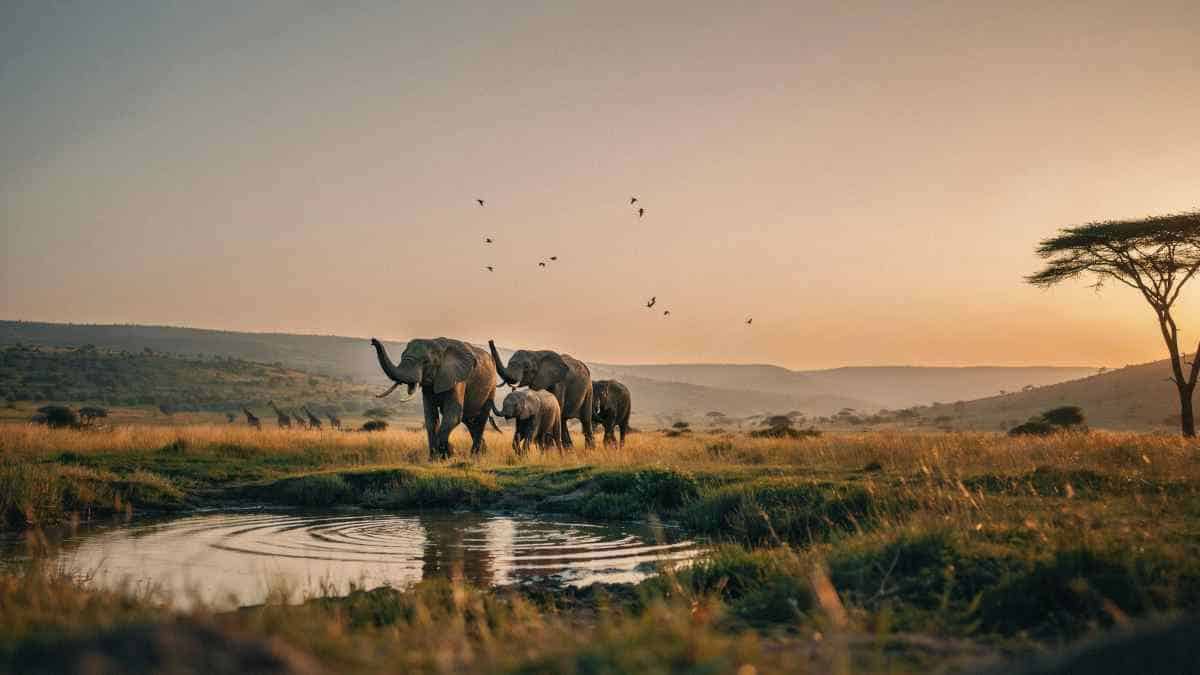
Image generated with Ai
Africa is no longer just part of the global tourism conversation; it is rapidly becoming one of its biggest success stories. Fresh data from UN Tourism shows that international visitor arrivals to Africa increased by 8%, making the continent one of the fastest-growing tourism regions in the world. While many destinations continue rebuilding and expanding their visitor economies, Africa is accelerating its momentum through stronger regional connectivity, growing airline networks, expanding hospitality investments and an increasingly diverse range of travel experiences.
For travellers, investors and tourism businesses alike, the latest figures suggest that Africa is emerging as one of the most dynamic regions in international tourism, attracting visitors seeking everything from wildlife safaris and cultural heritage to luxury resorts, adventure travel and business events.
Let’s be honest—Africa has always had extraordinary tourism assets.
From the Serengeti plains of Tanzania and South Africa’s world-renowned safari parks to Morocco’s historic medinas, Egypt’s ancient monuments and Rwanda’s mountain gorillas, the continent offers experiences unlike anywhere else.
Advertisement
Advertisement
Now, according to UN Tourism, those attractions are translating into measurable growth. International visitor arrivals have risen 8%, placing Africa among the world’s strongest-performing tourism regions and demonstrating sustained confidence in the continent’s travel industry. This growth reflects increasing demand from both long-haul international travellers and regional visitors exploring destinations across Africa.
For years, safari tourism dominated Africa’s international image.
While wildlife experiences remain one of the continent’s greatest strengths, today’s tourism landscape has become far more diverse.
Travellers are increasingly visiting Africa for beach holidays along the Indian Ocean, wine tourism in South Africa, cultural festivals in West Africa, luxury desert experiences in Morocco, diving in the Red Sea, mountain trekking in East Africa and business events in major cities such as Nairobi, Cape Town and Kigali.
Advertisement
Advertisement
This diversification is helping destinations attract visitors throughout the year while reducing dependence on a single tourism segment.
One of the biggest drivers behind Africa’s tourism expansion is improved connectivity.
Airlines have continued adding regional and international routes, making travel between African countries—and from key global markets—more convenient.
Modernised airports, expanded aviation partnerships and increasing cooperation among tourism boards are encouraging travellers to combine multiple destinations within a single itinerary.
Instead of visiting only one country, many international visitors now explore several African destinations during the same holiday, creating broader economic benefits across the region.
Tourism growth requires more than attractions.
Across Africa, governments and private investors have continued expanding hotel capacity, eco-lodges, luxury resorts, conference facilities and visitor infrastructure.
Global hospitality brands are increasing their presence in key markets, while locally owned accommodation providers continue offering authentic experiences that appeal to international visitors seeking meaningful cultural connections.
Investment in roads, airports, digital services and tourism training is also helping improve the overall visitor experience.
These developments strengthen Africa’s competitiveness in an increasingly crowded global tourism marketplace.
Modern travellers are increasingly searching for authentic experiences rather than conventional holidays.
Africa offers exceptional opportunities for wildlife conservation tourism, hiking, marine adventures, archaeological exploration, culinary experiences and cultural immersion.
Whether witnessing the Great Migration in Tanzania and Kenya, exploring Victoria Falls, discovering the ancient pyramids of Egypt or enjoying coastal escapes in Mauritius and Zanzibar, visitors have access to experiences that remain difficult to replicate elsewhere.
This growing demand for experiential travel aligns closely with Africa’s natural and cultural strengths.
The latest UN Tourism figures extend beyond visitor numbers.
Every international arrival supports employment across hotels, restaurants, transport, tour operations, handicrafts, entertainment and local communities.
Tourism also encourages investment in infrastructure, improves international connectivity and generates opportunities for small and medium-sized enterprises.
For many African economies, sustained tourism growth represents an important contributor to economic diversification and long-term development.
Perhaps the most encouraging takeaway is what the 8% increase represents.
Travellers are demonstrating growing confidence in African destinations, supported by improved infrastructure, stronger marketing campaigns and enhanced accessibility.
As destinations continue investing in sustainability, conservation and hospitality, Africa is strengthening its position as one of the world’s most exciting travel regions.
Rather than competing on price alone, many destinations are focusing on delivering authentic experiences that create lasting memories and encourage repeat visits.
According to UN Tourism, international visitor arrivals to Africa increased by 8%.
Improved connectivity, expanding hospitality infrastructure, diverse tourism experiences and growing international confidence are contributing to the continent’s tourism growth.
Safari tourism, cultural travel, beach holidays, adventure tourism, luxury travel and MICE (Meetings, Incentives, Conferences and Exhibitions) are all supporting growth across Africa.
2026 – UN Tourism confirms an 8% rise in international visitor arrivals to Africa.
The latest UN Tourism data reinforces Africa’s emergence as one of the world’s fastest-growing tourism regions. An 8% increase in international visitor arrivals reflects more than post-pandemic recovery—it signals growing global confidence in the continent’s expanding tourism offerings. With improved air connectivity, increased hospitality investment and a broader mix of wildlife, cultural, coastal and business travel experiences, Africa is positioning itself as a major force in the future of international tourism. If current momentum continues, the continent is set to play an even more influential role in shaping global travel trends in the years ahead.
Advertisement
Advertisement
Advertisement













Friday, September 4, 2026

Friday, September 4, 2026

Friday, September 4, 2026

Thursday, September 3, 2026

Wednesday, September 2, 2026

Friday, September 4, 2026
Friday, September 4, 2026