
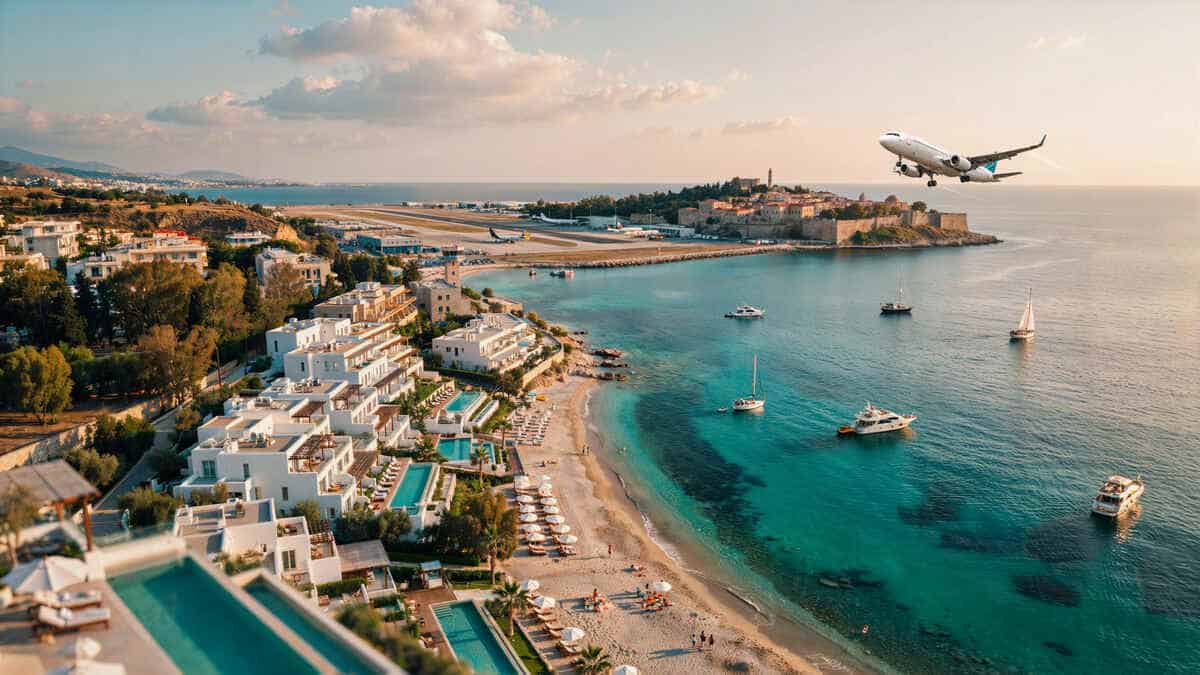
Image generated with Ai
France Goes Hand in Hand With Italy in propelling Greece’s tourism surge as strong European travel demand fuels a more than 25 percent increase in tourism revenues during the first five months of 2026, transforming Rhodes and other Greek islands into billion-euro Mediterranean hotspots. The remarkable growth has been driven by rising international arrivals, higher visitor spending, booming all-inclusive resort demand and Greece’s growing popularity among travellers seeking affordable luxury, historic experiences and world-class island escapes. With European markets strengthening the country’s tourism engine, Greece is emerging as one of the biggest winners of the 2026 Mediterranean travel boom.
Greece’s tourism sector has entered a powerful new growth phase in 2026, supported by rising demand from European travellers and a surge in international holiday spending. Driven by strong visitor flows from markets including France, Italy, Germany, the United Kingdom and other European destinations, Greece has recorded a remarkable increase of more than 25 percent in tourism revenues during the first five months of 2026.
The Mediterranean nation has transformed tourism into one of its strongest economic pillars, with islands such as Rhodes, Crete, Santorini and other popular destinations attracting millions of visitors seeking beaches, culture, history and premium holiday experiences. The latest performance highlights how Greece has successfully combined affordability, luxury hospitality and world-famous landscapes to strengthen its position as one of Europe’s leading travel destinations.
Official tourism figures show that Greece generated billions in travel receipts during the opening months of 2026, marking a significant improvement compared with the same period in the previous year. The growth has been supported by increased arrivals, higher visitor spending and growing demand for all-inclusive resort holidays.
Advertisement
Advertisement
The latest tourism expansion has been heavily influenced by European travel markets, with France and Italy playing an important role in supporting Greece’s visitor economy. Travellers from these countries have continued to choose Greece for its combination of affordable Mediterranean escapes, historic attractions, island experiences and high-quality hospitality.
Germany and the United Kingdom have also remained among the strongest source markets, contributing significant visitor numbers to Greek islands and coastal destinations. The popularity of Greece among European travellers has been strengthened by convenient flight connections, competitive holiday packages and increasing demand for stress-free resort experiences.
The growth of European arrivals has created strong momentum for destinations such as Rhodes, where international visitors are attracted by a unique combination of ancient heritage, clear waters, beaches and modern tourism facilities.
With European travellers increasingly searching for value-focused luxury experiences, Greece has benefited from its ability to offer premium holidays at competitive prices compared with some other Mediterranean destinations.
Among Greece’s many destinations, Rhodes has become one of the strongest examples of tourism success. The island has successfully combined its historic identity with modern hospitality infrastructure, creating a destination that appeals to families, couples and international leisure travellers.
The island’s tourism model has been supported by large-scale all-inclusive resorts that provide visitors with complete holiday packages covering accommodation, dining, entertainment and recreational activities. These resorts have become a major part of Greece’s tourism economy because they allow travellers to enjoy convenient experiences while increasing spending within the destination.
Rhodes continues to attract visitors through its historic landmarks, medieval architecture, natural landscapes and coastal attractions. The island’s ability to offer both cultural exploration and relaxing beach holidays has helped it compete successfully with other popular Mediterranean destinations.
Affordability has also played an important role. Compared with some rival European holiday locations, Rhodes continues to offer attractive prices for families and leisure travellers looking for Mediterranean experiences without excessive costs.
A major reason behind Greece’s tourism success has been the rapid growth of the all-inclusive hospitality sector. These resorts have been designed to provide travellers with convenient, complete holiday experiences where accommodation, food, entertainment and activities are combined into one package.
The model has become increasingly popular among international visitors who prefer predictable travel costs and simplified holiday planning. For families especially, all-inclusive resorts provide easier travel arrangements by reducing additional expenses during the stay.
From an economic perspective, these properties have helped increase visitor spending and improve tourism revenue generation. By keeping more guest expenditure within hotels and resort facilities, destinations are able to benefit from stronger tourism-related income.
The success of this model has encouraged continued investment in Greece’s hospitality sector, with more emphasis being placed on premium facilities, upgraded services and improved visitor experiences.
The tourism industry continues to hold strategic importance for Greece’s economy. The strong increase in travel receipts during 2026 has provided additional financial support while strengthening the country’s international economic position.
During May 2026 alone, tourism revenues recorded a significant year-on-year increase, demonstrating continued confidence among international travellers. International arrivals also experienced strong growth during the first five months of the year, highlighting the resilience of Greece’s tourism market.
Tourism has become a major source of foreign income for Greece, supporting businesses across multiple sectors including hotels, restaurants, transport services, retail and local tourism operators.
The continued expansion has also encouraged airlines, tour operators and hospitality companies to increase capacity and develop stronger connections between Greece and key international markets.
While Greece’s tourism boom has delivered major economic benefits, rapid growth has also created new challenges. Increasing visitor numbers have placed pressure on infrastructure, natural resources and popular destinations.
Climate change has become one of the biggest concerns affecting Greece’s tourism future. Rising temperatures, extreme heatwaves and wildfires have created operational difficulties during the peak summer season.
The tourism industry is increasingly being required to adapt to changing environmental conditions through improved infrastructure, better resource management and stronger sustainability strategies.
Water availability, energy demand and environmental protection have become key priorities as Greece seeks to maintain tourism growth without damaging the natural attractions that bring visitors to the country.
Some Greek destinations have experienced pressure from excessive visitor numbers. Islands such as Santorini have faced challenges linked to overcrowding, infrastructure limitations and changing visitor expectations.
The situation has highlighted the importance of balancing tourism growth with long-term sustainability. While record arrivals create economic opportunities, uncontrolled expansion could impact the quality of visitor experiences and the environment.
Authorities and tourism stakeholders are increasingly focusing on sustainable tourism development, including improved infrastructure, better visitor management and investment in local communities.
The future success of Greek tourism will depend not only on attracting more visitors but also on ensuring destinations remain attractive, accessible and environmentally protected.
Greece’s tourism success story has attracted attention from other coastal destinations seeking to strengthen their international appeal. Countries with beautiful coastlines and cultural heritage are studying how Greece has combined natural attractions, hospitality investment and effective tourism marketing.
Destinations in Africa, including coastal regions in Kenya and Tanzania, could benefit from similar strategies by improving resort infrastructure, strengthening international connectivity and developing competitive holiday packages.
The Greek experience demonstrates that successful tourism growth requires more than natural beauty. Efficient transport networks, quality accommodation, affordability and strong global marketing are equally important.
By creating seamless travel experiences, emerging destinations can increase their competitiveness in the global tourism market.
The 2026 tourism performance confirms Greece’s position as one of the strongest travel destinations in the Mediterranean. Supported by European markets including France, Italy, Germany and the United Kingdom, the country has achieved significant revenue growth while attracting record visitor interest.
The combination of historic attractions, affordable luxury, all-inclusive resorts and island experiences has created a powerful tourism ecosystem.
However, future growth will depend on Greece’s ability to manage environmental pressures and protect its destinations from excessive strain.
France and Italy are helping drive Greece’s tourism surge as strong European demand delivers over 25 percent revenue growth in the first five months of 2026, powered by rising arrivals, higher spending and booming island resort holidays.
As tourism revenues continue to rise, Greece stands at the centre of a new Mediterranean travel era where economic growth, hospitality innovation and sustainable development must move together.
Advertisement
Tags: European tourism markets, Greece tourism boom, Mediterranean travel growth, Rhodes Island Holidays
Advertisement
Advertisement













Friday, September 4, 2026

Friday, September 4, 2026

Friday, September 4, 2026

Thursday, September 3, 2026

Wednesday, September 2, 2026

Friday, September 4, 2026

Friday, September 4, 2026