
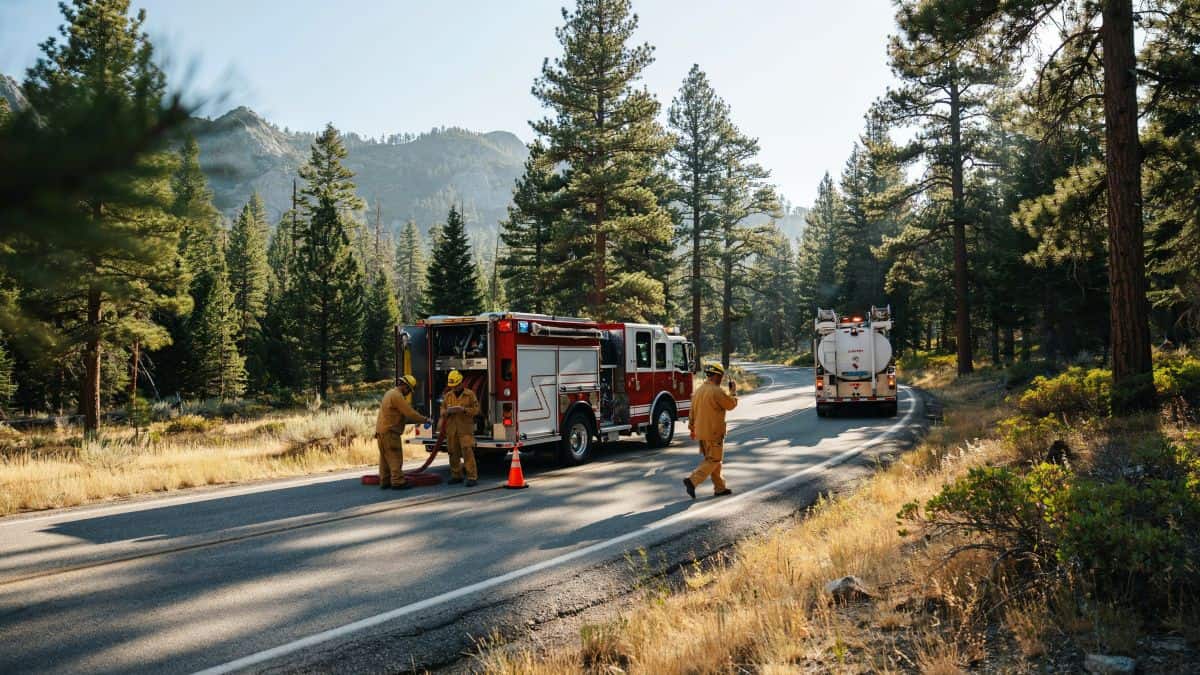
Image generated with Ai
California is strengthening its emergency preparedness as the state enters one of the busiest periods of the summer travel season. With hotter temperatures, dry vegetation and elevated fire weather increasing wildfire risk across parts of the state, the California Governor’s Office of Emergency Services (Cal OES) has taken proactive action by deploying additional firefighting resources to Sierra County. The move is designed to improve response capabilities before wildfires occur, helping protect local communities while supporting safe travel for visitors exploring California’s mountains, forests and outdoor recreation areas.
According to Cal OES, the prepositioning of firefighting equipment and personnel forms part of California’s broader strategy to reduce emergency response times during periods of heightened wildfire danger. Rather than waiting until an incident develops, resources are strategically placed in areas facing increased risk so local and state agencies can respond more rapidly when conditions change.
Advertisement
California regularly experiences heightened wildfire danger during the summer months as temperatures rise and vegetation becomes increasingly dry.
According to Cal OES, the latest deployment follows forecasts indicating elevated fire weather across parts of Northern California. Warm temperatures, low humidity and periods of gusty winds have combined to create conditions that can allow fires to spread more quickly once ignited.
Advertisement
Advertisement
The agency also noted that Red Flag Warnings were issued for portions of Northern California, signalling weather conditions that can significantly increase wildfire potential. Across much of the state, hot and dry weather was expected to continue through the weekend, reinforcing the need for increased readiness.
These seasonal weather patterns are carefully monitored by emergency agencies so resources can be positioned where they are most likely to be needed.
To strengthen local response capabilities, Cal OES authorised the deployment of additional firefighting assets to Sierra County beginning on 10 July.
According to the official announcement, the deployment included:
These resources were assigned to Sierra County through 11 July, providing additional support during the period of elevated wildfire concern.
By placing equipment and personnel closer to areas facing increased fire danger, emergency agencies can shorten travel times to incidents and improve the ability to contain fires while they remain relatively small.
One of the primary objectives of prepositioning resources is to improve emergency response during the earliest stages of a wildfire.
Cal OES explains that strategically locating firefighting assets allows local agencies to begin suppression efforts more quickly, reducing the likelihood that smaller fires develop into larger, more destructive incidents.
This approach also strengthens coordination between state and local emergency responders, ensuring that additional equipment is immediately available when weather conditions increase operational demands.
Rapid intervention remains one of the most effective methods of limiting wildfire growth under favourable circumstances.
Wildfire preparedness extends beyond protecting forests and natural landscapes.
Communities located near wildfire-prone areas benefit from enhanced emergency readiness because faster response can reduce risks to homes, businesses, infrastructure and public services.
Sierra County contains rural communities surrounded by forests and mountainous terrain where fire weather can change rapidly during summer.
By reinforcing local firefighting capacity before emergencies arise, California aims to improve resilience while supporting the safety of residents and visitors alike.
Summer represents one of California’s busiest tourism seasons.
Travellers visit mountain regions for camping, hiking, fishing, scenic drives, wildlife viewing and other outdoor recreation opportunities.
While the Cal OES deployment was not issued as a travel restriction, it demonstrates the state’s commitment to maintaining preparedness during periods of elevated wildfire risk.
Visitors travelling through Northern California should remain aware of local weather forecasts, monitor official emergency information and follow any instructions issued by local authorities if conditions change.
Preparedness measures taken by emergency agencies help support safer travel by strengthening response capabilities before emergencies occur.
The deployment reflects close cooperation between Cal OES and local fire departments.
According to the agency, prepositioned resources operate alongside local emergency services, with staging locations and response assignments determined in consultation with local fire officials.
This collaborative approach enables emergency managers to position equipment where operational needs are expected to be greatest while maintaining flexibility as weather conditions evolve.
Coordinated planning remains a key element of California’s emergency management strategy throughout wildfire season.
California’s emergency preparedness relies heavily on continuous monitoring of weather conditions.
Forecasts identifying hot temperatures, declining humidity levels and increasing wind speeds help agencies evaluate wildfire potential and determine where additional resources should be placed.
Red Flag Warnings provide important information indicating conditions that can contribute to rapid fire growth if ignitions occur.
Using weather intelligence alongside local risk assessments allows emergency managers to make informed decisions before incidents develop.
This proactive planning supports both public safety and operational efficiency.
California’s mountain regions remain popular destinations throughout summer.
Visitors continue enjoying campgrounds, hiking trails, lakes and scenic highways while emergency agencies maintain readiness behind the scenes.
Travellers are encouraged to practise responsible outdoor behaviour by following local fire regulations, respecting campfire restrictions where applicable and remaining alert to changing weather conditions.
Checking official information before travelling can help visitors stay informed about local advisories without disrupting planned holidays unnecessarily.
Preparedness and responsible recreation work together to reduce wildfire risks during periods of elevated fire danger.
Tourism depends not only on attractive destinations but also on effective public safety systems.
California’s investment in emergency preparedness demonstrates how proactive planning contributes to destination resilience during challenging seasonal conditions.
By deploying firefighting resources in advance, emergency agencies help reassure residents, tourism businesses and visitors that protective measures are already in place before emergencies arise.
Such planning supports confidence in travel while allowing local communities to respond more effectively if wildfire activity increases.
The latest deployment to Sierra County illustrates California’s emphasis on prevention and preparedness rather than reactive emergency management.
Instead of waiting for wildfire activity to escalate, Cal OES continues working with local agencies to identify areas facing elevated risk and position firefighting resources accordingly.
This strategy improves operational readiness, strengthens cooperation between emergency responders and supports faster action during periods of heightened fire danger.
As California continues through the summer fire season, proactive measures such as resource prepositioning, weather monitoring and coordinated emergency planning remain essential components of protecting communities, supporting outdoor recreation and helping ensure that residents and visitors can safely enjoy the state’s diverse natural landscapes.
Advertisement
Tags: Cal OES, California tourism, California travel safety, California wildfire preparedness, Emergency Preparedness
Advertisement
Advertisement













Saturday, September 5, 2026

Saturday, September 5, 2026

Saturday, September 5, 2026

Saturday, September 5, 2026

Saturday, September 5, 2026

Thursday, September 3, 2026

Saturday, September 5, 2026

Saturday, September 5, 2026


