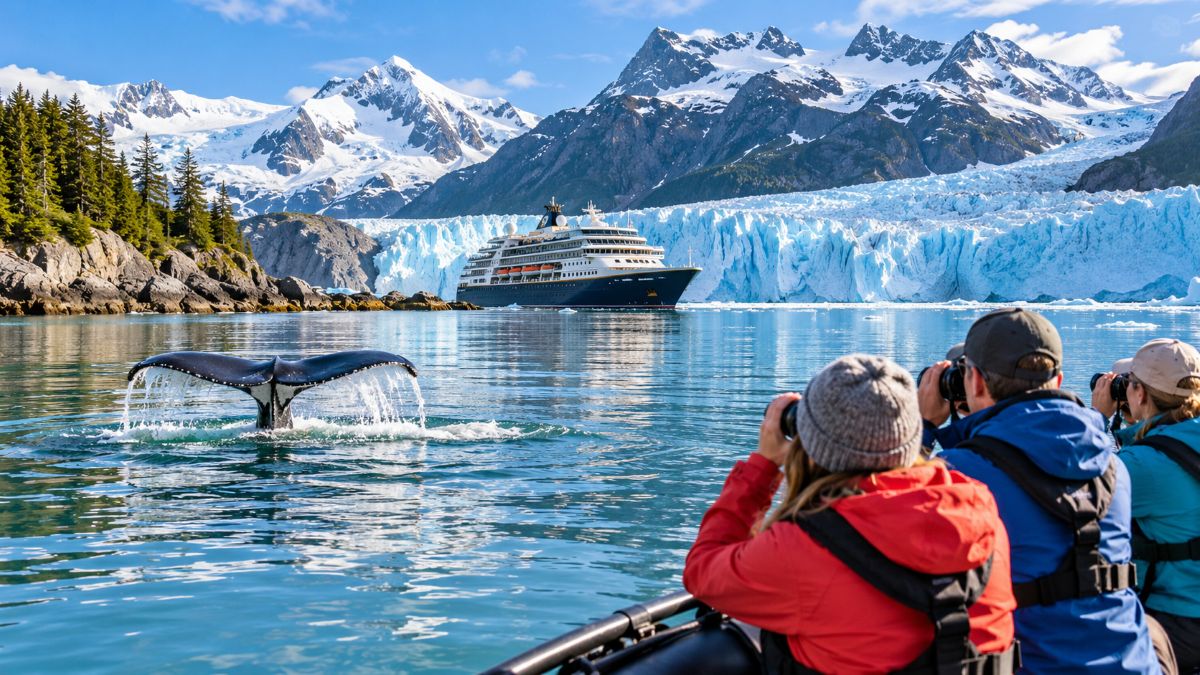
Image generated with Ai
Alaska is redefining the appeal of expedition cruising as travellers increasingly seek intimate encounters with nature, remote landscapes and experiences that contribute to the protection of fragile destinations. A small-ship sailing experience in Southeast Alaska is placing conservation at the centre of the journey, offering visitors an alternative to conventional cruising while bringing them deep into the Tongass National Forest.
The experience combines comfortable accommodation, flexible daily activities and close access to Alaska’s wildlife and wilderness. Rather than focusing on busy ports and large passenger numbers, the seven-day sailing programme creates opportunities for hiking, kayaking and fishing in secluded waters. Its conservation-led model also connects tourism directly with long-term environmental stewardship, giving travellers a closer understanding of the forests, glaciers, coastal ecosystems and wildlife that make Southeast Alaska one of the world’s most distinctive adventure destinations.
Advertisement
The small-ship operation was established in 1979 with a mission centred on protecting the Tongass National Forest. Nearly five decades later, conservation remains fundamental to the organisation’s operating philosophy.
Revenue generated beyond operating expenses is directed towards conservation, advocacy and stewardship efforts associated with the forest. This approach gives the sailing experience a purpose that extends beyond leisure, creating a direct relationship between tourism and environmental protection.
Advertisement
Advertisement
For travellers, the model provides an opportunity to explore one of North America’s great wilderness areas while gaining a deeper appreciation of why its ecosystems require careful management. The emphasis on conservation also reflects a wider shift within adventure and expedition travel towards experiences that place environmental responsibility alongside comfort and discovery.
Southeast Alaska offers an especially strong setting for small-ship exploration because of its combination of protected waterways, forested islands, glaciers and abundant wildlife.
The two vessels used for the experience accommodate only 10 and 12 passengers respectively, creating an atmosphere closer to a floating wilderness lodge than a conventional cruise ship. The smaller capacity allows travellers to spend more time away from heavily visited cruise destinations and experience quieter areas of the region.
Seven-day journeys operate between Sitka and Juneau, while the itinerary can remain flexible according to weather, wildlife opportunities and passenger interests. This adaptability is particularly valuable in an environment where conditions can change quickly and wildlife encounters cannot be scheduled with the precision of a conventional sightseeing excursion.
Advertisement
Advertisement
| Travel Feature | Small Ship Experience | Traveller Benefit |
|---|---|---|
| Passenger capacity | 10 to 12 guests | More intimate atmosphere |
| Cruise duration | Seven days | Extended wilderness immersion |
| Main destinations | Sitka and Juneau | Access to Southeast Alaska |
| Activities | Hiking, kayaking and fishing | Choice of outdoor experiences |
| Wildlife | Whales, bears, otters, eagles and sea lions | Close nature encounters |
| Itinerary | Flexible | Greater adaptability |
| Conservation | Central operating mission | Tourism linked with stewardship |
Wildlife is one of the strongest reasons travellers choose Alaska, and the small-ship format creates opportunities to observe animals in comparatively quiet surroundings.
Passengers can encounter humpback whales, Stellar sea lions, bald eagles, otters, beavers and bears during excursions and while sailing through remote coastal waters. The experience is not built around guaranteed sightings but around spending extended periods in habitats where wildlife naturally thrives.
Kayaking can bring travellers closer to sheltered coves and islands, while hiking provides access to forest and coastal environments. Fishing is also offered directly from the vessels where regulations permit, giving guests another way to experience Alaska’s marine environment.
The variety of activities means the journey can appeal to travellers with different interests. A passenger who is not interested in fishing can instead spend the day hiking or paddling, while groups can benefit from itinerary adjustments based on their preferred activities.
The vessels maintain a deliberately relaxed character rather than attempting to replicate the scale and entertainment of large cruise ships.
Cabins provide practical comforts including storage, private showers, soft bedding and duvets. Most rooms feature bunk-style arrangements with a double bed below and a single berth above, reinforcing the informal character of the experience.
Shared spaces are designed to feel more like a traditional Alaskan lodge. Dark wood, leather seating and a relaxed salon create a social environment where passengers can unwind after outdoor excursions.
Food service follows a set daily menu because of the limited number of guests, while dietary requirements can be accommodated. The smaller scale also allows staff to respond more personally to individual preferences than is typically possible aboard a large cruise vessel.
A major strength of the experience is the freedom to shape each day around passenger interests.
Activity options can include morning and afternoon excursions, with the programme adjusted after considering what guests want to experience. Guides and equipment are then organised around those choices.
This model changes the rhythm of an Alaska holiday. Instead of moving through a fixed sequence of attractions, travellers spend more time responding to the environment. A calm morning may favour kayaking, while another day could prioritise hiking, wildlife observation or fishing.
For families and private groups, greater itinerary flexibility can provide additional value because routes and activities can be tailored around shared interests.
The limited passenger capacity is central to the character of the journey. Guests can spend time together in intimate surroundings, while the crew can provide a more personalised service.
Even educational sessions benefit from the setting. Naturalist presentations become informal conversations in the salon rather than large-scale lectures, allowing passengers to engage more directly with information about Alaska’s wildlife and ecosystems.
Remote overnight anchoring adds another dimension. Instead of returning to a major port each evening, the vessels can remain in secluded coves, creating opportunities to experience sunsets, quiet waters and wildlife along the shoreline.
This style of cruising is particularly suitable for travellers who value nature, outdoor activities and quieter destinations over large-ship entertainment.
It can appeal to experienced Alaska visitors looking for something different from conventional port-based itineraries, as well as first-time visitors who want a deeper connection with the landscape.
However, the experience is not designed around extensive onboard entertainment, nightlife or resort-style facilities. Its greatest attractions are the wilderness, wildlife, activities and conservation mission.
For travellers interested in responsible tourism, the connection between visitor spending and environmental stewardship adds another important dimension to the holiday.
The model demonstrates how tourism can become more closely connected with destination protection. Instead of treating conservation as a separate initiative, the experience integrates environmental stewardship into the purpose of the business.
That approach is increasingly relevant as travellers become more conscious of the environmental impact of tourism and seek meaningful experiences in sensitive destinations.
Southeast Alaska’s forests, waterways and wildlife provide extraordinary tourism assets, but their long-term value depends on responsible management. A small-ship model that encourages visitors to understand and appreciate these environments can help turn travel into a source of greater awareness and support for conservation.
For Alaska, the appeal lies not simply in taking travellers into the wilderness, but in showing them why protecting that wilderness matters.
1. What makes this Alaska cruise different from a traditional cruise?
The experience uses small vessels carrying only 10 to 12 passengers, focusing on remote wilderness, outdoor activities and conservation rather than large ports and extensive onboard entertainment.
2. How long are the Alaska sailing trips?
The journeys operate as seven-day sailings between Sitka and Juneau.
3. What activities are available during the cruise?
Travellers can participate in hiking, kayaking, wildlife observation and fishing where regulations permit.
4. What wildlife can travellers see in Southeast Alaska?
Potential sightings include humpback whales, bears, otters, bald eagles, beavers and Stellar sea lions.
5. What is the Tongass National Forest?
The Tongass is a vast temperate rainforest in Southeast Alaska containing extensive forests, coastal ecosystems, waterways and wildlife habitats.
6. Is fishing included in the experience?
Fishing is offered as an included activity directly from the vessels where local regulations allow it.
7. Are the Alaska cruise itineraries fixed?
The itineraries are flexible and can be adjusted according to passenger interests, conditions and activity opportunities.
8. Is this experience suitable for families?
Yes. Private and family groups can benefit from itinerary flexibility that allows activities and routes to be adjusted around group interests.
9. What type of accommodation is available?
Cabins provide practical amenities including comfortable beds, storage and private showers, with many rooms featuring bunk-style sleeping arrangements.
10. Why is conservation important to the experience?
Conservation is central to the operating mission, with revenue beyond operating costs directed towards conservation, advocacy and long-term stewardship.
Advertisement
Tags: Adventure Travel, Alaska expedition cruise, Alaska hiking, Alaska kayaking, Alaska small ship cruise
Advertisement
Advertisement













Saturday, September 5, 2026

Saturday, September 5, 2026
Saturday, September 5, 2026
Saturday, September 5, 2026
Saturday, September 5, 2026

Saturday, September 5, 2026

Saturday, September 5, 2026