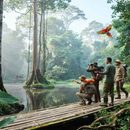
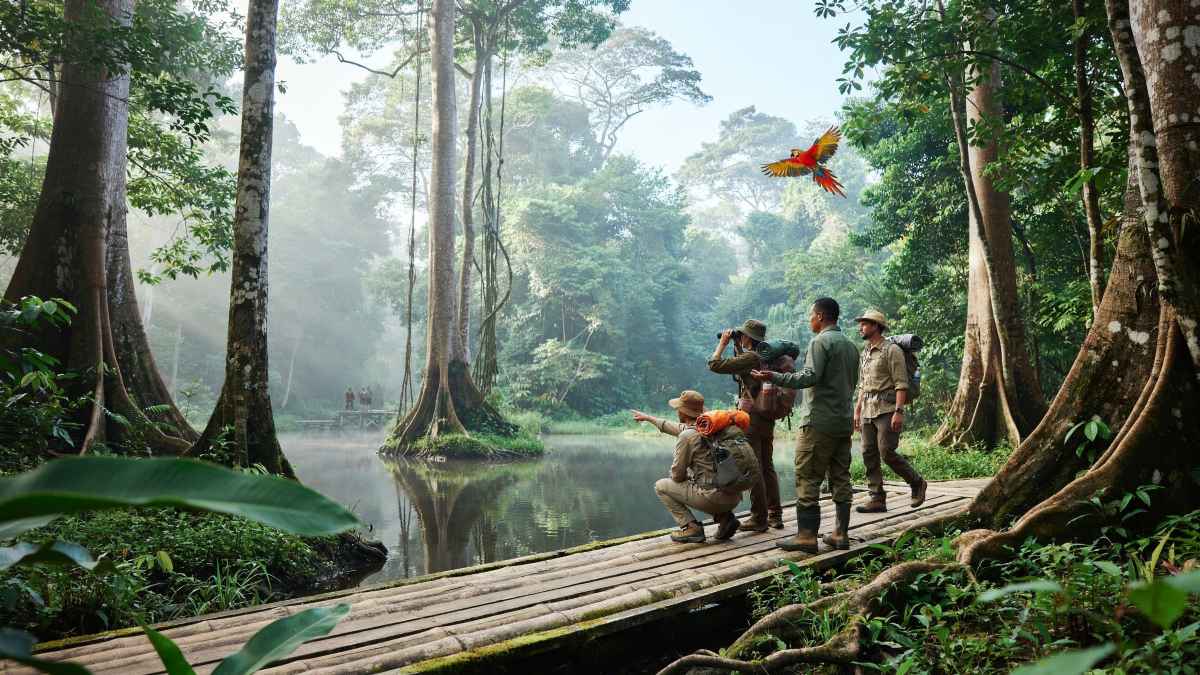
Image generated with Ai
Rainforest tourism by local communities in Peru is taking place along the secluded Putumayo River in the form of the Reserva Comunal Bajo Putumayo Yaguas. The protected landscape covers an area of 1,606 square kilometres in the vicinity of the Colombian border and is establishing a new approach to Amazon tourism in which the indigenous communities take control over the process of conservation and tourism. In the reserve, there are 13 indigenous communities with ethnic groups such as Bora, Kichwa, Murui-Muinanɨ, Yagua, Ocaina and Ticuna. The implementation of the initiative has connected rainforest preservation with tours on the river, medicinal plant treks and traditional fishing, which are aimed at earning some money for the indigenous communities.
The Bajo Putumayo Yaguas landscape extends through one of the most isolated sections of the Peruvian Amazon. Its forests and waterways form an extensive ecological corridor connecting communities with an environment exceptionally rich in wildlife and plant diversity.
Advertisement
More than 4,500 documented plant and animal species are associated with the protected landscape, while the region also contains an important share of Peru’s freshwater fish diversity.
These resources provide the foundation for a tourism experience based on observation and participation rather than conventional resort development. Travellers can explore the river system by boat, enter forest environments with community guides and learn about traditional relationships between Indigenous communities and the surrounding ecosystem.
Advertisement
Advertisement
The result is a form of Amazon travel where cultural knowledge and biodiversity are inseparable from the visitor experience.
A defining feature of the reserve is its co-management structure. Instead of relying exclusively on centralised administration, participating Indigenous communities have a direct role in managing the protected territory and developing tourism activities.
This gives local communities greater control over how visitors enter sensitive rainforest areas and how tourism experiences are organised. River expeditions can be regulated according to environmental conditions, while forest activities can be designed around areas suitable for low-impact exploration.
For travellers, Indigenous guidance also provides access to knowledge that cannot be replicated through conventional wildlife excursions. Medicinal plant walks can introduce visitors to traditional botanical knowledge, while fishing safaris can demonstrate longstanding relationships with the river and its aquatic ecosystems.
Such experiences can make cultural interpretation a core part of the journey rather than an optional addition to a nature excursion.
The Putumayo River is central to the emerging tourism network. Its waterways provide a natural transportation system through a landscape where conventional road-based tourism is limited.
Small-scale river expeditions can therefore become the principal way for visitors to explore the reserve. Travellers can combine wildlife observation with forest walks, traditional fishing and encounters with rural communities while moving through a largely undeveloped Amazon environment.
The remote setting also naturally limits the scale of tourism. Rather than attracting large numbers of visitors through extensive accommodation infrastructure, the reserve can focus on controlled expeditions and community-based services.
This gives Bajo Putumayo Yaguas potential as a specialist destination for travellers seeking wildlife, Indigenous culture, conservation and adventure in a less-developed section of the Peruvian Amazon.
The economic dimension is particularly important in a region facing threats from illicit gold mining and illegal logging. Creating legitimate income from tourism gives participating communities another economic pathway linked directly to maintaining the rainforest.
Under the emerging administrative framework, tourism revenues from regulated activities can remain within communal structures. This strengthens the connection between visitor spending and local conservation priorities.
The approach also places greater value on keeping rivers, forests and wildlife habitats intact. A healthy ecosystem becomes the foundation of the tourism product, meaning environmental degradation could directly undermine the economic opportunity created by responsible travel.
This model can help shift the role of tourism from simply bringing visitors into the Amazon to creating financial incentives for long-term stewardship.
Peru’s best-known Amazon tourism hubs have developed around destinations such as Iquitos and Puerto Maldonado. Bajo Putumayo Yaguas offers a fundamentally different proposition by taking travellers deeper into a remote river landscape and placing Indigenous communities at the centre of the experience.
Its attraction is not mass-market accessibility. Instead, the reserve appeals to travellers prepared for expedition-style journeys involving river travel, forest trekking, wildlife observation and cultural immersion.
That distinction could help diversify Peru’s Amazon tourism economy while reducing pressure on heavily visited areas.
Bajo Putumayo Yaguas presents a significant extension in the potential for indigenous-led tourism in Peru. The unique combination of communal management, amazing diversity, and regulated rivers gives rise to a model in which the processes of conservation and tourism support each other. On the one hand, the reserve allows tourists to get acquainted with the Peruvian Amazon in a way that lets them visit communities with historical ties to the forest and rivers of this area. On the other hand, tourism can become a way for these communities to benefit economically from their territory while increasing their motivation to conserve it.
Advertisement
Tags: Amazon rainforest tourism, Bajo Putumayo Yaguas, Indigenous Amazon expeditions, Indigenous tourism Peru, Loreto
Advertisement
Advertisement













Saturday, September 5, 2026
Saturday, September 5, 2026

Saturday, September 5, 2026

Saturday, September 5, 2026

Saturday, September 5, 2026

Saturday, September 5, 2026