

Singapore Airlines Leads Asia’s Push for Seamless Journeys as North America’s Extra Charges Face Scrutiny

Published
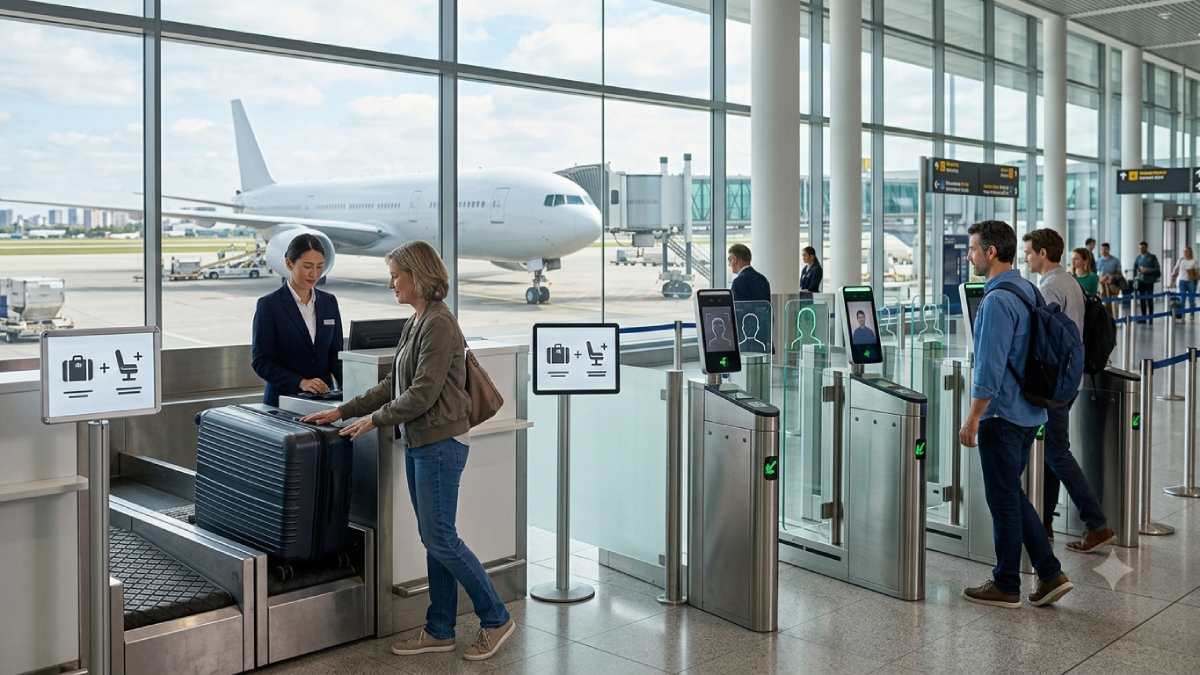
The international aviation business sector is marked by the inherent discrepancy of the regulatory environment and operational processes. The airlines that are operating across North America have chosen a business model based on fare unbundling, friction in distribution, and ancillary fee monetization. On the contrary, the aviation business strategy in Asia focuses on ecosystem integration, government-supported biometric automation, fuel transparency, and distance-based customer loyalty program. With North American airlines being under constant pressure to make mandatory refunding and fee disclosure, the Asian airports keep setting the standards of a smooth travel experience.
Structural Divergence in Global Aviation Strategy
The international commercial airline industry has been bifurcated into two fundamentally distinct regulatory and commercial philosophies. Across North America, legacy carriers and low-cost operators have systematically unbundled the core passenger airfare. Under this unbundled framework, passage for only a physical seat is granted by the base ticket price, while essential travel components—such as checked baggage, advance seat selection, carry-on luggage, and inflight Wi-Fi—are monetized separately as ancillary add-ons. This structural decoupling has been paired with aggressive distribution strategies by which digital friction fees and off-platform surcharges are imposed on third-party channels like Global Distribution Systems (GDS) and Online Travel Agencies (OTAs), driving passengers directly toward carrier-owned digital portals.
In stark contrast, end-to-end operational integration, transparent fee structures, state-led technological automation, and customer ecosystem retention are emphasized by the Asian aviation strategy. Systemic integration designed to streamline passenger throughput at every touchpoint has been pursued by major aviation hubs and flag carriers across the Asia-Pacific region. This includes state-backed implementations of passport-free biometric clearance, strict regulatory indexation of fuel surcharges to protect consumers from arbitrary fare spikes, and the preservation of frequent flyer mile parity based on actual sector miles flown rather than ticket spend.
| Operational Paradigm Dimension | North American Aviation Model | Asian Aviation Strategy |
|---|---|---|
| Primary Revenue Engine | Unbundled base fares plus high-margin airline ancillary fees. | Integrated fare yields, cargo revenue, and long-term customer lifetime value. |
| Distribution Policy | Off-platform penalties, direct booking pushes, and restricted API feeds. | Multichannel accessibility with standardized GDS and IATA NDC integration. |
| Airport Border Clearance | Multi-touchpoint verification, manual passport checks, and carrier kiosks. | State-led passport-free biometric clearance using ICAO DTC standards. |
| Fuel Price Volatility Management | Unregulated carrier-imposed surcharges and capacity reductions. | Regulatory fuel surcharge regulation indexed directly to spot jet fuel benchmarks. |
| Loyalty Program Architecture | Revenue-spent pegging (miles earned per dollar spent). | Distance-based frequent flyer mile parity (earnings on distance flown). |
| Regulatory Focus | Mandated airline ticket transparency, automatic refunds, and unbundling curbs. | Infrastructure expansion, state-supported hub competitiveness, and high-speed rail integration. |
Profound operational implications for cross-border interlining, airline alliance cohesion, and international regulatory enforcement are created by this macro structural divergence. As carriers from both regions navigate post-pandemic passenger growth and decarbonisation goals, the modern international travel landscape is defined by the tension between friction-based monetization and seamless system integration.
Advertisement
Advertisement
The North American Aviation Model: Fare Unbundling and Friction Monetisation
The Financial Architecture of Unbundled Ancillary Fees
The commercial strategy underlying the North American aviation model is engineered around the complete financial unbundling of passenger air transportation. How passenger airlines transitioned from all-inclusive fare structures to decoupled pricing models over the past two decades is illustrated by historical financial statistics maintained by the U.S. Department of Transportation (USDOT) Bureau of Transportation Statistics (BTS). Following major fuel price spikes and economic shocks in the early 2000s, mechanisms to protect profitability were sought by airlines, leading to the widespread introduction of dedicated fees for checked baggage and reservation modifications.
The immense scale of this unbundling is demonstrated by Form 41 financial schedule data published by the BTS. Billions of dollars annually in baggage and reservation change fees alone are collected by passenger airlines. Two key economic objectives for carriers are achieved by decoupling these services:
Advertisement
Advertisement
- Headline Price Suppression: Low base fares on public meta-search engines are maintained by airlines, maximizing search conversion rates while essential charges are shifted to later stages of the booking process.
- Tax Isolation: A significant portion of ancillary fee revenue is isolated from traditional government ad-valorem transportation taxes that apply strictly to base ticket fares.
Seat selection has been transformed into a complex dynamic pricing matrix due to this dependency on ancillary revenue. Cabin positioning, extra-legroom seats, and basic window or aisle preferences are monetized individually using real-time demand algorithms. While average revenue per available seat mile (RASM) is optimized by this strategy, friction is generated for travelers who face hidden costs throughout their journey.
Distribution Surcharges, Off-Platform Penalties, and Digital Friction Fees
Parallel to product unbundling, commercial distribution networks have been aggressively restructured by North American carriers. Historically, inventory was distributed by airlines primarily through global distribution systems like Sabre, Amadeus, and Travelport, through which travel agencies and corporate travel departments were provided with full fare visibility. However, to bypass GDS booking fees and capture proprietary customer data, punitive off-platform distribution strategies have been implemented by major carriers.
Direct channel surcharges are imposed by carriers on tickets booked through legacy GDS connections, full fare inventory is restricted from non-direct channels, and travel agents are required to transition to XML-based New Distribution Capability (NDC) feeds. While rich media and custom ancillary bundles can be presented directly to buyers using NDC technology, technical fragmentation and digital friction fees for third-party aggregators have been introduced by the transition.
Carrier dynamic pricing algorithms are also shielded from external comparison tools by off-platform penalties. By restricting full fee transparency on third-party comparison sites, consumers are encouraged by airlines to book directly on carrier websites and native mobile applications, where high-margin ancillary products—such as co-branded credit card applications, travel insurance, and lounge access—can be marketed without competitive interference.
Regulatory Intervention: USDOT Enforcement and Airline Ticket Transparency
Mandated Cash Refunds Under 14 CFR Part 260
In response to persistent consumer complaints regarding hidden fees, flight disruptions, and delayed reimbursements, comprehensive federal consumer protection regulations were established by the USDOT. The cornerstone of this regulatory framework is codified under Title 14 of the Code of Federal Regulations (14 CFR Part 260), under which mandatory requirements for airline fare and ancillary fee refunds are set.
Under 14 CFR Part 260, prompt, automatic cash refunds to the original form of payment must be issued by U.S. and foreign air carriers operating flights touching the United States when a flight is significantly delayed, cancelled, or when an offered alternative transportation arrangement is rejected by a passenger. Clear quantitative definitions for disruptions that trigger automatic refund entitlements are established by the rule:
Advertisement
Advertisement
- Domestic Flight Disruptions: A scheduled departure or arrival delayed significantly.
- International Flight Disruptions: A scheduled departure or arrival delayed significantly.
- Routing and Quality Changes: Changes to the origination or destination airport, increases in intermediate connections, downgrades to a lower cabin class, or movement to less accessible aircraft for travelers with disabilities.
Crucially, it is mandated by the USDOT that these refunds must be automatic. If an alternative flight assignment or travel credit offer is rejected by a passenger, a full refund must be automatically processed by the airline within specified timeframe guidelines for credit card purchases and other payment methods. Carrier working capital management is fundamentally altered by this requirement by requiring liquidity reserves to be maintained by airlines rather than retaining unearned passenger revenue as non-refundable vouchers.
Airline Ticket Transparency and Ancillary Fee Disclosures
Complementing Part 260, strict rules governing airline ticket transparency and upfront fee disclosures were implemented by the USDOT. Under these consumer protection directives, the obscuring of essential travel costs by airlines and ticket agents is prohibited. Fees for first and second checked bags, carry-on luggage, and advance seat assignments must be explicitly disclosed by carriers at the precise point in the booking flow where an airfare is first displayed.
Furthermore, airlines are required by federal regulations to refund ancillary service fees whenever the paid service is not delivered. If inflight Wi-Fi, advance seat selection, or baggage delivery is paid for by a passenger, but the service is rendered unavailable by operational aircraft swaps or system failures, the fee must be automatically refunded by the airline without forcing manual claims to be submitted by the passenger.
Civil rights enforcement has been simultaneously expanded by the USDOT Office of Aviation Consumer Protection (OACP), targeting mishandled mobility equipment and accessibility barriers. Hands-on training for airline personnel handling wheelchairs is mandated by federal enforcement notices, while accessible lavatories on single-aisle commercial aircraft are required, ensuring that basic accessibility rights guaranteed under federal law are not infringed upon by ancillary revenue strategies.
The Asian Aviation Strategy: Biometric Automation and Integrated Ecosystems
Passport-Free Biometric Clearance at Major Transit Hubs
While heavy focus is placed by North American aviation regulation on controlling fee unbundling, state-led technology infrastructure is leveraged by the Asian aviation strategy to maximize airport throughput and streamline border clearance. Exemplifying this strategy, tokenless, passport-free biometric clearance across all terminals at Singapore Changi Airport has been implemented by Singapore’s Immigration & Checkpoints Authority (ICA) and the Civil Aviation Authority of Singapore (CAAS).
Under this automated border clearance concept, facial and iris biometrics serve as a single verification token across automated immigration gates and aircraft boarding points. Contactless clearance is undergone by arriving Singapore residents and all departing foreign travelers without paper boarding passes or passports being physically presented. The dramatic throughput improvements achieved through tokenless processing are demonstrated by official operational data from the ICA:
Advertisement
Advertisement
- Clearance Speed Reduction: Passenger processing time was significantly decreased per traveler.
- Systemwide Clearance Volume: Close to 245 million travelers across national land, sea, and air checkpoints were cleared annually by the ICA while strict border security protocols were maintained.
- Infrastructure Deployment: More than 130 automated clearance lanes operate at Changi Airport, supported by automated robotic document processing systems at centralized service centers.
International Civil Aviation Organization (ICAO) Technical Advisory Group on Traveller Identification Programme (TAG-TRIP) standards are directly adopted by this seamless border infrastructure. By adhering to ICAO Doc 9303 specifications for the ICAO Digital Travel Credential (DTC), encrypted digital representations of passenger identities are stored securely on mobile devices and central border databases by Asian aviation hubs, enabling rapid verification without physical document friction.
Fuel Surcharge Indexation and Price Protection
Another cornerstone of the Asian aviation strategy is the administrative regulation of airline fuel surcharges. Unlike the North American market, where carrier-imposed fuel surcharges are independently set by airlines without direct government oversight, transparent, index-linked surcharge calculation frameworks are enforced by major Asian civil aviation authorities.
In Japan, under the supervision of the Ministry of Land, Infrastructure, Transport and Tourism (MLIT), and in South Korea via the Ministry of Land, Infrastructure and Transport (MOLIT), fuel surcharges are pegged directly to public jet fuel spot price benchmarks, specifically the Singapore Kerosene (MOPS) spot market index. Under these official regulatory mechanisms:
- Predictable Price Reviews: Surcharge levels are reassessed on a strict schedule based on moving average spot prices.
- Automatic Fare Cuts: When benchmark jet fuel spot prices fall below established regulatory thresholds, the mandated fuel surcharge automatically drops to zero, ensuring immediate price cuts for consumers.
- Margin Inflation Protection: Airlines are legally barred from raising fuel surcharges to pad baseline operating yields when global crude oil prices decline.
Consumer uncertainty regarding arbitrary ticket surcharges is eliminated by this regulatory indexation. By providing public visibility into fuel cost adjustments, baseline travel demand is maintained and public trust in airline pricing mechanics is protected by Asian transport ministries.
Loyalty Program Architectures: Frequent Flyer Mile Parity vs Revenue Spend Models
Distance-Based Equity in Asian Carrier Loyalty Frameworks
A key strategic divide separating North American and Asian commercial aviation involves the design of frequent flyer programs. Historically, rewards were calculated globally by airline loyalty schemes using distance-based formulas, awarding points based on the actual physical sector miles flown by the passenger.
Over the past decade, distance-based earning structures were dismantled by major North American carriers as revenue-spent models were adopted. Under a spend-based loyalty engine, elite status qualification and redeemable miles are calculated as a direct multiplier of ticket price paid, rendering long-haul travel on discounted economy fares virtually non-rewarding for travelers.
Advertisement
Advertisement
Conversely, frequent flyer mile parity is maintained by prominent Asian flag carriers, offering flight mile earnings based on standard sector distances governed by International Air Transport Association (IATA) Resolution 011 mileage frameworks. Geographic sector distances are calculated by these carriers utilizing IATA Maximum Permitted Mileages (MPM) and Ticketed Point Mileages (TPM), rewarding passengers based on the physical distance traveled rather than pure ticket spend.
Customer loyalty across extensive long-haul international networks is reinforced by this commitment to distance-based equity. It is ensured that cost-conscious international business travelers and long-haul leisure passengers remain loyal to Asian carriers operating competitive Eurasian, Transpacific, and Australasian routes.
Accounting Dynamics Under IFRS 15 and Financial Monetisation
The divergence in loyalty architectures is closely tied to financial accounting standards and co-branded credit card monetization models. International Financial Reporting Standards (IFRS 15) regarding revenue recognition from customer contracts must be adhered to by both regional models. Under IFRS 15, when loyalty miles are earned by a passenger, a portion of the transaction price must be deferred by the airline as a contract liability until the performance obligation is fulfilled via award travel redemption.
In North America, loyalty programs have been turned into primary financial profit centers by co-branded credit card agreements. Bulk loyalty miles are sold by airlines to financial partners at fixed rates, generating billions in high-margin cash flows that offset airline operational costs. Consequently, North American loyalty schemes function largely as financial service entities by which consumer credit card spend is monetized rather than physical passenger transportation.
In Asia, while co-branded credit card partnerships continue to be expanded, loyalty programs remain anchored to core flight operations. Loyalty points are designed primarily to maintain seat load factors and retain long-term passenger volume across multi-leg international flight networks.
Economic, Macroeconomic, and Tourism Policy Implications
Significantly different economic outcomes for national tourism boards, airport infrastructure operators, and macro consumer welfare are yielded by the divergent operational philosophies of North America and Asia.
Advertisement
Advertisement
In North America, high quarterly operating profits have been generated for carriers during peak travel cycles by extensive product unbundling, but systemic friction across the broader travel ecosystem has been introduced. Terminal baggage drop operations and security check lines are slowed down at airport check-in desks by digital friction and unexpected ancillary fees as carry-on limits and seat assignments are negotiated by passengers. Furthermore, corporate travel management is complicated by aggressive distribution restrictions, raising administrative overhead for enterprise businesses managing travel budgets.
In Asia, air transportation is viewed by state-guided aviation policy as an essential engine for national economic growth, trade expansion, and international tourism development. Terminal bottlenecks are reduced by the deployment of passport-free biometric clearance and automated border clearance, expanding effective airport capacity without immediate physical terminal expansions being required.
Consumer purchasing power is preserved by Asian regulators ensuring that fuel surcharges drop automatically when energy markets soften, directly benefiting regional hospitality, retail, and tourism sectors. Mega-hubs like Singapore Changi, Tokyo Haneda, and Seoul Incheon are cemented as efficient international transit gateways through seamless integration between national high-speed rail networks, regional transit systems, and digital border clearance.
Official Statements and Future Outlook Through 2030
The evolving policy expectations governing commercial air travel are highlighted by official documentation released by civil aviation regulators. Commitment to enforcing complete fee transparency and protecting passenger civil rights was reaffirmed by regulators in official notices published by the USDOT Office of Aviation Consumer Protection. It was emphasized in USDOT statements that passenger data privacy must be safeguarded by airlines, published refund policies must be adhered to, and unlawful discrimination in dynamic pricing algorithms must be avoided.
Simultaneously, a clear commitment to expanding global digital identity standards is demonstrated by official announcements from Singapore’s ICA and working papers submitted to the ICAO Facilitation Panel. Automated border clearance adoption across Europe, the Middle East, and Latin America is expected to be accelerated by the global expansion of the ICAO Digital Travel Credential framework, establishing contactless biometric processing as the universal standard for international flight operations.
As commercial aviation approaches 2030, a selective convergence between these regional strategies is anticipated by analysts. While mounting regulatory pressure to eliminate hidden fees and automate cash refunds is faced by North American operators, unbundled basic economy fares are being selectively introduced by Asian flag carriers on short-haul regional routes to compete with low-cost carriers. However, on long-haul international corridors, the global benchmark for passenger experience and operational efficiency continues to be set by the fundamental principles of the Asian aviation strategy—contactless biometric transit, transparent fuel-indexed pricing, and mile parity.
Advertisement
Advertisement
Sharply differing priorities between North American monetization strategies and Asian integrated ecosystems are reflected by the fundamental divide separating commercial aviation markets. While reliance is placed on unbundled ancillary fees and distribution surcharges by North American carriers to drive operating profitability, seamless biometric airport processing, transparent fuel-indexed fare protections, and distance-based loyalty equity are prioritized by Asian civil aviation authorities. However, hidden fee practices are gradually being constrained through mandatory cash refunds and upfront price disclosures enforced by authorities like the USDOT. Ultimately, the future of global aviation strategy will depend on balancing carrier profitability with frictionless passenger clearance across an increasingly interconnected international travel marketplace.
Conclusion
The divergence in North American thrust toward friction-based monetization versus Asian ecosystem engagement reflects differences in priorities for their regional aviation ecosystems. Unbundling and distribution penalties appear to be a bigger concern for the former, while the latter focuses on biometric clearance and protections against price undercutting. The evolution of the industry is expected to involve balancing sustainable profitability and convenient passenger experiences based on the regulatory and market forces in their home regions.
Advertisement
