

Acapulco Leads Morelia, Mérida and Other Mexican Cities in Driving Mexico Tourism Growth in 2026 as Tulum Hotel Occupancy Falls Nearly Nine Points

Published
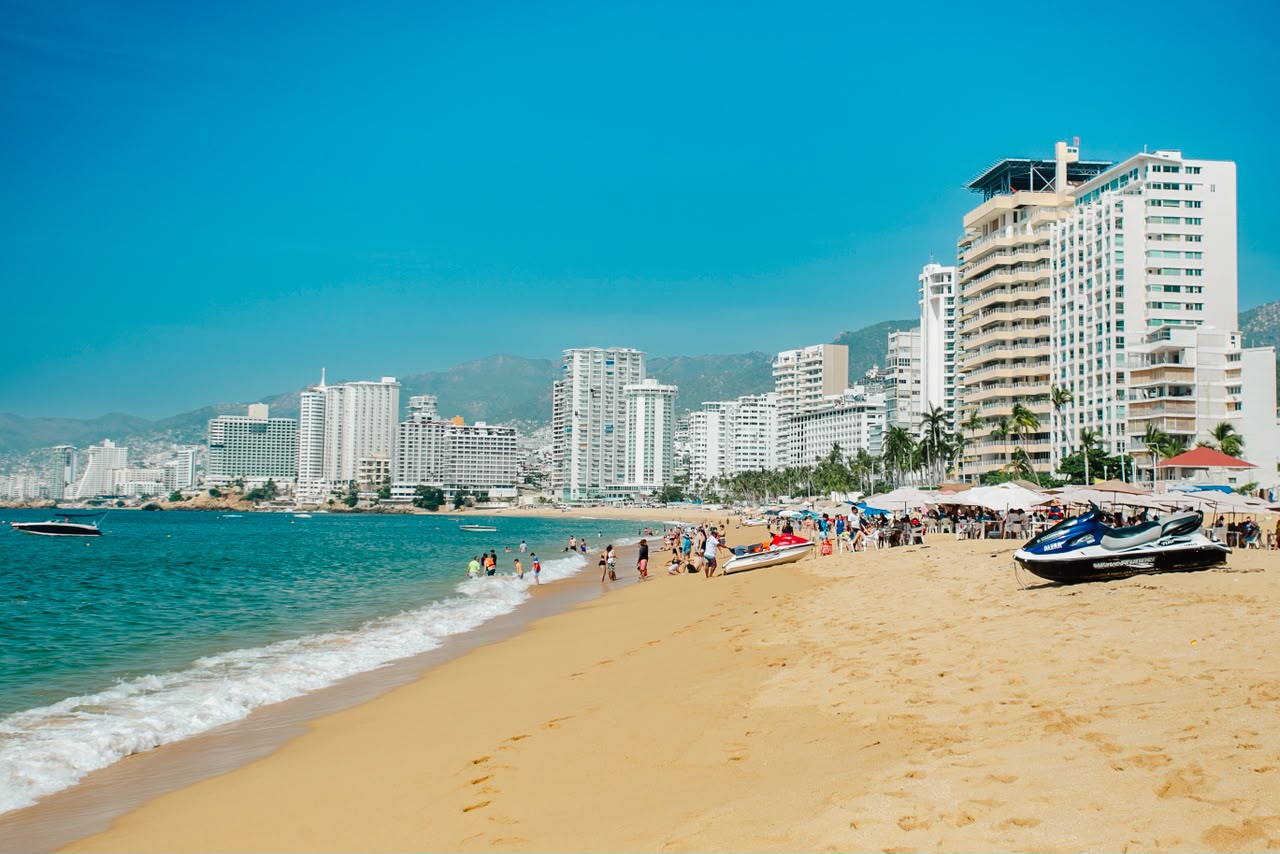
Mexico’s tourism performance in 2026 is revealing a sharp contrast between fast-growing cities and softer resort demand. Acapulco welcomed 991,421 summer visitors, Morelia and Mérida posted some of the strongest projected tourism growth, and Monterrey recorded a major rise in foreign air arrivals. Mazatlán also surpassed 2.6 million tourists between January and July, strengthening the country’s broader travel economy. Yet the picture is not uniformly positive. Tulum’s hotel occupancy fell by nearly nine percentage points compared with 2025, while Cancún also recorded a smaller decline. Official data therefore show a tourism market expanding strongly in some destinations while facing visible pressure in others.
The latest official figures demonstrate that Mexico cannot be described as having a single tourism trend in 2026. Some destinations are registering strong visitor volumes, while others are benefiting from major events or improved aviation demand. At the same time, resort destinations in Quintana Roo are showing weaker hotel performance compared with the previous year.
| Destination | Period | Official tourism indicator | Hotel occupancy | Economic impact | Change |
|---|---|---|---|---|---|
| Mazatlán | Jan–Jul 2026 | More than 2.6 million tourists | 75% | More than MXN18.554 billion | Actual |
| Acapulco | Summer 2026 | 991,421 tourists | 66% | Nearly MXN8 billion | Occupancy +11.7% |
| Morelia | Jul–Aug 2026 | Tourist arrival projection | 63.1% projected | — | +26.8% projected |
| Mérida | Jul–Aug 2026 | Tourist arrival projection | 58.7% projected | — | +23.4% projected |
| Monterrey | June 2026 | Foreign air tourists | — | — | +42.2% year-on-year |
| Mexico City | June 2026 | Foreign air tourists | — | — | +10.6% year-on-year |
| Oaxaca | Guelaguetza 2026 | 149,000 tourists expected | 83% projected | More than MXN668 million | Event forecast |
| Cancún | Jan–Jul 2026 | Hotel performance | 74.44% | — | -2.33 percentage points |
| Tulum | Jan–Jul 2026 | Hotel performance | 63.69% | — | -8.99 percentage points |
The figures combine actual results, summer projections and event-specific forecasts, so they should not be treated as identical indicators.
Mazatlán Surpasses 2.6 Million Tourists in Seven Months
Mazatlán recorded one of the strongest confirmed tourism performances in the group. According to the Government of Sinaloa, more than 2.6 million tourists visited the destination between January and July 2026.
Advertisement
Advertisement
Average hotel occupancy reached 75%, while tourism generated more than MXN18.554 billion for the local economy during the period. The wider state of Sinaloa welcomed approximately 3.15 million visitors and generated more than MXN20.258 billion in tourism activity.
These numbers demonstrate Mazatlán’s importance within Sinaloa’s tourism economy and represent actual recorded results rather than projections.
Advertisement
Advertisement
Acapulco Approaches One Million Summer Visitors
Acapulco also reported strong summer tourism activity.
The municipal government recorded 991,421 tourists during the 2026 summer season. Average hotel occupancy reached 66%, while tourism generated close to MXN8 billion in economic activity.
Hotel occupancy improved by 11.7% during the summer period. This followed an earlier federal tourism projection that suggested Acapulco could record a 20% rise in tourist arrivals during the summer compared with 2025.
The final municipal data therefore provide a confirmed picture of almost one million travellers visiting Acapulco during the season.
Morelia Leads Mexico’s Projected Summer Growth
Morelia stood out in official federal projections because of the expected pace of growth rather than its total visitor volume.
Mexico’s Secretariat of Tourism projected that tourist arrivals in Morelia would increase 26.8% during the summer period from 20 July to 30 August 2026 compared with the same period in 2025.
Advertisement
Advertisement
Hotel occupancy was projected to reach 63.1%.
Morelia’s municipal government also highlighted expanding aviation connectivity, reporting 10 international and six domestic connections or frequencies through Morelia International Airport.
The 26.8% figure remains a projection and should not be described as final full-year tourism growth.
Mérida Follows With 23.4% Projected Arrival Growth
Mérida also appeared prominently in the federal summer tourism forecast.
Sectur projected tourist arrivals to increase 23.4% during the 20 July to 30 August period compared with the corresponding 2025 season.
Hotel occupancy was expected to average 58.7%.
Advertisement
Advertisement
Among the destinations included in the federal comparison, Mérida followed Morelia in projected summer visitor growth. The figures highlight the growing importance of cultural, heritage and urban tourism alongside Mexico’s established coastal destinations.
However, as with Morelia, the 23.4% figure is an official projection rather than a confirmed full-year result.
Monterrey Records 42.2% Rise in Foreign Air Arrivals
Monterrey produced one of the strongest confirmed international aviation indicators in June 2026.
Mexico’s Secretariat of Tourism reported that foreign tourist arrivals by air increased 42.2% compared with June 2025.
The growth coincided with the 2026 FIFA World Cup period.
Other host-airport markets also recorded increases, including AIFA at 53%, Mexico City International Airport at 10.6% and Guadalajara at 6.2%.
Advertisement
Advertisement
Monterrey’s figure should specifically be understood as growth in foreign tourists arriving by air during June, rather than a 42.2% increase in overall tourism.
Mexico City Gains From Stronger International Aviation Demand
Mexico City also experienced stronger foreign air arrivals.
The capital’s principal airport, AICM, recorded a 10.6% year-on-year increase in foreign tourist arrivals by air during June 2026.
Separately, Sectur projected overall summer tourist arrivals in Mexico City to increase 3%, while average hotel occupancy was expected to reach approximately 58.2%.
These figures measure different aspects of tourism performance. The 10.6% figure represents an actual June aviation result, while the 3% number was a broader summer projection.
Oaxaca Uses Guelaguetza to Drive Cultural Tourism
Oaxaca’s major tourism indicator centred on Guelaguetza 2026.
Advertisement
Advertisement
The federal Tourism Secretariat expected the festival to attract approximately 149,000 tourists, create more than MXN668 million in economic activity and produce hotel occupancy of around 83%.
The 94th edition included more than 140 cultural, gastronomic, artisan and sporting activities during July.
These figures relate specifically to the Guelaguetza tourism period and should not be presented as Oaxaca’s total annual visitor count.
Cancún Maintains High Occupancy Despite Softer Performance
Cancún continued to record strong hotel utilisation, although official state data show a moderate slowdown.
Average hotel occupancy reached 74.44% between January and July 2026, compared with 76.77% during the corresponding period in 2025.
That represents a decline of 2.33 percentage points.
Advertisement
Advertisement
Despite the reduction, Cancún remained one of the stronger hotel markets within Quintana Roo, with occupancy staying above 74% during the first seven months of the year.
Tulum Faces a Much Sharper Hotel Occupancy Decline
Tulum recorded a more significant reduction.
Official Quintana Roo tourism statistics show average occupancy falling to 63.69% between January and July 2026, compared with 72.67% during the same period in 2025.
That equals a decline of 8.99 percentage points.
The drop was sharper than Cancún’s 2.33-point decline, Playa del Carmen’s 4.49-point reduction, Riviera Maya’s 4.63-point decline and Costa Mujeres’ 6.11-point fall.
Across Quintana Roo overall, occupancy declined from 75.10% to 71.54%, while Isla Mujeres moved in the opposite direction, rising from 68.57% to 72.57%.
Advertisement
Advertisement
Mexico’s 2026 Tourism Story Is Growth, Events and Uneven Resort Demand
The official data reveal a tourism market developing at different speeds.
Mazatlán and Acapulco recorded substantial visitor numbers and economic activity. Morelia and Mérida emerged prominently in federal summer growth projections. Monterrey and Mexico City benefited from stronger international air arrivals, while Oaxaca demonstrated the power of major cultural events to generate concentrated tourism demand.
Cancún remained highly occupied despite a modest decline. Tulum, however, experienced a considerably steeper reduction in hotel occupancy.
Mexico’s 2026 tourism performance therefore reflects strong visitor flows alongside significant regional differences, making destination-level data increasingly important when evaluating the country’s travel economy.
Image: Mexico federal Secretariat of Tourism
Advertisement
