
Birmingham Alongside Coventry and More as UK Councils Reinforce Parks with Earth Bunds and Barriers, Backed by £250,000 in Milton Keynes

Published
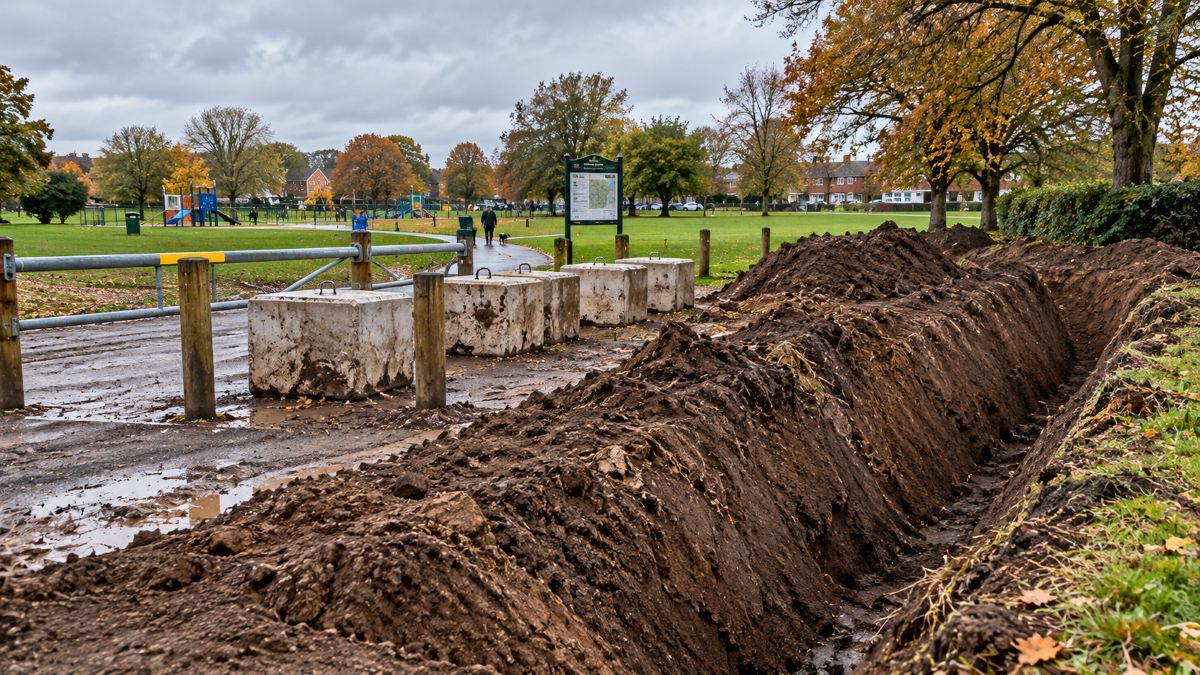
Birmingham, alongside Coventry and more UK locations, is reinforcing parks with earth bunds and barriers to prevent unauthorised vehicle encampments and protect public green spaces. The measures reflect growing efforts by councils to safeguard recreational facilities, manage vehicle access and reduce repeated maintenance costs. Meanwhile, Milton Keynes has allocated £250,000 over five years for protective infrastructure, including concrete blocks and earth bunds. Reading and Coventry have also documented spending on similar preventative measures. However, their effectiveness varies, raising questions about long-term maintenance, accessibility and public expenditure. These developments highlight the importance of balancing park protection with inclusive recreational access for residents and visitors.
Why Are Birmingham and Other UK Councils Reinforcing Public Parks?
Birmingham has reportedly introduced defensive trenches around Daisy Farm Park, Manningford Park and Chinn Brook Recreation Ground to restrict unauthorised vehicle access.
Advertisement
Advertisement
The measures reflect concerns about repeated encampments and potential damage to recreational land.
However, the specific October 2026 trench installations have not been independently confirmed through a published council project notice.
Advertisement
Advertisement
Birmingham City Council has previously obtained court injunctions concerning unauthorised encampments, including orders covering designated parks.
Other authorities have adopted similar approaches, although their physical protection measures differ.
Advertisement
Advertisement
Coventry has installed earth bunds and bollards, while Reading has used embankments, planters and reinforced access points.
The primary objective is to protect public spaces while preserving legitimate pedestrian access.
Advertisement
Advertisement
Importantly, these measures concern unauthorised vehicle entry rather than restrictions on ordinary tourists or lawful park visitors.
Which UK Cities Have Introduced Similar Park Protection Measures?
Official local authority records identify several councils that have introduced physical barriers or legal protections around vulnerable green spaces.
| City or town | Council | Documented measures |
|---|---|---|
| Birmingham | Birmingham City Council | Reported trenches and existing legal restrictions |
| Coventry | Coventry City Council | Earth bunds, bollards and reinforced gates |
| Reading | Reading Borough Council | Embankments, planters and bollards |
| Milton Keynes | Milton Keynes City Council | Concrete blocks and earth bunds |
| Plymouth | Plymouth City Council | Earth bund proposals and community-funded works |
| Sutton | London Borough of Sutton | Grass bunds, gates and height barriers |
| Ringwood | Ringwood Town Council | Earth bunds and drop-down bollards |
| Newark and Sherwood | District Council | Wildflower and grass bunds |
| Brighton and Hove | City Council | Bollards and consideration of earth bunds |
These examples cover different years and should not be presented as simultaneous construction projects in October 2026.
Nevertheless, they demonstrate how councils across England have adopted comparable approaches to protecting recreational land.
Advertisement
Advertisement
How Much Have Councils Allocated to Defensive Park Infrastructure?
Milton Keynes provides one of the strongest examples of investment in preventative measures.
The council documented an additional £250,000 allocation over five years to strengthen vulnerable sites using concrete blocks and earth bunds.
Reading separately reported £104,000 in protective works across 13 locations during 2017–18, followed by another £29,000 programme.
Coventry recorded approximately £13,153 in site protection works.
| Council | Published amount | Purpose |
|---|---|---|
| Milton Keynes | £250,000 | Five-year physical protection programme |
| Reading | £104,000 | Protection works across 13 sites |
| Reading | £29,000 | Additional preventative measures |
| West Berkshire | £35,000 | Security improvements at three locations |
| Coventry | £13,153 | Bunds, bollards and reinforced gates |
| Brighton and Hove | £20,000 | Historical estimate for a proposed bund |
| Plymouth | £750 | Community grant contribution |
These figures represent different types of expenditure, allocations and estimates.
They cannot be combined into a single confirmed national spending total.
Advertisement
Advertisement
What Do Official Government Statistics Reveal About Unauthorised Encampments?
The Ministry of Housing, Communities and Local Government published its January 2026 Traveller Caravan Count in July.
The figures recorded 29,402 Traveller caravans across England, compared with 27,293 in January 2025.
Of the 2026 total, 24,452 caravans were located on authorised sites.
Another 4,950 were recorded on unauthorised sites, including 4,335 on land owned by Travellers and 615 on land not owned by Travellers.
| England indicator | January 2026 |
|---|---|
| Total Traveller caravans | 29,402 |
| Authorised sites | 24,452 |
| Unauthorised sites | 4,950 |
| Unauthorised developments on Traveller-owned land | 4,335 |
| Unauthorised encampments on land not owned by Travellers | 615 |
| Share on authorised sites | 83.2% |
| Share on unauthorised sites | 16.8% |
The statistics distinguish different land-use circumstances and should not be interpreted as evidence that all unauthorised caravans occupy public parks.
Have Earth Bunds and Physical Barriers Successfully Protected Green Spaces?
Council records provide mixed evidence about the effectiveness of protective landscaping.
Advertisement
Advertisement
Reading Borough Council reported that grass-covered earth bunds and related measures helped prevent further vehicle incursions at protected locations.
Newark and Sherwood District Council similarly reported positive outcomes from wildflower and grass bunds in its December 2023 assessment.
However, Brighton and Hove previously questioned whether additional earth barriers would provide lasting protection.
The authority warned that physical restrictions could be breached or simply shift unauthorised encampments elsewhere.
These findings suggest that effectiveness depends on site layout, access points, maintenance and enforcement arrangements.
No independently verified national success rate exists for earth bunds or defensive trenches.
Advertisement
Advertisement
Consequently, councils must evaluate whether preventative landscaping offers sustainable protection without unnecessarily restricting public access.
How Could Defensive Barriers Affect Parks, Tourism and Public Recreation?
Public parks support local recreation, community activities and visitor experiences.
Physical barriers can help prevent unauthorised vehicle access to playing fields, landscaped areas and other recreational facilities.
However, poorly designed trenches or bunds may also complicate maintenance operations, emergency vehicle access and movement for visitors with disabilities.
| Potential impact | Possible benefit | Main consideration |
|---|---|---|
| Vehicle restrictions | Reduced unauthorised entry | Emergency access |
| Landscape protection | Less vehicle-related damage | Maintenance requirements |
| Recreational facilities | Protection of playing fields | Continued public access |
| Council expenditure | Potential reduction in repeated costs | Construction and upkeep |
| Accessibility | Separation of vehicles and pedestrian areas | Inclusive access |
| Tourism | Preservation of recreational spaces | No verified visitor impact |
Conclusion: What Does the Wider UK Park Protection Debate Reveal?
Birmingham, alongside Coventry, Reading and other English locations, demonstrates how councils are using earth bunds, barriers and legal measures to protect public green spaces from unauthorised vehicle encampments. Milton Keynes has documented a £250,000 protection programme, while Reading and Coventry have reported additional expenditure on preventative infrastructure. However, council experiences suggest that physical barriers do not always provide permanent solutions. Official statistics also show that most Traveller caravans in England occupy authorised sites. Ultimately, effective park management requires proportionate enforcement, accessible public spaces, responsible expenditure and careful consideration of the needs of local communities.
Comment by Anup Keshan, Founder and Editor-in-Chief of Travel And Tour World
“Public parks and green spaces are important assets for local communities and domestic tourism across the United Kingdom. Protecting these recreational areas while maintaining accessibility is essential for creating welcoming destinations. The measures introduced by councils in Birmingham, Coventry, Reading and other locations highlight the importance of thoughtful public-space management. However, long-term solutions should balance infrastructure protection, community engagement and fair enforcement. Well-maintained parks support outdoor recreation, family activities and visitor experiences. By investing responsibly in green spaces and ensuring inclusive access, local authorities can strengthen community wellbeing while preserving valuable recreational environments for residents and tourists alike.”
Advertisement
