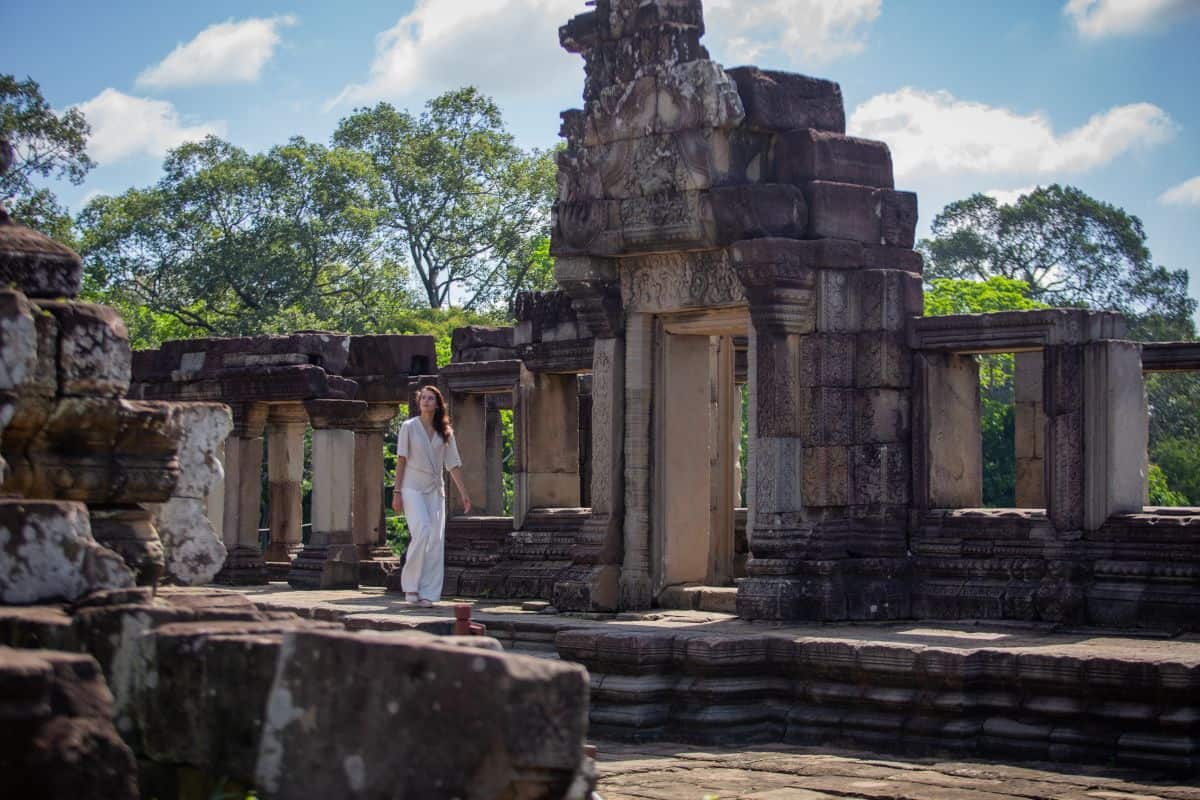
Anantara Angkor Resort located in Siem Reap, Cambodia, is capitalizing on the 25th anniversary of the parent company by launching a cultural experience through a luxurious stay experience which combines a morning experience at Angkor Wat and an evening celebrating the significance of lotus spiritually, culturally, and in cooking and artistry. The Angkor & The Lotus – 25th Anniversary Offer starts at US$415 per suite per night and includes a minimum stay of three nights as well as two destination experiences and daily breakfast.
Timing makes this package offer have a tourism dimension as well. Cambodia’s green season spans between June and October, and it has been associated with the wetness of the landscape as well as lower demand compared to the peak season of the dry season. This is backed by official figures. Angkor Enterprise, which is government-controlled, recorded 40,451 foreign tourists purchasing Angkor tickets in July 2026, earning a total of about US$1.85 million from ticket sales. About 450,000 foreign tourists have purchased Angkor tickets since the beginning of 2026 until 13 August 2026.
Advertisement
Rather than positioning its anniversary offer around conventional room discounts alone, Anantara has built the package around two experiences that connect directly with Cambodian history and culture. The official offer combines a dawn journey to Angkor Wat with a dusk visit to a lotus eco-farm. Accommodation is provided at Anantara Angkor Resort, a boutique all-suite property with only 39 suites arranged around a courtyard pool. The structure reflects a broader trend in luxury hospitality in which hotels increasingly compete through access, interpretation and destination-specific experiences rather than accommodation alone.
In Siem Reap, that approach carries particular weight. Angkor Wat and the wider Angkor Archaeological Park remain Cambodia’s most internationally recognised heritage attractions, while the surrounding province offers crafts, cuisine, rural landscapes and spiritual traditions capable of extending visitor stays beyond temple sightseeing. For Anantara, placing the lotus at the centre of the programme creates a visual and cultural thread connecting the resort stay with both Angkor’s architecture and contemporary Khmer life.
Advertisement
Advertisement
The first major component of the package begins before sunrise. Guests travel to Angkor Wat with transport, an English-speaking guide, temple passes and a picnic breakfast included in the offer. The journey then extends beyond Cambodia’s best-known monument to other significant sites within the archaeological landscape. The route incorporates Srah Srang, traditionally associated with the royal bathing landscape, followed by exploration that can connect travellers with the wider Angkor complex.
Official Angkor Enterprise guidance lists Angkor Wat, Bayon, Ta Prohm and Srah Srang among destinations included within the commonly travelled Small Circuit. The government’s official ticketing authority also confirms that the Angkor temple park opens early enough for sunrise visitation. This makes the pre-dawn experience particularly valuable for travellers seeking cooler temperatures and a different visual perspective on the temples. The key attraction is not simply reaching Angkor Wat early. A guided itinerary can add historical interpretation, explain architectural details and help travellers understand how individual temples relate to the development of the wider Khmer civilisation.
Anantara describes the current period as offering visitors greater space around the temples. While claims such as the quietest season in years should be treated as the resort’s promotional characterisation rather than an official statistical classification, government data confirm relatively modest July visitor volumes compared with the intense crowds Angkor can accommodate during major events. Angkor Enterprise, the Cambodian public institution responsible for managing ticket revenue and monitoring tourist numbers at the archaeological park, recorded 40,451 foreign Angkor pass purchases in July 2026. Ticket sales produced approximately US$1.85 million during the month.
The contrast between normal green-season traffic and special events can be dramatic. During the Angkor Equinox on 22 March 2026, the APSARA National Authority reported that more than 30,000 visitors gathered to witness sunrise aligned with Angkor Wat’s central tower in a single event. That illustrates why timing can dramatically alter a visitor’s experience of the same monument. For travellers prioritising photography, slower exploration and atmospheric landscapes, seasonal timing may therefore matter almost as much as the itinerary itself.
The June-to-October green season brings an entirely different character to Siem Reap and Angkor compared with the dry months. Anantara’s official destination guidance describes the period as cooler, wetter, greener and generally less crowded, while the resort identifies November to March as the more popular dry season. For temple tourism, rainfall has obvious disadvantages. Travellers need to prepare for showers, wet pathways and changing weather. Yet the same conditions can intensify the landscape. Vegetation becomes lush, temple surroundings turn greener and waterways regain greater visual presence.
That setting aligns closely with the resort’s lotus theme. Instead of treating seasonal rain simply as an obstacle, the package uses the period to promote a softer, more immersive style of travel. The itinerary is less about moving rapidly through a checklist of temples and more about connecting architecture, water, vegetation, food and traditional craft. Such positioning can also help Siem Reap tourism distribute demand across more months of the year instead of depending excessively on the traditional winter peak.
After the morning temple programme, the second signature experience shifts attention from ancient monuments to a living element of Khmer culture. At dusk, guests travel to a lotus eco-farm, where the programme incorporates a boat journey among the plants and hands-on activities exploring their practical and cultural uses. The resort says guests learn about harvesting the lotus and producing fibres from its stems, connecting the plant with craft traditions, food, wellness and spiritual symbolism. The experience concludes with an eight-course tasting menu drawing inspiration from refined Cambodian culinary traditions.
The combination is strategically important for tourism. Visitors often associate Siem Reap overwhelmingly with Angkor Wat. By connecting an internationally famous archaeological attraction with agriculture, artisans and cuisine, experiences of this kind broaden the economic and cultural footprint of tourism. They also allow travellers to understand Cambodian heritage as something still practised rather than something existing exclusively within archaeological remains.
The use of the lotus gives the package more cultural coherence than a conventional temple-and-dinner itinerary. Anantara describes the flower as representing purity, rebirth and enlightenment within Cambodia. Lotus imagery is also visible across Angkor’s architectural and decorative traditions, allowing the resort to create a conceptual connection between the morning temple experience and the evening farm visit. This matters because high-end cultural tourism increasingly depends on storytelling.
A traveller can visit Angkor Wat independently, purchase an official pass and photograph the temples. A curated luxury product must therefore offer something additional. In this case, Anantara is attempting to create continuity between heritage, landscape, craftsmanship and food. The lotus provides that continuity. It transforms two separate tourism activities into one narrative journey, starting with carved stone and sacred symbolism at dawn and finishing with living plants, local techniques and cuisine at dusk.
Between the two destination experiences, guests stay at Anantara Angkor Resort, which operates just 39 suites around an internal courtyard and swimming pool. The property is approximately 10 minutes from central Siem Reap and around 15 minutes from Angkor Wat, giving guests access to both the temples and the city’s restaurants, markets and nightlife.
Its accommodation spans suites measuring roughly 46 to 59 square metres, while larger luxury categories extend from 78 to 235 square metres. Selected rooms include private terraces, plunge pools or specialised configurations aimed at families and higher-spending guests. The resort also operates Chi, which focuses on Khmer-influenced dining, alongside an Anantara Spa offering wellness facilities and treatments influenced by traditional Cambodian practices. This relatively small inventory supports the package’s emphasis on personalised travel rather than high-volume resort tourism.
The Angkor & The Lotus offer requires at least three nights, a condition that has wider implications for destination tourism. A longer stay gives travellers time to move beyond a rushed one-day temple circuit. It creates opportunities for additional expenditure on restaurants, guides, transport, markets, cultural attractions, wellness services and excursions. The package includes daily breakfast, the sunrise Angkor programme and the evening lotus experience. The published starting rate is US$415 per suite per night, with taxes and service charges added separately. Prices remain subject to availability, seasonal changes and blackout dates.
From a tourism perspective, longer stays can be particularly valuable for heritage destinations because they reduce pressure to concentrate every activity into a few heavily visited locations. Siem Reap has long worked to broaden its proposition beyond Angkor alone, and experiential hotel packages can support that objective by linking temple visitation with rural, culinary and cultural experiences.
This particular anniversary programme by Angkor & The Lotus highlights how the country’s luxury hospitality industry is incorporating heritage in an increasingly complex destination offering. Angkor is the foundation. But the offering expands on the journey to include lotus farming, traditional crafts, Cambodian food, wellness and boutique hospitality. The timing is crucial as well. According to official figures, there were just above 40,000 foreign passes purchased at Angkor in July. Meanwhile, Anantara sees June to October as the greener and quieter time to visit the temples.
Thus, this is a different offer compared to peak season Cambodia. Visitors still get the opportunity to visit one of the most famous archaeological sites in Asia, but with possibly more space to explore, greener environment and more time for other activities. In terms of Siem Reap, such product helps to develop higher-end and longer stay tourism. For Anantara, the 25th anniversary becomes a destination-focused campaign instead of a typical hotel promotion. But most importantly, the experience makes Angkor Wat not the end of the journey, but only the start of the experience of Cambodia’s living culture.
Image Source: Minor Hotels
Advertisement
Tags: Anantara Angkor Resort, Angkor Wat sunrise tour, Cambodia cultural tourism, Khmer heritage experience, luxury Cambodia travel
Advertisement
Advertisement













Saturday, September 5, 2026

Friday, September 4, 2026

Saturday, September 5, 2026

Friday, September 4, 2026

Thursday, September 3, 2026

Wednesday, September 2, 2026

Saturday, September 5, 2026