
Tikal and Petén Lead Guatemala Tourism Transformation as Fifty-Seven Thousand Six Hundred Hectare UNESCO Heritage Site Joins Sustainable Vision Through 2036

Published
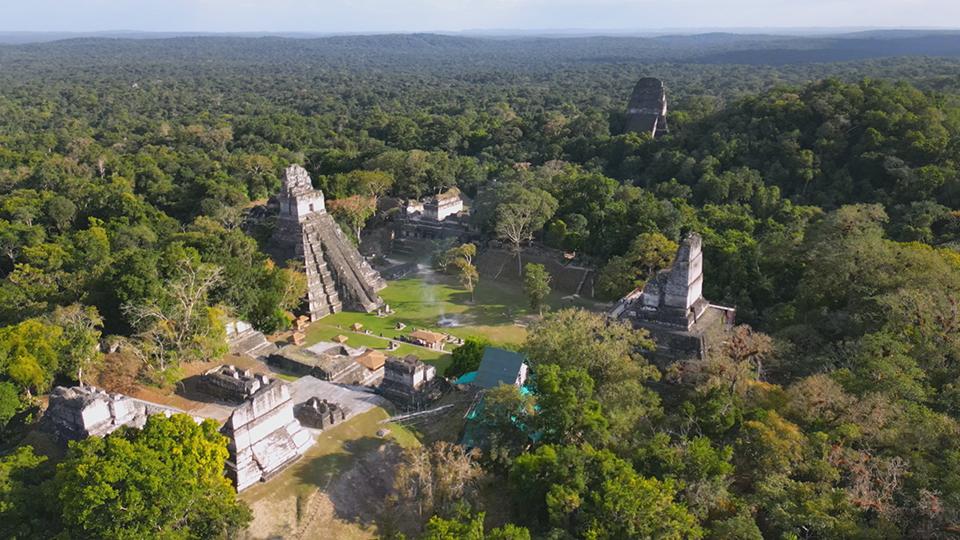
Guatemala is placing Tikal National Park and its wider Maya heritage tourism offering within a long-term strategy designed to strengthen sustainable destinations, connectivity, infrastructure and international tourism positioning. The country’s Sustainable Tourism Master Plan 2026–2036 establishes a decade-long framework supported by a shorter 2026–2028 implementation programme. Meanwhile, Tikal’s 57,600-hectare UNESCO World Heritage landscape and aviation access through Mundo Maya International Airport underline Petén’s importance within Guatemala’s cultural and nature-based tourism portfolio. Pasted markdown
Guatemala Tourism and Tikal: Key Official Data
| Indicator | Official figure/details |
|---|---|
| Tikal National Park location | Petén, Guatemala |
| Tikal UNESCO inscription | 1979 |
| UNESCO classification | Mixed cultural and natural World Heritage property |
| Tikal National Park area | 57,600 hectares |
| Regional aviation gateway | Mundo Maya International Airport |
| Airport code | FRS |
| Aircraft movements, January 2026 | 732 |
| Sustainable Tourism Master Plan | 2026–2036 |
| Near-term implementation programme | 2026–2028 |
| Main strategic areas | 4 |
| Consultation participation | More than 2,000 people |
| Departments represented | All 22 departments of Guatemala |
The figures combine official information from Guatemala’s tourism and civil aviation authorities with UNESCO data. Importantly, the 732 airport movements are an aviation statistic and should not be interpreted as the number of tourists visiting Tikal. Pasted markdown
Tikal Anchors Guatemala’s Maya Heritage Tourism
Located in the northern department of Petén, Tikal National Park represents one of Guatemala’s most important combinations of cultural heritage and nature-based tourism.
UNESCO inscribed Tikal on the World Heritage List in 1979 and classifies the 57,600-hectare national park as a mixed cultural and natural property. This distinction is particularly relevant to Guatemala’s tourism proposition because travellers encounter an important ancient Maya urban and ceremonial centre within the forests of Petén. Pasted markdown
Advertisement
Advertisement
Tikal therefore supports multiple tourism segments rather than archaeology alone. Its setting allows Guatemala to combine Maya history, cultural heritage, forests and biodiversity within the same destination experience.
UNESCO Tikal National Park information
Advertisement
Advertisement
Mundo Maya International Airport Strengthens Access to Petén
Aviation connectivity is an important component of Petén’s accessibility.
Mundo Maya International Airport (FRS) serves Flores and the wider Petén region, providing an aviation gateway for travellers heading towards Tikal and other destinations in northern Guatemala.
Official statistics from Guatemala’s Dirección General de Aeronáutica Civil (DGAC) recorded 732 aircraft movements at Mundo Maya International Airport during January 2026. Pasted markdown
The figure covers different categories of aviation activity. It should therefore be described as total aircraft movements rather than commercial tourist flights or Tikal visitor arrivals.
That distinction is important when assessing tourism performance. Airport activity demonstrates aviation operations at the Petén gateway, but the DGAC figure does not establish how many passengers subsequently travelled to Tikal.
Guatemala DGAC official aviation statistics
Advertisement
Advertisement
Guatemala Introduces Sustainable Tourism Master Plan 2026–2036
Guatemala’s tourism development is now being guided by its Plan Maestro de Turismo Sostenible 2026–2036.
The ten-year framework addresses far more than increasing visitor numbers. Its scope encompasses tourism governance, destination and product development, sustainability, competitiveness, connectivity, infrastructure and Guatemala’s international tourism positioning. Pasted markdown
This gives Guatemala a national framework through which established attractions such as Tikal can form part of a broader tourism system involving destinations, communities, infrastructure and environmental and cultural resources.
INGUAT tourism plans and policies
Four Strategic Areas Guide Guatemala’s Tourism Development
The official tourism framework is organised around four principal strategic areas.
The first focuses on strengthening tourism governance, including institutional coordination, participation and improved management.
Advertisement
Advertisement
The second centres on developing sustainable and diversified tourism products and destinations, broadening Guatemala’s visitor offering while strengthening destination competitiveness.
A third strategic area embeds sustainability throughout tourism development, incorporating environmental, social and cultural considerations.
The fourth aims to strengthen Guatemala’s positioning in priority tourism markets and improve the country’s overall competitiveness. Pasted markdown
Together, these priorities establish a framework in which tourism growth is connected with destination management and sustainability.
More Than Two Thousand People Participate in Tourism Planning
The development process also incorporated participation from across Guatemala.
According to the official information, more than 2,000 people participated in consultations, representing all 22 departments of the country. Pasted markdown
Advertisement
Advertisement
The nationwide scope is significant because Guatemala’s tourism assets extend far beyond its best-known international destinations.
Petén contains Tikal and other Maya and natural attractions. Sacatepéquez includes Antigua Guatemala, while Sololá contains Lake Atitlán. Other departments contribute different cultural, ecological and tourism products.
The master plan consequently provides a national framework rather than concentrating tourism development exclusively in established visitor centres.
2026–2028 Programme Brings Near-Term Focus
The 2026–2036 master plan establishes Guatemala’s longer-term tourism direction, but it is complemented by a 2026–2028 implementation programme.
That creates two important planning horizons: a decade-long strategic vision and a shorter period for near-term implementation. Pasted markdown
For Guatemala’s tourism sector, this means the new framework is not simply a distant 2036 objective. The 2026–2028 programme provides an earlier phase within the wider strategy.
Advertisement
Advertisement
Connectivity Becomes Part of Guatemala’s Tourism Strategy
Improving destination connectivity is another important component of the official framework.
Better connectivity can support visitor movement between gateways and tourism destinations. In Petén, Mundo Maya International Airport represents an important piece of this wider accessibility picture. Pasted markdown
For travellers, connectivity can influence how easily different parts of Guatemala can be incorporated into a broader itinerary.
However, connectivity should not automatically be equated with tourism growth. The available official information does not establish that the 732 January aircraft movements at Mundo Maya directly generated a corresponding increase in Tikal visitors.
Tourism Infrastructure Supports the Wider Visitor Journey
The strategy also addresses tourism infrastructure, which is essential for developing competitive destinations.
Infrastructure affects how visitors reach attractions, move between destinations and access tourism services. For a globally recognised heritage destination such as Tikal, however, infrastructure development must operate alongside archaeological and environmental protection. Pasted markdown
Advertisement
Advertisement
This creates an important balancing requirement: increasing accessibility and strengthening visitor facilities while safeguarding the resources that make the destination internationally significant.
Heritage Protection and Environmental Management Move Together
Tikal illustrates why Guatemala’s sustainability strategy cannot separate cultural preservation from environmental management.
The national park combines a major Maya archaeological landscape with a protected forest environment. UNESCO’s mixed World Heritage classification formally recognises both dimensions.
Guatemala’s tourism framework similarly incorporates the protection and sustainable management of tourism resources. Pasted markdown
This approach is relevant beyond Tikal. Guatemala’s tourism resources encompass archaeological heritage, forests, lakes, volcanoes, protected landscapes, biodiversity and living cultural traditions.
Guatemala Looks to Diversify Its Tourism Portfolio
Diversification forms another component of the country’s wider tourism strategy.
Advertisement
Advertisement
The framework seeks to strengthen investment while developing tourism products and priority visitor segments beyond a limited number of internationally recognised attractions. Pasted markdown
Potential tourism areas covered within Guatemala’s broader portfolio include Maya and archaeological tourism, cultural experiences, nature tourism, adventure travel, meetings and events, wellness and gastronomy.
Tikal occupies a particularly strong position within this approach because it connects several tourism themes simultaneously: Maya civilisation, archaeology, biodiversity, nature and protected heritage.
Tikal and Sustainable Tourism Become Part of Guatemala’s Long-Term Vision
Guatemala’s tourism strategy brings together heritage protection, sustainability, infrastructure, connectivity and destination diversification under a 2026–2036 national framework.
Tikal provides a compelling example of what that strategy must manage. The 57,600-hectare UNESCO World Heritage property combines Maya archaeological significance with natural conservation, while Mundo Maya International Airport provides an important aviation gateway to Petén.
With more than 2,000 participants from all 22 departments contributing to the tourism planning process and a dedicated 2026–2028 implementation period, Guatemala has established both long-term and near-term frameworks for its tourism development. Pasted markdown
Advertisement
Advertisement
The official evidence supports a clear conclusion: Guatemala is positioning sustainable destination development, connectivity and heritage protection as interconnected priorities. What remains to be measured over the coming years is how implementation translates into visitor growth, stronger regional tourism economies and improved conservation outcomes at destinations such as Tikal.
Image: Guatemalan government
Advertisement
