
Jamaica’s Tourism Recovery Faces New Threat as Proposed NWC Water Rate Hike Raises Hotel Cost Fears

Updated
Published
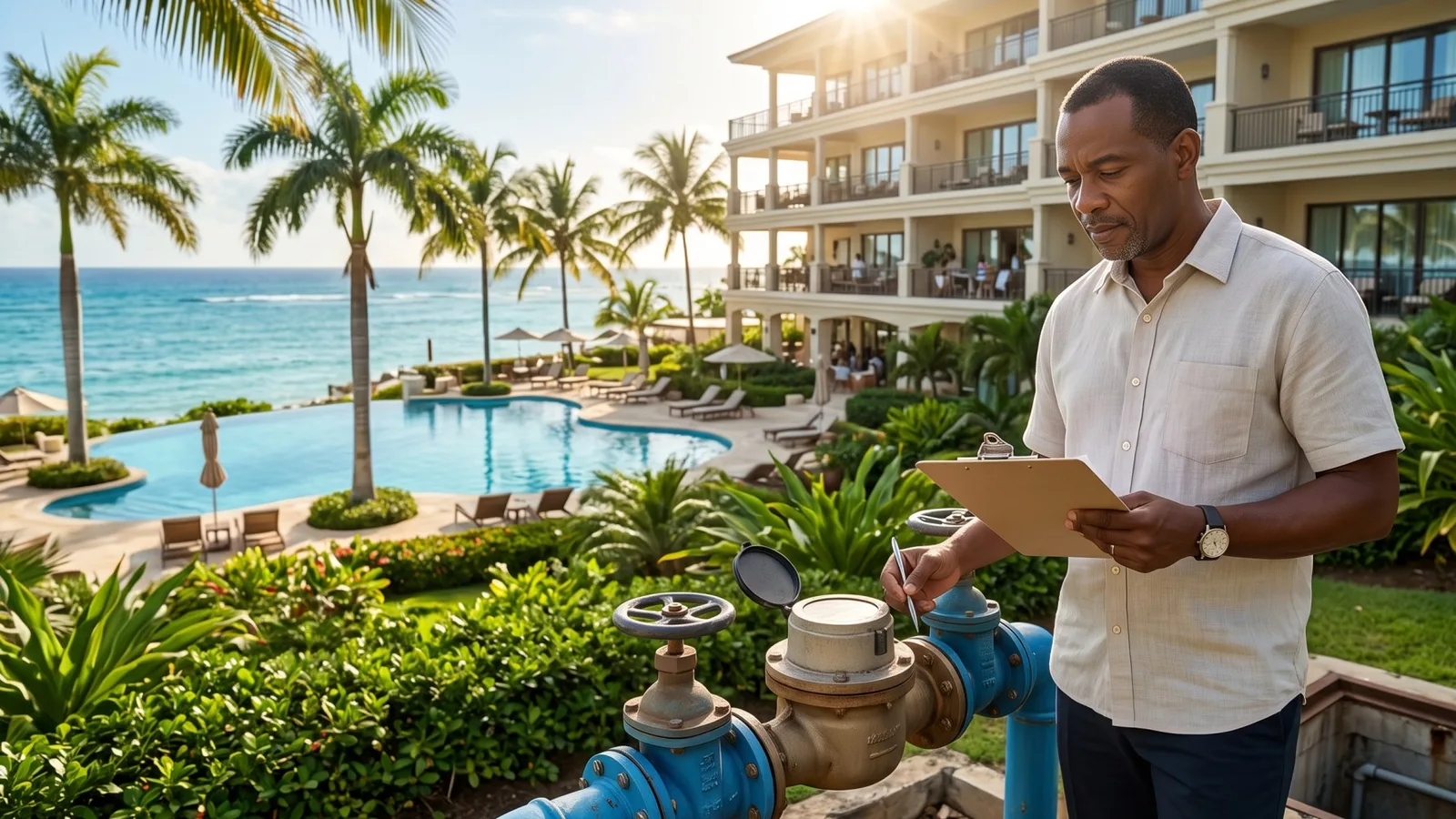
Jamaica’s tourism recovery faces fresh financial pressure as the National Water Commission (NWC) seeks a 51 per cent tariff increase, raising concerns about the future operating costs of hotels and tourist attractions. The Jamaica Hotel and Tourist Association (JHTA) is questioning how the proposed increase could affect commercial water users and whether higher charges would bring meaningful service improvements.
The proposal arrives as Jamaica continues rebuilding its tourism industry after Hurricane Melissa. With visitor numbers below previous-year levels, hotels already face difficult financial decisions. The proposed NWC water rate hike now raises another important question: can Jamaica strengthen its essential infrastructure without placing additional pressure on tourism businesses?
Jamaica’s Tourism Industry Confronts Another Major Financial Challenge
The proposed water tariff increase comes at a particularly sensitive time for Jamaica’s hospitality industry. Hotels are restoring damaged facilities, rebuilding customer confidence and preparing for stronger international visitor demand. A substantial increase in utility bills could complicate these efforts. Water is essential to almost every aspect of hotel operations, from guest accommodation to restaurant services.
Unlike some discretionary expenses, water consumption cannot be reduced without practical limits. Higher charges could therefore place additional pressure on businesses already managing rising hotel operating costs. This creates a difficult balance between Jamaica’s need for modern infrastructure and the financial stability of its tourism sector.
Advertisement
Advertisement
NWC’s Proposed 51 Per Cent Increase Triggers Fresh Uncertainty
The National Water Commission submitted its tariff application on 16 October 2026. The Office of Utilities Regulation (OUR) confirmed receipt on 20 October. The application covers the five financial years from 2026/27 to 2030/31. NWC officials disclosed the proposed 51 per cent increase during parliamentary scrutiny.
However, the regulator’s official announcement did not approve new rates. The OUR must first assess whether the submission meets the requirements for a formal review. It may also request additional information. This distinction matters because the proposed increase remains subject to examination, and its eventual effect on individual hotel bills has not been established.
Advertisement
Advertisement
JHTA Demands Clarity Over Potential Tourism Industry Costs
The Jamaica Hotel and Tourist Association (JHTA) has raised concerns about how the proposal could affect hotels and attractions. Its questions centre on the treatment of different customer categories and the improvements businesses could expect in return. Commercial water users do not necessarily face the same charges as households. Consequently, a headline increase does not explain what individual tourism businesses might actually pay.
The association also wants clarity about service reliability, water quality and the reduction of system losses. These questions are particularly important for hotels that operate throughout the year and depend on uninterrupted services to maintain international hospitality standards.
Why Water Is One of the Most Important Expenses for Jamaican Hotels
Water is not simply another utility expense for Jamaica’s tourism businesses. It supports accommodation, sanitation, swimming pools, kitchens, restaurants, laundry facilities and landscaping. Large resorts may require substantial daily supplies to maintain their services. Even smaller hotels must meet strict cleanliness and hospitality expectations.
If costs rise significantly, operators may struggle to absorb the increase without adjusting other budgets. Cutting water use too sharply could damage service standards and affect guest satisfaction. These realities explain why higher water tariffs in Jamaica deserve careful assessment. The challenge extends beyond hotel accounts to the visitor experience and the country’s reputation.
Existing Commercial Water Tariffs Reveal a Complicated Pricing System
The NWC’s published tariff schedule, effective 6 May 2026, already separates commercial water consumption into different pricing bands. The rates also distinguish between water and sewerage services. Additional billing components include service charges, a Price Adjustment Mechanism and regulatory factors. This makes the potential impact of a new increase more complicated than multiplying every bill by 51 per cent.
Commercial consumers could experience different adjustments depending on their classification and consumption. The existing pricing structure is particularly important for larger properties that consume substantial volumes. Understanding these differences will help hotels assess their potential future liabilities more accurately.
Advertisement
Advertisement
| Existing commercial tariff | Water charge | Sewerage charge |
|---|---|---|
| Up to 2 million imperial gallons | J$2,816.75 | J$3,253.35 |
| Consumption above 2 million imperial gallons | J$1,641.83 | J$1,896.34 |
NWC commercial and industrial consumption charges per 1,000 imperial gallons, effective 6 May 2026. These are existing rates, not proposed new charges.
A 51 Per Cent Increase Could Create Substantial Financial Exposure
The potential financial implications become clearer through simple illustrations. If a hotel currently pays J$500,000 monthly and its entire bill increases by 51 per cent, the monthly amount would reach J$755,000. That represents J$3.06 million in additional annual expenditure. A hotel paying J$1 million monthly would face an illustrative annual increase of J$6.12 million.
These are hypothetical calculations, not approved tariffs or predictions for specific properties. Actual increases could differ because of consumption bands, service charges and regulatory decisions. Nevertheless, the examples demonstrate why tourism operators need detailed information before they can prepare realistic financial forecasts.
NWC Faces Growing Expenses While Seeking Funds for Essential Improvements
The National Water Commission faces substantial financial challenges that have intensified pressure for a tariff review. Rising electricity expenses, difficulties collecting revenue and ageing infrastructure have complicated its operations. Water treatment, pumping and distribution require considerable energy. Maintaining pipelines and wastewater facilities also demands continuous investment. NWC officials have linked the proposed increase to the utility’s wider investment programme.
They have indicated that a smaller approved adjustment could require changes to planned expenditure. However, the financial case for higher charges must be considered alongside operational efficiency. Increasing customer payments without addressing underlying weaknesses would not necessarily provide a sustainable solution.
Jamaica’s Auditor General Uncovers Serious Financial and Management Weaknesses
The financial position of the NWC provides important context for the proposed increase. Jamaica’s Auditor General published a performance audit in June 2026, documenting significant financial and operational concerns. Outstanding payables had increased from J$10.6 billion in financial year 2016/17 to J$33.2 billion in 2025/26. Net receivables stood at approximately J$4.59 billion in March 2026.
Advertisement
Advertisement
This exposed a serious difference between outstanding obligations and amounts expected from customers. The report also identified weaknesses in project planning and performance monitoring. These findings strengthen the case for examining financial accountability before approving substantial increases in consumer charges.
Ageing Pipelines and Delayed Projects Deepen Questions About Service Reliability
Jamaica’s water infrastructure requires substantial modernisation. The Auditor General reported that approximately 70 per cent of NWC infrastructure was more than 40 years old, based on the utility’s strategic planning information. Older networks can experience leaks, breakdowns and expensive maintenance requirements.
The audit also examined 50 infrastructure contracts and found that 29 experienced implementation delays ranging from three to 29 months. Such delays can postpone essential improvements and increase project costs. The findings underline the need for stronger planning, procurement and monitoring. Tourism businesses need confidence that additional revenue will support projects capable of delivering reliable water supplies and measurable improvements.
Jamaica’s Severe Water Loss Problem Makes Infrastructure Reform More Urgent
One of NWC’s greatest challenges is non-revenue water. This includes treated water lost through leaks, unauthorised consumption, inaccurate meters and other unbilled use. Jamaica Information Service reported in October 2026 that approximately 70 per cent of NWC’s water production generated no revenue. The Government has outlined a US$340 million programme aimed at reducing those losses towards 30 per cent by 2035.
Its projected annual financial benefits total approximately J$10.7 billion through improved revenue collection and reduced operating expenses. These savings remain projections. Nevertheless, they demonstrate why repairing networks and improving efficiency are essential to the long-term tariff debate.
Western Jamaica’s Water Investment Programme Offers Hope for Resort Destinations
The Government’s Western Water Resilience Project could become an important development for Jamaica’s leading tourism destinations. Jamaica Information Service reported in 2026 that the programme carries an estimated investment value of US$425 million, with its first phase costing US$176.22 million. The project targets ageing pipelines and water distribution infrastructure across the northwestern region.
Advertisement
Advertisement
Planned improvements include important supply corridors serving Montego Bay, Lucea and the Negril Beach Strip. These destinations support hotels, restaurants, attractions and surrounding communities. However, construction takes time. The expected benefits must be demonstrated through completed works and dependable services before they can justify expectations of improved water reliability.
Drought Conditions Reveal Another Threat to Jamaica’s Tourism Operations
Water shortages have added urgency to Jamaica’s infrastructure challenges. On 1 October 2026, Jamaica Information Service reported that drought conditions were affecting 107 NWC supply systems at varying levels. The utility identified particular pressure in Kingston, St Andrew, St Thomas and northeastern communities.
Authorities have responded through supplementary pumping, recommissioned wells and water trucking. These conditions highlight the importance of storage capacity and emergency arrangements. Hotels facing interruptions may need additional resources to maintain normal operations. Such measures can increase expenditure. However, drought impacts differ across the island, and not every tourist destination or accommodation property is experiencing the same difficulties.
Hurricane Melissa’s Devastation Continues to Shape Jamaica’s Tourism Recovery
Hurricane Melissa struck Jamaica in October 2025, damaging hotels and disrupting tourism activity, particularly in western areas. The rebuilding process has continued throughout 2026. In September, Jamaica’s Ministry of Tourism reported that approximately 70 per cent of formal accommodation capacity was available. Around 6,000 rooms had returned to service following the hurricane, while another 9,000 were still awaiting reopening at the time of the ministerial update.
Further recovery was expected into early 2027. Hotels undergoing reconstruction must manage significant financial commitments. Introducing higher utility charges during this period could complicate renovation budgets, reopening plans and the rebuilding of tourism employment.
Tourism Arrivals Show Why Jamaica Cannot Ignore Growing Industry Costs
Official tourism figures demonstrate both Jamaica’s resilience and the challenges facing its recovery. According to the Ministry of Tourism’s September 2026 update, the country welcomed approximately 2.34 million visitors between January and August, generating around US$2.5 billion. However, arrivals were 17 per cent below the corresponding previous-year period, while tourism earnings declined by 18 per cent.
Advertisement
Advertisement
These figures reflect the impact of reduced accommodation capacity and continuing recovery challenges. Hotels need stable operating conditions to rebuild revenue and attract international visitors. Although a water tariff increase would not automatically reduce visitor arrivals, additional costs could affect investment decisions and future room pricing.
Smaller Hotels and Tourist Attractions Could Face Greater Financial Pressure
The impact of higher water charges could vary considerably across Jamaica’s tourism industry. Large resorts may have more financial resources and better opportunities to invest in efficient equipment. Smaller hotels, guesthouses and independently operated attractions may face tighter budgets. Many depend on seasonal bookings and have limited flexibility to increase room prices. Additional water expenses could therefore reduce funds available for maintenance, employment, marketing and property improvements.
Tourism suppliers may also experience indirect pressure if commercial costs rise. These possibilities make customer classification particularly important. A fair assessment should consider the financial position of different operators rather than assuming every business can absorb identical increases.
Jamaica’s Planned Tourism Tax Increase Adds Another Layer of Concern
The water tariff debate comes alongside a separate government policy affecting tourism costs. In February 2026, Jamaica’s Ministry of Finance announced plans to increase General Consumption Tax on specified tourism activities from 10 per cent to 15 per cent, effective 1 April 2027. The Government estimated that the measure would generate approximately J$11.4 billion in additional annual revenue.
The JHTA has engaged with the finance ministry over the implications for tourism competitiveness. Although the tax proposal and NWC tariff application are separate matters, both contribute to industry concerns about future costs. Their combined effects deserve careful economic assessment without treating either proposal as an identical burden.
JHTA’s Sustainability Agenda Highlights Ways Hotels Can Control Water Expenses
The JHTA has already identified water conservation as a major priority for Jamaica’s tourism sector. Its August 2026 Sustainable Destination Review encouraged hotels to improve metering, detect leaks and strengthen wastewater management. The association also recommended tracking water consumption against occupied rooms.
Advertisement
Advertisement
These measures can help operators identify waste and evaluate potential savings. Hotels could consider efficient laundry equipment, improved maintenance schedules and responsible landscape irrigation. However, conservation cannot replace reliable public infrastructure. Businesses still require dependable water supplies to maintain essential services. Any tariff reform should therefore encourage responsible consumption while supporting wider improvements to the national water network.
OUR Faces a Crucial Test Over Affordability, Accountability and Public Consultation
The Office of Utilities Regulation must assess the NWC’s financial requirements alongside the potential effects on customers. Its review should establish the proposed rates for different consumer categories, the timing of any adjustments and the investments linked to additional revenue. Clear performance targets for reducing water losses would strengthen accountability.
The JHTA has called for meaningful consultation before a decision is made. Businesses need opportunities to examine the proposal and explain its commercial implications. The regulator’s initial acceptance decision is expected within ten days of its 20 October announcement. That step would only determine whether formal review can proceed, not authorise an immediate increase.
Jamaica’s Tourism Recovery Depends on Balancing Higher Charges With Better Services
Jamaica’s tourism recovery now faces an important test of financial sustainability and infrastructure planning. The NWC needs sufficient resources to modernise ageing systems, reduce losses and maintain essential services. Hotels, meanwhile, need predictable expenses and reliable supplies to rebuild after Hurricane Melissa.
The proposed 51 per cent increase has exposed the tension between these priorities. A balanced outcome would provide transparent tariff calculations, practical customer consultation and measurable improvements in service delivery.
Until the regulator completes its review, the increase remains a proposal rather than an approved charge. Jamaica’s long-term tourism competitiveness will depend on achieving stronger infrastructure without unnecessarily weakening the businesses that support its visitor economy.
Advertisement
