
Discover Greece’s Charm: New Travel Trends and Growing Tourism Opportunities

Published
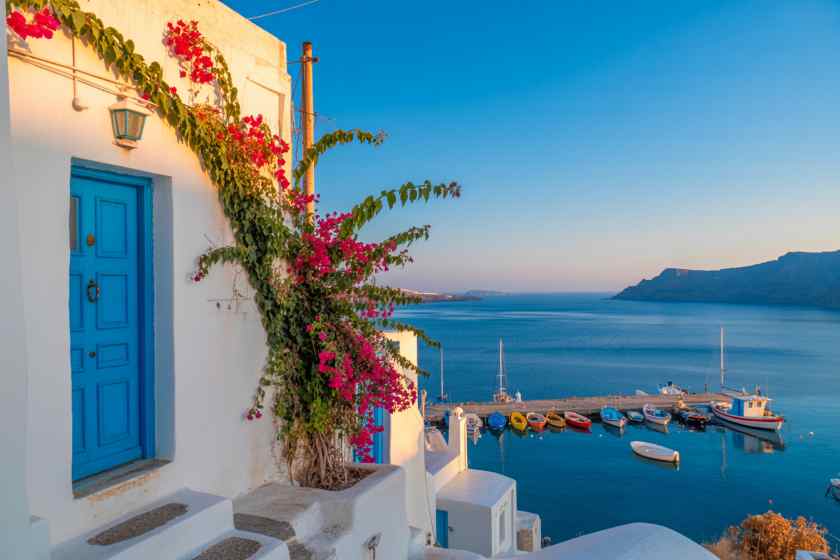 Image generated with Ai
Greece’s tourism landscape is undergoing recalibration, catalysed by the evolving preferences and purchasing patterns of global travellers. Analysts now chart a pronounced divergence in booking behaviour, wherein consumers consolidate travel in either the pre-season or the very last minute; the former secures desired properties, while the latter hunts for deep markdowns. Such bifurcation is consistently stressing the cash-flow cycles of local operators, compelling them to recalibrate inventory and capital heuristics at an intense tempo.
Preliminary metrics for the first semester of 2025 deliver a nuanced tableau. Although international arrivals for June registered a fractional decline of 1.7% against June 2024, monetised performance—elastic to inflational and premium pricing—surpassed expectations. The Bank of Greece records an 8.8% uptick in tourism revenues for the month, alongside an overall first-half surge of 11%, achieving a cumulative €7.66 billion versus €6.89 billion for the corresponding period of 2023. The variational leverage, in the aggregate, is attributed to elevated average-per-visit expenditure rather than head-count surges, confirming operators’ strategic pivot to value and yield over volume and demonstrating the sector’s assimilation of a chronically levelled pricing environment.
Advertisement
Advertisement
Changing Habits: Last-Minute Bookings and Shorter Stays
Travellers to Greece are revising their itineraries. An appreciable number are deferring trips to later autumn, lured by milder weather and the promise of quieter locales, and are concurrently choosing to abbreviate the length of their visits. This twin move has subdued early-season arrivals, particularly from the European Union, where forward bookings diminished. The downturn from EU nationals has, nevertheless, been counterbalanced, in part, by an 8% surge in participants from non-EU markets, including the United States, which remains an indicator of robust interest.
Advertisement
Advertisement
Accompanying this trend, the surge in same-month and same-week bookings has recalibrated the dynamics of consumption. Travellers seeking economy disclosures on rooms and fares are transacting closer to departure, thereby introducing pronounced obliques in demand curves. While select hotel and vacation rental segments attain sudden peaks in occupancy, others wrestle with erratic, non-sequential narratives of reservations. Consequently, establishments are compelled to recalibrate yield-management algorithms and devise outreach calibrated to reactive markets.
Hotel Occupancy and Revenue Trends
Advertisement
Advertisement
Visitor volume has remained volatile; yet hotel occupancy edged sideways relative to last year. Data published by the Institute for Tourism Research and Forecasts (ITEP) attributes a June 2025 occupancy rate of 78.5% to continuing patterns. Simultaneously, hotel operators contend with intensifying competition from short-term rental platforms, chiefly Airbnb and VRBO, whose market penetration has widened. These platforms satisfy a growing segment of travellers who prioritise flexibility, customisation, and interesting alternatives to branded properties.
Even though rental demand remains vibrant, human-analysis indicators signal a decelerating trajectory across established hotspots. June’s readings for the Greek archipelago, encompassing Santorini, Mykonos, and Crete, report flatlining booking curves for entire properties deemed traditional by the platform’s metrics. In consequence, the accommodation industry has sharpened its strategy, shifting toward value-adding micro-experiences and upscale ancillary offerings.
Advertisement
Advertisement
June’s average rate for double hotel accommodation along the Greek mainland and islands climbed to €147, an upward adjustment that reflects sustained inflationary pressure across continental Europe. Revenue executives regard the increment as supportive of top-line growth and yield management. Nevertheless, cautionary notes emerge: travellers constrained by disposable-income erosion from elevated food and energy prices, and whose markets of origin exhibit pronounced declines, might defer or forgo such expenditures.
The Role of International Markets and Non-EU Visitors
A central pillar of Greece’s enduring tourism vitality now rests upon the robust engagement of the United States market: visitor expenditure from the U.S. rose by 65% in June 2025 alone and by almost 30% over the first half of the year. Such heightened fiscal commitment underscores Greece’s burgeoning stature as a luxury destination among American clientele. Patrons are increasingly gravitating toward emblematic sites—the Acropolis in the capital, the sacred precinct at Olympia, and the cantilevered coastlines of the Cyclades.
Escalating American demand is already prompting the introduction of an expanding roster of non-stop services, notably from hub cities including New York, Chicago, and Los Angeles. The growing ubiquity of these routes considerably shortens travel times and widens gateway access to Greece’s heritage-drenched and scenic zones. The advance coincides with an amplifying worldwide fascination with Greek culture, gastronomy, and classical history, ingredients that collectively forge an enduring magnet for the non-EU visitor contingent.
Advertisement
Advertisement
Impact on Local Enterprises and Tourism Infrastructure
Persistent shifts in visitor conduct and the emergence of novel tourism patterns in Greece are compelling local enterprises to recalibrate. Hospitality and travel stakeholders—ranging from accommodation and catering firms to excursion designers and event purveyors—are responding by fine-tuning pricing, elevating service quality, and orchestrating frictionless guest journeys. This constant realignment is critical for remaining attractive to today’s discerning clientele.
Complementarily, Greece’s tourism infrastructure is undergoing targeted modernisation. Interventions are engineered to absorb increased patronage while simultaneously addressing mounting expectations for sustainability and service excellence. As traveller preference tilts toward environmentally responsible solutions, the sector is cascading initiatives designed to curtail ecological footprints, amplify resource stewardship, and enhance the availability of certified, ecologically responsible lodging.
Conclusion: Aligning with Emerging Travel Orientations
The prevailing evolution in visitor behaviour and travel modalities in Greece is ushering in a paradigm that privileges sustainability and adaptability. While international arrivals persist in expansion, the sector is compelled to reconcile shifting consumption tendencies—namely, spontaneous bookings and compressed itinerary lengths—with the preservation of service sophistication. With the dual currents of rising income and changing traveller expectations, Greece is likely to uphold its status as a premier destination, securing a compelling convergence of profound cultural resonance, dramatic landscapes, and inventive tourism modalities.
Advertisement
