
India Will Be a Major Growth Engine as Radisson Hotel Group Targets 500 Hotels by 2030
Published
 Image generated with Ai
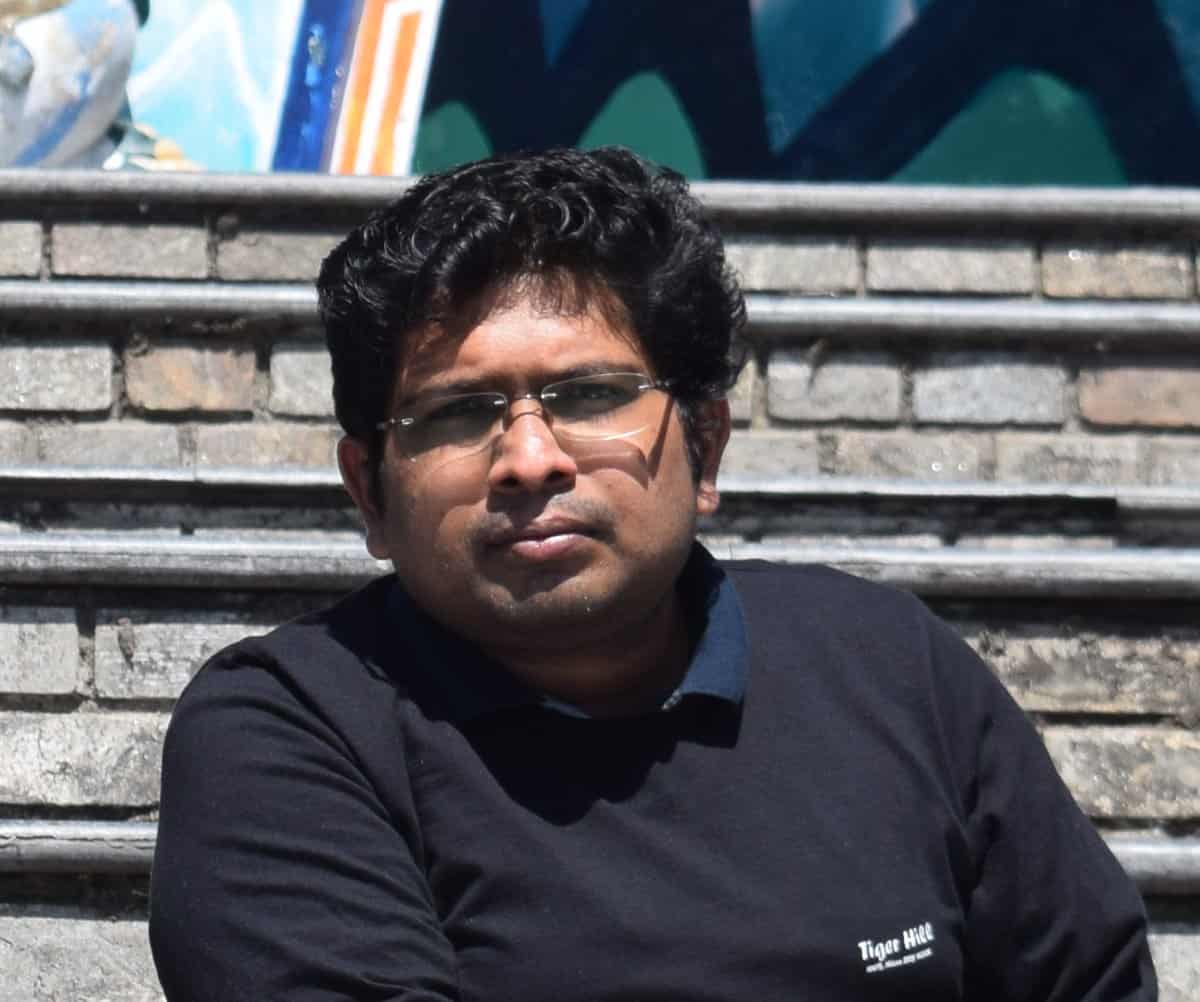
Radisson Hotel Group is accelerating its ambitions in one of the world’s fastest-growing hospitality markets, with a bold target of reaching 500 hotels in India by 2030 while expanding its global footprint across high-growth and established destinations. In this exclusive interview, Elie Younes, Global Chief Development Officer at Radisson Hotel Group, explains how the Group’s nearly three decades of experience in India is shaping a market-specific strategy focused on Tier 1, Tier 2 and emerging Tier 3 cities, leisure and spiritual destinations, and locations benefiting from major transport infrastructure.
The discussion also examines the growing role of conversions, lifestyle and luxury brands, and owner partnerships in supporting faster expansion. With 160 hotels signed and opened globally in the first half of 2026, Younes outlines how Radisson Hotel Group balances investment across India, China, Europe, the Middle East and Africa, while its Verified Net Zero programme seeks to prove that sustainability can strengthen demand, efficiency, resilience and long-term asset value.
You have an ambitious plan to reach 500 hotels in India by 2030; what specific tier-city strategies or brand segments will be the primary engines driving this aggressive scale-up?
Radisson Hotel Group has been present in India for nearly 30 years, giving us a deeper understanding of the market and strong relationships with local owners and communities. Our India Vision 2030 strategy is therefore not a one-size-fits-all expansion plan, but a tailored strategy designed around the country’s economic, demographic, and infrastructure growth.
Advertisement
Advertisement
We will reinforce our presence in Tier 1 and Tier 2 cities while selectively expanding into high-potential leisure and spiritual destinations as well as locations that benefit from new airport and transport infrastructure. Markets that were previously considered secondary are generating stronger demand as connectivity improves and domestic travel grows.
From a brand perspective, we see opportunities led by Radisson Collection, Radisson Blu, and Radisson, with the strong awareness of the latter being used to grow the upscale segment. We also aim to expand Radisson RED in the growing lifestyle segment, while Radisson Individuals will be used for conversion and semi-conversion opportunities. This diversified approach will allow us to serve different guest segments while providing owners with a brand and operating model suited to the economics of each location.
Advertisement
Advertisement
- You noted that demand in India is currently outpacing supply. How is Radisson Hotel Group adapting its development pipeline to capitalize on this gap before local competitors close it?
India’s hotel development fundamentals remain highly attractive. Domestic travel continues to grow, infrastructure is improving rapidly, and demand consistently outpaces supply. The opportunity is not cyclical, but supported by structural changes in how and where people travel.
To capture this opportunity, we are adapting our pipeline in three ways. Firstly, by broadening our reach beyond established gateway cities into Tier 2 and Tier 3 cities, spiritual destinations, leisure locations, and emerging transport hubs. Then, we are increasing our use of conversions, semi-conversions, and brownfield developments, which allow suitable properties to enter the market faster than traditional new builds. Radisson Individuals is particularly important because it enables independent hotels to retain their identity while accessing our brands, systems, and distribution platforms. Third, our India Vision 2030 gives our local team a detailed roadmap while we remain open to strategic partnerships where they create sustainable value to expand our presence. Through all this, our aim is to ensure our growth is supported by the right assets, partners, and long-term economics rather than simply scaling for its own sake.
Radisson Hotel Group has signed and opened 160 hotels globally in H1 2026. How do you balance resource allocation and owner relations between booming markets like India/China and stabilizing markets across EMEA?
Signing and opening 160 hotels representing more than 22,000 keys in six months requires a market-specific approach rather than applying the same development model everywhere. We allocate resources according to the maturity of each market, the strength of demand and availability of assets, and the value that we can create with owners. In high-growth markets such as India and China, we are focused on building scale, expanding our footprint and responding to strong demand for branded hospitality. In established European markets, development is more selective and is increasingly driven by conversions, repositionings, mixed-use projects, and flagship opportunities in destinations where our brands can create a clear competitive advantage. Across the Middle East and Africa, we continue to pursue targeted growth in markets with strong long-term fundamentals.
What remains consistent across all the regions is our owner-first approach. Owners expect responsiveness, approachability, and results, supported by flexible development models, effective commercial systems, and empowered teams. More than 65% of our owners operate multiple hotels with us ,and more than half of these have partnered with us for over 20 years. Those relationships allow us to adapt our approach locally while maintaining a consistent long-term value proposition.
With the recent launch of Radisson RED in New Zealand and Radisson Individuals Premier in Southeast Asia, what shifts in traveler demographics are dictating your lifestyle and luxury brand expansions?
Advertisement
Advertisement
The expansion of our lifestyle and luxury brands is closely linked to how traveler expectations are evolving and not defined by demographics alone. Today’s guests increasingly expect memorable experiences and value a more personalized stay.
In markets such as Southeast Asia and Australasia, we see strong potential driven by rising travel demand, growing leisure segments, and a new generation of travelers looking for spaces and experiences that reflect local culture. Radisson RED responds to travelers seeking an energetic lifestyle experience, contemporary design, and vibrant social environment. Radisson Individuals Premier serves a different need: independent upper-upscale hotels with strong local character that can retain their individuality while benefiting from Radisson Hotel Group’s standards.
For example, Radisson RED Auckland demonstrates the opportunity for lifestyle hospitality in an important urban gateway, while LIME Resort Bohol reflects the demand for premium leisure stays that combine contemporary design with authentic Filipino hospitality and a link to the destination. Together, the different brands allow us to address evolving traveler preferences without forcing every market or property into the same format.
As you expand the Verified Net Zero program into more hotels, how are you demonstrating to owners that sustainable hospitality practices actively drive above-market financial returns?
Sustainability has become an increasingly important part of the value proposition for owners. Through our Verified Net Zero (VNZ) program, we demonstrate how sustainability can contribute to stronger commercial performance through guest demand, operating efficiency, asset resilience, and reduced exposure to future regulatory and energy risks.
In 2025, we opened our first Verified Net Zero hotels in Manchester City Centre and Oslo City Centre, both of which are already providing useful indicators. Awareness of their net zero positioning is above 70%, and approximately one in five guests say the hotel’s net-zero status influenced their booking decision. This demonstrates that credible, independently verified sustainability can contribute to differentiation and demand rather than operating only as a compliance measure. demonstrating that both existing and new properties can significantly reduce emissions while maintaining high guest experience and operational standards. We also see strong potential in conversion-led sustainability, where existing buildings can be transformed into more efficient hotels while responding to evolving market expectations.
Advertisement
Advertisement
Our VNZ properties also focus on electrification, renewable energy, resource and operational efficiencies, low-carbon food and beverage, and waste reduction. For owners, this helps protect the long-term value of their assets while also helping them respond to evolving guest and regulatory expectations.
Most importantly, the VNZ hotel model is designed to work in existing buildings as well as new developments. The Manchester and Oslo hotels show that conversion-led decarbonization can significantly reduce emissions while maintaining guest experience and operational standards. As we expand the program to include more hotels, we will continue to measure both environmental and commercial performance to build a stronger evidence base for owners.
Advertisement
