
Hungary’s Lake Balaton Luxury Boom Slows as High Prices Reshape Tourism in 2026

Published
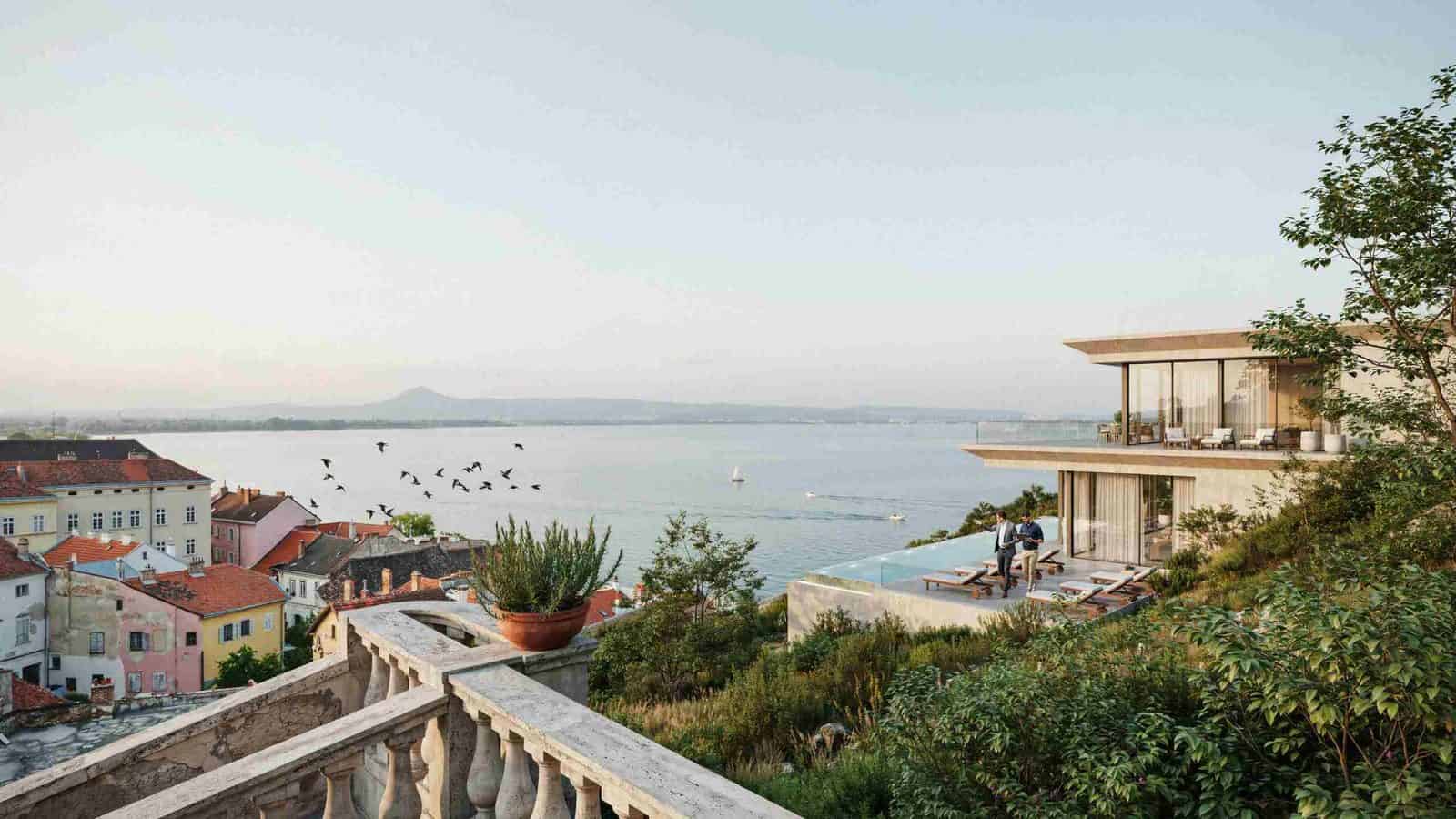
Image Credit: Hungary Tourism
With the upcoming 2026, there will be an extremely important stage for the Lake Balaton holiday market in Hungary, due to high property costs, selective investments, and delayed luxury constructions which have already started changing the face of one of the most popular holiday destinations in Central Europe. Popular for its low-cost family holidays, boating, wine cellars and lakeside hotels, Lake Balaton region is starting to change and attract new investors and projects. But as much as the changes are taking place, there are a lot of questions raised concerning the issues of affordability, accessibility and sustainability. With high prices staying high and some projects being delayed, the moment has come to find out whether or not luxury investments could benefit the development of tourism further.
Advertisement
Advertisement
Lake Balaton’s Real Story Is No Longer Just About Expensive Holiday Homes
For decades, Lake Balaton has occupied a unique place in Hungarian tourism.
Hungary has no coastline, making the lake far more than a conventional resort district. The Hungarian Tourism Agency identifies Balaton as one of the country’s key tourism regions and promotes much more than swimming and summer holidays. Its official destination strategy encompasses cultural tourism, wine and gastronomy, wellness, cycling, active travel and ecotourism.
Advertisement
Advertisement
That diversification matters.
It means the economic value of Lake Balaton increasingly depends on whether it can function as a year-round destination, rather than simply as a summer playground dominated by second homes and seasonal spending.
Advertisement
Advertisement
The Hungarian Tourism Agency has also highlighted continuing investment across the region, including upgraded accommodation, improvements at 98 beaches in 38 settlements, and fleet renewal involving new ferries and catamarans.
The stated objective is significant: making Balaton more environmentally friendly and competitive while supporting both travellers and residents. Hungarian Tourism Agency
That official ambition creates an important benchmark against which the current property boom should be judged.
The critical question is no longer simply whether expensive homes can be sold.
It is whether development strengthens the functioning tourism economy around them.
HUF 880,000 Per Square Metre Shows How Far Balaton Property Has Moved
Official Hungarian Central Statistical Office data gives the clearest indication of the scale of the transformation.
Advertisement
Advertisement
In the Balaton agglomeration, the average price reached approximately HUF 880,000 per square metre in the fourth quarter of 2025, around 12% higher than a year earlier. Earlier in 2025, the average had temporarily reached approximately HUF 900,000 per square metre. KSH
Those figures are broader than luxury listings alone.
That distinction is crucial.
Spectacular waterfront villas can generate headlines, but the more important signal is that the wider Balaton housing market has become substantially more expensive.
Hungary itself experienced extraordinary property inflation.
The Magyar Nemzeti Bank, Hungary’s central bank, reported that nationwide house prices rose 23.5% in nominal terms during 2025. After adjusting for inflation, real house-price growth reached 19%, the strongest increase in 25 years.
Advertisement
Advertisement
Even more strikingly, the central bank estimated that house prices nationally stood 22.5% above the level justified by economic fundamentals in the fourth quarter of 2025. Magyar Nemzeti Bank
That places Balaton’s luxury story inside a much larger Hungarian housing phenomenon.
Premium lakeside development did not emerge in isolation. It grew during one of the strongest periods of property-price appreciation in the country’s modern history.
The Property Boom Is Now Running Into a Much More Selective Market
High prices do not automatically guarantee endless demand.
Hungary’s central bank reported that housing transactions fell 18% year on year during the first quarter of 2026, following strong activity in the previous year.
Investor behaviour also began changing.
Advertisement
Advertisement
The MNB said purchases for investment purposes became more cautious as rental yields declined and housing overvaluation increased. Investors became more prominent on the selling side of the market after the introduction of Hungary’s Home Start Programme. Magyar Nemzeti Bank
This provides essential context for stalled or delayed premium developments around Lake Balaton.
The problem is not necessarily that wealthy buyers have suddenly disappeared.
Rather, capital has become more selective.
Projects now need to justify:
- high acquisition prices;
- construction costs;
- financing requirements;
- achievable sales values;
- year-round demand;
- planning risk;
- and long-term investment returns.
That is a different environment from the rapid post-pandemic property surge.
Advertisement
Advertisement
A development that looked straightforward when values were rising rapidly can become far harder to finance when buyers hesitate, inventories increase or policy scrutiny intensifies.
What Others Get Wrong: Tourism Demand and Property Demand Are Not the Same Thing
One of the biggest mistakes in analysing Lake Balaton is treating premium real estate growth as proof of an equally strong tourism market.
The two overlap, but they are not identical.
Second-home ownership can raise property values while producing very different visitor spending patterns from hotels, guesthouses and other short-stay accommodation.
A residential apartment occupied for a limited part of the year does not necessarily generate the same recurring demand for restaurants, attractions, transport, tour operators and accommodation workers as a commercially operated visitor economy.
Official tourism figures make that distinction particularly important in 2026.
Advertisement
Advertisement
Hungary recorded nearly 2.5 million tourist arrivals and 6.7 million tourism nights in July 2026. National arrivals were only slightly lower than a year earlier, while tourism nights increased marginally. KSH
However, by August the picture had weakened.
The Hungarian Central Statistical Office reported that international tourist arrivals at Lake Balaton were 14% lower year on year in August 2026.
Across Hungary, international arrivals fell 12.6% that month, while January-August international arrivals were down 2.9%. KSH
That does not establish a long-term decline.
But it does show why the Balaton story cannot be reduced to luxury property values.
Advertisement
Advertisement
High-value housing and tourism demand can move in different directions.
Lake Balaton Is Becoming a Destination-Management Test
This is where the new angle becomes much stronger.
Lake Balaton should increasingly be viewed as a destination-management laboratory.
Tourism authorities want higher quality.
Developers want premium returns.
Homeowners want property appreciation.
Advertisement
Advertisement
Municipalities need infrastructure.
Visitors want access to beaches, restaurants, vineyards, trails and waterfront spaces.
Residents need affordable housing, services and functioning communities.
Environmental authorities must protect one of Hungary’s most valuable natural assets.
Those objectives can coexist.
But they do not automatically align.
Advertisement
Advertisement
Successful destination management therefore requires more than attracting investment.
It requires investment that contributes to the wider tourism ecosystem.
That could mean developments that support public mobility, employment, public-space quality, year-round commerce and environmental resilience rather than operating as isolated residential enclaves.
Government Scrutiny Is Changing the Development Equation
Hungary’s regulatory environment is also becoming a larger part of the Balaton investment story.
In August 2026, the Hungarian government opened consultation on changes involving designated priority investment projects following a comprehensive review ordered earlier in the year.
The government stated that priority status should be removed in cases where retaining it would create significant social, infrastructure, environmental or nature-conservation risks.
Advertisement
Advertisement
It also explicitly emphasised support for property developments serving the national public interest when projects conform to local development objectives and do not undermine the ability of municipalities to represent local interests. https://kormany.hu
That language is important.
It signals that the development debate is no longer exclusively about construction volume or investment value.
Local compatibility has become part of the policy conversation.
For future projects around sensitive tourism destinations such as Balaton, that could increasingly affect investor calculations.
Planning certainty has an economic value.
Advertisement
Advertisement
If developers believe approval frameworks, environmental requirements or local planning relationships can materially influence project timelines, those issues become part of financing and acquisition decisions.
Lake Balaton’s Luxury Market Now Faces Five Different Pressures
The forces shaping Balaton can be understood more clearly when viewed together.
| Pressure | Verified 2025-26 indicator | Why it matters for Balaton |
|---|---|---|
| Property appreciation | Balaton agglomeration averaged HUF 880,000 per sq m in Q4 2025 | Raises barriers for buyers and residents |
| National overheating | Hungarian house prices rose 23.5% in 2025 | Increases correction and affordability risk |
| Valuation risk | Prices estimated 22.5% above fundamentals nationally | Makes investors more selective |
| Softer international tourism | International arrivals at Balaton fell 14% YoY in Aug 2026 | Challenges assumptions of permanently accelerating visitor demand |
| Regulatory scrutiny | Government reviewing priority projects on social, infrastructure and environmental grounds | Adds local compatibility to development decisions |
Sources: Hungarian Central Statistical Office, Magyar Nemzeti Bank and Government of Hungary. KSH
The table exposes the real issue.
Balaton is moving from an era dominated by appreciation toward one requiring performance.
Developments must increasingly prove that they work financially, socially and environmentally.
Advertisement
Advertisement
Affordability May Become the Defining Tourism Issue
Housing affordability is often treated as separate from tourism.
In resort regions, it is anything but separate.
Hotels require employees.
Restaurants require chefs, servers and managers.
Marinas need technicians.
Tourism attractions need seasonal and permanent workers.
Advertisement
Advertisement
Transport services require local personnel.
If workers cannot live within practical commuting distance, labour costs rise and recruitment becomes harder.
The destination eventually feels the effects through prices, service availability and business operating hours.
Hungary’s central bank has already connected rapid housing inflation with deteriorating affordability.
It noted that housing prices have been rising faster than rents, incomes and construction costs and warned that overvaluation creates greater risk of price correction. Magyar Nemzeti Bank
Balaton therefore illustrates a wider challenge faced by premium tourism regions across Europe.
Advertisement
Advertisement
A destination can become more valuable as real estate while simultaneously becoming more difficult to operate as a lived community.
That tension deserves far more attention than the spectacle of multimillion-euro villas.
This Is Why “Hamptons of Hungary” Only Tells Half the Story
Comparing northern Lake Balaton with an affluent international resort region makes an effective shorthand.
But it can also obscure Balaton’s actual tourism identity.
The region remains highly diverse.
Its tourism proposition includes beaches, cycling, sailing, vineyards, gastronomy, spa experiences, cultural heritage and rural communities.
Advertisement
Advertisement
The Hungarian Tourism Agency explicitly wants visitors to experience the region outside the traditional summer season. Hungarian Tourism Agency
That means the strongest future Balaton tourism model may not be one dominated by exclusivity.
It may instead be one combining high-value tourism with broad accessibility.
Luxury hotels and residential developments can certainly contribute.
But so can independent accommodation, campsites, wineries, cycle tourism, wellness facilities, ferries, events and family holidays.
A healthy destination requires multiple demand segments.
Advertisement
Advertisement
Overdependence on any one category makes tourism more vulnerable.
The International Visitor Drop Deserves Attention, Not Alarm
The 14% decline in international arrivals at Lake Balaton in August 2026 is significant.
It should not, however, be misrepresented as evidence that foreign tourism has collapsed.
Monthly tourism figures can move sharply because of weather, calendar effects, transport patterns, economic confidence and comparisons with unusually strong previous periods.
The more useful interpretation is strategic.
Lake Balaton cannot assume that international visitor growth will increase continuously simply because its property market has become more expensive.
Advertisement
Advertisement
International travellers compare destinations.
They compare accommodation prices, air connectivity, rail access, food costs, attractions and perceived value.
That places pressure on Balaton to ensure that premiumisation translates into better experiences rather than higher prices alone.
The distinction will become increasingly important if the region wants to expand its international profile.
Tourism Concentration Creates Another Hidden Vulnerability
Balaton tourism is also geographically concentrated.
A 2026 report prepared for the Balaton Development Council showed that a relatively small number of major settlements account for a substantial share of tourism activity in the region.
Advertisement
Advertisement
Five key towns generated more than half of Balaton’s visitors and almost 59% of its guest nights in the period examined by the council. Balatoni Integrációs Kft.
This matters because heavy concentration can intensify local pressure.
Infrastructure demand becomes concentrated.
Parking pressure increases.
Housing demand intensifies.
Prime waterfront areas become more valuable.
Advertisement
Advertisement
Restaurants and public services face stronger seasonal peaks.
At the same time, lesser-known communities may receive fewer economic benefits.
A more balanced regional tourism strategy could therefore help distribute demand across the wider Balaton area.
That aligns with the Hungarian Tourism Agency’s emphasis on cultural, active, gastronomic and ecotourism beyond traditional beachfront holidays.
Climate Resilience Has Entered the Investment Conversation
There is another factor property marketing rarely puts at the centre of the story: water and climate.
During Hungary’s severe summer heat conditions in August 2026, official government reporting based on National Directorate General for Water Management data recorded Lake Balaton’s average water level at 55 centimetres on 4 August, after dropping by one centimetre over the previous day. https://kormany.hu
Advertisement
Advertisement
A single reading cannot define Balaton’s long-term environmental condition.
However, it illustrates why climate adaptation is becoming central to regional planning.
The Balaton Development Council’s 2026 work programme specifically includes support for climate adaptation and implementation of the region’s climate strategy. Balatoni Integrációs Kft.
This introduces another variable for developers.
Future premium investment will increasingly be judged not merely by architecture and waterfront views but by water efficiency, landscape impact, heat resilience, energy demand, transport choices and compatibility with natural systems.
That is a much more sophisticated investment proposition.
Advertisement
Advertisement
Car-Free and Low-Impact Design Could Become a Competitive Advantage
One implication of the changing market is that environmentally sensitive design may become more commercially valuable rather than merely regulatory.
Balaton’s strongest premium developments may eventually be those that can demonstrate:
- reduced car dependency;
- protected landscape views;
- efficient water use;
- low-energy buildings;
- better pedestrian access;
- integration with cycling networks;
- extensive vegetation;
- year-round functionality.
These characteristics matter because they align the interests of developers, travellers and destination authorities more closely.
A visually impressive project can generate short-term attention.
A development that reduces infrastructure pressure while increasing tourism value can create much stronger long-term legitimacy.
In a region whose primary tourism asset is its landscape, environmental compatibility is not a peripheral concern.
Advertisement
Advertisement
It is part of the product being sold.
Supply Is Also Returning Across Hungary
The wider housing market may further influence investor psychology.
Hungary completed only around 12,000 new homes in 2025, the lowest number since 2016, according to the MNB.
Yet building permits rose significantly, and the central bank forecast approximately 15,700 new homes could be completed in 2026, representing around 30% annual growth. Magyar Nemzeti Bank
Official construction statistics also show that Hungary built 3,457 dwellings during the second quarter of 2026, compared with 2,425 in the same period of 2025.
Holiday-home construction increased from 57 units to 66 over the same quarterly comparison. KSH
Advertisement
Advertisement
Balaton-specific luxury supply operates differently from national housing supply, but increasing availability matters.
Scarcity produces pricing power.
More choice produces competition.
Developers may consequently need stronger design, facilities and locations to command premium values.
The Next Phase Could Reward Quality Over Quantity
This may prove positive for Lake Balaton.
Periods of rapid development often reward speed.
Advertisement
Advertisement
More selective markets reward differentiation.
Projects that cannot demonstrate genuine value may remain delayed.
Developments with exceptional locations, responsible planning and clear demand may proceed.
That type of market filtering could support Balaton’s transition towards what Hungarian tourism authorities describe as sustainable, quality-oriented tourism.
The danger comes if “quality” is interpreted only as expensive.
Luxury and quality are not synonymous.
Advertisement
Advertisement
For destinations, quality also means efficient transport, clean beaches, reliable services, attractive public spaces, accessible hospitality and environmental protection.
The strongest Balaton strategy would therefore raise visitor value without making the destination socially or economically one-dimensional.
What Investors Should Now Be Watching
Lake Balaton remains one of Hungary’s most recognisable tourism assets.
Its scarcity value has not disappeared.
Neither has its appeal to second-home buyers.
But investors considering the region in 2026 should arguably monitor a wider range of indicators than headline asking prices.
Advertisement
Advertisement
Property appreciation remains relevant, but so do completed transaction volumes.
Tourism arrivals matter, but the split between domestic and foreign demand matters more.
Planning status matters.
Environmental constraints matter.
Local acceptance matters.
Year-round utilisation matters.
Advertisement
Advertisement
Infrastructure capacity matters.
These variables could determine whether a premium project becomes a resilient asset or an expensive seasonal development struggling to achieve expected returns.
What Travellers Should Watch as Balaton Changes
Visitors also have a stake in this transformation.
More investment can deliver better hotels, spas, restaurants, marinas and public infrastructure.
It can improve the international reputation of Lake Balaton.
It can help extend tourism beyond July and August.
Advertisement
Advertisement
But unchecked premiumisation can also make destinations more expensive and less diverse.
Travellers seeking the traditional Balaton experience may increasingly need to explore beyond the best-known waterfront enclaves.
That could actually benefit communities elsewhere in the region.
Wine villages, cycling corridors, smaller beaches and inland cultural destinations can become stronger alternatives, spreading tourism expenditure more widely.
This is where Balaton’s broader tourism strategy becomes particularly valuable.
Hungary Has an Opportunity to Build a Different Kind of Premium Destination
Lake Balaton does not need to choose between investment and preservation.
Advertisement
Advertisement
The more productive choice is between different forms of investment.
One model concentrates mainly on private property values.
Another uses private capital to improve a functioning destination.
The second is much more powerful.
It means development that supports local businesses.
It means protecting environmental quality.
Advertisement
Advertisement
It means keeping transport manageable.
It means sustaining communities beyond the summer.
It means attracting visitors with spending power without excluding the domestic travellers who helped build Balaton’s tourism identity.
The Hungarian government’s stronger emphasis on local development objectives may therefore prove especially consequential.
The direction suggests a shift away from assuming that strategically important investment automatically deserves exceptional treatment.
Travel Analytics: Balaton Is Sending Three Different Signals
A data-led reading of Lake Balaton in late 2026 produces three simultaneous signals.
Advertisement
Advertisement
The property signal remains strong. An average HUF 880,000 per-square-metre price across the Balaton agglomeration confirms that the region continues to command substantial residential value. KSH
The tourism signal is mixed. Hungary continues generating millions of tourist arrivals, but Balaton’s 14% year-on-year decline in international arrivals during August shows that destination demand cannot be treated as automatically rising. KSH
The policy signal is becoming more demanding. Government review of priority investment frameworks places greater emphasis on social, infrastructure, environmental and local-government considerations. https://kormany.hu
Together, those indicators describe a market in transition rather than collapse.
That distinction matters.
Editorial Perspective: Balaton’s Biggest Risk Is Not That Luxury Development Stops
Changes that took place around Lake Balaton should not be considered from the perspective of the emergence of luxurious villas only. The issue is whether the country will be able to benefit from the investments in order to create a strong tourism industry around Lake Balaton without destroying its charm.
Advertisement
Advertisement
The current slowdown in the development of certain projects can be considered positive for the development of tourism. There is a chance for the government, local authorities, and companies that implement these projects to reconsider what kind of sustainable growth would suit such a unique place in Hungary. Premium investments would mean better quality, employment, and more spending tourists but, at the same time, the inflation of property prices might negatively influence this process.
In terms of the travel analytics, Lake Balaton presents an ambiguous image: high property prices coupled with low foreign demand and increased regulations. This combination means that the future period will focus on quality and sustainability rather than just on growth. The situation in Hungary allows the country to be a pioneer in the development of tourism destinations in Europe.
Advertisement
