
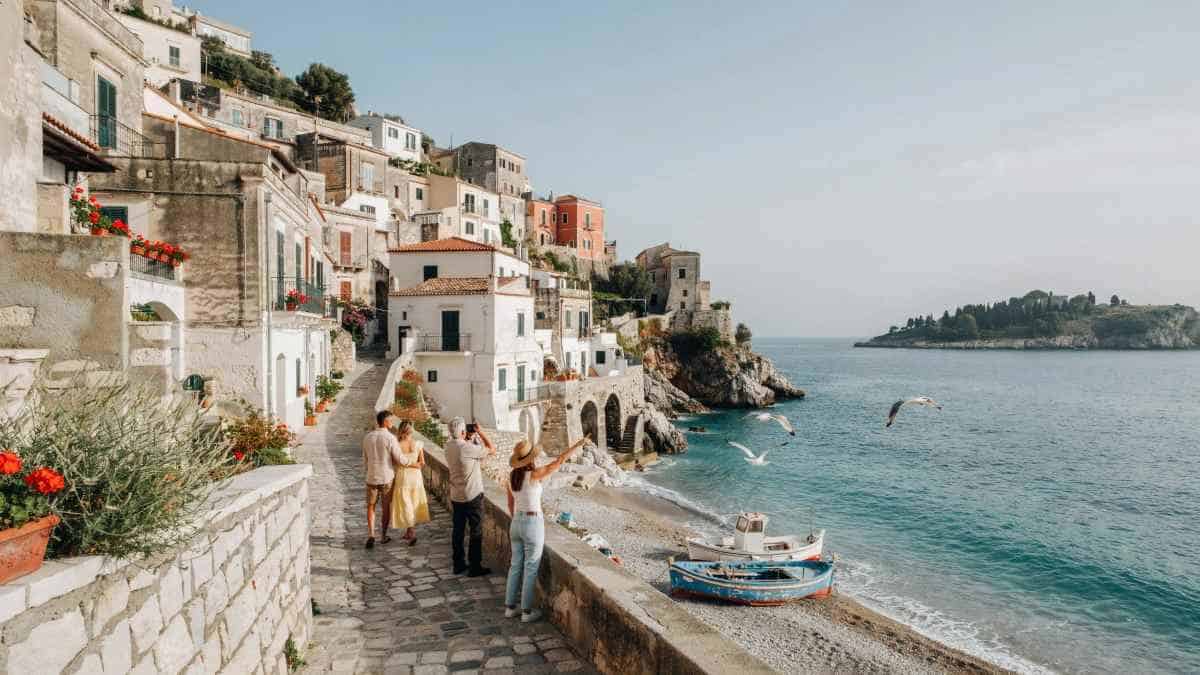
Image generated with Ai
There is a marked shift in the geography of tourism in Italy due to the rise in the number of tourists who travel beyond Rome, Florence, and Venice. According to the latest data gathered via the website Alloggiati of the Interior Ministry, there is a rising tendency in the south and the interior regions of Italy. Calabria has had the most number of tourists, up 10.54%, followed by Umbria, 9.70%; Piedmont, 9.22%; and Sardinia, 8.24%.
Calabria is leading the current growth trend.
Located at the southern tip of mainland Italy, Calabria offers a combination of Mediterranean coastline, mountain landscapes, historic towns and regional cuisine. Its position away from the country’s most established international tourism routes has helped give it a different visitor profile.
The 10.54% rise in arrivals indicates that more travellers are discovering the region as an alternative to Italy’s better-known destinations.
Advertisement
Calabria can also benefit from visitors seeking longer and more immersive trips. Instead of moving rapidly between famous cities, travellers can spend additional time exploring local communities, beaches, archaeological sites and mountainous interiors.
This type of tourism can generate spending across a wider range of businesses.
Umbria recorded the second-highest growth rate at 9.70%.
The region provides a strong alternative to Italy’s major urban tourism centres. Historic towns, countryside landscapes, religious heritage and food experiences give Umbria a distinctive position in the national tourism market.
Advertisement
Advertisement
Its location in central Italy also makes it accessible to travellers already visiting Tuscany or Rome. Visitors can add destinations such as Perugia, Assisi and other smaller towns to broader itineraries.
The growth in arrivals suggests that travellers are increasingly willing to move beyond Italy’s most recognisable cities.
This could help distribute tourism spending among smaller accommodation providers, restaurants, cultural attractions and local businesses.
Piedmont recorded 9.22% arrival growth and is another example of how travellers are expanding beyond Italy’s traditional tourism map.
The region combines major urban experiences in Turin with vineyards, mountains, historic towns and culinary traditions.
Piedmont’s strength lies partly in its ability to appeal to different visitor segments. City travellers can combine Turin with wine country while outdoor visitors can explore alpine landscapes.
This variety supports longer itineraries and creates opportunities for visitors to move between urban and rural destinations.
Sardinia recorded an 8.24% increase in arrivals. The island remains one of Italy’s most recognised leisure destinations but its growth also demonstrates the continuing strength of island tourism.
Sardinia is traditionally associated with beaches and coastal holidays. Yet the island offers much more through mountain landscapes, archaeological heritage, traditional communities and food culture.
Greater interest in experiences beyond the coast could help spread visitors across the island and reduce concentration in the most popular beach destinations.
Italy’s tourism shift is not limited to specific regions. Travellers are also showing interest in alternative destination types.
Lake destinations are recording occupancy of around 54% while thermal spa hubs are reaching approximately 51%.
These destinations provide a different tourism experience from Italy’s busiest coastal areas. Lakes can combine outdoor recreation, scenery, gastronomy and small-town experiences. Thermal destinations appeal to travellers seeking wellness, relaxation and slower holidays.
Both categories can attract visitors throughout different parts of the year. This makes them particularly valuable for destinations seeking to reduce seasonal pressure.
The growth of inland and lake destinations reflects a wider change in visitor behaviour.
Italy’s famous coastal areas remain extremely popular, but high visitor concentrations can create pressure on accommodation infrastructure, transport and local communities.
Travellers may increasingly look for quieter alternatives where they can enjoy authentic experiences without the intensity associated with major tourism hotspots.
This does not mean traditional destinations are losing their appeal. Rome, Florence and Venice remain essential components of Italy’s international tourism offer. Instead, the country is gaining additional demand from regions that were previously less prominent on international itineraries.
Greater geographical distribution of tourism can provide important economic benefits.
When visitors spend more time in smaller towns and rural areas, their spending can reach businesses that receive less benefit from mass tourism. Accommodation providers, restaurants, guides, transport operators, cultural attractions and local producers can all participate in the visitor economy.
Longer regional journeys can also encourage travellers to spend more nights in Italy.
This supports the broader transition from high-volume sightseeing towards more experience-driven tourism.
Clearly, these new visitors in Italy show an emergence of a growing tourism market that is likely to diverge from its geographical base. The regions showing growth in terms of arrivals include Calabria (growth of 10.54%), Umbria (9.70%), Piedmont (9.22%) and Sardinia (8.24%). Additionally, there is also a positive occupancy in the areas around lakes and thermal baths because of the trend of travellers choosing to vacation in far-flung areas that are not crowded coastlines. The country will be able to grow the tourism market in other areas without touching on its main tourism centres. As tourists become increasingly attracted to southern and inland Italy, the country’s tourism sector will be all about Italy rather than Rome, Florence and Venice.
Advertisement
Advertisement
Advertisement













Friday, September 4, 2026

Friday, September 4, 2026

Friday, September 4, 2026

Thursday, September 3, 2026

Wednesday, September 2, 2026

Friday, September 4, 2026

Friday, September 4, 2026