
Greece Joins Portugal, Spain, Croatia, Italy, Hungary, Malta and More European Countries Now Becoming Popular for Digital Nomads as Strong Visa Programme, Affordable Travel Base and Lower Cost of Living Become Magnetic Field to Become Tourism Goldmine

Published
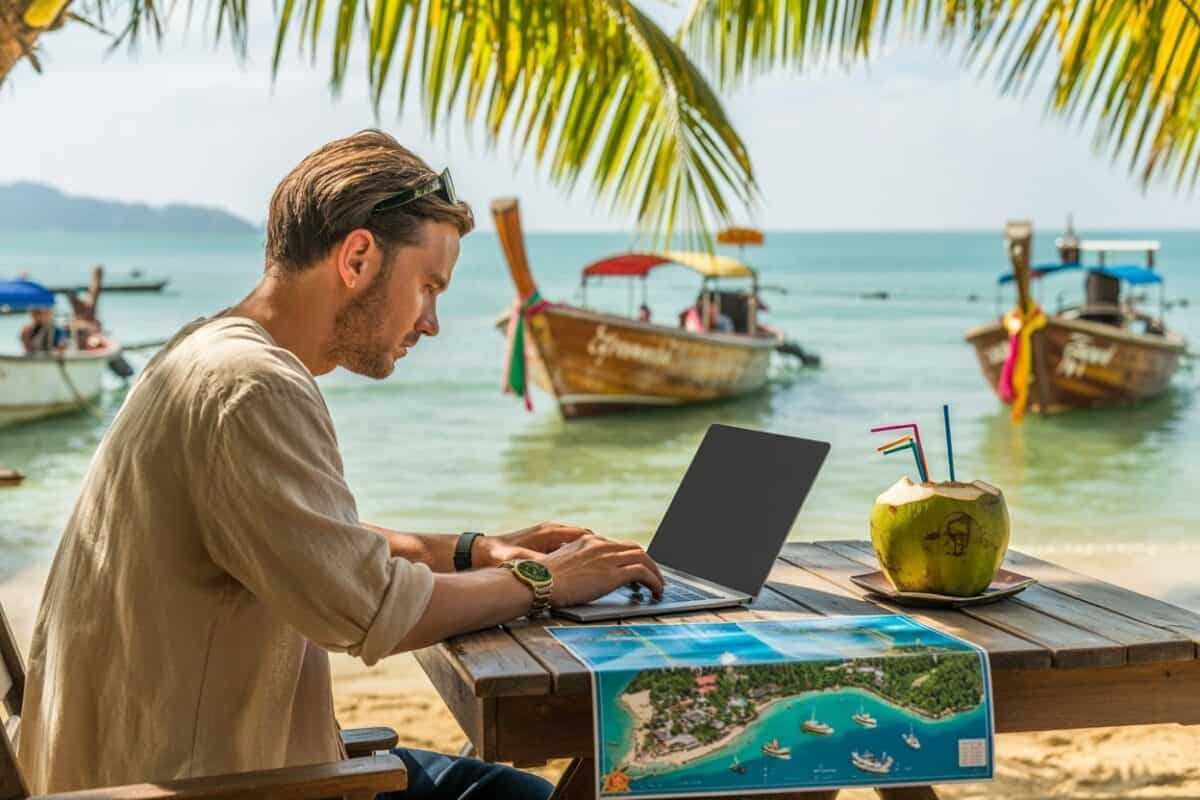
Greece joins Portugal, Spain, Croatia, Italy, Hungary, Malta and more European countries that are rapidly becoming digital nomad magnets as strong visa programmes, affordable travel bases and lower costs of living turn Europe into a powerful tourism goldmine.
Greece joins Portugal, Spain, Croatia, Italy, Hungary, Malta and more European countries that are now becoming popular for digital nomads as governments race to transform tourism economies. Strong visa programmes, affordable travel bases and lower costs of living are creating a magnetic field for remote workers worldwide. Consequently, Europe is evolving beyond traditional tourism and becoming a year-round tourism goldmine. Greece is attracting professionals seeking Mediterranean lifestyles, while Portugal, Spain, Croatia, Italy, Hungary and Malta continue expanding their appeal. As remote work permanently reshapes global travel, these destinations are positioning themselves at the centre of long-stay international mobility.
| Country | Why It Is Popular | Popular Cities | Strengths |
|---|---|---|---|
| Portugal | One of Europe’s most established nomad hubs | Lisbon, Porto, Madeira | Mild weather, strong community, visa options |
| Spain | Rapidly growing among global and Indian professionals | Barcelona, Valencia, Madrid, Malaga | Good infrastructure, residency pathways |
| Croatia | Mediterranean lifestyle with affordable living | Split, Zagreb, Dubrovnik | Official nomad visa, coastal lifestyle |
| Greece | Strong visa programme and island lifestyle | Athens, Thessaloniki, Crete | Lower costs than Western Europe |
| Estonia | Digital government pioneer | Tallinn | E-residency, advanced digital services |
| Italy | Newer entrant gaining popularity | Milan, Rome, Sicily | Culture, food, slower pace |
| Hungary | Affordable European base | Budapest | Fast internet, low taxes |
| Malta | English-speaking Mediterranean destination | Valletta, Sliema | High safety and connectivity |
| Georgia | Visa-friendly and inexpensive | Tbilisi | Long stays, affordable lifestyle |
The global tourism landscape is undergoing one of its biggest transformations as countries increasingly compete for a share of the booming digital nomad economy. What started as a niche movement among freelancers and technology professionals has evolved into a major economic opportunity that is reshaping travel, immigration and urban development strategies worldwide.
Digital nomads are remote workers who leverage technology to work while travelling and living abroad for extended periods. Unlike traditional tourists who may stay for a few days or weeks, digital nomads often remain in destinations for months or even years, creating stable economic contributions for local communities.
Advertisement
Advertisement
Governments are responding quickly to this shift by introducing dedicated digital nomad visas, improving internet connectivity, expanding co-working spaces and developing policies that encourage longer stays. Europe remains the strongest market, while Southeast Asia continues to dominate affordability and lifestyle appeal.
Here is a country-wise analysis of the destinations leading the global digital nomad revolution in 2026.
Advertisement
Advertisement
Why are Spain and Portugal leading Europe’s digital nomad movement?
Spain has emerged as one of the world’s most desirable digital nomad destinations because it combines excellent infrastructure, a pleasant climate and a formal digital nomad visa programme. Cities such as Barcelona, Madrid, Valencia and Malaga have become thriving international hubs where remote workers can access high-speed internet, co-working facilities and vibrant social communities.
Portugal continues to maintain its reputation as a pioneer in the digital nomad ecosystem because of Lisbon, Porto and Madeira. The country successfully positioned itself as an attractive destination by offering a balance between affordability, quality of life and simplified residency pathways that appeal to global professionals.

Why are Croatia and Greece becoming Mediterranean remote work powerhouses?
Croatia has transformed itself from a seasonal tourist destination into a year-round remote work hub through dedicated visa programmes and strategic investments. Cities such as Split and Zagreb now attract professionals who seek an affordable European lifestyle combined with stunning coastlines.
Greece has also capitalised on the trend by promoting Athens, Thessaloniki and several islands as remote work destinations. The country’s relatively lower living costs compared to Western Europe, alongside its cultural heritage and Mediterranean climate, continue to attract long-term visitors.
Greece’s digital nomad economy is entering a new phase as businesses increasingly weigh economic opportunities against social challenges. While many companies see remote workers as a powerful source of year-round revenue, others worry that rising demand could put pressure on housing affordability and local infrastructure.
A new study published in the journal Tourism and Hospitality highlights this evolving relationship. Researchers found that Greek businesses do not automatically embrace or reject digital nomads. Instead, their attitudes are shaped by how they categorise this growing segment of international travellers.
Advertisement
Advertisement
The findings arrive at a crucial time as countries across Europe compete to attract remote professionals through dedicated visa programmes and long-stay incentives.
Why are digital nomads creating a new debate among Greek businesses?
Digital nomads have created a unique challenge because they do not fit into traditional categories. They are neither conventional tourists who stay for a few days nor permanent residents who fully integrate into local communities.
Instead, they occupy a middle ground by working remotely while living temporarily in foreign destinations. This hybrid identity is forcing businesses to rethink how they serve travellers and how they plan future investments.
The study surveyed 747 owners and managers of small and medium-sized enterprises across Greece. Researchers sought to understand how businesses perceive digital nomads and whether they are willing to adapt their operations to attract them.

Why does perception matter more than the digital nomads themselves?
One of the study’s most significant findings is that business responses are shaped by perception rather than by digital nomads themselves. Owners first decide how they classify these remote workers before determining whether they represent an opportunity or a challenge.
Researchers identified two dominant viewpoints. Some businesses see digital nomads as temporary outsiders who are not fully part of local communities, while others view them primarily as tourists who bring valuable spending power.
Advertisement
Advertisement
These distinctions heavily influence business decisions. Different labels create different expectations, which ultimately shape future strategies.
| Country | Visa Programme | Visa Duration | Minimum Monthly Income Requirement (USD) | Key Advantages |
|---|---|---|---|---|
| Greece | Digital Nomad Visa | 12 months, renewable | US$4,050 | Mediterranean lifestyle, potential tax incentives |
| Portugal | D8 Digital Nomad Visa | 1 year + residency pathway | US$4,270 | Permanent residency pathway after 5 years |
| Spain | International Teleworker Visa | 1 year visa + multi-year permits | US$3,300 | Attractive tax regime, family inclusion |
| Croatia | Digital Nomad Residence Permit | Up to 18 months | US$3,820 | Coastal lifestyle, tax benefits under certain conditions |
| Italy | Digital Nomad Visa | 12 months | US$3,150-$3,250 | Designed for highly skilled professionals |
| Hungary | White Card | Up to 2 years | US$3,480 | Affordable European base |
| Malta | Nomad Residence Permit | 1 year, renewable | US$4,050 | English-speaking, strong connectivity |
Why do some businesses support stronger regulations?
Businesses that view digital nomads as temporary non-residents are more likely to support regulatory protections. These include measures designed to manage housing availability, taxation responsibilities and pressure on public services.
Many business owners recognise that rapid growth without proper planning could create long-term problems. Rising accommodation costs and increased competition for local resources are among the biggest concerns.
However, supporting regulations does not necessarily indicate opposition to digital nomads. Many businesses believe that proper governance can help preserve local quality of life while maintaining economic benefits.
Why are tourist-like digital nomads becoming highly valuable customers?
Businesses that classify digital nomads as tourists tend to be much more enthusiastic about adapting their services. These firms see clear commercial opportunities in attracting long-stay visitors.
Unlike conventional tourists, digital nomads often remain in destinations for months instead of days. This extended presence generates consistent spending across restaurants, cafés, accommodation providers, transport operators and local retailers.
Advertisement
Advertisement
For many businesses, this creates a more stable revenue model. Instead of relying entirely on peak summer tourism seasons, companies can generate income throughout the year.
Why is money the biggest factor driving business adaptation?
The study found that expected financial returns are the strongest motivator influencing business behaviour. Owners who anticipate direct economic benefits are significantly more willing to adjust their services.
Digital nomads often spend regularly on accommodation, co-working spaces, food services, wellness facilities and leisure activities. This diverse spending pattern makes them attractive customers for many sectors.
Researchers noted that perceived economic gains outweighed every other factor. If businesses clearly see opportunities to increase revenue, they are more likely to invest in infrastructure and specialised services.

Why are businesses still adapting despite concerns?
One of the study’s most interesting findings is that businesses concerned about negative impacts still want to attract digital nomads. This seemingly contradictory behaviour reflects a pragmatic approach.
Many companies understand that housing shortages and pressure on local services are genuine risks. However, they also recognise that the economic opportunity is too significant to ignore.
Advertisement
Advertisement
Instead of rejecting digital nomads altogether, businesses appear to favour balanced growth. They want safeguards in place while simultaneously benefiting from the market expansion.
This dual approach suggests that economic growth and regulation are no longer viewed as opposing forces.
Why will one-size-fits-all policies not work?
Researchers found substantial differences among businesses depending on their size, age and dependence on tourism. These variations indicate that uniform policies may not be effective.
A small independent café may have very different priorities from a larger hospitality business. Likewise, companies operating in highly touristic destinations may face different challenges compared to businesses in less visited areas.
Because of these differences, the researchers recommend targeted support rather than broad national policies. Flexible approaches may allow regions to adapt according to local circumstances.
How could digital nomads reshape Greece’s tourism future?
The findings suggest that digital nomads could become one of Greece’s most valuable long-term tourism segments. Unlike traditional seasonal tourism, remote work tourism spreads economic activity throughout the year.
Advertisement
Advertisement
This creates opportunities to reduce dependence on summer travel while generating more stable income streams for businesses. Local economies may become more resilient if managed effectively.
However, sustainable growth will require careful planning. Policymakers, businesses and local communities will need to work together to ensure that economic benefits do not come at the expense of housing affordability or public services.
The researchers also caution that their findings represent a snapshot in time rather than a definitive long-term prediction. The study identifies associations rather than direct cause-and-effect relationships.
Nevertheless, the message is becoming increasingly clear. Greece’s digital nomad economy is no longer an emerging trend. It is rapidly becoming a major component of the country’s future tourism strategy, and businesses are learning how to balance opportunity with responsibility.
Why does Estonia remain one of the smartest digital nations?
Estonia remains a global leader because it embraced digital transformation years before many countries recognised its importance. Its e-government infrastructure allows many administrative tasks to be completed online, significantly simplifying life for international residents.
Tallinn has become particularly attractive to entrepreneurs, technology workers and freelancers who value efficiency and innovation. Estonia’s e-residency programme also continues to inspire similar initiatives worldwide.
Advertisement
Advertisement
Why are Italy, Hungary and Malta gaining popularity?
Italy has become increasingly attractive as remote workers seek a lifestyle centred around culture, gastronomy and regional diversity. Milan, Rome and Sicily are seeing growing interest from professionals who want to balance work with authentic European experiences.
Hungary offers affordability alongside strong digital infrastructure, particularly in Budapest, while Malta benefits from being an English-speaking Mediterranean destination. Both countries are successfully targeting professionals seeking alternatives to more expensive Western European cities.

How are digital nomads changing the future of global tourism?
The digital nomad movement is creating a new category between tourism and immigration that many countries are actively trying to capture. These travellers spend more consistently than traditional tourists and contribute to local economies throughout the year.
Governments are increasingly recognising that attracting remote workers can reduce seasonal tourism dependence and create sustainable economic growth. This trend is expected to accelerate throughout the remainder of the decade as remote and hybrid work become permanent features of global employment.
Anup Kumar Keshan, Travel Industry Tycoon, Founder and Editor-in-Chief, Travel And Tour World says, “Digital nomadism is no longer a trend; it is a complete transformation of how humanity travels, works and lives. Countries that understand this evolution are creating sustainable tourism economies that are less dependent on seasonal visitors and more focused on long-term economic contribution. The future belongs to destinations that successfully blend technology, quality of life, visa accessibility and authentic local experiences. We are witnessing the birth of a new era where tourism, work and residency are converging into one powerful global movement that will redefine international travel for generations to come.”
The cause behind this rapid growth is the global expansion of remote and hybrid work cultures. The answer lies in how Greece, Portugal, Spain, Croatia, Italy, Hungary, Malta and more European countries are responding with strong visa programmes, affordable travel bases and lower costs of living. The reason these destinations are succeeding is simple. Digital nomads spend more money, stay longer and contribute throughout the year rather than only during peak tourism seasons. Therefore, governments increasingly see remote professionals as economic assets that can stabilise local economies and reduce dependence on short-term holiday tourism.
Greece joins Portugal, Spain, Croatia, Italy, Hungary, Malta and more European countries in building a new tourism model centred on digital nomads. Strong visa programmes, affordable travel bases and lower costs of living are no longer supplementary benefits; they have become powerful competitive tools. Moreover, this transformation is creating sustainable economic opportunities for destinations across Europe. As digital nomad communities continue expanding, these countries are expected to attract even greater numbers of long-stay international professionals. Ultimately, Europe is turning remote work into a strategic tourism goldmine that could redefine global travel patterns for the next decade.
Advertisement
Advertisement
Europe is building a new tourism economy
The digital nomad economy is rapidly becoming one of Europe’s most valuable tourism opportunities. Governments are investing in policies that encourage international professionals to relocate temporarily while continuing their overseas employment.
These travellers generate spending across multiple industries every day. They rent apartments, use public transport, eat at local restaurants, join fitness centres, work from cafés and participate in local cultural activities.
For many destinations, this creates a more stable economic ecosystem. Businesses can depend on a steady stream of consumers rather than waiting for peak holiday seasons.
The model also reduces economic vulnerability. Regions that traditionally depended on summer visitors are now expanding into year-round destinations.
Greece is emerging as a strategic player
Greece has become increasingly attractive because it combines Mediterranean living with digital nomad-friendly policies. Athens, Thessaloniki and several island destinations are attracting remote professionals who seek better quality of life and lower living expenses.
The country’s dedicated digital nomad visa allows eligible individuals working for foreign employers to stay for extended periods. Authorities also recognise that these travellers can help diversify the tourism economy.
Advertisement
Advertisement
At the same time, Greece is carefully monitoring housing affordability and public infrastructure pressures. Policymakers understand that sustainable growth will be essential for long-term success.
Businesses are also adapting quickly. Restaurants, accommodation providers and co-working spaces are expanding services aimed specifically at remote professionals.
Portugal and Spain continue to dominate the market
Portugal remains one of Europe’s strongest digital nomad ecosystems because it built its reputation early. Lisbon, Porto and Madeira have evolved into internationally recognised hubs for remote workers.
The country’s residency pathways and established international communities continue to attract professionals from around the world. Portugal also benefits from strong infrastructure and relatively accessible living costs compared with some neighbouring countries.
Spain is also experiencing rapid growth through its International Teleworker Visa. Barcelona, Valencia, Madrid and Malaga have become highly desirable locations due to their climate, connectivity and urban lifestyle.
Spain is particularly appealing because it combines work opportunities with family-friendly environments. This broader appeal allows the country to attract multiple categories of international professionals.
Advertisement
Advertisement

Croatia, Italy, Hungary and Malta are creating strong alternatives
Croatia has transformed itself from a seasonal tourism destination into a year-round economic player. Split, Dubrovnik and Zagreb now attract professionals seeking affordable Mediterranean lifestyles.
Italy has entered the competition by targeting highly skilled professionals through its digital nomad visa programme. Rome, Milan and Sicily offer cultural richness that differentiates Italy from other destinations.
Hungary continues to gain attention because Budapest offers affordability alongside excellent digital infrastructure. Lower living costs are becoming one of its biggest advantages.
Malta has also carved out a strong position by promoting itself as an English-speaking Mediterranean destination. Its small size, international accessibility and favourable climate appeal to many remote workers.
Businesses are both optimistic and cautious
Businesses across Europe increasingly see digital nomads as valuable customers. Their spending habits create consistent revenue streams that support long-term economic stability.
However, optimism is accompanied by caution. Some business owners worry about rising housing costs and increasing pressure on public services.
Advertisement
Advertisement
Recent research from Greece highlighted this balanced perspective. Many businesses support attracting digital nomads while simultaneously advocating safeguards that protect local communities.
This approach reflects a growing consensus across Europe. Growth is welcomed, but it must be carefully managed.
Digital nomads are changing tourism forever
The rise of digital nomadism is blurring the boundaries between travel, work and residency. This is creating entirely new opportunities for governments, businesses and local communities.
Traditional tourism focused on short-term visitors and seasonal demand. Digital nomads, however, create long-term economic participation throughout the year.
This difference is significant because it changes how countries design tourism policies. Governments are now developing specialised visa programmes instead of relying solely on traditional marketing campaigns.
Technology is also playing a critical role. Fast internet, co-working spaces and efficient digital services have become essential tourism assets.
Advertisement
Advertisement
Competition will continue to intensify
Europe’s digital nomad race is still in its early stages. Countries will likely continue refining visa programmes and offering additional incentives.
Income thresholds, tax benefits and administrative simplicity may become major competitive factors. Countries with streamlined processes could attract larger numbers of international professionals.
Infrastructure investments will also remain essential. Reliable connectivity, efficient public transport and affordable housing will determine long-term success.
At the same time, governments must maintain a delicate balance. Excessive growth without proper planning could create social tensions and reduce quality of life for local residents.
Advertisement
