
Italy Aligns With Germany And More Launch Rail Routes Transforming European Holidays

Updated
Published
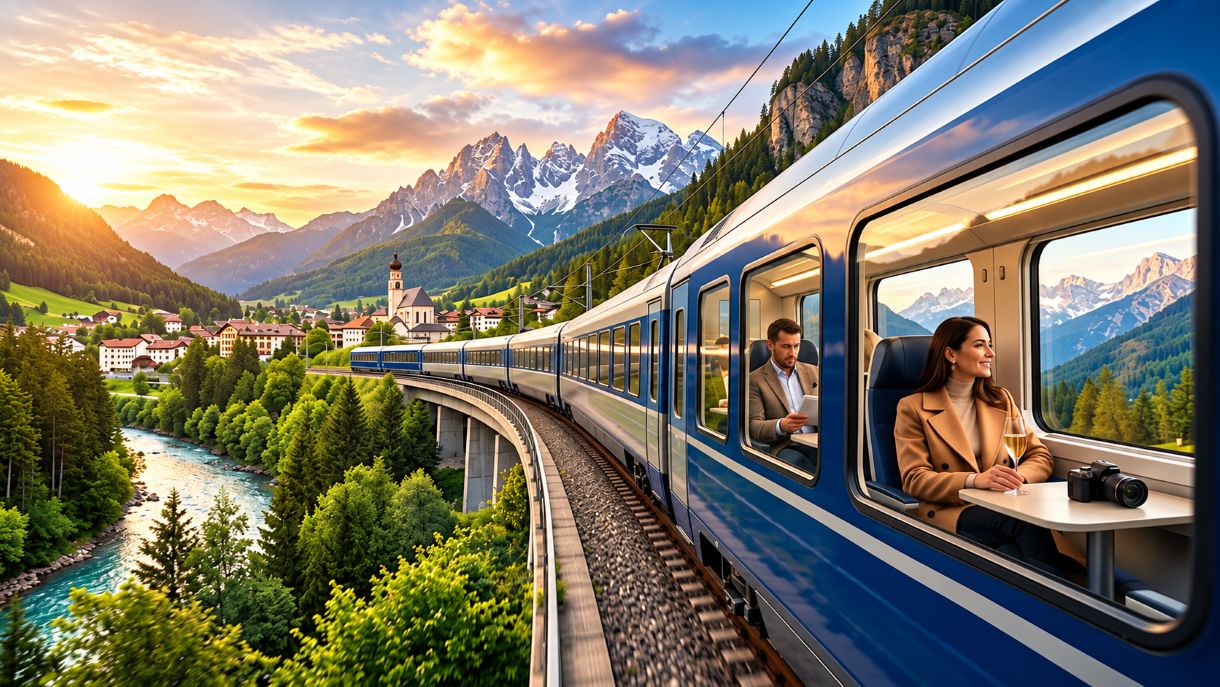
Image generated with Ai
European railway networks are undergoing an extraordinary renaissance as international transport authorities and national carriers consolidate cross-border itineraries for forward-thinking holidaymakers. Continental exploration has decisively shifted away from crowded airport terminals towards panoramic, low-carbon transit that redefines travel as an enriching destination in itself. By harmonising operational timetables, investing in advanced rolling stock, and eliminating historical border bottlenecks, major rail companies across Western and Central Europe are creating an interconnected web of high-speed corridors and heritage journeys. This coordinated expansion unlocks seamless transit across mountains, coastlines, and historic cultural centres without the friction of flight transfers.
Discerning travellers planning their itineraries are discovering that the slower pace of the railway journey revitalises the romance of discovery while delivering exceptional practical convenience. Modern passengers demand elevated comfort, environmental responsibility, and culturally authentic stopovers. The incoming wave of international routes scheduled through 2027 directly addresses this appetite by pairing cutting-edge high-speed infrastructure with bespoke luxury sleeper excursions. Whether connecting bustling northern capitals to tranquil Mediterranean shores or traversing remote alpine passes, these inter-country alignments demonstrate that the golden age of train holidays has arrived with unprecedented sophistication.
Transcontinental Alignments Reshaping Cross-Border Journeys
The deliberate coordination between Italy and Germany represents a fundamental milestone in modern European connectivity. For decades, journeys crossing the central spine of the Alps required fragmented regional bookings, multiple ticketing platforms, and inconvenient transfers at frontier towns. Under newly unified planning frameworks, Italian and German railway authorities have established direct, high-capacity corridors designed to carry holidaymakers smoothly between historical hubs. By synchronising services such as Trenitalia’s flagship Frecciarossa fleet with international partners, transalpine journeys become magnificent scenic showcases rather than logistical hurdles.
This bilateral momentum has sparked broader collaboration across neighbouring jurisdictions, drawing France, Belgium, Switzerland, Spain, and the Scandinavian transit authorities into a cohesive, customer-focused ecosystem. Instead of operating as isolated domestic networks, these systems now function as cooperative arteries. The strategic benefit for global travellers is immense: single-ticket capabilities, coordinated platform connections, and guaranteed passenger rights across borders. As infrastructure projects progressively reduce travel times, these rail corridors establish an alluring alternative to short-haul aviation, preserving the landscape while enabling travellers to witness changing topography from modern passenger lounges.
Advertisement
Advertisement
Flagship European Rail Routes Connecting Key Destinations
| Route Name | Core Termini | Operating Partners | Key Scenic and Cultural Highlights |
| Transalpine Express | Munich to Rome | Trenitalia, ÖBB, DB | Bavarian foothills, Brenner Pass, Bolzano, Florence |
| Aurelian Odyssey | Paris to Cappadocia | Golden Eagle Luxury Trains | Champagne vineyards, Vienna, Istanbul, Anatolian plains |
| Al Ándalus Heritage | Madrid to Seville | Renfe Luxury Trains | Toledo, Aranjuez Palace, Córdoba, Andalusian architecture |
| Riviera Coastal Link | Nice to Genoa | SNCF, Trenitalia | Èze-sur-Mer, Monaco cliffs, Ligurian coastline, Boccadasse |
| Northern Capital Direct | Hamburg to Copenhagen | Deutsche Bahn, DSB | Baltic maritime crossings, Danish pastoral landscapes |
| Rhine-Alsace Connector | Brussels to Basel | SNCF Voyageurs, SNCB | European Parliament, Strasbourg canals, Rhine River banks |
| Northern Skyline | Berlin to Oslo | Deutsche Bahn, DSB, Vy | Öresund Bridge, Gothenburg archipelago, Swedish forests |
Mediterranean Splendour Along The Italian And French Coasts
Coastal train travel retains an enduring magic that air transport cannot replicate, nowhere more evident than along the sun-drenched trajectory connecting France and Italy. Skirting the azure waters of the Mediterranean, regional connections between Nice and Genoa guide travellers past precipitous cliffs, pastel-coloured fishing harbours, and fragrant hillside lemon groves. Passengers departing the French Riviera glide through Èze-sur-Mer, the principality of Monaco, and Menton before reaching the border station of Ventimiglia. Here, the track merges effortlessly with the Italian network, opening up the dramatic sweeps of the Ligurian coast.
Arriving in Genoa by rail presents a grand historic introduction to one of Italy’s maritime powerhouses, celebrated for its narrow medieval alleys and magnificent Renaissance palazzi. Concurrently, high-speed rail operators are expanding services within northern Italy itself. French operator SNCF is preparing dedicated high-speed routes to link Turin directly with Venice, providing international voyagers with an enchanting cross-country passage. Travellers journeying south from Paris via high-speed connections can easily integrate Piedmontese gastronomy in Turin with the timeless gondola-lined waterways of Venice, proving that regional travel partnerships offer unparalleled creative freedom for holiday planning.
Advertisement
Advertisement
Alpine Corridors Uniting Central Europe And The North
The scenic majesty of Central Europe finds its ultimate expression along the direct rail axis linking Munich with Rome. Crossing through Austria via Innsbruck and traversing the monumental Brenner Pass, this service weaves through the jagged limestone peaks of the Dolomites, descending through Bolzano, Trento, and Verona before slicing across the Tuscan countryside towards the Eternal City. This eight-hour journey transforms what was once an exhausting drive into an indulgent, panoramic retreat. Ongoing civil engineering developments, notably the anticipated opening of the Brenner Base Tunnel, promise to trim travel times even further, cementing this transalpine route as an essential pillar of European transit.
Further north, Nordic and German transport operators are crafting expansive connections across the Baltic and Scandinavian corridors. Beginning with direct ICE L services linking Hamburg and Copenhagen, this ambitious project extends onward to connect Berlin with Oslo via Sweden. Traversing dramatic bridges, coastal inlets, and dense boreal woodlands, this multi-nation link showcases the power of international standardisation. Passengers can experience vibrant Danish design in Copenhagen, coastal elegance in Gothenburg, and the dramatic fjords surrounding Oslo, all while remaining grounded in exceptional comfort.
Western Luxury Charters And Historic Cultural Itineraries
Beyond scheduled passenger expresses, Europe’s luxury charter sector continues to elevate experiential rail tourism to peerless heights. The Aurelian Odyssey aboard the Golden Eagle Danube Express exemplifies this grand ambition, whisking private travellers across six nations on an unforgettable voyage from Paris to the fairy chimneys of Cappadocia. Featuring curated stopovers in the Champagne region, private classical symphony performances in Vienna, and guided tours of ancient Ephesus, this route merges five-star hospitality with deeply immersive historical storytelling.
Similarly, Spain’s iconic Al Ándalus luxury train celebrates the architectural and culinary tapestry of the Iberian Peninsula. Gliding between Madrid and Seville, the vintage rolling stock carries passengers through the UNESCO-listed monuments of Aranjuez, Toledo, Mérida, and Córdoba. Travellers savour regionally sourced gastronomy and world-class regional wines while resting in lavish Belle Époque suites. Complementing these luxury charters, extended regional services like the direct link between Brussels, Strasbourg, and Basel offer weekend explorers an accessible, cultured journey through the heart of Alsatian wine country and the vibrant trilateral borderlands of Switzerland, Germany, and France.
Frequently Asked Questions
Which European countries are launching direct cross-border train routes?
Italy, Germany, France, Belgium, Switzerland, Spain, Denmark, and Norway are introducing coordinated cross-border connections to streamline international rail travel.
Advertisement
Advertisement
How long does the direct train journey take between Munich and Rome?
The scenic journey across the Alps via the Brenner Pass takes approximately eight and a half hours, with future infrastructure expected to reduce travel times further.
Can British holidaymakers reach these new European train routes using Eurostar?
Yes, travellers departing London St Pancras International can connect seamlessly via Eurostar services in Paris or Brussels to access the wider continental network.
What scenic highlights are visible along the Nice to Genoa coastal rail link?
Passengers enjoy views of the Mediterranean coastline, including the cliffs of Èze-sur-Mer, Monaco, Menton, and the picturesque Ligurian villages surrounding Genoa.
Advertisement
Advertisement
What is the Al Ándalus train itinerary across Spain?
The Al Ándalus travels between Madrid and Seville, stopping at historic UNESCO World Heritage sites including Aranjuez, Toledo, Mérida, and Córdoba.
Are dining and sleeping facilities available on luxury charter trains like the Golden Eagle?
Yes, luxury charter services feature private ensuite sleeper compartments, fine-dining carriages serving regional cuisine, and dedicated lounge carriages with live entertainment.
When will the direct rail link between Hamburg and Copenhagen enter regular service?
Direct high-speed services using modern ICE L rolling stock are scheduled to begin operating on the Hamburg to Copenhagen route towards late 2027.
Advertisement
Advertisement
How does travelling by train compare to flying in terms of environmental impact?
Rail travel produces substantially lower greenhouse gas emissions per passenger kilometre compared to commercial aviation, making it a far more sustainable travel choice.
Do passengers require separate tickets when travelling across international borders in Europe?
Major railway alliances are increasingly providing unified ticketing platforms, allowing travellers to book multi-country connections under a single coordinated reservation.
What makes Strasbourg an ideal stopover on the Brussels to Basel route?
Strasbourg offers a rich blend of French and German heritage, featuring its historic canal-lined Petite France district, stunning Gothic cathedral, and seasonal cultural markets.
Advertisement
