
Hundreds of Travelers Face Disruptions Over Asia with 471 cancellations and 3,618 Delays across Jakarta, New Delhi and 37 More Airports

Updated
Published
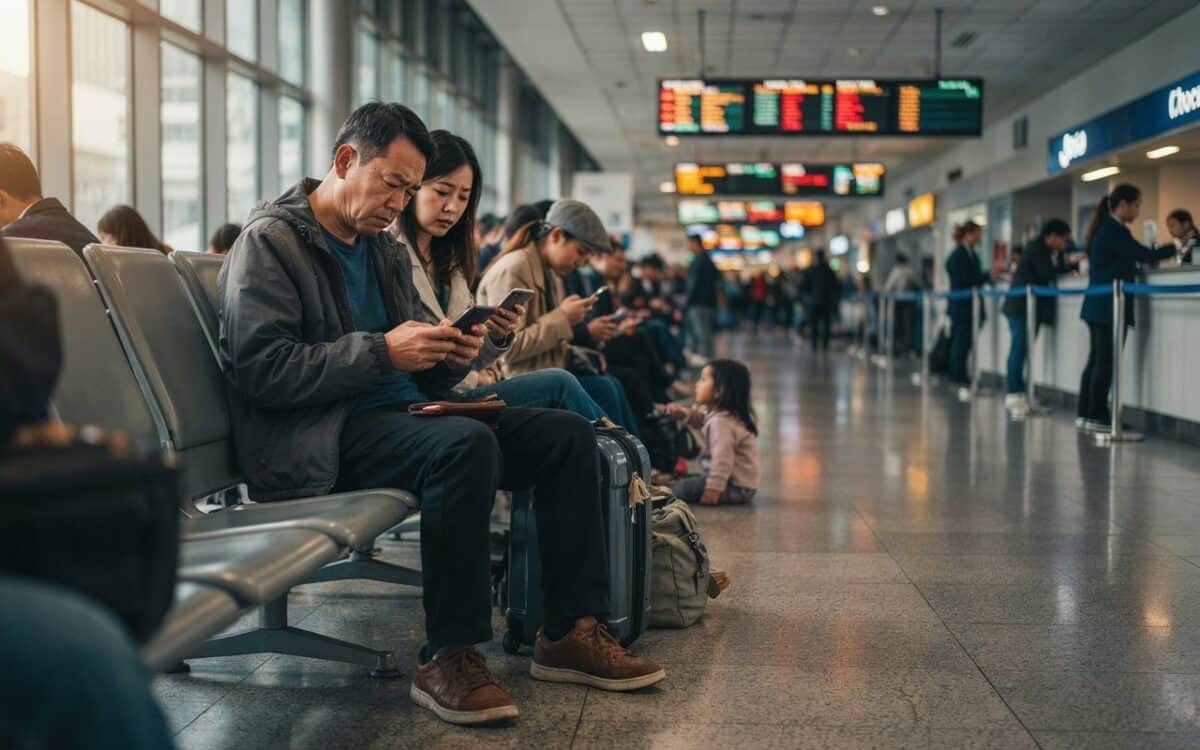
Hundreds of travellers are facing widespread travel disruptions across Asia as 471 cancellations and 3,618 delays affect major airports including Jakarta and New Delhi along with 37 more airports across the region. The disruption has impacted key aviation hubs due to operational pressure, airport congestion, weather-related challenges and environmental issues such as haze conditions linked to Indonesian forest fires. As a result, airlines and passengers across Asia are experiencing significant schedule uncertainty, with major carriers working to manage delayed services and cancelled operations. The ongoing disruption has created challenges across China, India, Indonesia, Taiwan, Hong Kong, Southeast Asia and other connected markets, where busy airports and airline networks are struggling to maintain normal operations. Major hubs such as Shanghai, Beijing, Guangzhou, Jakarta and New Delhi have become critical points of impact as delays spread through interconnected aviation routes.
Asia Aviation Network Faces Widespread Disruption Affecting Thousands of Passengers
Air travel across Asia is facing significant disruption, with 3,618 flight delays and 471 cancellations recorded across major airports, affecting passengers travelling through some of the region’s busiest aviation hubs. The disruption has spread across China, India, Indonesia, Taiwan, Hong Kong, Japan, South Korea, Southeast Asia and Middle East-linked Asian routes, creating widespread pressure on airlines and airport operations.
The latest disruption data shows that major aviation centres are experiencing operational challenges, with Shanghai, Beijing, Guangzhou, Shenzhen, Jakarta, Delhi, Taipei and Hong Kong among the most affected locations. High passenger traffic, airport congestion, weather-related operational pressure and regional environmental challenges have contributed to delays and cancellations across multiple markets.
A further challenge for Southeast Asia has emerged from toxic haze linked to Indonesian forest fires, affecting air quality and visibility in parts of the region. Smoke conditions in areas of Malaysian Borneo and neighbouring territories have raised concerns for transport operations, including aviation, as reduced visibility can affect airport activity and aircraft movements.
Advertisement
Advertisement
China Becomes the Main Centre of Asian Flight Disruptions
China has recorded the largest concentration of airport disruptions, with several major aviation hubs reporting heavy delays and cancellations. The scale of the impact reflects the importance of China’s domestic aviation network, where disruption at one major airport can quickly affect connected cities and airline schedules.
Shanghai Hongqiao International Airport recorded the highest number of delays among the listed airports, with 250 delays and 22 cancellations. Taiwan Taoyuan International Airport followed with 223 delays and three cancellations, while Beijing Capital International Airport reported 165 delays and 27 cancellations.
Advertisement
Advertisement
Other major Chinese airports affected include Guangzhou Baiyun International Airport, which recorded 177 delays and 25 cancellations, Xiamen Gaoqi International Airport with 168 delays and 15 cancellations, Shenzhen Bao’an International Airport with 155 delays and five cancellations, and Hangzhou Xiaoshan International Airport with 136 delays and 11 cancellations.
Additional disruptions were reported at Fuzhou Changle International Airport with 131 delays and six cancellations, Chengdu Tianfu International Airport with 106 delays and 32 cancellations, Kunming Changshui International Airport with 102 delays and 21 cancellations, and Nanjing Lukou International Airport with 100 delays and 17 cancellations.
Advertisement
Advertisement
The disruption across Chinese airports has placed significant pressure on airlines operating domestic and international services. When aircraft arrive late, the impact can continue throughout the day as airlines manage aircraft rotations, crew schedules and connecting passenger movements.
Airlines Across Asia Experience Heavy Operational Pressure
The disruption has affected numerous airlines across Asia, with Chinese carriers experiencing some of the highest levels of operational impact.
China Eastern recorded 99 cancellations and 448 delays, making it one of the most affected airlines in the region. Air China reported 73 cancellations and 153 delays, while Shenzhen Airlines experienced 33 cancellations and 145 delays.
Other Chinese airlines affected included XiamenAir, which recorded 180 delays and two cancellations, China Southern Airlines with 202 delays and one cancellation, Shanghai Airlines with 78 delays and 10 cancellations, and Hainan Airlines with 56 delays and four cancellations.
Advertisement
Advertisement
Additional carriers including Chengdu Airlines, Qingdao Airlines, Tibet Airlines, Zhejiang Loong and China United Airlines also experienced delays and cancellations.
The disruption highlights the interconnected nature of Asian aviation, where delays at major airports can create network-wide consequences for airlines serving multiple destinations.
Indonesia and Southeast Asia Face Major Travel Disruption
Indonesia has become one of the most affected aviation markets outside China. Jakarta Soekarno-Hatta International Airport recorded 207 delays and 51 cancellations, representing the highest cancellation figure among all airports included in the disruption data.
Other Indonesian airports also faced significant disruption. Ngurah Rai Bali International Airport reported 82 delays and six cancellations, Sultan Hasanuddin International Airport recorded 64 delays and 13 cancellations, Juanda International Airport experienced 63 delays and 10 cancellations, while Kuala Namu International Airport reported 56 delays and 10 cancellations.
The regional situation has also been complicated by haze conditions linked to Indonesian forest fires. Smoke travelling across borders has affected air quality in parts of Southeast Asia, including Malaysian Borneo, creating additional concerns for visibility and transport operations.
Southeast Asian airlines have also experienced disruption. Batik Air Indonesia recorded 70 delays and 30 cancellations, Citilink reported 50 delays and 18 cancellations, Garuda Indonesia experienced 37 delays and 15 cancellations, and Lion Air recorded 70 delays and four cancellations.
Advertisement
Advertisement
AirAsia reported 95 delays and three cancellations, while PAL Express and Pelita Air Service also recorded operational disruptions.
India, Japan, South Korea and Taiwan Aviation Networks Also Affected
India’s aviation sector has also experienced disruption, with Indira Gandhi International Airport recording 194 delays and 12 cancellations.
Indian airlines reported significant operational challenges. IndiGo recorded 175 delays and three cancellations, Air India experienced 62 delays and six cancellations, SpiceJet reported 29 delays and nine cancellations, and Akasa Air recorded seven delays and five cancellations.
Pakistan-based airlines were also affected, with Pakistan International Airlines reporting 13 delays and two cancellations, while Airblue recorded seven delays and one cancellation.
East Asian aviation markets also experienced disruption. Korean Air recorded 73 delays and one cancellation, All Nippon Airways reported 56 delays and one cancellation, ANA Wings recorded 37 delays and two cancellations, and Mandarin Airlines experienced 26 delays and one cancellation.
Middle East Airlines Connected With Asian Routes Report Delays
Airlines operating between Asia and the Middle East also faced disruption. Emirates recorded 207 delays and six cancellations, making it one of the most delayed carriers in the overall disruption data.
Advertisement
Advertisement
Etihad Airways reported 109 delays and one cancellation, Saudia experienced 68 delays and 17 cancellations, Air Arabia recorded 45 delays and two cancellations, and Gulf Air reported three delays and two cancellations.
These disruptions have the potential to affect passengers travelling between Asia and international destinations through major Gulf aviation hubs.
Hong Kong and Other Asian Markets Experience Additional Pressure
Hong Kong International Airport recorded 168 delays and five cancellations, creating challenges for one of Asia’s most important international transit hubs.
Airlines based in Hong Kong also reported disruption. Cathay Pacific experienced 57 delays and two cancellations, while Hong Kong Airlines recorded 16 delays and one cancellation.
Singapore Airlines also reported operational impact, with 24 delays and one cancellation recorded.
What Affected Passengers Should Do Now
Passengers travelling through affected Asian airports should take several precautions to reduce the impact of possible schedule changes.
Advertisement
Advertisement
- Travellers should check their airline status updates regularly before leaving for the airport, as schedules can change quickly during periods of widespread disruption. Passengers should also arrive earlier than usual because busy airports may require additional time for check-in, security procedures and boarding.
- Those with connecting flights should allow additional transfer time, especially when travelling through major hubs such as Shanghai, Beijing, Guangzhou, Jakarta, Delhi, Taipei and Hong Kong.
- Passengers affected by cancellations should contact airlines directly for rebooking options and alternative travel arrangements. Keeping essential medicines, travel documents, chargers and important items in hand luggage can also help during unexpected delays.
- Travellers in Southeast Asia should also monitor local air quality updates because haze conditions may affect visibility and transport operations.
Data Verification Notice
The data has been extensively curated by our editorial team using real-time aviation figures recorded on 1 September 2026 at 3:39 pm ET USA (2 September 2026, 2:39 am Jakarta Time (GMT+7)).
Primary Source: FlightAware.
Verification Protocol: All statistics have been independently reviewed and cross-checked by our human editorial desk. Timestamped records, data logs and feed snapshots are securely archived internally to support historical accuracy and editorial transparency.
Note: Real-time flight-tracking figures reflect active airspace and operational data. Minor variations may occur when compared with information displayed at individual airport terminals or airline departure gates.
You can read our previously published articles on flight disruption on Travel and Tour World . Check here.
Advertisement
Verified by Tuhin Sarkar
