
South Florida Autumn Arts and Maritime Calendar Activates Tri-County Tourism Corridor Across Miami, Fort Lauderdale, and the Palm Beaches

Published
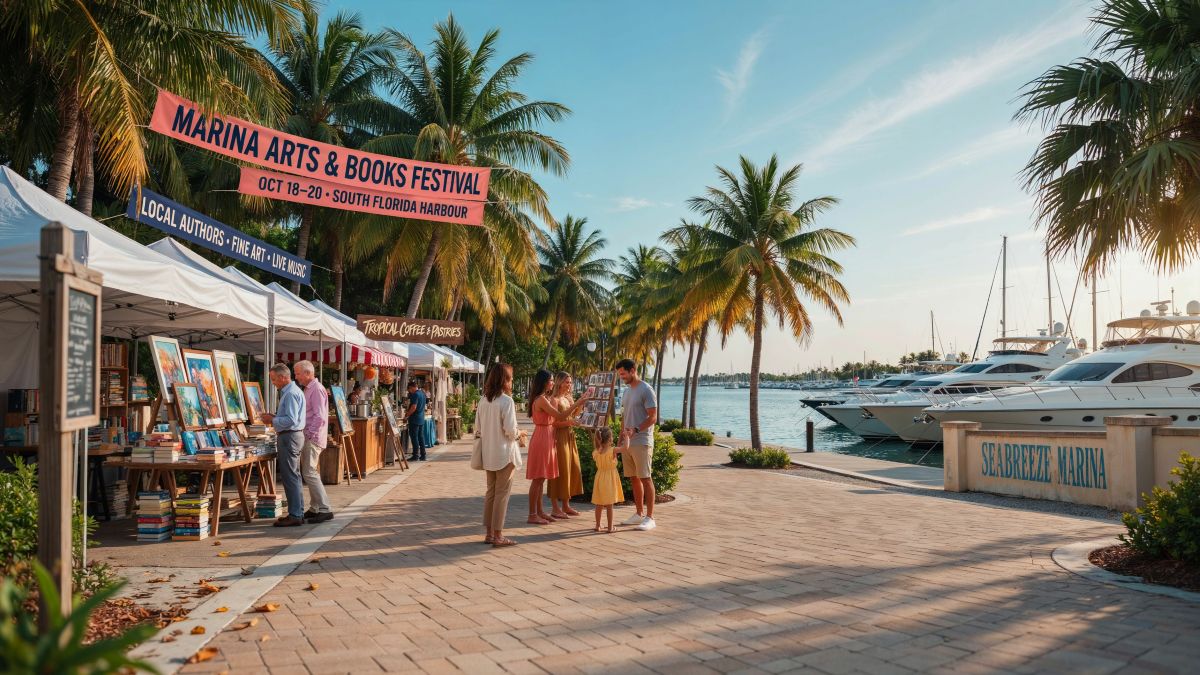
South Florida Autumn Arts and Maritime Calendar Activates Tri-County Tourism Corridor Across Miami, Fort Lauderdale, and the Palm Beaches.South Florida Autumn Arts and Maritime Calendar Activates Tri-County Tourism Corridor Across Miami, Fort Lauderdale, and the Palm Beaches.Municipal event logistics, harbor authorities, and cultural organizations across Miami-Dade, Broward, and Palm Beach counties are executing coordinated operational rollouts this week as South Florida opens its high-profile November 2026 autumn calendar.
Anchored by marquee multi-day fixtures—including the 67th Annual Fort Lauderdale International Boat Show (FLIBS) closing out early November, the 43rd Miami Book Fair across downtown Miami, and the Palm Beach County arts and culinary festivals—the region’s late-autumn calendar draws hundreds of thousands of domestic and foreign travelers, converting urban thoroughfares and maritime docks into multi-billion-dollar economic engines.
Where Do These Events Happen and Who Is Participating?
Rather than cordoning activities inside a single municipal hall, South Florida’s November cultural circuit activates open-air waterfronts, collegiate campuses, and municipal arts promenades spanning three distinct metropolitan counties:
- Miami-Dade County (The Miami Book Fair & Heritage Showcases): Centered at Miami Dade College (Wolfson Campus) in Downtown Miami, the 8-day festival spans street fair stages, the “Children’s Alley,” and academic halls across NE 2nd Avenue. Over 450 international and domestic authors, poets, translators, and publishers participate alongside 200+ independent book exhibitors and culinary artisans.
- Broward County (Fort Lauderdale International Boat Show & Cultural Corridors): The maritime calendar takes over seven premier marine sites—headquartered at the Bahia Mar Yachting Center and stretching along the Las Olas Marina, Hall of Fame Marina, and the Broward County Convention Center. The showcase convenes over 1,200 exhibiting shipbuilders, marine designers, and equipment manufacturers representing more than 52 nations, alongside local marine conservation and trade apprentices.
- Palm Beach County (Downtown Palm Beach Gardens Art Festival & Historic Trails): Operating across the pedestrian avenues of Palm Beach Gardens and the South Florida Fairgrounds in West Palm Beach, curated juried art circuits bring together more than 200 fine sculptors, painters, jewelers, and regional culinary vendors alongside coastal performing artists.
How Has Regional Autumn Attendance Tracked Over the Past Five Years?
Because South Florida’s November events operate across open-access urban streets and ticketed maritime docks, attendance telemetry is compiled using county hotel tax logs, Brightline intercity rail tap-ins, and municipal turnstile registries:
Advertisement
Advertisement
| Year | Operational Model & Staging Framework | Aggregate Tri-County November Turnout | Average Regional Hotel Capacity |
| 2021 | Phased Recovery (Post-Pandemic Resumption) | ~310,000 | 72.5% |
| 2022 | Full Municipal Resumption | ~365,000 | 79.8% |
| 2023 | Inter-City Rail Integration (Brightline Route) | ~410,000 | 83.2% |
| 2024 | Expanded Multi-District Arts Circuit | ~435,000 | 86.5% |
| 2025 | Pre-Cycle Tourism Baseline Record | ~460,000 | 89.1% |
| 2026 | 2026 High-Volume Staging Projection | ~475,000–490,000 | 91.5%+ (Expected capacity) |
Which Other Countries Have This Same Cultural and Maritime Event Format?
While South Florida holds unique geographic advantages as a subtropical gateway, sovereign destinations globally stage structurally equivalent waterfront exhibitions and municipal book capitals:
- Monaco (Monaco Yacht Show, Port Hercule): The Mediterranean counterpart to Fort Lauderdale’s maritime showcase, uniting global superyacht shipyards, luxury lifestyle purveyors, and high-net-worth maritime investors.
- Mexico (Feria Internacional del Libro de Guadalajara – FIL): The Spanish-speaking world’s largest literary festival, featuring thousands of publishers and authors echoing Miami’s bilingual Latin American book pavilions.
- France (Cannes Yachting Festival & Salon du Livre de Paris): European benchmark models combining premier coastal marine trade in Cannes with high-density literary and philosophical salons in Paris.
- United Arab Emirates (Abu Dhabi International Boat Show & Sharjah International Book Fair): Middle Eastern hubs that leverage November autumn temperatures to stage simultaneous maritime luxury expos and world-class international publishing forums.
Which Region of Travellers Come to These Events Most?
Mobility analytics monitored by regional transportation authorities, Miami International Airport (MIA), and Fort Lauderdale-Hollywood International Airport (FLL) identify three dominant visitor feeder corridors:
Advertisement
Advertisement
- U.S. Northeast & Midwest Fly-and-Ride Corridor (55%+ of Non-Local Visitors): Comprising cultural tourists, seasonal homeowners (“snowbirds”), and maritime trade delegates arriving from New York, New Jersey, Massachusetts, Illinois, and Pennsylvania to escape colder northern climates.
- Latin America & Caribbean Basin (26% of International Arrivals): Affluent leisure travelers, publishers, and marine enthusiasts traveling from Brazil, Colombia, Mexico, and Argentina, utilizing Miami as a primary commercial and cultural bridgehead.
- Western Europe & Canada: Accounting for approximately 19% of inbound travelers, consisting of Canadian leisure vacationers alongside British, French, and German trade delegates and collectors participating in the early autumn yachting and arts previews.
Which Country Benefits Most and How Are Tourism and the Economy Impacted?
The United States—and specifically the State of Florida and the tri-county metropolitan region of Miami-Dade, Broward, and Palm Beach—stands as the direct macroeconomic beneficiary.
┌────────────────────────────────────────────────────────────────────────┐
│               SOUTH FLORIDA REGIONAL ECONOMIC FOOTPRINT                │
├───────────────────────────────────┬────────────────────────────────────┤
│       DIRECT HOSPITALITY          │       COMMERCIAL & CIVIC TAX       │
├───────────────────────────────────┼────────────────────────────────────┤
│ • $2.1B+ combined direct spend    │ • Transient Occupancy Tax:         │
│   across hotels, marine trade,    │   sustains local municipal infra-  │
│   dining, and ground transit.     │   structure without resident debt. │
│                                   │                                    │
│ • Weekend hotel occupancy lift to │ • Small-business circulation:      │
│   88%–93% across Downtown Miami,  │   direct high-margin retail spend  │
│   Fort Lauderdale, & Palm Beach.  │   for independent artisans/shops.  │
└───────────────────────────────────┴────────────────────────────────────┘
Transit and Multi-County Spend Dispersal: The Brightline intercity rail system and Tri-Rail regional commuter network enable attendees to lodge in Fort Lauderdale while attending evening book discussions in Miami or exploring artisan fairs in the Palm Beaches, dispersing discretionary traveler capital evenly across municipal boundaries.
Advertisement
Advertisement
Direct Economic Injection: According to economic impact studies monitored by VISIT FLORIDA, cultural and specialty trade travelers generate upwards of 30% higher daily spend than standard volume tourists. The collective November festival corridor generates over $2.1 billion in total economic output, with the Fort Lauderdale International Boat Show alone contributing $1.79 billion across state-level supply chains and marine engineering firms.
Hotel Compression and Shoulder-Season Hedging: Accommodations throughout downtown Miami, Fort Lauderdale Beach, and West Palm Beach record occupancy surges between 88% and 93%, protecting Average Daily Rates (ADR) during a late-autumn shoulder window that bridges the gap between summer beach travel and the winter holiday surge.
Advertisement
