
France Joins Germany, Italy, Spain, UK, Portugal, Greece, and More in a Powerful Anti Tourism Uprising Sweeping Europe as Barcelona, Venice, Rome, Milan, and Paris Face Fierce Public Backlash Over Housing Shortages, Cruise Crowding, and Record Breaking Visitor Surges

Published
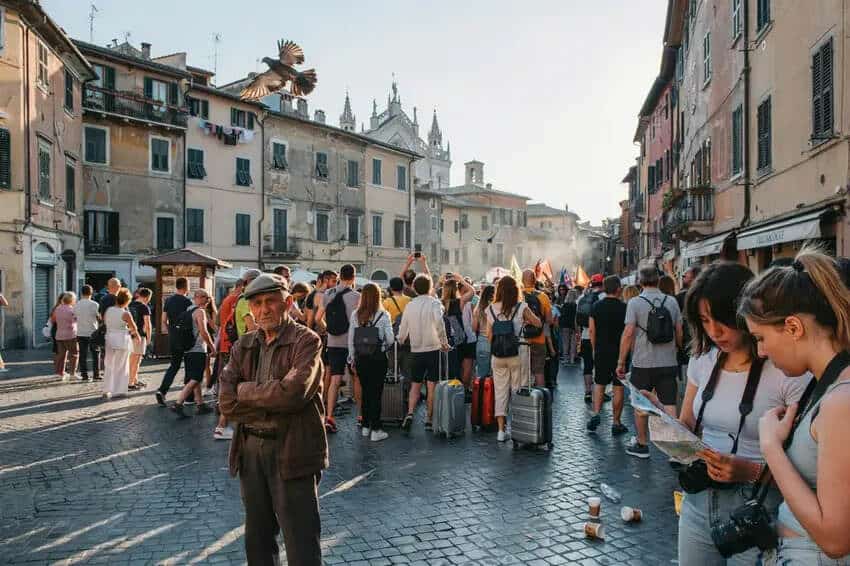
France Joins Germany, Italy, Spain, UK, Portugal, Greece, and More in a Powerful Europe-Wide Anti Tourism Uprising as Barcelona, Venice, Rome, Milan, and Paris face intensifying public backlash driven by severe housing shortages, rising rental costs, cruise tourism congestion, and record-breaking visitor inflows, with growing pressure on urban infrastructure and livability across major European destinations in 2026, despite continued growth in international arrivals and strong demand for city-based tourism across the continent.
Europe’s tourism landscape has been shown to be entering a period of visible social tension as major destinations experience growing public resistance linked to housing affordability, rental shortages, and infrastructure overload. According to comparative multi-country assessment across 30 European destinations, anti-tourism sentiment has been recorded at varying intensity levels, with Southern and Western Europe emerging as the most affected regions.
Advertisement
Advertisement
While international arrivals continue to expand across the continent, localised protests and policy responses have been increasingly reported in major urban centres. The situation has been identified as a dual reality: strong tourism-driven economic growth on one side, and rising community pressure on the other.
Spain Emerges as the Epicentre of Europe’s Anti Tourism Movement
Spain has been positioned at the highest level of protest activity among European destinations. Demonstrations have been recorded across more than 40 cities, reflecting widespread concern about overtourism pressures.
Advertisement
Advertisement
Barcelona has remained the most prominent focal point, where public demonstrations have been linked to escalating rental costs and reduced availability of long-term housing. Similar unrest has been observed across the Canary Islands, where tourism concentration has intensified structural pressure on local services.
Catalonia, one of the most visited regions in Europe, has continued to experience heavy visitor inflows, with millions of arrivals recorded annually. Despite this, rising dissatisfaction has been publicly expressed in urban areas where tourism density is highest.
Advertisement
Advertisement
Key developments in Spain:
- Anti-tourism demonstrations reported in over 40 urban destinations
- Barcelona identified as a central protest hotspot
- Canary Islands experiencing rising local resistance
- Housing affordability cited as the dominant concern
- Short-term rental expansion linked to residential displacement pressure
Despite this, Spain has still recorded continued growth in international arrivals, reflecting strong demand across European and global markets.
Italy Faces Intensifying Urban Pressure Across Historic Cities
Italy has been ranked second in terms of protest activity intensity. Major cultural cities have experienced targeted demonstrations linked to tourism saturation and housing market distortions.
Venice has remained at the centre of regulatory intervention, where access controls and visitor management mechanisms have been introduced during peak travel periods. Rome, Florence, Naples, and Milan have also reported protest activity connected to short-term rental expansion and urban congestion.
In several cases, public concern has been directed toward infrastructure strain, where historic urban layouts have been placed under increasing visitor pressure beyond designed capacity.
Key developments in Italy:
Advertisement
Advertisement
- Protests recorded in Venice, Rome, Florence, Naples, and Milan
- Short-term rental systems identified as a major concern
- Infrastructure stress in historic city centres highlighted
- Visitor management taxes introduced in select periods in Venice
- Rising debate over tourism balance versus livability
Despite tensions, Italy has continued to show strong tourism growth forecasts, supported by sustained international demand.
France Sees Growing Anti Cruise and Urban Tourism Sentiment
France has been placed among the top three countries experiencing visible tourism-related protest activity. Demonstrations have been reported in Paris, Marseille, and Nice, with particular attention directed toward cruise tourism expansion.
Urban tourism pressure in Paris has been linked to rising accommodation costs and congestion in central districts. Coastal destinations such as Marseille and Nice have also experienced concerns connected to seasonal overcrowding and infrastructure strain during peak months.
A growing debate around cruise ship arrivals has added further complexity to tourism policy discussions, particularly in coastal urban environments.
Key developments in France:
- Protests recorded in Paris, Marseille, and Nice
- Rising opposition to cruise tourism expansion
- Urban housing pressure identified as a major issue
- Seasonal overcrowding in coastal destinations
- Policy discussions linked to sustainable tourism balance
Despite these developments, France has continued to report growth in international arrivals and aviation demand forecasts.
Advertisement
Advertisement
Moderate Pressure Group Across Western and Southern Europe
A second category of destinations has been identified where anti-tourism sentiment exists but remains geographically limited rather than nationally widespread.
These countries include Portugal, Greece, the Netherlands, Germany, and the United Kingdom. In these destinations, protests have generally been concentrated in specific cities or districts rather than across entire national systems.
Observed patterns include housing affordability concerns and growing debates around tourism taxation frameworks. However, tourism development continues to remain strong and economically significant.
Countries with moderate sentiment levels:
- Portugal
- Greece
- Netherlands
- Germany
- United Kingdom
Key characteristics:
- Localised protests rather than nationwide movements
- Housing and rental affordability concerns increasing
- Tourism taxes and regulations being debated
- Continued strong international visitor demand
- No systemic nationwide disruption reported
Stable Tourism Pressure Regions Across Central and Northern Europe
A third classification includes countries where tourism continues to develop with minimal mass protest activity. These regions are considered comparatively stable in terms of visitor-local population relations.
Advertisement
Advertisement
Austria, Switzerland, Czech Republic, Croatia, and several Scandinavian nations have been placed in this category. While tourism growth continues, public resistance has remained limited and largely non-systemic.
These destinations have been noted for stronger regulatory balance and managed tourism flows, reducing pressure on residential housing markets.
Countries with stable conditions:
- Austria
- Switzerland
- Czech Republic
- Croatia
- Scandinavian countries
Key characteristics:
- Limited or no mass protest movements
- More balanced tourism-to-resident ratios
- Strong regulatory frameworks in place
- Stable infrastructure capacity
- Controlled tourism growth patterns
Cyprus and Albania Identified as Most Open Tourism Destinations
At the opposite end of the spectrum, Cyprus and Albania have been identified as destinations with minimal protest activity and high levels of tourism acceptance.
These countries have been characterised by relatively open tourism policies and lower intensity of regulatory restrictions on visitor flows. Public resistance levels have remained minimal compared to broader European patterns.
Advertisement
Advertisement
Key developments:
- Cyprus and Albania ranked as most open destinations
- Minimal recorded protest activity
- Low regulatory pressure on tourism flows
- High tourism acceptance levels among local populations
- Emerging positioning as growth-friendly travel markets
Structural Drivers Behind Europe’s Tourism Tension
The study indicates that tourism pressure is being shaped by multiple interconnected factors rather than a single cause. These include housing market distortions, rising rental prices, short-term accommodation expansion, and uneven distribution of visitor flows across urban centres.
In addition, media visibility and policy responses such as tourism taxes have contributed to shaping public perception. The ratio of tourists to residents has also been identified as a key structural indicator influencing protest intensity.
Despite these pressures, tourism continues to remain one of the strongest economic sectors across Europe, supporting employment, infrastructure investment, and regional development.
A clearly divided tourism landscape has been observed across Europe. On one side, Spain, Italy, and France are experiencing intensified public resistance driven by housing and urban pressure. On the other side, several countries continue to maintain stable tourism environments with limited disruption.
France joins Germany, Italy, Spain, UK, Portugal, Greece, and more in a sweeping Europe-wide anti-tourism wave as cities like Barcelona, Venice, Rome, Milan, and Paris face rising housing shortages, rent inflation, and overtourism pressure. The situation has intensified due to record visitor inflows straining urban infrastructure and reducing housing availability for local residents in major European destinations in 2026.
At the same time, demand for European travel remains strong, with continued growth in arrivals and forecasted increases in passenger traffic. This dual trend suggests that Europe’s tourism future will increasingly depend on balancing economic benefits with urban livability and sustainable visitor management strategies.
Advertisement
