
Colombia Tourism Expands Beyond Medellín as Vaupés and Guaviare Lead New Regional Travel Growth

Published
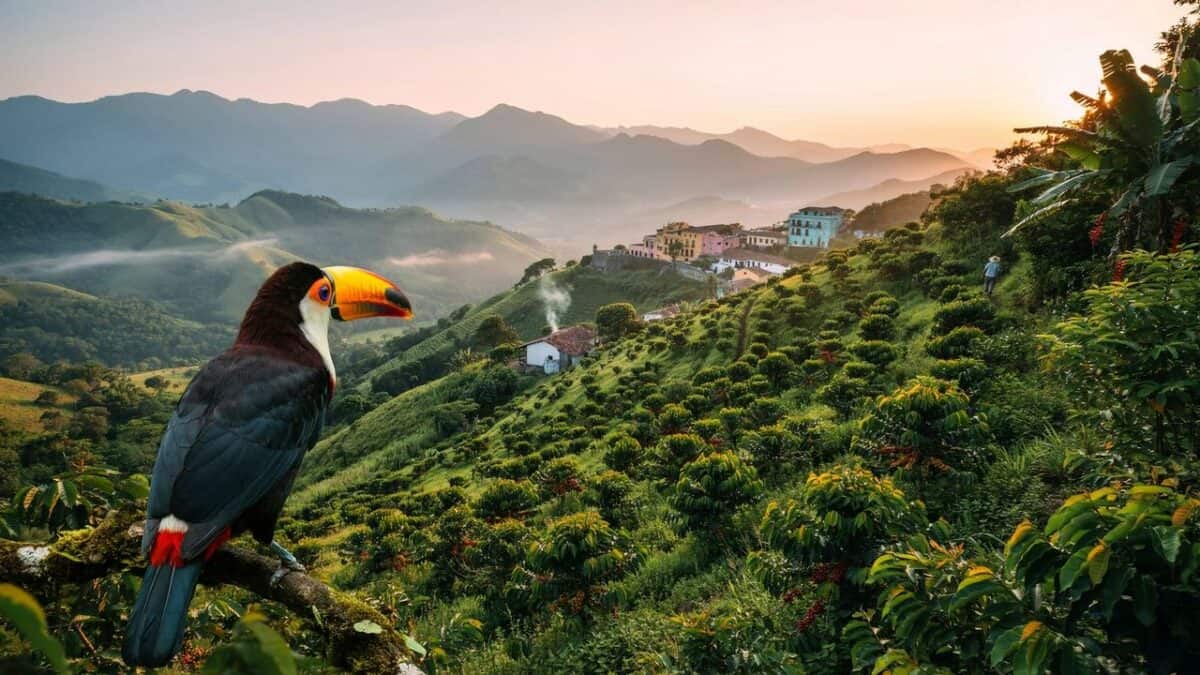
Colombia tourism is expanding beyond Medellín as Vaupés and Guaviare lead a new wave of regional travel growth, showing how international visitor interest is beginning to reach destinations outside the country’s established tourism centres. During the first half of 2026, official tourism data showed particularly strong increases in non-resident foreign visitors to Vaupés and Guaviare, while other departments including Guainía and Nariño also gained attention. The shift comes as Central and South America’s wider travel economy is forecast to grow faster than the global economy in 2026, creating new opportunities for nature, community, cultural and adventure tourism across Colombia.
The emerging pattern does not mean established destinations such as Bogotá, Medellín and Cartagena are losing their importance.
Instead, Colombia is attempting to spread tourism activity into more regions.
That could become increasingly important as international travellers look for experiences beyond major cities and traditional resort areas.
Advertisement
Advertisement
Latin American Tourism Enters 2026 With Strong Growth Outlook
The wider regional environment is supportive.
The World Travel & Tourism Council expects the Travel & Tourism sector across Central and South America to grow strongly during 2026.
Advertisement
Advertisement
WTTC forecasts the sector’s contribution to regional GDP to increase by 4.1%.
That compares with projected global economic growth of 3.2%.
Advertisement
Advertisement
International visitor spending across Central and South America is forecast to rise even faster, increasing by approximately 7.8%.
| 2026 WTTC indicator | Forecast |
|---|---|
| Central and South America Travel & Tourism GDP growth | 4.1% |
| Global economic growth comparison | 3.2% |
| International visitor spending growth | 7.8% |
This provides an important background for Colombia.
Growing international spending can create opportunities not only for major tourism centres but also for destinations able to develop credible nature, culture and adventure products.
Colombia Wants Tourism Growth to Reach More Regions
Colombia’s Ministry of Commerce, Industry and Tourism has been highlighting the increasing geographical spread of international tourism.
Advertisement
Advertisement
The country’s traditional tourism gateways remain dominant.
Bogotá, Medellín and Cartagena continue to account for a large proportion of foreign visitor activity.
However, government tourism statistics are increasingly showing growth in departments that historically received much smaller international visitor numbers.
This matters because tourism concentrated in a small number of cities limits the geographic distribution of visitor spending.
Regional tourism can potentially create demand for accommodation, guides, transport, restaurants and community enterprises in areas where international tourism previously played a limited role.
Vaupés Records One of the Strongest Growth Rates
Vaupés stands out in the latest regional data.
Advertisement
Advertisement
The department lies within Colombia’s Amazon region and has a tourism profile very different from the country’s major cities.
Official figures covering the first half of 2026 indicate that non-resident foreign visitor numbers increased sharply compared with the same period a year earlier.
The percentage increase is significant because Vaupés begins from a much smaller tourism base than destinations such as Bogotá or Cartagena.
That distinction is essential.
A large percentage increase in a smaller destination does not mean it is suddenly receiving more tourists than Colombia’s established gateways.
It means international interest is expanding from a relatively low starting point.
Advertisement
Advertisement
Guaviare Builds Its Nature and Adventure Appeal
Guaviare is another department attracting increased international interest.
Located where the Andes, Amazon and Orinoco ecosystems meet, the region has considerable potential for nature and adventure tourism.
Its tourism products include forests, rivers, rock formations, archaeological and Indigenous heritage, and biodiversity experiences.
One of the region’s most distinctive attractions is Cerro Azul, known for ancient rock paintings.
Guaviare’s tourism development also demonstrates how Colombia’s visitor economy can move beyond conventional city breaks.
For travellers seeking nature and cultural experiences, these areas provide a substantially different product from Cartagena’s Caribbean heritage or Medellín’s urban tourism.
Advertisement
Advertisement
Guainía Adds Another Amazon-Orinoco Experience
Guainía forms part of the same broader shift towards less traditional destinations.
The eastern department is associated with rivers, rainforest landscapes and Indigenous communities.
Its best-known natural attraction is the Cerros de Mavecure.
The dramatic rock formations rise above the surrounding landscape near the Inírida River and have become increasingly visible within Colombia’s nature-tourism promotion.
Destinations such as Guainía can appeal to travellers seeking remote experiences.
However, remoteness also creates challenges.
Advertisement
Advertisement
Tourism development requires reliable transport, trained guides, accommodation, environmental management and cooperation with local communities.
Rapid visitor growth without those foundations can place pressure on sensitive ecosystems.
Nariño Offers a Different Type of Regional Tourism
Nariño demonstrates that Colombia’s emerging tourism growth is not limited to Amazonian areas.
Located in southwestern Colombia near the border with Ecuador, the department offers mountain landscapes, culture, heritage and nature.
Pasto is the regional capital and provides access to several important attractions.
The Las Lajas Sanctuary near Ipiales is one of the region’s most recognisable landmarks.
Advertisement
Advertisement
Nariño is also associated with the annual Blacks and Whites Carnival in Pasto, recognised by UNESCO as Intangible Cultural Heritage.
This gives the department a tourism identity based on culture and highland landscapes rather than tropical rainforest.
For tour operators, that variety increases the number of different Colombia products that can be developed.
Colombia’s Tourism Map Is Becoming More Diverse
The growth of destinations including Vaupés, Guaviare, Guainía and Nariño supports a broader objective: reducing the concentration of tourism in a small number of places.
Colombia already has several internationally established tourism centres.
They include:
Advertisement
Advertisement
- Bogotá
- Medellín
- Cartagena
- Santa Marta
- San Andrés
These destinations remain crucial to the country’s tourism economy.
Regional growth can complement them rather than replace them.
A visitor arriving through Bogotá, for example, can continue by domestic air towards a smaller destination.
That creates opportunities for multi-stop itineraries combining established gateways with emerging tourism regions.
Domestic Aviation Will Be Essential
Colombia’s geography makes aviation particularly important to regional tourism development.
Mountain ranges, forests and long road distances can make overland travel difficult.
Advertisement
Advertisement
Some remote destinations are considerably easier to reach by air.
That means tourism growth in departments such as Vaupés and Guainía depends partly on maintaining reliable domestic connectivity.
For international tour operators, accessibility is one of the first considerations when deciding whether a destination can be included in a commercial itinerary.
Attractions alone are not enough.
Travellers need predictable transportation, accommodation and local services.
Community Tourism Could Benefit From the Shift
Regional tourism creates opportunities for smaller businesses.
Advertisement
Advertisement
Visitors travelling outside Colombia’s major cities may rely more heavily on locally based guides, independent accommodation providers and community enterprises.
Potential beneficiaries include:
- Local guides
- Indigenous tourism businesses
- Small hotels and lodges
- Restaurants
- Transport providers
- Artisans
- Nature-tour operators
- Community tourism projects
The challenge is ensuring that tourism revenue remains within destination communities.
That requires thoughtful planning rather than simply increasing visitor numbers.
Nature Tourism Needs Careful Management
Several of Colombia’s emerging destinations contain environmentally sensitive areas.
The Amazon and Orinoco regions have significant biodiversity and Indigenous cultural heritage.
Advertisement
Advertisement
Tourism can provide economic incentives for conservation, but poorly managed growth can also create environmental pressure.
Visitor limits, waste management, trained guides and community participation become particularly important in remote areas.
This is why percentage growth figures should not automatically be treated as a race for maximum visitor volume.
For some destinations, lower-volume and higher-value tourism may be more appropriate.
Regional Growth Creates Opportunities for Travel Operators
For international tour operators, Colombia’s changing tourism map opens new possibilities.
Traditional itineraries commonly focus on Bogotá, Medellín and Cartagena.
Advertisement
Advertisement
Future programmes could increasingly add regional extensions.
Potential themes include:
- Amazon tourism
- Indigenous cultural experiences
- Archaeology
- Birdwatching
- Adventure tourism
- Community tourism
- Nature photography
- Cultural festivals
These products can appeal to repeat visitors who have already experienced Colombia’s major cities.
They can also attract specialist travellers looking for destinations outside mainstream tourism circuits.
Strong Percentages Need Statistical Context
Regional growth statistics require careful interpretation.
A department receiving a relatively small number of international visitors can produce a very large percentage increase after adding only a modest number of travellers.
Advertisement
Advertisement
For that reason, percentage growth should always be considered alongside absolute visitor numbers.
Bogotá, Medellín and Cartagena remain much larger international tourism destinations than Vaupés, Guaviare or Guainía.
The importance of the emerging departments is therefore not their current scale.
It is the direction of travel.
International tourism activity is beginning to reach a broader range of Colombian regions.
Conclusion: Colombia Tourism Expands Beyond Medellín as Vaupés and Guaviare Lead New Regional Travel Growth
Colombia tourism is expanding beyond Medellín as Vaupés and Guaviare lead new regional travel growth, signalling a gradual diversification of international visitor activity beyond the country’s best-known destinations.
Advertisement
Advertisement
The change comes at a favourable moment for the wider region.
WTTC expects Travel & Tourism GDP across Central and South America to grow by 4.1% in 2026, faster than the 3.2% global economic growth comparison used in its forecast. International visitor spending is projected to increase by 7.8%.
For Colombia, the opportunity is to direct part of that momentum towards more regions.
Vaupés and Guaviare are gaining attention for Amazonian, nature and cultural tourism. Guainía adds remote landscapes and the Cerros de Mavecure, while Nariño provides a contrasting combination of highland scenery, religious heritage and cultural traditions.
The percentage increases should be viewed carefully because these destinations start from smaller visitor bases than Bogotá, Medellín or Cartagena.
Nevertheless, the trend matters.
Advertisement
Advertisement
A more geographically diverse tourism economy can introduce international travellers to new parts of Colombia while creating opportunities for local guides, accommodation businesses, transport operators and communities.
The next challenge will be making that growth sustainable.
Better connectivity, environmental protection, community participation and reliable visitor infrastructure will determine whether today’s emerging destinations become lasting parts of Colombia’s international tourism story.
Advertisement
