
Singapore Targets High-Spending Business Tourists at IMEX America 2026 as MICE Tourism Boom Sparks Global Race for Billion-Dollar Events

Published
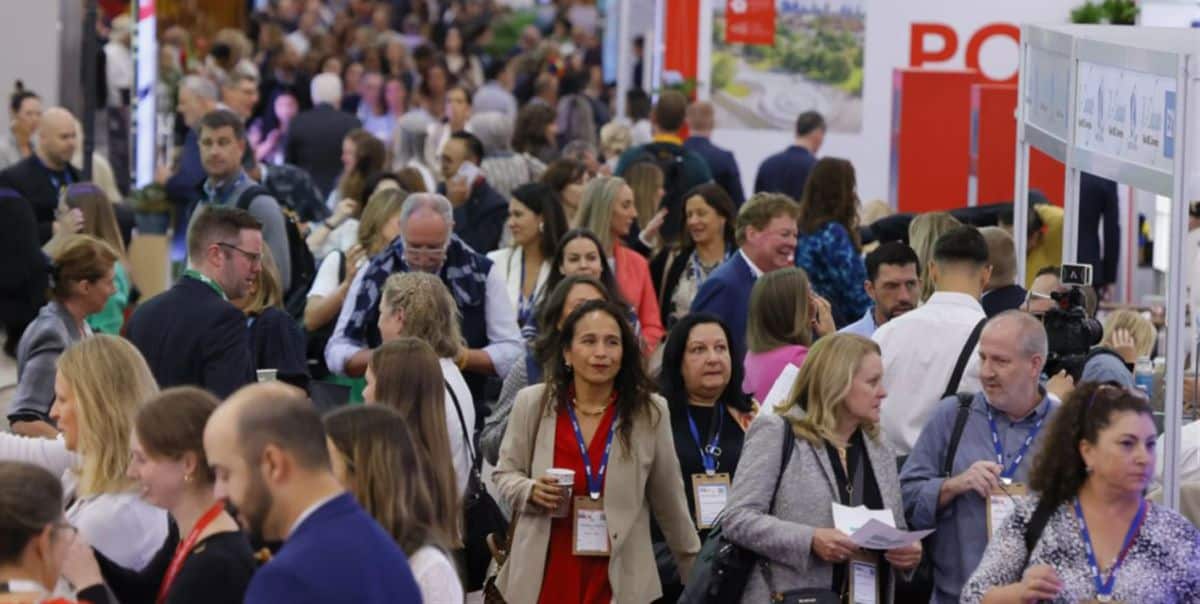
Singapore tries to attract business tourists who have a high economic value to its meetings offer at IMEX America 2026. Singapore is looking for something more than getting recognition at an exhibition. The city needs business events that would bring people and money into the city. Furthermore, Singapore has good revenues from MICE tourism and a sustainability policy. This information can be used to make buyers interested in the destination. Nevertheless, an exhibit at a trade show does not mean that a city gets new bookings. It only means that buyers create a list of cities they will compare and choose later.
Why IMEX America Matters to Asian Destinations
IMEX America is a major trade show for the meetings, incentive travel, conferences and exhibitions industry. It brings together destinations, hotels, venues, event organisers and suppliers with buyers looking for places to hold future events.
The 2026 exhibition runs from 13 to 15 October at Mandalay Bay in Las Vegas. A day of education, known as Smart Monday, took place on 12 October. The exhibition’s business value lies in the meetings it helps to arrange. A conversation may lead to a conference bid, an incentive trip or a new relationship between an organiser and a destination.
For Asian tourism authorities, the show offers access to global buyers in one place. It also gives cities an opportunity to explain what they can offer beyond meeting rooms. Local culture, food, transport, hotels and visitor experiences can all influence where a business event takes place.
Advertisement
Advertisement
Which Asian Destinations Have Confirmed Representation?
Japan, South Korea, Singapore, Thailand, the United Arab Emirates and Hong Kong have documented representation through government, tourism-body or event-organiser sources. Türkiye’s 2026 national tourism calendar also lists IMEX America. The country is partly in Europe and partly in Asia, so an Asia-focused article can identify it as transcontinental.
India’s Ministry of Tourism participation is reported in a circular issued by the Indian Association of Tour Operators. Indonesia is represented commercially through an Indonesian event company named in a supplier announcement. These are useful leads, but they do not establish the same kind of national-government delegation as the official listings for Japan, Singapore or the UAE.
Advertisement
Advertisement
This is a verified list of announced representation, not a complete attendance roll. A planned pavilion or exhibitor listing confirms that a destination intended to take part. It does not prove how many delegates attended or how many meetings they completed.
Seoul Shifts Its Focus to Buyers Who Can Make Decisions
Seoul’s strategy offers one of the clearest angles for the article. The Seoul Tourism Organization said its IMEX 2026 programme would focus on pre-registered business consultations. The goal is to meet buyers with the authority to select locations for future events and to build contacts that can support follow-up work.
The city’s “TEAM SEOUL” pavilion brings together the Seoul Metropolitan Government, the tourism organisation and ten member companies from the Seoul MICE Alliance. These include hotels and event specialists. The group is promoting Seoul to international planners as a destination for meetings and conferences.
The strategy points to a larger shift in destination marketing. A crowded pavilion may attract attention, but the number of useful conversations can matter more. Seoul’s planned approach links its stand activity to meetings with potential clients. That gives the city a clear business aim: encourage planners to consider Seoul for future events and continue discussions after the exhibition.
Seoul Uses Local Experiences to Make Meetings More Memorable
Seoul is also presenting the city through its everyday culture. The official announcement said the pavilion would feature a “Seoul Happy Hour” built around chimaek, a popular pairing of fried chicken and beer. The activity is intended to create a relaxed setting where buyers can experience a small part of Seoul while discussing business.
This offers an article angle that combines tourism and sales. A destination does not promote only its conference halls. It also presents the experiences delegates might enjoy before, during and after an event. Food, neighbourhoods and local customs can help planners picture the full trip.
Advertisement
Advertisement
Seoul also planned a briefing for members of the international conference-organiser network INCON on 14 October. Since that was the day after the exhibition opened, the article should describe it as part of the wider programme rather than an opening-day event. The intended purpose was to strengthen links with organisers who could help attract large conferences to Seoul.
Tokyo Brings Japanese Craft into Its Exhibition Story
Tokyo’s Business Events team confirmed it would attend IMEX America with local partners. Its visitor experience includes mizuhiki, a traditional Japanese art that uses decorative cord. Tokyo’s autumn 2026 newsletter said visitors would have the opportunity to experience mizuhiki at the booth.
The activity gives planners something to see and do while learning about the destination. It also helps Tokyo tell a story that reaches beyond infrastructure. A meeting planner can assess venues and hotel capacity, but cultural experiences can help make an incentive trip or conference programme feel distinctive.
Tokyo has connected this demonstration with a broader theme of presenting tradition alongside sustainability. The available announcement confirms the planned activity, but it does not provide figures showing that the display generated bookings or reduced event emissions. The sound reporting angle is to explain how cultural demonstrations support destination identity, while leaving commercial results open until they are reported.
Singapore Connects MICE Growth With Tourism Spending
Singapore brings a strong economic context to the Las Vegas show. The Singapore Tourism Board reported that MICE tourism receipts reached S$2.3 billion in 2025, an increase of more than 35 per cent from 2024.
That figure is not revenue from IMEX America. It shows why Singapore places importance on attracting meetings and incentive groups. Business events can bring visitors who stay in hotels, eat at local restaurants and use attractions and transport. They can also support business relationships and future visits.
Advertisement
Advertisement
Singapore’s presence in Las Vegas is backed by a public trade-event calendar and a procurement record for the Singapore pavilion. These sources establish official preparation for the show. The next question is how the city will measure the results. Meeting requests and contacts can be counted quickly. A confirmed event, its delegate numbers and its eventual visitor spending take longer to establish.
That gap between activity and outcome gives the article a useful analytical thread: the value of a trade-show stand depends on what happens after the exhibition.
Singapore’s Sustainability Credentials Add a Second Selling Point
Singapore is also building sustainability into its MICE strategy. The Tourism Board’s 2026 materials describe a MICE sustainability certification framework for businesses and event venues. The board has also pointed to guidance for reducing waste through actions such as reuse and recycling.
A 2026 tourism-performance release reported that all six of Singapore’s purpose-built MICE venues had obtained sustainability certification. It also said that more than 80 per cent of members of the Singapore Association of Convention and Exhibition Organisers and Suppliers had achieved certification.
These figures give Singapore a basis for speaking with buyers who want clear information about environmental practices. They also raise questions that planners can ask of any destination: What does the certification cover? How does a venue measure waste? Which suppliers take part?
Certification can show that a venue or business has met defined standards. It does not prove that every event held there has a low environmental impact. A careful article can explain the framework without turning it into an unsupported promise.
Advertisement
Advertisement
Hong Kong Links Las Vegas With a Wider US Sales Mission
Hong Kong’s tourism board connected IMEX America with trade missions in two other US cities. Its August 2026 circular invited local travel partners to join sales activities in Los Angeles on 9 October and San Francisco on 12 October, followed by IMEX America in Las Vegas from 13 to 15 October.
The sequence gives Hong Kong a wider American-market strategy. The Las Vegas trade show was part of a multi-city programme to meet overseas travel buyers and explore business opportunities. Eligible trade partners were invited to use the Hong Kong pavilion as a meeting base.
The circular specified that no pre-scheduled appointments would be arranged for participants in that particular programme. Instead, a shared meeting table would be available. This detail is useful because it shows that destinations and their partners may have different access arrangements at the same exhibition.
The wider story is how tourism organisations coordinate trade missions around major events. For Hong Kong, the exhibition was one point in a series of US meetings rather than a stand-alone appearance.
Thailand and the UAE Present Different Destination Choices
Thailand’s Convention and Exhibition Bureau is listed in the IMEX exhibitor directory, with its booth identified at E1540. The bureau promotes Thailand’s business-events sector and works with suppliers across the country. That gives the destination a formal presence for planners considering meetings, conferences and incentive trips in Southeast Asia.
The United Arab Emirates also has documented representation, with Dubai and Abu Dhabi appearing in official event listings. Abu Dhabi’s government exhibition system lists IMEX America at Mandalay Bay and identifies meeting-pod availability. Dubai’s business-events calendar invites planners to meet its team and discuss potential events in the emirate.
Advertisement
Advertisement
These listings point to an important editorial distinction: the UAE is one country, but its cities promote their own venues and experiences. A useful comparison would examine what each destination offers to planners, including event capacity, hotels, transport and local programmes. The available listings establish participation. They do not reveal final attendance numbers or the number of event contracts secured.
India and Indonesia Add Further Asian Industry Representation
India’s participation is described in an August circular from the Indian Association of Tour Operators. The circular says the Ministry of Tourism would take part and invite eligible tourism businesses to join the India Pavilion. It set a participation fee of ₹2.5 lakh for each four-square-metre space at the exhibitions covered by the notice.
This creates a potential story about shared access. A common pavilion can give hotels, tour operators and wellness resorts a route to international buyers. The circular documents the invitation and fee; it does not confirm the final list of businesses that attended.
Indonesia has a different type of evidence. An event company named PT E&C Productions was identified in an announcement about Asian representatives at IMEX America. This supports the presence of an Indonesian commercial supplier, not an Indonesian government delegation.
Keeping these distinctions clear strengthens the article. It allows India and Indonesia to be included without implying that every form of commercial participation represents a country’s official national stand.
Event Technology Matters When It Supports Real Follow-Up
IMEX America uses digital tools to help attendees plan their time. Its official app includes the attendee list, schedules, exhibitor directory, floor plan and badge scanning. The show’s technology provider also describes AI-supported recommendations, meeting scheduling, lead capture and post-event analytics.
Advertisement
Advertisement
These functions can help exhibitors manage a busy exhibition. A planner can book appointments, find a booth and record a useful contact. But technology does not, by itself, turn a scan into a confirmed conference or an incentive group.
The stronger article asks what happens at each stage. Did the contact request information? Did the destination submit a proposal? Did the organiser shortlist the city? Was the event eventually booked? Those steps show whether digital tools help businesses reach outcomes that matter.
The provider’s published 2025 figures include 92,000 scheduled meetings. That is a previous-year result, not a 2026 total. The article should avoid presenting it as a figure for this year’s exhibition.
What Asian Participation Could Mean for Future Travel
The IMEX America 2026 will showcase the audacious approach of Asia in trying to promote business tourism, but the real test is what happens after the event. First, Seoul will arrange for potential buyer meetings while Tokyo employs culture through craft in an attempt to make their offer unique. Singapore, on the other hand, associate’s development of the MICE industry with sustainability. Additionally, Hong Kong has linked this event to the wider marketing of the country in the US. Countries like Thailand, Japan, South Korea, UAE and Türkiye have all provided evidence of participating in this conference. But it takes more than a busy booth to secure bookings.
Advertisement
