
Germany Aligns with France, Belgium, Netherlands, and Austria as Berlin Raises National Security Threat Level to High, Expands Intelligence Powers, and Reshapes Travel Safety Across Europe
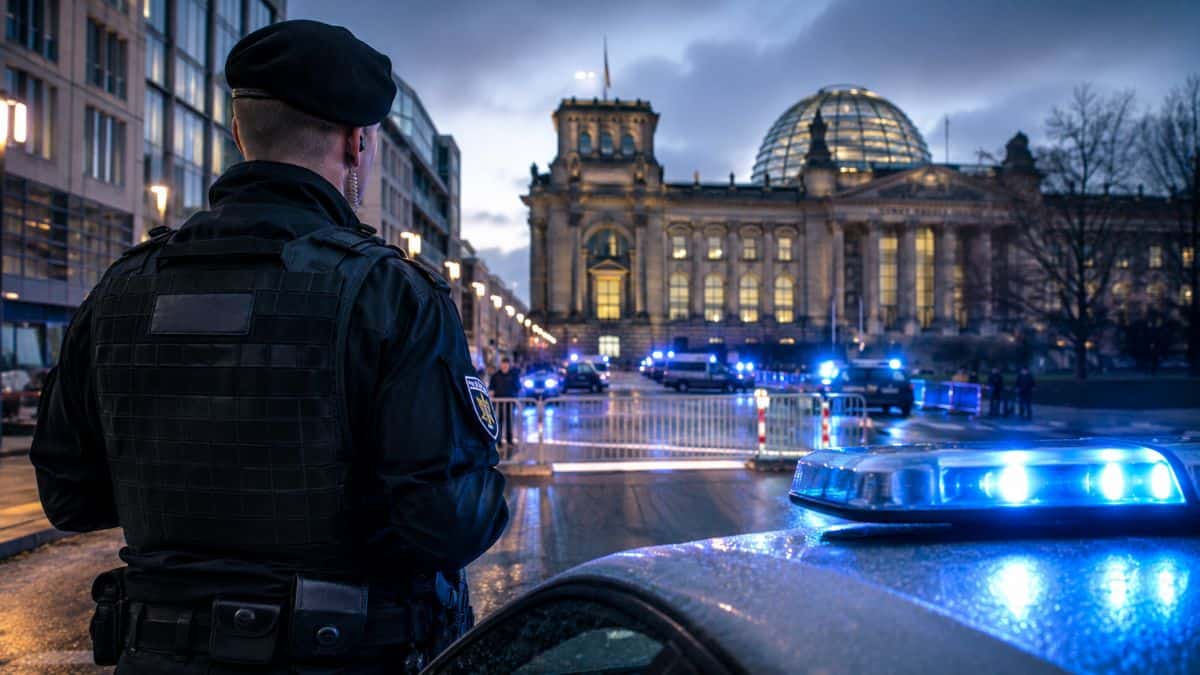
Germany has elevated its national security threat assessment from “abstract” to “high,” signaling a significant shift in the country’s domestic security posture and creating important implications for residents, international visitors, business travelers, and the wider European travel landscape. The decision comes as Chancellor Friedrich Merz’s government prepares sweeping intelligence reforms designed to strengthen Germany’s ability to detect, prevent, and respond to evolving terrorist threats. While officials emphasize there is no reason for public panic, authorities have acknowledged that intelligence assessments now indicate a greater likelihood of attacks than previously believed.
As one of Europe’s busiest travel destinations and a central transportation hub connecting France, Belgium, the Netherlands, Austria, and dozens of other countries, Germany’s enhanced security measures are expected to influence airport operations, railway security, border cooperation, public event management, and intelligence sharing across the continent. Government officials have stressed that tourism and business travel will continue as normal, but travelers should anticipate increased security vigilance at transport hubs, public venues, and major gatherings while Berlin strengthens its preventive capabilities.
Germany Elevates National Threat Assessment Following Intelligence Warnings
German authorities announced that the country’s threat assessment has been upgraded from an abstract level to a high-threat environment after intelligence agencies recorded a growing volume of credible security information suggesting an increased possibility of terrorist attacks.
According to Interior Minister Alexander Dobrindt, security services have identified significantly more intelligence reports than in previous assessments, prompting officials to conclude that Germany now faces a more immediate security environment rather than only a theoretical threat.
Advertisement
Advertisement
The revised assessment does not indicate that a specific attack has been confirmed. Instead, it reflects intelligence indicating heightened risks requiring greater preparedness from security agencies.
| Key Security Development | Latest Status |
|---|---|
| National threat level | Raised to High |
| Previous assessment | Abstract threat |
| Primary reason | Increased intelligence reporting |
| Government objective | Stronger preventive security |
| Expected impact | Enhanced nationwide vigilance |
Why Germany’s Security Decision Matters for European Travel
Germany occupies a strategic position at the heart of Europe’s transportation network. Millions of travelers pass through German airports, railway stations, highways, and urban centers every month, making the country a vital gateway for international tourism and business mobility.
Advertisement
Advertisement
Major aviation hubs such as Frankfurt, Munich, Berlin Brandenburg, Düsseldorf, Hamburg, and Cologne Bonn connect passengers with destinations across Europe, North America, Asia, Africa, and the Middle East.
The heightened threat level is therefore relevant not only for Germany but also for neighboring countries that maintain extensive cross-border transport connections.
Travelers can generally expect:
| Travel Sector | Potential Impact |
|---|---|
| Airports | Increased security screening |
| Rail stations | Additional patrols |
| Public transport | Enhanced monitoring |
| Tourist attractions | Greater police visibility |
| Major events | Expanded security checks |
Authorities have emphasized that transportation services remain fully operational.
Intelligence Reform Represents a Major Policy Shift
Alongside the revised threat assessment, Berlin is preparing legislation that would substantially expand the operational authority of Germany’s intelligence agencies.
Historically, German intelligence organizations have primarily focused on gathering, analyzing, and evaluating intelligence rather than conducting direct operational interventions.
Advertisement
Advertisement
The proposed reforms would broaden their role during exceptional security situations where immediate action may be required.
Government officials argue that modern terrorism evolves rapidly and often requires faster responses than traditional bureaucratic processes can deliver.
The proposed legislation is expected to be discussed during a Cabinet meeting scheduled for August.
Proposed Intelligence Powers Explained
One of the most significant elements of the draft legislation would permit intelligence officers to undertake emergency operational measures under narrowly defined terrorism-related circumstances.
Officials indicate these powers could include emergency entry into private premises when authorities believe an imminent threat exists and police intervention may not arrive quickly enough.
However, the government has also clarified an important limitation.
Advertisement
Advertisement
Intelligence officers would not receive arrest powers.
Detaining suspects would remain exclusively the responsibility of Germany’s police forces, preserving the traditional separation between intelligence collection and law enforcement.
| Proposed Measure | Government Position |
|---|---|
| Emergency searches | Permitted under strict conditions |
| Arrest authority | Remains with police |
| Intelligence operations | Expanded in emergencies |
| International cooperation | Increased |
| Oversight | Subject to legal review |
Stronger Cooperation with International Intelligence Partners
Berlin’s security reforms are also intended to improve intelligence cooperation with allied nations.
Germany already works closely with European Union members, NATO partners, and international intelligence organizations on counterterrorism, cybersecurity, organized crime, and border security.
Officials believe expanded operational flexibility would enable faster coordination when intelligence indicates cross-border threats affecting multiple countries.
Given Germany’s location in central Europe, enhanced cooperation with neighboring states including France, Belgium, the Netherlands, and Austria is expected to remain an important component of regional security planning.
Advertisement
Advertisement
Civil Liberties Debate Expected
While many security experts support stronger preventive capabilities, the proposed reforms are also likely to generate extensive public and parliamentary debate.
Germany maintains robust constitutional protections for privacy, judicial oversight, and civil liberties.
Any expansion of intelligence powers typically undergoes careful legal scrutiny to ensure security measures remain proportionate and consistent with constitutional safeguards.
Legal experts are expected to closely examine issues including judicial authorization, oversight mechanisms, accountability, transparency, and limitations on operational authority.
Balancing public safety with individual rights remains one of the central challenges facing policymakers.
Previous Attacks Continue to Shape Security Policy
Germany’s latest security measures follow several deadly attacks that have significantly influenced national security discussions.
Advertisement
Advertisement
Authorities continue reviewing lessons learned from previous incidents involving vehicle attacks and knife assaults that resulted in multiple fatalities and injuries.
These incidents have reinforced government efforts to improve intelligence sharing, strengthen preventive capabilities, and identify emerging threats earlier.
Officials argue that evolving terrorist tactics require equally adaptive security institutions capable of responding before attacks occur rather than solely investigating incidents afterward.
What International Travelers Should Know
Germany remains open to international tourism and business travel.
No nationwide travel restrictions have been introduced as part of the revised threat assessment.
However, visitors should remain aware of heightened security awareness across transportation networks and public spaces.
Advertisement
Advertisement
Travelers are encouraged to allow additional time at airports and railway stations, remain attentive to official announcements, report suspicious activity to authorities, and carry valid identification during domestic travel.
Large festivals, sporting events, concerts, and public celebrations may also feature expanded security screening and increased police presence.
These measures are intended to reassure the public while improving preparedness rather than discouraging travel.
Germany’s Security Strategy and the Future of European Mobility
Germany’s decision reflects broader European efforts to modernize national security strategies amid increasingly complex threat environments.
The proposed intelligence reforms seek to improve early intervention capabilities while preserving judicial oversight and democratic accountability.
For the travel industry, enhanced security may become increasingly integrated into passenger experiences across airports, railway networks, tourism destinations, and public venues.
Advertisement
Advertisement
Industry stakeholders generally recognize that maintaining traveler confidence depends not only on efficient transportation systems but also on strong public safety measures.
As Germany advances its legislative reforms, other European governments may closely observe Berlin’s approach when evaluating their own intelligence frameworks and counterterrorism strategies.
The coming months will therefore be important not only for Germany’s domestic security architecture but also for regional cooperation across Europe’s interconnected travel and transportation network.
Conclusion
Germany’s decision to elevate its national security threat level to “high” marks one of the country’s most significant security developments in recent years. Combined with proposed legislation expanding intelligence agency capabilities, Berlin is seeking to strengthen its capacity to prevent attacks before they occur while maintaining constitutional safeguards. For international travelers, the immediate impact is expected to be limited to increased security vigilance rather than restrictions on movement. As Europe continues adapting to evolving security challenges, Germany’s reforms underscore the growing importance of intelligence cooperation, proactive threat detection, and resilient transportation systems in supporting safe and confident travel throughout the region.
Frequently Asked Questions
1. Why did Germany raise its threat level to high?
German authorities cited a significant increase in intelligence reports indicating a higher likelihood of potential terrorist threats.
2. Does the new threat level mean an attack is imminent?
No. Officials say the assessment reflects increased risk rather than confirmation of a specific planned attack.
Advertisement
Advertisement
3. Will tourists still be able to visit Germany?
Yes. Germany remains open to international visitors, and normal travel operations continue.
4. Will airport security become stricter?
Travelers may experience enhanced screening, additional police presence, and increased security checks.
5. What changes are planned for intelligence agencies?
The government proposes expanding operational powers during terrorism-related emergencies while keeping arrest authority with police.
6. Can intelligence officers arrest suspects under the proposal?
No. Arrest powers would remain exclusively with German police.
7. Which countries are most closely affected by Germany’s security cooperation?
Germany works closely with neighboring European countries, including France, Belgium, the Netherlands, and Austria, alongside other international partners.
8. Are public events expected to face additional security measures?
Yes. Major festivals, sporting events, concerts, and public gatherings may have enhanced security screening.
Advertisement
Advertisement
9. How could this affect business travelers?
Business travel is expected to continue normally, although passengers should allow additional time for security procedures.
10. Why is Germany’s decision important for European travel?
Germany serves as one of Europe’s primary transportation hubs, making its security policies significant for regional aviation, rail travel, tourism, and cross-border mobility.
Advertisement
