
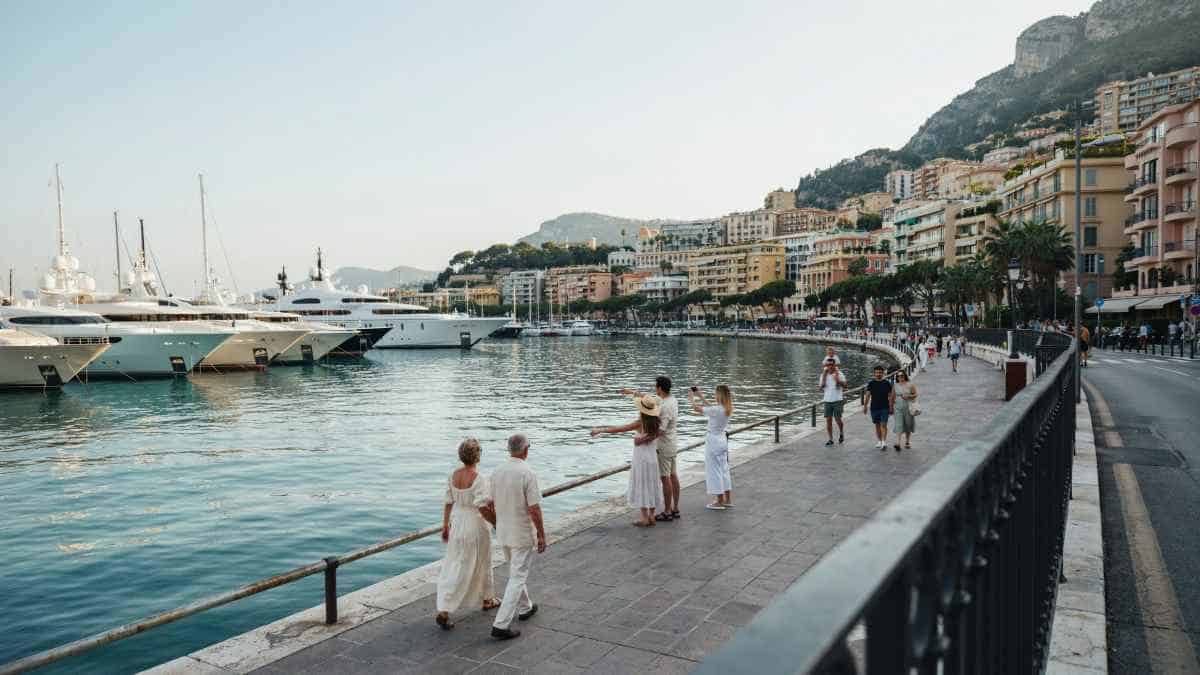
Image generated with Ai
A new peak in finances in Monaco tourism and hospitality has been achieved owing to strong hotel results, luxury travel internationally and the inclusion of the eco-district Mareterra in the visitor setting of the Principality. According to statistics from the Monegasque Institute of Statistics and Economic Studies, accommodation and catering revenues have reached a record €1.14 billion, with hotel occupation at 64.5%. These figures reflect the size of the hospitality economy in Monaco and its place in the Mediterranean luxury tourism segment. Visitors come to the Principality owing to its hotels, restaurants, cultural activities, events, ports and luxury retailing. In Monaco, due to its geographical conditions, it is possible to combine several activities in a small period of time, in addition to its location on the French Riviera and connection with other destinations around the Mediterranean.
Monte Carlo is one of Monaco’s most recognised tourism districts and is closely associated with luxury accommodation, entertainment, dining and major international events.
The area around Casino de Monte-Carlo forms a central sightseeing destination, with visitors also drawn to surrounding luxury hotels, restaurants and high-end shopping. The district’s architecture and landscaped public spaces provide a distinctive setting for travellers exploring the Principality.
Hotels across Monaco cater to an international luxury market, with room rates and yields reflecting the destination’s premium positioning. Strong occupancy combined with high-value visitor spending contributes significantly to the wider accommodation and food service economy.
Advertisement
The development of Mareterra adds a new dimension to Monaco’s tourism landscape. The waterfront district incorporates residential, commercial, public and landscaped areas as part of a major coastal development.
Its location along the Larvotto waterfront places Mareterra within an established tourism environment close to beaches, hotels and Mediterranean leisure facilities. Public spaces and pedestrian areas provide additional opportunities for visitors to explore Monaco’s expanded waterfront.
Mareterra also forms part of Monaco’s wider approach to developing its limited land area. The project extends the Principality’s coastline and introduces new spaces within one of Europe’s most densely developed destinations.
For travellers, the district can be incorporated into itineraries covering Larvotto, Monte Carlo and Port Hercules.
Monaco’s tourism economy has a strong focus on international high-value travel. Visitors arrive for leisure holidays, major sporting events, business activities, cultural experiences and luxury shopping.
Non-EU visitors form an important component of the international luxury market. Travellers from outside the European Union can combine Monaco with wider French Riviera itineraries, including Nice, Cannes and other Mediterranean destinations.
The concentration of luxury hotels and restaurants allows Monaco to accommodate visitors seeking premium hospitality within a compact destination. Dining represents another significant part of the visitor experience, with restaurants ranging from established fine-dining establishments to casual Mediterranean venues.
Hotel occupancy of 64.5% demonstrates continued demand for accommodation within the Principality. Hotel performance is influenced by seasonal leisure travel, international events, business activity and major sporting occasions.
Monaco’s calendar includes events that attract substantial international audiences. The Formula 1 Monaco Grand Prix remains one of the destination’s most prominent tourism events, drawing spectators and international visitors to Monte Carlo and surrounding areas.
The event also creates demand for hotels, restaurants, transportation and visitor services across Monaco and the wider French Riviera.
Although Monaco is strongly associated with luxury tourism, its visitor attractions also include museums, historic buildings, gardens and cultural institutions.
The Prince’s Palace in Monaco-Ville provides one of the Principality’s most significant historical attractions. The old town surrounding the palace offers narrow streets, traditional architecture, restaurants and viewpoints overlooking the Mediterranean.
The Oceanographic Museum is another major attraction, combining marine science, aquariums and exhibitions. Its location on the Rock provides visitors with panoramic views of the coastline.
Monaco’s gardens also contribute to the destination’s tourism offer, including the Exotic Garden and Japanese Garden.
Monaco’s Mediterranean coastline supports a broad range of leisure activities. Port Hercules provides a prominent marina environment where visitors can see yachts and explore the waterfront.
Larvotto offers a more leisure-focused setting with its beach, promenade, restaurants and access to the Mareterra district. The waterfront area allows visitors to combine swimming and relaxation with dining and sightseeing.
The Principality’s compact size means these areas can be connected within a single itinerary, allowing travellers to experience several districts without lengthy journeys.
Monaco does not have its own commercial airport. International visitors generally reach the Principality through Nice Côte d’Azur Airport in France before continuing by road, rail, helicopter or other regional transportation.
The railway station at Monaco-Monte-Carlo connects the Principality with destinations along the French Riviera. Regional trains provide access to Nice, Cannes, Menton and other coastal locations.
This connectivity makes Monaco particularly suitable for travellers building multi-destination Mediterranean itineraries.
The €1.14 billion turnover achieved within the accommodation and food service sector, coupled with a hotel occupancy rate of 64.5%, highlights the significance of tourism and hospitality to the economy of Monaco. The addition of Mareterra ensures that a waterfront environment is added to an existing visitor environment, with Monte Carlo, Monaco-Ville, Larvotto and Port Hercules still providing key tourism attractions. The combination of luxury accommodation, international events, culture, Mediterranean lifestyle and regional transport links ensure that Monaco continues to be a small destination able to offer value for money alongside varied experiences.
Advertisement
Advertisement
Advertisement













Friday, September 4, 2026
Friday, September 4, 2026

Friday, September 4, 2026

Thursday, September 3, 2026

Wednesday, September 2, 2026

Friday, September 4, 2026
Friday, September 4, 2026