
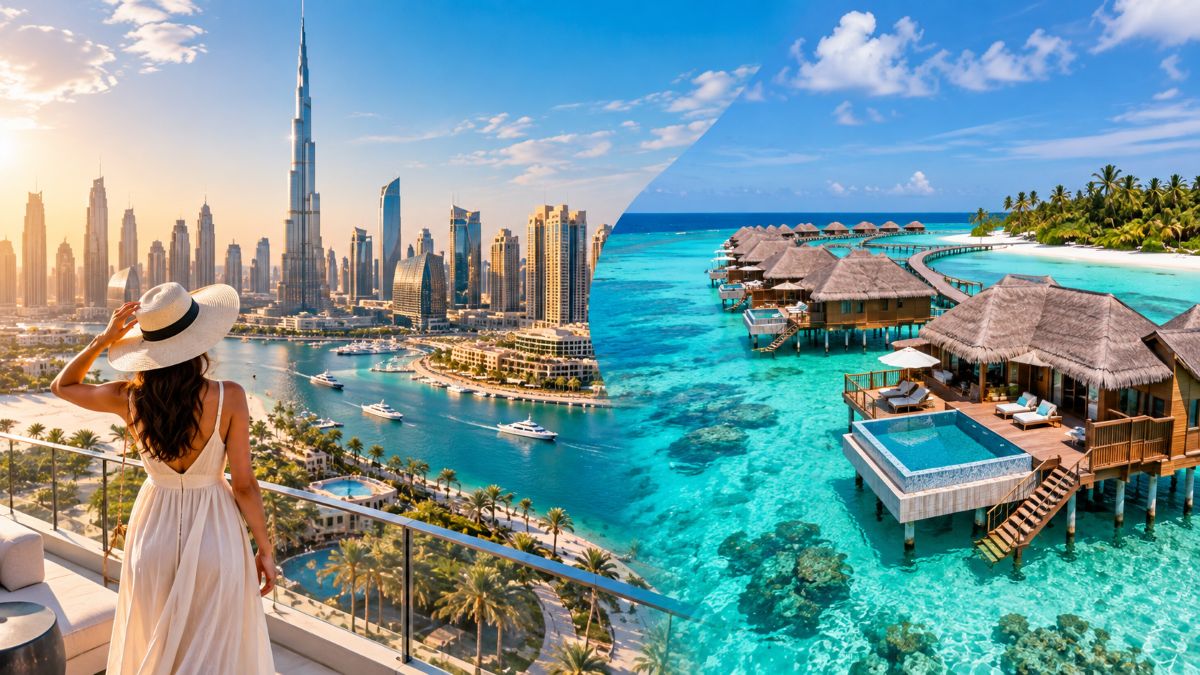
Image generated with Ai
The United Arab Emirates and the Maldives are emerging as a compelling combination for travellers seeking a holiday that blends energetic city experiences with secluded island relaxation. Dubai supplies dramatic architecture, sophisticated hospitality, shopping, entertainment and Arabian cultural encounters, while the Maldives offers turquoise lagoons, coral reefs, private villas and a slower rhythm across its scattered islands. Together, they create a twin-centre itinerary that can appeal to couples, families, honeymooners and luxury travellers looking to experience two distinctly different sides of an Indian Ocean journey.
The appeal of combining destinations rather than spending an entire holiday in one location reflects a wider evolution in premium travel. Visitors increasingly want variety without sacrificing comfort, and a Dubai-Maldives itinerary provides a natural contrast between urban discovery and tropical retreat. The journey can begin with several days exploring Dubai’s skyline, historic districts and waterfront attractions before transitioning to an island resort where snorkelling, wellness treatments, marine experiences and overwater accommodation become the focus. This combination also demonstrates how regional connectivity can turn separate destinations into one seamless holiday experience.
Advertisement
Dubai remains one of the world’s most recognisable city-break destinations, combining futuristic architecture with established Middle Eastern traditions. For international travellers, its appeal lies in the ability to move between contrasting experiences within a relatively short period.
The city skyline provides an immediate introduction. The Burj Khalifa dominates Downtown Dubai, while surrounding districts offer luxury hotels, restaurants, shopping destinations and entertainment. Travellers can also explore the Dubai Frame for broad views across the city’s contrasting old and new areas.
Advertisement
Advertisement
Yet Dubai’s travel identity extends well beyond its modern skyline. Dubai Creek and the Al Fahidi Historical District offer opportunities to discover an older side of the emirate, with traditional architecture, souqs, textiles, spices and abra boat journeys. These experiences give visitors cultural context alongside the city’s contemporary attractions.
The Museum of the Future adds another dimension, presenting technology, innovation and speculative ideas about tomorrow. For travellers who prefer leisure, Dubai’s beaches, rooftop pools, shopping centres and desert experiences provide alternatives to sightseeing.
The strongest feature of a Dubai and Maldives holiday is the contrast between the two destinations. Dubai is visually dramatic and fast-moving, while the Maldives is defined by open water, low-rise island environments and a much quieter pace.
This difference makes itinerary planning particularly important. Spending the first part of the holiday in Dubai allows travellers to embrace sightseeing, dining and entertainment before moving towards a more restorative island stay.
A typical twin-centre journey can be structured around the following pattern.Travel Stage Main Experience Suitable Activities Dubai Urban discovery Architecture, shopping, culture and dining Dubai Adventure and leisure Desert experiences, beaches and waterfront attractions Maldives Island relaxation Beaches, pools, spa treatments and marine activities Maldives Ocean adventure Snorkelling, diving, kayaking and boat excursions Final Days Slow travel Wellness, private dining and sunset experiences
The arrangement is particularly attractive for travellers who do not want to choose between a conventional city holiday and a tropical escape.
After the intensity of Dubai, the Maldives changes the atmosphere almost immediately. Its appeal comes from its combination of powdery beaches, clear lagoons, coral ecosystems and accommodation designed around the surrounding ocean.
For many visitors, the attraction is not simply luxury but the sense of separation from everyday routines. Overwater villas and private pools can create a strong feeling of privacy, while beachfront accommodation offers direct access to the sand and sea.
Marine activities remain central to the destination. Snorkelling allows visitors to explore coral reefs close to their resort, while diving and guided excursions can reveal a wider range of underwater life. In areas known for whale shark encounters, responsible marine excursions can provide particularly memorable experiences.
The destination also suits travellers seeking wellness. Spa treatments, yoga sessions, quiet beach time and leisurely meals can be incorporated into a schedule without the pressure to visit numerous attractions.
A common misconception about luxury island holidays is that they are entirely passive. The Maldives can offer a substantial choice of activities for travellers who want adventure alongside relaxation.
Parasailing, kayaking, jet skiing and other water-based activities can introduce an energetic element to an otherwise tranquil stay. Snorkelling is particularly accessible because reefs and marine environments can often be explored without the commitment required for a full diving programme.
At the same time, travellers can deliberately leave portions of the day unplanned. This balance is one of the reasons the destination works effectively as the second half of a twin-centre itinerary.
Dubai can fulfil the desire for movement and discovery, whereas the Maldives can provide space for recovery. Rather than competing with one another, the destinations complement each other.
The Dubai-Maldives combination also reflects a broader shift in luxury tourism. High-end travellers increasingly seek experiences that feel distinctive rather than simply expensive. Privacy, personalisation, access to nature, wellness and culturally meaningful activities can now be as important as the physical quality of a hotel.
Dubai offers this through its combination of contemporary design, fine dining, cultural attractions and entertainment. The Maldives approaches luxury differently, emphasising privacy, natural surroundings, marine experiences and personalised resort service.
This distinction is valuable for travel planning because the two destinations can satisfy different expectations during the same holiday. Travellers may spend one day visiting major architectural landmarks and the next day swimming in a private lagoon.
A multi-destination holiday can make a longer journey feel more varied and rewarding. Instead of spending a week or more following one travel pattern, visitors can divide their time according to different interests.
For couples, Dubai can provide sophisticated dining, shopping and city experiences before a private island retreat. Families can combine attractions and activities in Dubai with safe beach-based recreation in the Maldives. Honeymooners can use the city portion for exploration before finishing with several peaceful days in an overwater setting.
The approach can also make sense for repeat visitors. Travellers who have already experienced Dubai’s major attractions may use a shorter city stay as an introduction before extending their journey into the Maldives.
The success of a twin-centre itinerary depends on allowing enough time in both destinations. Rushing through Dubai before immediately moving between flights and resort transfers can reduce the enjoyment of the journey.
A balanced itinerary should allow several days for Dubai and a longer period in the Maldives if relaxation is the primary objective. Travellers should also consider seasonal conditions, flight schedules, transfer arrangements and resort location before confirming plans.
In the Maldives, the final transfer can involve a speedboat or domestic flight followed by a further connection, depending on the resort. This makes arrival planning particularly important.
Dubai’s extensive accommodation range also means travellers can choose between Downtown, waterfront and beach-oriented areas depending on their priorities. The Maldives, meanwhile, offers resorts with different approaches to family travel, wellness, diving, romance and privacy.
The appeal of Dubai and the Maldives ultimately rests on contrast. One destination delivers architectural spectacle, cultural discovery and an energetic urban environment; the other offers marine landscapes, privacy and restorative island experiences.
For travellers planning a premium holiday, that contrast can create a more complete journey than either destination alone. The itinerary moves from city lights and contemporary landmarks to coral reefs, ocean horizons and quiet evenings.
As international tourism continues to evolve towards personalised, experience-led travel, twin-centre holidays are likely to remain attractive. Dubai and the Maldives demonstrate how two destinations with very different identities can be connected into a single journey that combines exploration, comfort, adventure and relaxation.
What makes Dubai and the Maldives a good twin-centre holiday?
The combination provides two contrasting experiences, with Dubai offering urban attractions, culture, shopping and entertainment while the Maldives focuses on beaches, marine activities, wellness and relaxation.
How long should travellers spend in Dubai and the Maldives?
A balanced itinerary could include several days in Dubai followed by a longer Maldives stay, although the ideal duration depends on budget, interests and available holiday time.
Is a Dubai-Maldives trip suitable for honeymooners?
Yes. Dubai offers sophisticated dining, sightseeing and entertainment, while the Maldives provides privacy, beaches, villas and romantic island experiences.
Can families combine Dubai and the Maldives?
Yes. Dubai offers numerous family-oriented attractions and activities, while many Maldivian resorts provide accommodation and recreation designed for families.
What activities can travellers enjoy in Dubai?
Visitors can explore architectural landmarks, historical districts, museums, beaches, shopping areas, desert environments and waterfront attractions.
What activities are popular in the Maldives?
Snorkelling, diving, kayaking, parasailing, boat excursions, spa treatments, swimming and beach relaxation are among the major experiences.
Why is the Maldives suitable after visiting Dubai?
The Maldives offers a slower and quieter environment, creating a natural contrast with Dubai’s busy urban atmosphere.
Are Dubai and Maldives holidays suitable for luxury travellers?
Both destinations have extensive premium hospitality options, although their approaches to luxury differ between Dubai’s sophisticated urban environment and the Maldives’ private island setting.
What should travellers consider when planning a twin-centre itinerary?
Travellers should check flight connections, seasonal conditions, accommodation locations, resort transfers, entry requirements and the amount of time available for each destination.
What is the main travel appeal of a Dubai-Maldives itinerary?
Its greatest strength is variety. Travellers can combine culture, architecture, entertainment and city exploration with beaches, marine life, privacy and wellness in one journey.
Advertisement
Tags: Arabian travel, Dubai Maldives holiday, Dubai Maldives twin centre, Dubai Tourism, Dubai Travel, Honeymoon Destinations, Luxury tourism, luxury travel, Maldives luxury holidays, Maldives tourism, Maldives Travel, Premium Travel, tropical island holidays, twin centre holidays
Advertisement
Advertisement













Friday, September 4, 2026

Friday, September 4, 2026

Friday, September 4, 2026

Friday, September 4, 2026

Thursday, September 3, 2026

Wednesday, September 2, 2026
Friday, September 4, 2026

Friday, September 4, 2026


