 Somudranil Sarkar
Somudranil Sarkar
Somudranil Sarkar
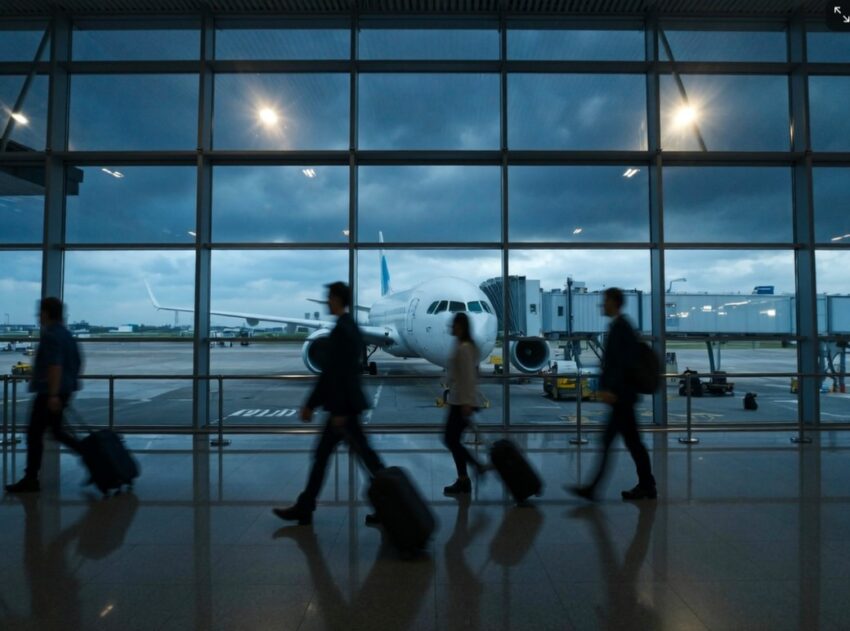
Image generated with Ai
Flight operations across major aviation hubs like Dubai (DXB), Doha (DOH), and Abu Dhabi (AUH) are facing widespread disruptions with repeated operational halts and airport closures. IndiGo and Air India are maintaining essential connectivity by operating 50 flights to the Gulf today, focusing on cargo and repatriation flights. Qatar Airways has suspended services to 12 international destinations in Asia and Europe due to airspace restrictions. Emirates and Etihad Airways are also facing extended service suspensions, although limited repatriation flights are being carried out. Meanwhile, westbound flights from Asia, especially India, are avoiding Iranian and Pakistani airspace, opting for detours over the Arabian Sea, Oman, and Egypt. These changes have significantly increased travel times, with a Delhi to London flight now taking over 12 hours instead of the usual 8, resulting in delays and passenger frustration. The following report describes which airlines resumed partial operations, how these services were managed, and what official sources had announced. It must be emphasised that every fact in this article was based on government‑verified statements and embassy advisories. The public has been cautioned to confirm bookings, follow official instructions, and avoid airports without tickets. Passengers had been reassured that safety remained the priority, and that information would be updated as authorities assessed the situation regularly.
Widespread Disruptions:
Major aviation hubs including Dubai (DXB), Doha (DOH), and Abu Dhabi (AUH) are experiencing repeated operational halts and closures. These disruptions have left thousands of passengers stranded and grounded flights, causing widespread chaos across the region. Airlines Resuming Limited Service:
Significant Detours:
Most westbound flights from Asia (especially India) are avoiding Iranian and Pakistani airspace. As a result, flights are being rerouted over the Arabian Sea, Oman, and Egypt. These diversions have significantly increased travel times. For instance, Delhi to London now takes over 12 hours (up from 8 hours), leading to passenger frustration and longer transit periods.
The early days of March 2026 saw the Middle East plunged into chaos as airstrikes and missile exchanges led to a sweeping closure of regional airspace. Airports that normally boomed with travellers fell silent. Governments invoked emergency laws, and national carriers grounded fleets. Airspace closure became the phrase of the month. People who had boarded planes were forced to disembark and wait. The sense of vulnerability was acute, and government bulletins emphasised that safety required caution. WAM, Sharjah24 and embassy statements were used as primary sources throughout this report to ensure accuracy. This context frames the narrative that follows carefully.
Advertisement
Advertisement
Official statements released by authorities described unprecedented government directives that closed airspace and halted commercial flights across the Gulf and Levant. The General Civil Aviation Authority in the United Arab Emirates announced the launch of exceptional flight operations for stranded passengers, urging people not to approach airports until contacted[1]. The U.S. Mission to the UAE reported that only a small number of flights were operating from airports in Abu Dhabi and Dubai, and passengers should travel only with confirmed tickets[2]. These messages highlighted the seriousness of the situation and the need for strict compliance with instructions. Everyone had been warned.
At Dubai International and Dubai World Central, a partial reopening was declared by the airport authority. The official Emirates News Agency reported that a limited resumption of operations began on the evening of 2 March[3]. Only a few flights were allowed, and travellers were told not to come without an airline call[4]. Emirates airline announced that it would operate a limited number of flights prioritising passengers with existing bookings[5]. A subsequent government news bulletin confirmed that more than 100 flights would operate on 5–6 March as the carrier gradually rebuilt its schedule[6][7]. These flights were still subject to strict controls.
Etihad Airways, the flag carrier of Abu Dhabi, was also drawn into the crisis. A report on the WAM‑affiliated Sharjah24 platform noted that Etihad resumed limited flight operations from Abu Dhabi, operating repositioning, cargo and repatriation flights while all scheduled commercial services remained cancelled[8]. Each flight required approval from government authorities and could only take off once safety criteria were met. Abu Dhabi Airports announced a partial reopening at Zayed International Airport with passengers urged to check with airlines before travelling[4]. This cautious approach illustrated how the airline’s operations were controlled by regulators. This careful strategy reduced risk significantly overall.
The low‑cost carrier flydubai responded to the emergency by preparing emergency flights for stranded passengers. In the official Sharjah24 report, it was stated that flydubai would operate a limited number of flights on 2 March and that customers should update their contact details and check flight status before heading to the airport[9]. This measure signalled that only a handful of flights were permitted, and passengers without confirmation would be denied entry. The airline’s actions were overseen by the same regulatory framework that governed Emirates and Etihad, and each flight remained subject to cancellation if airspace conditions deteriorated. Nothing else moved.
In Doha the national carrier Qatar Airways faced an unprecedented shutdown after Qatari airspace was closed. A notice from the Qatar Civil Aviation Authority explained that scheduled flights were temporarily suspended but that a limited number of flights would operate from 18–28 March. These revised schedules were designed to give travellers flexibility while the airline prepared for the return of normal operations. A separate statement from the state‑run QNA news agency listed specific flights and emphasised that passengers should only travel with confirmed tickets[10]. Safety remained paramount, and operations would increase only when the authority declared the airspace safe again.
In Lebanon, the national carrier Middle East Airlines became one of the few lifelines for departure. A U.S. Embassy security alert from Beirut stated that commercial flights were being offered by Middle East Airlines from Rafic Hariri Airport and urged Americans to depart if they deemed it safe[11]. Embassy services were reduced to emergency passport issuance, reflecting the gravity of the situation. Flights were scarce, and travellers were reminded that operations could be cancelled without notice. The airline’s limited departures symbolised the resilience of Beirut’s aviation sector amid regional turmoil and showed that some connections were still possible against odds.
Israel’s main gateway, Ben Gurion Airport, was subject to unprecedented restrictions. The U.S. Embassy in Jerusalem warned that the Government of Israel limited departures to one flight per hour with no more than 50 passengers[12]. Travellers were urged to use overland routes to Egypt or Jordan when possible. Embassy advisories repeatedly stressed that the airport operated limited flights and that no one should go to the terminal without a ticket[13]. These directives highlighted the dangerous security environment and the government’s attempt to control crowds while allowing a trickle of departures. Fear and uncertainty hung over travellers every moment without warning.
The United Arab Emirates’ General Civil Aviation Authority (GCAA) played a pivotal role in controlling the crisis. It launched exceptional flight operations at airports across the country to assist stranded passengers and insisted that travellers not enter airports until contacted[1]. U.S. consular notices echoed this message, indicating that only a few flights were operating and passengers should travel only with confirmed tickets[2]. Dubai Airports confirmed that a limited resumption began on 2 March, with select airlines permitted to collect stranded passengers from Abu Dhabi[14]. These actions underscored the GCAA’s centralised command over aviation. Control was never relaxed at all ever.
For thousands of passengers, the crisis translated into days of uncertainty. People who had been planning to travel suddenly found themselves stranded, as only a handful of seats were available on limited flights. Emirates prioritised customers with existing bookings and urged others to stay home[5]. flydubai asked passengers to verify contact details before travelling[9]. Qatar Airways warned that flights were subject to change or cancellation. U.S. missions reminded travellers that only those with confirmed tickets should head to airports[2]. This uncertainty left many feeling helpless, waiting for a rare seat. Families were separated and heartbreak intensified everywhere without warning again.
Diplomatic missions became critical actors during the aviation shutdown. U.S. embassies in Jerusalem and Abu Dhabi issued repeated security alerts providing departure options, including bus services to neighbouring countries and the possibility of charter flights arranged with carriers. They noted that overland routes to Jordan and Egypt were open and often safer than flying[12]. These advisories stressed that Ben Gurion Airport operated limited flights and that Americans should contact airlines rather than show up unannounced[13]. Diplomatic staff worked with local authorities to monitor flight availability and to coordinate safe departures for citizens. Coordination was intense at every level daily meetings.
Behind the scenes, aviation regulators across the region worked together to develop safe corridors through the contested airspace. The GCAA’s exceptional flight operations and the QCAA’s revised schedules reflected this coordination[1]. Authorities considered threats, closed zones, and missile trajectories before allowing even a single aircraft to depart. In Israel, strict caps on flights and passenger numbers were enforced[12]. Dubai Airports only reopened when regulators approved safe routes[3]. Safety guidance was constantly updated, and any sign of escalation could result in immediate suspension. As a result, every departure was preceded by meticulous risk assessment. No shortcuts were ever considered by authorities.
The suspension of flights and the gradual return of limited services had significant economic and social implications. Tourism revenues collapsed as travellers cancelled trips. Business deals were delayed, and supply chains suffered because cargo flights were restricted. Families were separated for weeks, creating emotional distress. Airlines lost millions in revenue while still paying crews and maintaining aircraft. The restrictions triggered panic buying, and hotels near airports filled with stranded passengers. Economic analysts speculated that the crisis could wipe out months of growth. These consequences underscored how essential air connectivity is to modern societies and how vulnerable it can be completely.
Public reaction to the airspace closure and the restricted reopenings was filled with fear and anger. Social media posts amplified rumours, and some outlets published sensational narratives about secret flights and hidden agendas. Citizens demanded answers from governments and airlines. Jingoistic commentary painted the crisis as a test of national resolve. In some countries, protests erupted outside travel agencies as passengers demanded repatriation. Meanwhile, official channels urged calm and stressed that safety was paramount. News organisations scrambled to verify information, often relying on government statements. This storm of emotions added to the drama of the aviation shutdown. It seemed endless.
Looking ahead, analysts predicted several possible outcomes from the crisis. If regional tensions eased, civil aviation authorities could fully reopen airspace, allowing airlines to rebuild schedules. Carriers might prioritise routes with strong demand and maintain contingency plans for future disruptions. Governments were expected to review emergency response protocols and invest in air defence. Passengers might remain cautious, choosing alternative transport or delaying travel. Economic recovery could be slow, especially for tourism‑dependent economies. Should hostilities flare again, limited flights might be reinstated, and travellers would once more rely on official sources for guidance and reassurance. Time will tell soon enough ultimately.
The events of March 2026 revealed how quickly air travel can be disrupted and how government agencies, airlines and passengers can respond. The limited flights that were allowed provided a glimmer of hope. The crisis reminded the world that the freedom to fly cannot be taken for granted. Government advisories emphasised safety, and travellers were urged to follow instructions. Airlines showed flexibility by operating repatriation flights and prioritising existing bookings. As operations resume, the lessons from this period will shape future policy, and travellers will remain vigilant. The story of how limited flights resumed across the Middle East underlines the resilience of the aviation sector and the importance of cooperation between governments and carriers. While the skies gradually reopen, the memory of eerily empty terminals and frantic pleas for seats will linger. Information flows will continue to be essential, and the experiences of March 2026 will be studied by regulators, airlines and passengers. The role of embassies and consulates in providing accurate information proved invaluable. As the region moves forward, the public is expected to demand greater transparency and preparedness. Ultimately, the crisis underscored that solidarity and adherence to official guidance can help passengers navigate even the darkest days. It also exposed the fragility of supply chains and the vulnerability of economies that depend on aviation. People missed events, and emotional scars will linger long.
| Category | Limited service (keywords) | Official source |
| Emirates (Airline) | Limited flights from 2 March; priority to existing bookings; over 100 flights on 5–6 March | WAM government bulletin[3][6] |
| Etihad Airways (Airline) | Repositioning, cargo and repatriation flights only; scheduled flights cancelled | Sharjah24–WAM report[8] |
| flydubai (Airline) | Limited flights on 2 March; passengers must update contact details | Sharjah24–WAM report[9] |
| Qatar Airways (Airline) | Revised limited flights from 18–28 March | Qatar Civil Aviation Authority news |
| Middle East Airlines (Airline) | Commercial flights from Beirut to evacuate passengers | U.S. Embassy Beirut alert[11] |
| Dubai Airports & GCAA (Airport authority) | Partial reopening at DXB and DWC with exceptional flights; passengers must wait for airline contact | Sharjah24 report[4][1] |
| Ben Gurion Airport (Airport) | One departure per hour, maximum 50 passengers; only ticketed passengers allowed | U.S. Embassy Jerusalem alert[12] |
| Abu Dhabi Airports (Airport) | Partial resumption at Zayed International; check with airlines | Sharjah24 report[4] |
Advertisement
Advertisement
Advertisement













Friday, September 4, 2026

Friday, September 4, 2026

Friday, September 4, 2026

Friday, September 4, 2026

Thursday, September 3, 2026

Wednesday, September 2, 2026

Friday, September 4, 2026

Friday, September 4, 2026


