
Western Sydney International Airport Puts Australia’s Tourism and Aviation Growth On A Powerful New Trajectory

Published
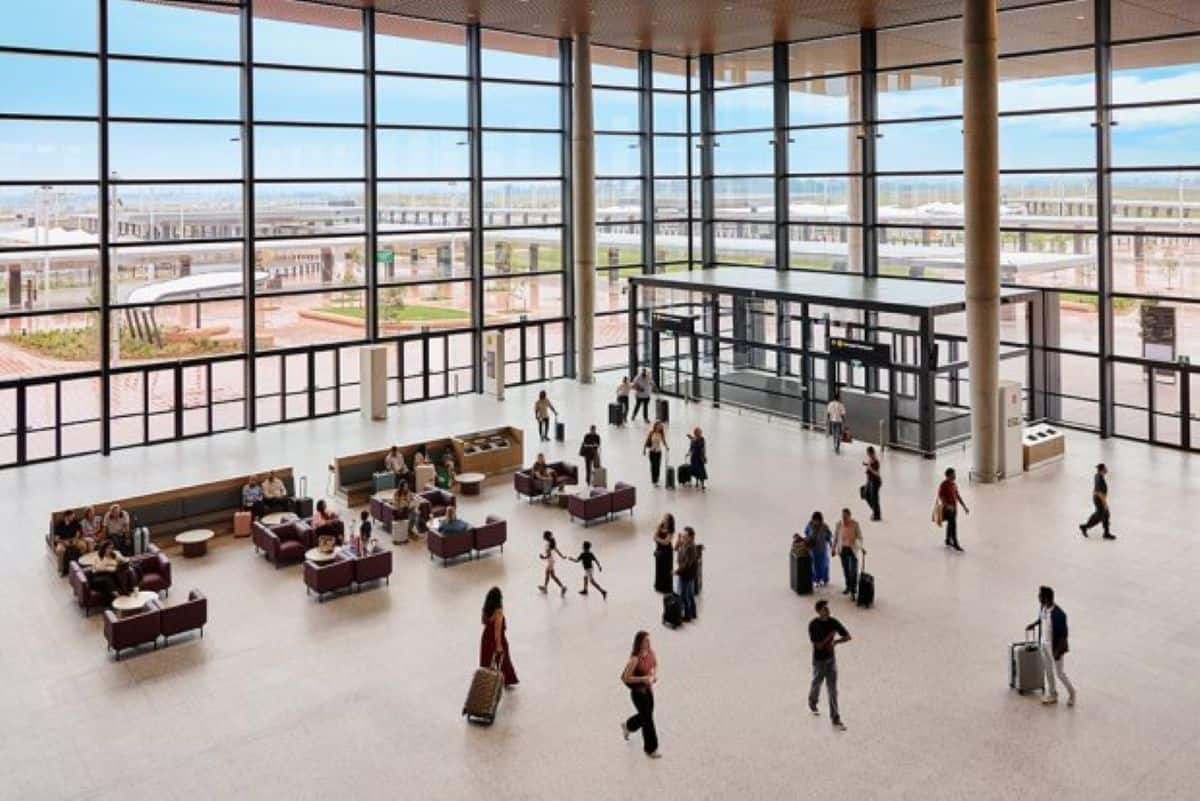
Western Sydney International Airport will welcome its first passengers on 25 October 2026, opening a new chapter in Australia’s aviation geography. Jetstar will launch flights to Melbourne, Brisbane and the Gold Coast, while Air New Zealand and Singapore Airlines will soon add international connectivity. The airport will initially handle up to 10 million passengers annually, but its long-term layout allows expansion towards 82 million. Unlike Sydney Airport, WSI will operate without a curfew and will develop a major overnight freight role. Its significance therefore extends beyond another runway. Western Sydney’s 2.9 million residents, growing visitor economy and emerging Aerotropolis could shift aviation demand westward.
A New Air Gateway Moves West
The opening of Western Sydney International Airport is significant because Sydney is gaining capacity where its population and economic activity have increasingly expanded. Greater Sydney reached 5.64 million residents in June 2025, adding 75,230 people during the year, while the population centre moved west. Outer areas such as Box Hill-Nelson and Austral-Greendale recorded particularly strong growth.
Western Sydney now contains about 2.9 million people, one-third of New South Wales’ population, and an economy approaching A$200 billion. It also contains around one-third of the state’s workforce and about 30% of its small businesses. The airport therefore arrives beside an enormous existing market rather than an empty development zone.
The federal government says the project has created more than 12,800 jobs, with roughly half going to local workers. More than A$500 million has also flowed to more than 360 Western Sydney businesses during construction. That early economic footprint hints at what could follow once aircraft, visitors, logistics operators and international businesses begin using the precinct.
Advertisement
Advertisement
Sydney’s Established Giant Faces A New Equation
Sydney Airport remains the dominant aviation gateway and will not suddenly surrender that position. It handled 42.54 million passengers in 2025, including 17.17 million international travellers, marking its busiest year for international traffic.
Yet Sydney Airport itself expects continued expansion. Its preliminary Master Plan 2045 forecasts 72 million annual passengers, including 36.4 million international and 36.2 million domestic and regional travellers. Airfreight could reach 1.4 million tonnes annually by then.
Advertisement
Advertisement
| Sydney Aviation Baseline | Sydney Airport | WSI |
|---|---|---|
| Recent/initial passenger scale | 42.54m in 2025 | 10m initial capacity |
| Long-term passenger planning | 72m by 2045 | 82m nominal long-term capacity |
| International role | Mature global gateway | Emerging international gateway |
| Curfew | Yes | No |
| Overnight freight | Restricted | Designed for regular operations |
| Catchment | Greater Sydney | Western Sydney and wider NSW |
The crucial distinction is therefore redistribution rather than replacement. Sydney Airport has an entrenched airline network, established terminals and a mature tourism ecosystem. WSI has something different: available land, 24-hour operations and a large population catchment that has historically travelled across the metropolitan area to reach aviation services.
That could encourage airlines to add capacity instead of merely transferring existing flights. Whether that happens will determine the airport’s long-term economic significance.
Airlines Will Test New Demand
WSI begins with a deliberately modest passenger network. Jetstar will operate up to 24 return flights each week, comprising up to 14 to Melbourne, seven to the Gold Coast and three to Brisbane. QantasLink will add eight weekly return flights from March 2027, split between Melbourne and Brisbane.
International connectivity will develop in stages. Air New Zealand will launch three weekly return services to Auckland from 26 October, while Singapore Airlines will operate daily services to Singapore from November. Vietjet will introduce Ho Chi Minh City flights from January 2027 and has plans for Bangkok services later. Fiji Airways is also preparing future connectivity.
This matters to travellers because route economics can change when an airline gains access to a different catchment. A Western Sydney resident travelling internationally could eventually avoid crossing the metropolitan area, while overseas visitors could gain direct access to Western Sydney, the Blue Mountains and regional NSW.
The NSW Government and WSI have also created a A$16 million route incentive package to attract international services. The programme is forecast to generate more than 162,000 international visitors and A$530 million in visitor expenditure.
Advertisement
Advertisement
The emerging question is simple but consequential: will WSI create new routes, or merely move existing demand from Sydney Airport?
Melbourne And Brisbane Reveal The Benchmark
The comparison with Melbourne and Brisbane demonstrates how large Australian airports are preparing for another period of growth.
Melbourne Airport handled 36.99 million passengers in FY2025–26, including 12.26 million international and 24.74 million domestic passengers. International traffic crossed 12 million for the first time, reinforcing Melbourne’s position as a major 24-hour gateway.
Melbourne is responding with a A$4.5 billion international terminal expansion and a third runway scheduled for 2031. The runway and terminal programme will give airlines additional capacity while supporting Victoria’s growing passenger and freight markets.
Brisbane Airport offers another useful benchmark. It handled 25 million passengers in 2025, with international traffic rising 10.7% and domestic traffic increasing 3.2%. December also produced a record 2.3 million passengers.
| Airport | Latest Passenger Figure | Major Expansion Signal |
|---|---|---|
| Sydney | 42.54m, 2025 | 72m forecast by 2045 |
| Melbourne | 36.99m, FY2025–26 | A$4.5bn terminal expansion and third runway |
| Brisbane | 25m, 2025 | Major precinct investment |
| WSI | 10m initial capacity | 82m long-term layout |
The contrast is important. Melbourne and Brisbane are expanding mature aviation ecosystems, while WSI is attempting to establish one. Its success will depend on whether airlines, logistics firms, hotels and tourism operators follow the aircraft.
Advertisement
Advertisement
Freight Could Deliver The Biggest Shift
Passenger traffic will generate the headlines, but freight could produce the most immediate structural change.
WSI’s purpose-built cargo precinct can ultimately accommodate up to 1.8 million tonnes of air cargo annually. Stage one can handle up to eight wide-body freighters or 16 narrow-body domestic freighters simultaneously. Qantas Freight, Menzies Aviation, dnata Cargo, dnata Catering & Retail and Texel Air are among the operators involved.
The timing is particularly important. From 1 November 2026, WSI is intended to become Sydney’s only airport capable of supporting regular overnight freight operations under the new arrangements surrounding Sydney Airport’s legislated curfew.
That gives WSI a role extending well beyond passenger travel. Overnight cargo can support e-commerce, pharmaceuticals, fresh produce, high-value manufacturing and time-sensitive exports. Its location also places the freight precinct close to major road corridors linking Western Sydney with the wider metropolitan market.
Aldi’s planned A$1 billion automated distribution centre in the Aerotropolis illustrates this emerging logistics ecosystem. The facility is expected to create about 3,700 construction jobs and 585 permanent positions, with its location designed to exploit proximity to incoming freight.
Tourism Could Finally Turn Westward
For travellers, the airport’s most interesting consequence could be the creation of a stronger western gateway to NSW.
Advertisement
Advertisement
Destination NSW is already connecting WSI with the Blue Mountains, Western Sydney and Southern Highlands through airline and tourism trade programmes. Industry participants have included airlines, online travel agencies, hotel groups and experience platforms, signalling an effort to build itineraries before passenger traffic accelerates.
The opportunity is substantial. The Blue Mountains alone recorded 2.6 million visitors, 2.9 million visitor nights and A$1.2 billion in expenditure in the year ending March 2026. A better-positioned international gateway could encourage more travellers to incorporate the region into longer NSW itineraries.
Western Sydney itself recorded 539,500 international visitors before the new airport opened, with visitation up 5.2% on the previous year. The airport could therefore accelerate an existing visitor market rather than create one from nothing.
The broader Australian visitor economy also reached A$192.4 billion in 2025, according to Tourism Research Australia data cited by Destination NSW. Visitor spending rose 6.5%, while accommodation supply, route connectivity and tourism investment also increased.
Hotels May Become The Missing Link
The airport can deliver passengers, but hotels must convert those passengers into local economic activity.
NSW’s Visitor Economy Strategy 2035 identifies a requirement for 40,434 additional accommodation rooms, with Greater Sydney accounting for 75% of the projected need. Western Sydney has therefore entered the airport era with a substantial accommodation challenge already visible.
Advertisement
Advertisement
This matters particularly for international travellers, business visitors and passengers using the region as a gateway to the Blue Mountains or Southern Highlands. Without sufficient rooms, restaurants, attractions and evening activities, visitors may simply travel elsewhere after landing.
The industry has recognised that risk. Destination NSW has convened hotel forums involving global hotel groups, government, developers and tourism businesses to examine occupancy, development pipelines and accommodation supply. That makes hotels a crucial indicator of whether aviation growth will become genuine destination growth.
Metro Access Will Decide The Experience
For travellers, an airport’s value depends heavily on what happens after landing.
The Sydney Metro–Western Sydney Airport line will eventually link WSI with St Marys in approximately 15 minutes. The 23-kilometre, six-station line is designed to carry up to 7,740 passengers per hour in each direction, creating a connection with the existing T1 Western Line towards Blacktown, Parramatta, Strathfield and Central.
Until Metro opens, interim bus services will provide connections to the wider transport network. Road access is also improving, including the M12 and major upgrades around Elizabeth Drive, Fifteenth Avenue and Mamre Road.
For travellers, the practical lesson is clear: WSI’s competitiveness will depend not only on ticket prices but also on the time and cost of reaching the terminal.
Advertisement
Advertisement
The Aerotropolis Changes The Stakes
The airport is only one component of a much larger development programme.
The Western Sydney Aerotropolis is planned as a high-skill economic centre spanning aerospace, advanced manufacturing, healthcare, freight, logistics, agribusiness, education and research. Government planning points towards 200,000 jobs across the broader Western Parkland City.
Private investment is already gathering pace. Proposed projects across the Aerotropolis rose from A$9.8 billion to A$21.6 billion between December 2024 and April 2026, driven by logistics, advanced manufacturing, distribution and data-centre projects.
This is why the airport should not be viewed as an isolated transport project. It forms part of an emerging economic triangle involving aviation, industry and urban development.
Catherine King, Australia’s Federal Minister for Infrastructure, described the airport in September 2026 as “bigger than an airport”, saying it connects Western Sydney to global industry and tourism. The statement captures the project’s wider ambition, although its ultimate impact will depend on how effectively businesses and travellers respond.
What Travellers Should Watch Next
The first year will provide the clearest test of WSI’s underlying proposition.
Advertisement
Advertisement
| Indicator | Why It Matters |
|---|---|
| Passenger numbers | Shows whether initial capacity is being absorbed |
| New international routes | Measures genuine network creation |
| Airline competition | Can influence fares and frequency |
| Overnight freight | Tests WSI’s 24-hour advantage |
| Hotel openings | Shows whether visitors stay locally |
| Metro patronage | Reveals public transport adoption |
| Blue Mountains visitation | Measures regional tourism spillover |
| Aerotropolis investment | Shows wider economic activation |
The most important signal will not necessarily be passenger volume. Route diversity, hotel demand, freight activity and repeat airline investment will reveal whether WSI is generating a durable aviation ecosystem.
For travellers, the immediate benefits are more tangible. Western Sydney residents gain another departure point, international visitors gain a new entry gateway, and travellers heading towards western and regional NSW gain a potentially more direct arrival corridor.
A Different Aviation Map Emerges
Western Sydney International Airport therefore enters service at a moment when Australia’s major gateways are all expanding. Sydney is planning for 72 million passengers, Melbourne is building a third runway, and Brisbane is consolidating record traffic and major infrastructure investment.
The distinction is that WSI has been designed around growth rather than congestion. Its 24-hour operating model, 82-million-passenger long-term layout, cargo precinct and connection with the Aerotropolis give it several routes to economic relevance.
Its first flights will not make it Sydney’s dominant airport. However, the airport could gradually alter where airlines place capacity, where freight moves overnight, where tourists stay and where aviation-linked businesses invest. The decisive test will be whether those activities grow around WSI rather than simply migrate from Sydney Airport.
Advertisement
