
Explore Jingdezhen, China’s Ancient Porcelain City Embraces Modern Creativity and Tourism, Here’s All You Need to Know

Published
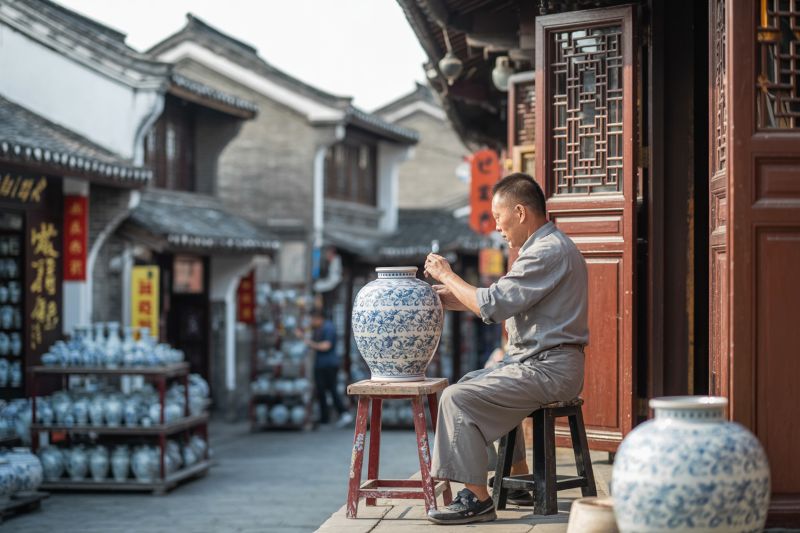 Image generated with Ai
Jingdezhen has undergone significant changes in recent years. Previously regarded as China’s Porcelain Capital, porcelain making was being phased out and the industry was declining due to environmental degradation. Now, however, the city is proudly become an example of modern urban renewal in the country. Transformation has become a blend of innovative urban renewal and the city’s historic ceramic legacy, making the city a renewed urban centre where young urban artists and artisans live and work, and a tourist. The city enjoys a mix of cultural tourism and legacy porcelain craftsmanship which has expanded the city’s industries and cultural diversity. The city is a cultural epicentre and attracts artists and entrepreneurs in great numbers from all parts of the globe. It has been transformed from a city of simple legacy craftsmanship to a city of cultural diversity and abundance.
The Rise of the “Ducktor Sui” and New Cultural Icons
One of the more surprising cultural icons to emerge from Jingdezhen’s revival is the “Ducktor Sui” or “Sui Sui Duck,” a quirky ceramic sculpture from the Ming Dynasty (1368-1644). Intended for the imperial collections in Beijing but never delivered, these whimsical incense burners were rediscovered and have since gained significant popularity. The peculiar, flower-eyed ducks have captured the imagination of visitors and have even become an unexpected symbol of the city’s creative rejuvenation.
Advertisement
Advertisement
The porcelain ducks, once buried and forgotten, were rediscovered in the 1980s and have since been transformed into a popular cultural product. Today, they are sold as cartoon-inspired figures, generating millions in revenue. The widespread appeal of these ancient ceramics reflects a broader trend in Jingdezhen’s reinvention, where traditional art forms are being reimagined for modern audiences, particularly younger generations.
The success of the “Ducktor Sui” exemplifies the city’s broader focus on making its ancient crafts relatable to contemporary tastes. Jingdezhen has effectively bridged the gap between its traditional ceramic artistry and the modern world of digital content creation, attracting global influencers like TikTok personality Khaby Lame, who recently visited the Imperial Kiln Museum and posed with the porcelain ducks.
Advertisement
Advertisement
A Historic City Reborn Through Urban Renewal
Jingdezhen’s transition from an industrial city to a cultural and creative hub began in earnest in the early 2010s. The city, historically known for its porcelain production, faced significant challenges as state-owned factories shut down in the late 1990s, leaving behind deteriorating industrial sites and a struggling economy. In response, local authorities adopted a unique urban renewal strategy that focused on preserving the city’s rich cultural heritage while also fostering a creative, youthful environment.
Rather than demolishing the old porcelain factories for real estate development, officials chose to preserve the buildings and convert them into spaces for young artists, designers, and ceramists. This approach not only helped retain the city’s historical charm but also supported the growth of a vibrant creative community.
Advertisement
Advertisement
One of the most prominent projects in this transformation is Taoxichuan, a neighborhood dedicated to “Jingpiaos”—young, independent ceramists drawn to the city by its artistic legacy. Formerly the site of the Yuzhou porcelain factory, Taoxichuan now houses galleries, workshops, and exhibition spaces. This revitalized district has become a hotspot for tourists and artists alike, attracting over 11 million visitors last year alone.
The renovation of the old porcelain factories also included the construction of affordable housing for young artists. As a result, the number of “Jingpiaos” has tripled, and the city now boasts a vibrant artistic community of more than 60,000 people. This transformation has not only revitalized the local economy but has also redefined Jingdezhen as a hub for creativity and innovation in the arts.
Advertisement
Advertisement
Cultural Tourism and the Growing Appeal of Jingdezhen
Jingdezhen’s appeal to tourists extends beyond its porcelain heritage. The city’s recent focus on cultural tourism has drawn visitors from around the world who seek to experience the fusion of ancient craftsmanship with modern artistic expression. The revitalization of old kilns and traditional alleyways, along with the opening of cultural blocks such as Taoxichuan, has provided visitors with an immersive experience of both the city’s past and its future.
Jingdezhen has embraced the growing trend of cultural tourism in China, where travelers are increasingly seeking destinations that offer more than just scenic beauty. Tourists now visit Jingdezhen not only to admire its porcelain masterpieces but also to engage in hands-on ceramic workshops, visit galleries, and explore the city’s unique blend of ancient and modern architecture.
The city’s transformation has also attracted a younger demographic, with tourists flocking to Jingdezhen for its vibrant art scene, lively fairs, and creative atmosphere. The city’s old factories have been turned into exhibition halls and spaces for public engagement, where visitors can interact with local artists and purchase unique ceramic pieces.
Preserving Tradition in the Age of Innovation
While Jingdezhen embraces modernization, it remains committed to preserving the traditional methods that have made it famous. The city’s ceramics industry, which is still largely focused on handcrafting porcelain, continues to thrive alongside the introduction of new technologies. Many artisans still produce ceramic works using time-honored techniques passed down through generations. These handcrafted items are highly prized for their quality and artistry, and they form a key part of the city’s cultural identity.
Advertisement
Advertisement
However, modern technology has not been entirely excluded from the process. At facilities like Fuyu Porcelain, a blend of traditional handcrafting and modern machinery is used to meet the demands of mass production while maintaining the artistry that Jingdezhen is known for. While automated machines are employed for some processes, veteran artisans continue to perfect intricate details that technology cannot replicate.
This balance between tradition and innovation has allowed Jingdezhen to maintain its reputation as the center of China’s ceramic production while adapting to contemporary market needs. Today, the city’s porcelain industry generates billions in revenue, with products exported worldwide. The combination of handmade craftsmanship and modern manufacturing ensures Jingdezhen remains a leader in the global ceramics market.
Jingdezhen as a Model for Cultural Revitalization
The success of Jingdezhen’s urban renewal serves as a model for other cities in China and around the world that aim to balance economic development with the preservation of cultural heritage. The city’s approach has demonstrated that urban renewal does not have to mean the destruction of history; instead, it can be a way to revitalize a community while honoring its past.
Jingdezhen’s commitment to preserving its porcelain-making traditions while fostering a creative environment for young artists has turned it into a cultural destination that attracts both tourists and artisans. The city’s revitalization also demonstrates how a focus on cultural and creative industries can drive economic growth and create new opportunities for communities, particularly through the lens of sustainable, heritage-based tourism.
For tourists, Jingdezhen offers a unique opportunity to engage with China’s rich porcelain-making history, learn about ancient techniques, and discover a city where tradition and modernity coexist harmoniously. As the city continues to grow as a center for artistic innovation, its cultural tourism sector is poised to thrive, offering visitors an immersive experience that connects them with China’s past and future.
Jingdezhen’s Bright Future
How urban renewal has allowed Jingdezhen to become a cultural hub. The city has revitalized its porcelain industry while modernizing porcelain craftsmanship. The success of the city’s urban renewal initiatives has helped establish the city as a cultural hub of China. Jingdezhen has significantly attracted and continues to attract tourists and young international artists. This trend is developing the city’s cultural and touristic potential internationally while ensuring its legacy as the porcelain capital for generations to come.
Advertisement
