
Travel Chaos Hits Frankfurt Airport as Lufthansa, United and Condor Face 205 Delays and 2 Cancellations Disrupting Berlin, Munich, Paris, London and More

Published
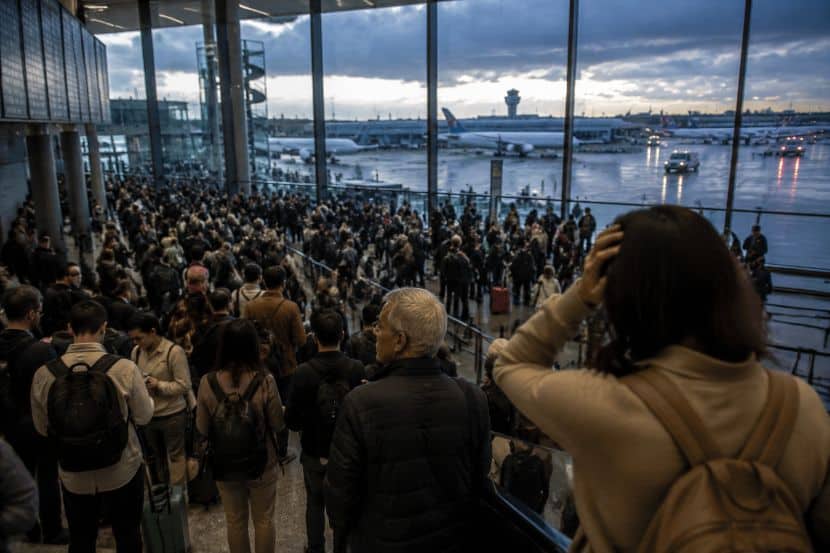
Frankfurt Airport has experienced a massive operational disruption with 205 reported flight delays and 2 cancellations. Affected carriers include a variety of international and domestic airlines. Disruptions have impacted both wide-bodied and short-haul operations, affecting the entire European and intercontinental flight networks.
Data from filed flight plans, airport operations data, and coordination data from the German air traffic management (DFS Deutsche Flugsicherung) indicates that the disruption has caused a general loss of schedule integrity and not an operational failure for a specific airline.
Lufthansa, Condor, United Airlines, Air Dolomiti, and a variety of Middle Eastern, Asian, and European airlines have all been impacted. Even with limited cancellations, the volume of delays is causing congestion at one of the largest airports in Europe which has a significant impact on the European flight network.
No official figures on the impact to passengers have been provided, however, the number of affected passengers is in the thousands based on typical aircraft loading. The operational disruption has caused passengers to miss flight connections, wait at the airport for extended periods of time, and have significant delays.
Advertisement
Advertisement
Frankfurt Airport Faces High-Intensity Delay Wave Across Global Network
The disruption at Frankfurt is primarily characterised by systemic delay accumulation rather than cancellations. The 205 delayed flights indicate a capacity imbalance affecting both arrivals and departures.
Advertisement
Advertisement
Operational flow at Frankfurt Airport remains under strain due to high traffic density, slot constraints, and cascading knock-on effects from earlier delayed inbound aircraft. As a major European hub, Frankfurt processes significant transfer traffic, meaning even minor delays propagate across long-haul connections to North America, Asia, and the Middle East.
Air traffic sequencing issues and ground handling bottlenecks have further contributed to delay amplification. Lufthansa, the largest operator at the airport, recorded the highest number of affected flights, reflecting its dominant hub structure and high-frequency scheduling model.
The limited cancellation count suggests that airlines are prioritising delay absorption over flight removal, a common strategy during peak operational congestion periods.
Airlines Most Affected by Operational Bottlenecks
Among carriers impacted, Lufthansa recorded 99 delayed flights, representing the largest share of disruption at Frankfurt Airport. This aligns with its hub-and-spoke dominance in the region.
Other significantly affected airlines include Condor with 27 delayed flights, Air Dolomiti with 11, and City Airlines with 13, indicating strain across both mainline and regional feeder networks.
Advertisement
Advertisement
International carriers such as United Airlines, Etihad Airways, Cathay Pacific, Air China, and All Nippon Airways also experienced operational delays. These disruptions are particularly impactful for long-haul scheduling, where turnaround timing is critical for global connectivity.
Low-cost and regional operators such as easyJet, SunExpress, and TUI fly were also impacted, highlighting that the disruption is system-wide rather than restricted to legacy carriers.
Cargo operators including Lufthansa Cargo and LAN Cargo reported delays as well, adding pressure to freight logistics chains dependent on Frankfurt’s central European location.
Origin and Destination Airports Show Widespread Knock-On Effects
The disruption extends beyond Frankfurt itself, affecting both origin and destination airports across Europe, Asia, and the Americas. The delay distribution reflects multi-layered network stress.
European feeder airports such as Vienna, Lisbon, Athens, and Amsterdam saw outbound scheduling knock-ons due to aircraft rotation delays. Similarly, long-haul origin points in North America and Asia experienced extended departure holding patterns due to Frankfurt slot unavailability.
Advertisement
Advertisement
Destination airports across Germany and neighbouring countries also absorbed delay impacts, particularly where Frankfurt serves as a transfer hub for connecting passengers.
The pattern indicates a classic hub congestion cycle, where inbound delay propagation reduces aircraft availability for outbound rotations, further amplifying system-wide disruption.
Passenger Impact and Travel Experience Disruption Across Europe
While official passenger figures have not been published, the scale of 205 delayed flights suggests a substantial number of travellers affected across international routes.
Passengers are experiencing extended waiting times at boarding gates, missed onward connections, and rebooking congestion across airline service desks. Frankfurt Airport’s role as a major transfer hub means connecting passengers are disproportionately affected compared to point-to-point travellers.
Business travellers face schedule instability impacting meetings and international operations, while leisure travellers face itinerary compression and hotel rebooking pressures.
Advertisement
Advertisement
Airlines are deploying recovery strategies including re-slotting, aircraft swaps, and passenger re-accommodation. However, due to high network density, recovery times are expected to extend beyond same-day operations.
Tourism and Connectivity Pressure on Germany’s Aviation Gateway
The disruption at Frankfurt Airport carries wider implications for Germany’s tourism and business connectivity. As a key entry point into Europe, Frankfurt plays a critical role in inbound tourism flows, corporate travel, and international transit connectivity.
Extended delays reduce passenger confidence in tight-connection itineraries and may shift future bookings toward alternative hubs such as Munich, Zurich, or Amsterdam. This can affect hotel occupancy patterns, business travel schedules, and inbound tourism timing.
For airlines such as Lufthansa, sustained congestion also increases operational costs due to crew rescheduling, aircraft idle time, and passenger compensation obligations under EU passenger rights regulations.
The event highlights the sensitivity of European hub airports to even moderate disruptions in scheduling efficiency.
Advertisement
Advertisement
Conclusion
At Frankfurt airport, we see how stressed a high traffic center can become at peak times. Airlines have decided to make fewer flights available while keeping as many flights as possible. The consequence of this is many flights become unviable instead of canceled.
In the short term, the overall effect of this will be felt by travelers due to further disruption of European flights and flights beyond Europe.
Authors Observation: All information is manually obtained from FlightAware’s official website, and all operations are subject to change based on real-time updates. In order to maintain safety, airlines actively modify schedules and itineraries. In order to get to their destinations safely, passengers are asked not to panic in such situations and to look for alternate travel choices. Relying on real-time updates, reviewing airline rebooking restrictions, and maintaining flexibility with travel plans are all highly recommended.
Source: flightaware
Advertisement
