
Vietnam Leading Thailand and Others in Catching US Tourists Attention as They Choose Alternative Options to the Philippines Throughout 2026

Published
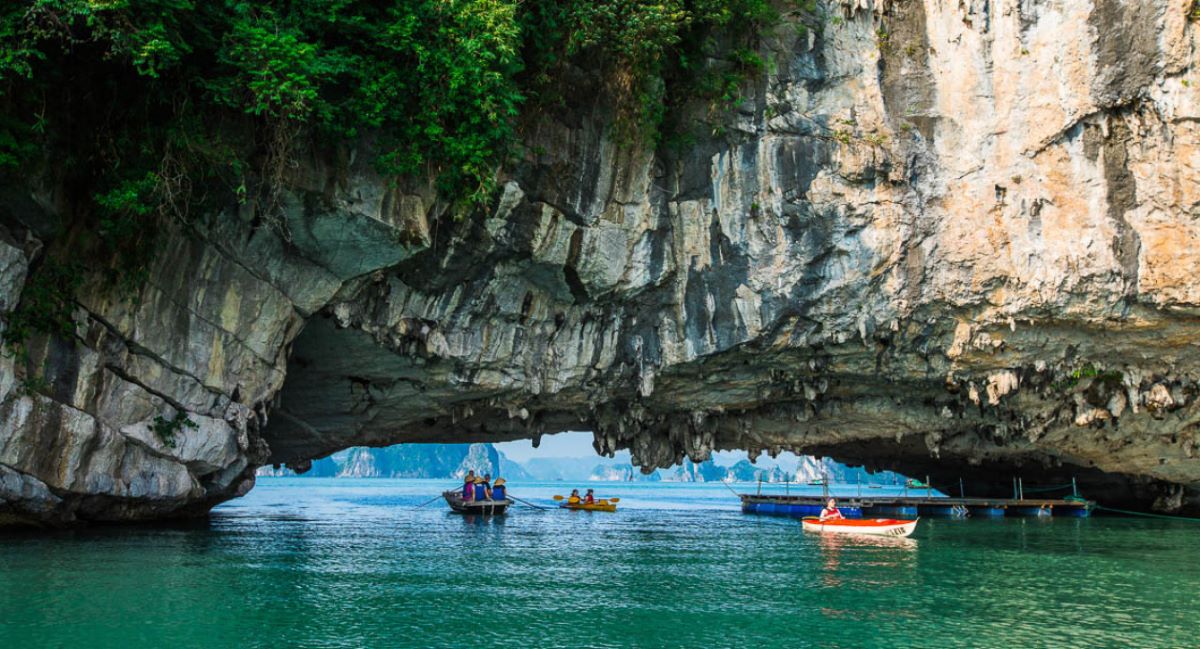
Vietnam is leading Thailand and others in catching US tourists’ attention as they choose alternative options to the Philippines throughout 2026, driven by strong visitor growth, easier entry procedures, competitive prices, diverse experiences and improved connectivity that are strengthening its appeal among American travellers.
American travellers are helping reshape tourism demand across Southeast Asia in 2026, with Vietnam recording the strongest US visitor growth among the destinations in the supplied data, followed by Malaysia, Singapore and Thailand, while the Philippines shows a decline. Vietnam recorded 687,368 US arrivals and 20% year-on-year growth, while Malaysia increased 4.4%, Singapore 1.4% and Thailand 0.4%. The Philippines, by contrast, shows 480,813 US arrivals and a 16.5% decline in the supplied dataset.
The numbers suggest that US travellers have a growing range of Southeast Asian choices. Easier entry procedures, competitive hotel prices, beaches, food, cultural attractions, improved tourism infrastructure and international connectivity are helping destinations compete for this valuable long-haul market.
However, the Philippines data needs careful interpretation. Separate Philippine government statistics for other 2026 reporting periods show higher US arrival totals than those contained in the supplied dataset. Therefore, the figures demonstrate stronger momentum for several competing destinations, but do not by themselves prove that individual American travellers are directly replacing Philippines trips with holidays elsewhere.
Advertisement
Advertisement
| Destination | US Tourist Arrivals | Market Share | YoY Change |
|---|---|---|---|
| Vietnam | 687,368 | 4.3% | +20.0% |
| Thailand | 471,254 | 3.4% | +0.4% |
| Malaysia | 171,465 | 0.8% | +4.4% |
| Singapore | 443,462 | Not provided | +1.4% |
| Philippines | 480,813 | 19.0% | -16.5% |
Vietnam Leads the Race for US Travellers With a Powerful 20% Surge
Vietnam stands out as the biggest growth story in the supplied figures. The country recorded 687,368 arrivals from the United States, giving the US a 4.3% share and representing a striking 20% year-on-year increase.
Advertisement
Advertisement
This performance puts Vietnam considerably ahead of Thailand, Malaysia and Singapore in terms of the growth rate of American arrivals shown in the dataset.
Several factors help explain Vietnam’s growing attraction.
American visitors can find very different holiday experiences within one country. Hanoi provides heritage, food and urban culture. Ho Chi Minh City delivers a faster-paced metropolitan experience. Da Nang combines a modern coastal city with beaches, while Hoi An offers heritage and cultural tourism. Vietnam also provides mountains, islands, cruises and rural experiences.
Advertisement
Advertisement
Entry convenience has strengthened its competitiveness. Vietnam offers an electronic visa system that can provide eligible international visitors with stays of up to 90 days and single or multiple entry.
Value is another advantage. Accommodation, local food and domestic travel can remain relatively affordable compared with many established long-haul destinations. This gives American visitors greater flexibility to extend their holidays or visit several Vietnamese destinations during the same journey.
Advertisement
Advertisement
Vietnam’s 20% increase consequently represents more than a statistical jump. It points towards a destination becoming increasingly competitive for the US long-haul traveller.
Thailand Maintains American Interest Despite Slower Growth
Thailand attracted 471,254 US visitors, representing a 3.4% market share and growth of 0.4% in the supplied figures.
The increase is tiny compared with Vietnam’s 20% surge. Yet the result also demonstrates the resilience of Thailand’s mature tourism market.
Thailand does not need to introduce itself to most international travellers. Bangkok, Phuket, Chiang Mai, Krabi and the country’s islands already have strong recognition in the US market.
The country’s tourism infrastructure is another major advantage. Travellers can choose from inexpensive accommodation, boutique properties, wellness retreats and luxury resorts.
Advertisement
Advertisement
Thailand also offers several tourism products within a single journey. American visitors can combine Bangkok’s shopping and nightlife with northern cultural attractions and southern beach destinations.
Food tourism, wellness, nightlife, shopping and island holidays give the country multiple reasons to attract repeat travellers.
The 0.4% increase therefore does not represent explosive expansion. Instead, it suggests that Thailand is maintaining US demand in an increasingly competitive Southeast Asian market.
Malaysia Gains Ground With 4.4% Growth From the US
Malaysia presents a smaller but noteworthy growth story.
The supplied data records 171,465 American arrivals, representing a 0.8% share and 4.4% year-on-year growth.
Advertisement
Advertisement
Malaysia’s advantage lies partly in the variety it can offer within a relatively compact tourism market.
Kuala Lumpur provides shopping, food, hotels and major urban attractions. Elsewhere, visitors can find islands, beaches, rainforests, wildlife, cultural destinations and resort experiences.
Malaysia is also well positioned for multi-country Southeast Asian holidays. Kuala Lumpur’s international aviation connections allow American travellers to combine Malaysia with neighbouring destinations such as Thailand, Singapore and Indonesia.
Entry convenience is another advantage. US tourists can generally enter Malaysia for short tourism stays without obtaining a conventional tourist visa beforehand, subject to prevailing entry requirements.
Its accommodation market also covers a wide price range, allowing budget-conscious tourists and premium travellers to find suitable options.
Advertisement
Advertisement
The 4.4% increase indicates that Malaysia may be benefiting as Americans look beyond Southeast Asia’s most established destinations.
Singapore Keeps US Travellers Coming With Premium Experiences
Singapore recorded 443,462 US arrivals and 1.4% growth in the supplied data.
Unlike Vietnam or Thailand, Singapore does not primarily compete on low-cost beach holidays. It offers a premium urban proposition built around hotels, shopping, restaurants, entertainment, attractions, business travel and aviation connectivity.
This difference helps Singapore occupy a distinctive place within Southeast Asian tourism.
Changi Airport is central to that advantage. Its extensive international network makes Singapore an effective gateway for Americans travelling deeper into Southeast Asia.
Advertisement
Advertisement
A US traveller can spend several days in Singapore before continuing to destinations elsewhere in the region. This makes the country both an individual destination and a strategic stop within longer Asian itineraries.
American visitors also benefit from relatively straightforward short-stay entry arrangements.
The 1.4% increase is modest, but Singapore’s continued growth shows that American demand is not limited to lower-cost destinations. Convenience, quality, connectivity and premium experiences remain powerful factors in travel decisions.
Philippines Shows a 16.5% Decline in the Supplied Data
The Philippines presents the sharpest contrast.
According to the supplied dataset, the country recorded 480,813 US arrivals, with Americans representing a substantial 19% share of the market. However, arrivals were shown falling 16.5% year on year.
Advertisement
Advertisement
That decline is particularly notable because the United States has historically been one of the Philippines’ most important international visitor markets.
The country retains considerable advantages.
English is widely spoken, while strong Filipino-American family and cultural connections generate substantial visiting-friends-and-relatives traffic. The Philippines also offers globally recognised beach and island destinations, including Boracay, Palawan and Cebu, alongside diving, marine tourism and nature experiences.
Direct air connectivity between the Philippines and the United States also provides an important foundation for demand.
However, the Philippines faces intense regional competition. Vietnam, Thailand, Malaysia and other Southeast Asian destinations are competing aggressively through destination promotion, new tourism products, easier travel arrangements, competitive accommodation and expanding aviation networks.
Advertisement
Advertisement
There is nevertheless an important statistical warning. Separate official Philippine tourism figures covering other periods of 2026 report considerably higher US arrival totals than the 480,813 shown in the supplied data. The reporting period and methodology behind the dataset should therefore be verified before the 16.5% decline is characterised as a definitive full-year trend.
Vietnam Is Emerging as the Strongest US Growth Story
The comparison becomes especially striking when growth rates are placed side by side.
Vietnam stands at +20%, Malaysia at +4.4%, Singapore at +1.4% and Thailand at +0.4%. The supplied Philippines figure stands at -16.5%.
That represents a gap of 36.5 percentage points between Vietnam’s growth rate and the Philippines’ decline rate.
It does not mean that all of Vietnam’s additional American visitors previously intended to visit the Philippines. Tourism flows cannot be interpreted that simply.
Advertisement
Advertisement
But it does show that destinations are moving in sharply different directions within the same valuable source market.
Vietnam appears to have found a particularly effective combination of affordability, culture, food, beaches, easier entry and diverse itineraries.
Thailand retains the power of a mature global tourism brand. Malaysia offers accessibility and value. Singapore provides convenience and premium city tourism.
Each is giving American travellers a different reason to consider Southeast Asia.
US Travellers Become a Bigger Battleground for Southeast Asian Tourism
The wider story is about competition.
Advertisement
Advertisement
Southeast Asian destinations are increasingly competing not simply for international arrival numbers but for travellers who stay longer, visit multiple places and spend across accommodation, restaurants, attractions, transport and retail.
US tourists are particularly valuable in this context because reaching Southeast Asia generally involves long-haul travel. Travellers making that journey may build longer holidays and multi-country itineraries.
That creates opportunities for destinations able to remove barriers and provide strong value.
Visa facilitation can make the booking decision easier. Direct flights and efficient connections can reduce travel time. Competitive hotels can make longer stays affordable. Beaches, cuisine, heritage, wellness, nightlife and nature provide reasons to extend an itinerary.
This is why the competition extends beyond marketing campaigns.
Advertisement
Advertisement
It involves aviation, visas, hotels, tourism infrastructure, pricing and the overall visitor experience.
Southeast Asia’s US Tourism Map Is Becoming More Competitive
The supplied figures ultimately show that American tourism demand across Southeast Asia is not moving at the same speed.
Vietnam is clearly the standout growth market at 20%. Malaysia is advancing at 4.4%. Singapore is growing 1.4%, while Thailand remains almost flat at 0.4%. The supplied Philippines figure points in the opposite direction with a 16.5% decline.
For the Philippines, that makes competition from neighbouring destinations increasingly important. Its beaches, islands, English-language accessibility, cultural links and strong US diaspora connections remain powerful advantages. But Southeast Asia’s tourism marketplace is becoming more crowded.
Vietnam’s rapid rise demonstrates how quickly traveller interest can expand when competitive prices, easier entry, diverse tourism products and improving connectivity come together.
Advertisement
Advertisement
The broader trend is therefore not simply that Americans are abandoning one country for another. It is that US travellers have more credible Southeast Asian alternatives than ever, and destinations across the region are working harder to capture their attention.
Throughout 2026, Vietnam’s 20% growth gives it the strongest momentum in the supplied figures, while Thailand, Malaysia and Singapore continue to compete for the same valuable American traveller. The Philippines, meanwhile, has a strong incentive to defend one of its most important international source markets as Southeast Asia’s battle for US tourism demand intensifies.
Vietnam is leading Thailand and others in catching US tourists’ attention as they choose alternative options to the Philippines throughout 2026, with 20% US visitor growth driven by affordable travel, easier entry, diverse attractions and stronger tourism connectivity.
In conclusion, Vietnam is leading Thailand and others in catching US tourists’ attention as they choose alternative options to the Philippines throughout 2026, supported by strong visitor growth, affordable experiences, easier entry procedures and expanding connectivity. While the Philippines continues to hold major tourism advantages, Vietnam’s rising appeal shows how Southeast Asia’s destinations are competing more strongly for American travellers through diverse experiences and improved travel access.
Advertisement
