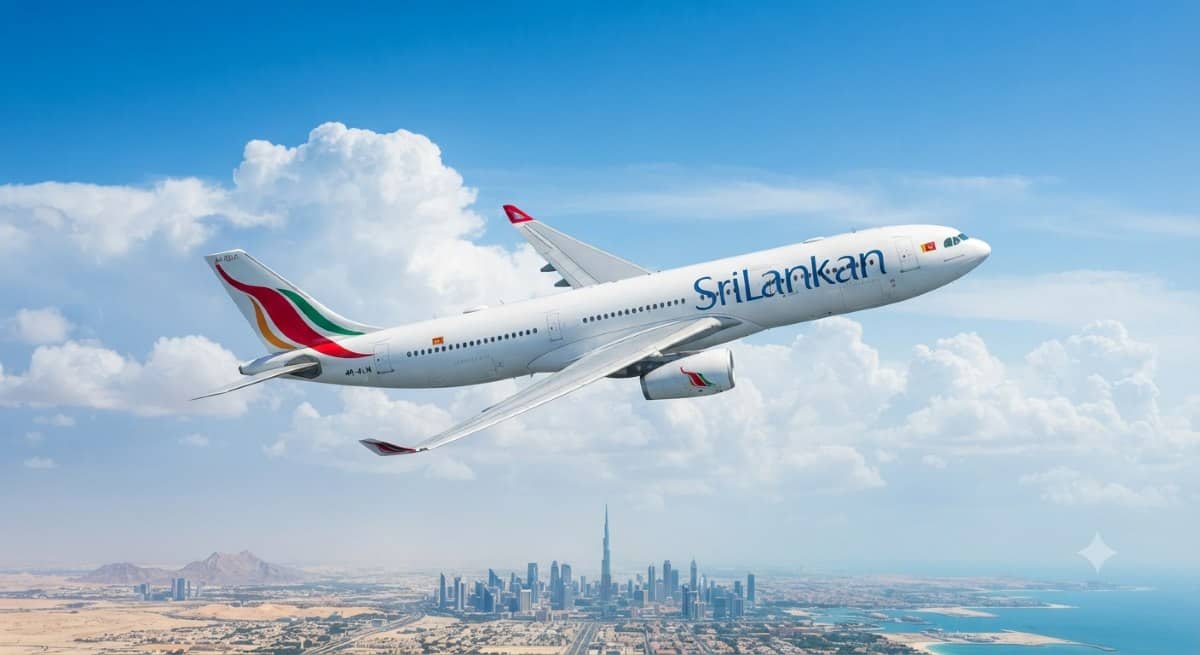
Image generated with Ai
Sri Lanka Travel has faced disruption after SriLankan Airlines suspended its Colombo–Jakarta flights due to volcanic ash from Indonesia’s Mount Anak Krakatoa affecting regional airspace. The airline cancelled scheduled services as a precautionary measure to protect passengers and aircraft safety, while aviation authorities restricted operations in affected areas because volcanic ash particles can create serious risks to aircraft engines and flight systems. The disruption also led to flight route adjustments across the region as airlines monitored changing airspace conditions.
SriLankan Airlines has suspended its scheduled Colombo–Jakarta services on 7 September 2026 after volcanic ash from Indonesia’s Mount Anak Krakatoa spread across regional airspace, creating safety concerns for aircraft operations. The disruption has affected international aviation links between Sri Lanka and Indonesia, while authorities continue to monitor the movement of volcanic ash and its impact on flight routes.
Advertisement
The airline cancelled flight UL 364 operating from Colombo to Jakarta and flight UL 365 travelling from Jakarta back to Colombo as a precautionary measure. The decision was taken after volcanic ash entered key aviation corridors and increased risks for aircraft flying through the affected region.
Volcanic ash events are considered a major aviation hazard because fine ash particles can damage aircraft engines, reduce visibility and interfere with critical flight systems. Airlines and aviation authorities worldwide closely monitor such situations before allowing flights to operate through affected airspace.
Advertisement
Advertisement
Indonesia’s Mount Anak Krakatoa has triggered fresh concerns for air travel after volcanic ash spread across parts of the surrounding airspace. The volcanic material created operational challenges for airlines flying through the region, forcing carriers and aviation authorities to review flight movements.
Indonesian aviation authorities temporarily restricted operations at several airports, including Jakarta’s Soekarno-Hatta International Airport, one of Southeast Asia’s busiest aviation hubs. The restrictions were introduced after volcanic ash and silica-rich particles were detected in areas used by commercial aircraft.
The presence of volcanic ash near airports and flight routes can create significant risks. Unlike normal weather-related disruptions, volcanic ash cannot be detected easily by aircraft radar systems, making it difficult for pilots to identify affected areas without updated aviation warnings.
When volcanic ash enters jet engines, it can melt inside the engine’s high-temperature sections and later harden, potentially affecting engine performance. It can also damage aircraft windows, sensors and other important components.
Because of these risks, airlines often choose to cancel, delay or reroute flights until authorities confirm that airspace conditions are safe.
SriLankan Airlines’ decision to cancel the Colombo–Jakarta route reflects the wider aviation industry’s approach to managing volcanic disruptions. Airlines regularly coordinate with aviation authorities, meteorological agencies and operational teams before making decisions during volcanic events.
The cancellation of UL 364 and UL 365 has affected passengers travelling between Sri Lanka and Indonesia. Travellers scheduled on these services have been advised to check updated flight information and follow airline guidance before heading to airports.
The disruption highlights how volcanic activity in one country can quickly influence international travel networks. Modern aviation routes are highly connected, meaning airspace restrictions in one region can affect flights operating hundreds or thousands of kilometres away.
Sri Lanka’s international air connectivity depends heavily on regional aviation corridors linking South Asia, Southeast Asia and Australia. Any restrictions along these routes can create delays, cancellations and operational changes for airlines serving multiple destinations.
The latest disruption follows the diversion of two SriLankan Airlines flights operating from Australia. Services travelling from Sydney and Melbourne were rerouted on the previous night to avoid areas affected by volcanic ash.
The diversions demonstrate how airlines continue adjusting flight paths when volcanic activity creates potential safety concerns. Instead of travelling through restricted areas, aircraft may take longer alternative routes to maintain safe operations.
Such rerouting decisions can increase flight times and affect aircraft schedules, especially on long-haul international services. Airlines must balance passenger convenience with operational safety when responding to sudden environmental hazards.
The impact of the volcanic ash disruption is not limited to SriLankan Airlines. Other international carriers operating through Indonesian airspace may also review their schedules depending on the movement of ash clouds and official aviation warnings.
Sri Lanka Travel faced disruption as SriLankan Airlines suspended Colombo–Jakarta flights after volcanic ash from Indonesia’s Mount Anak Krakatoa affected regional airspace, creating safety concerns for aircraft operations.
Passengers travelling through affected regions should regularly check airline updates before departure. Flight schedules can change quickly during volcanic events as airlines receive new information from aviation authorities.
Travellers should also allow additional time for possible delays at airports and remain prepared for schedule adjustments. Airlines generally provide updated travel instructions when cancellations or major changes occur.
The Mount Anak Krakatoa disruption once again highlights the importance of aviation safety procedures during natural events. While volcanic activity can cause temporary travel interruptions, coordinated action between airlines and authorities helps reduce risks for passengers and aircraft.
As monitoring continues, SriLankan Airlines and aviation officials will assess when normal flight operations between Colombo and Jakarta can resume. The reopening of affected routes will depend on airspace safety assessments and the movement of volcanic ash away from critical aviation corridors.
Advertisement
Tags: Airline News, Colombo, Jakarta, Sri Lanka, Travel News
Advertisement
Advertisement













Monday, September 7, 2026
Monday, September 7, 2026

Monday, September 7, 2026

Monday, September 7, 2026

Monday, September 7, 2026

Monday, September 7, 2026

Monday, September 7, 2026