
China Strengthens Business Tourism With High-Speed Rail and Digital Payments

Published
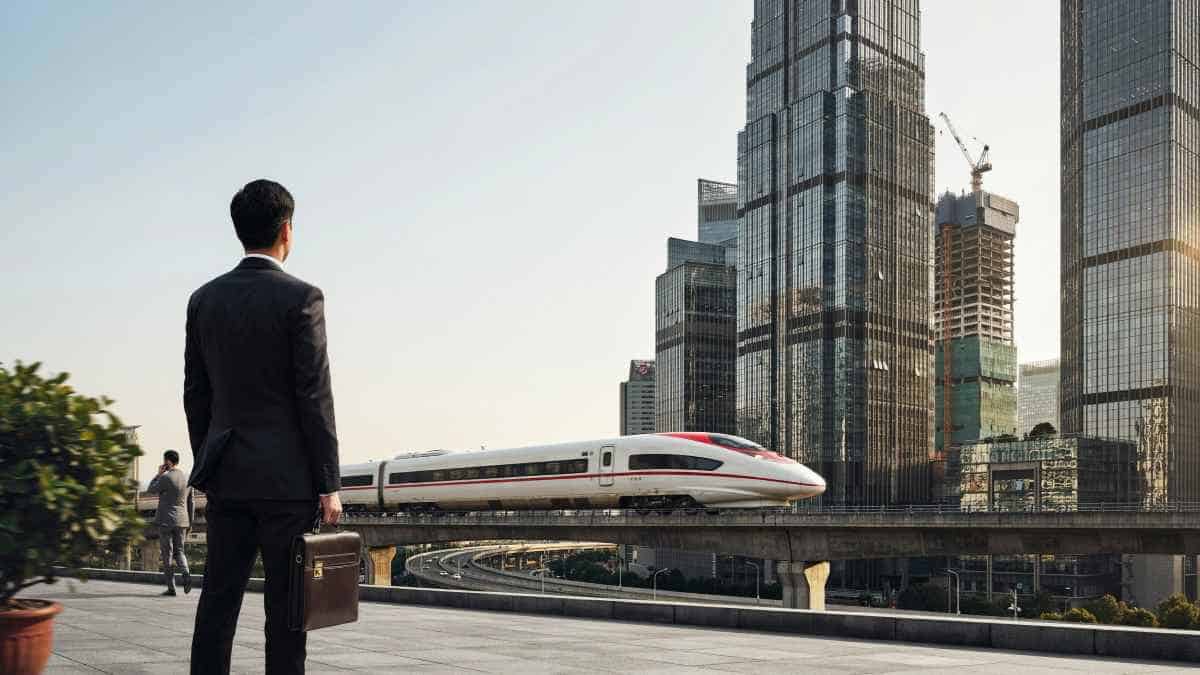
Image generated with Ai
China, with its centres of international business meetings like Shenzhen, Guangzhou, Hong Kong, Shanghai, and Beijing, is becoming an interconnected country for trade fair participants due to high-speed trains, technology, and growing business relations across borders. This is especially useful for trade fair participants who have to make fast travel from one commercial city to another and deal with accommodation, transportation, and exhibition purchase issues.
Greater Bay Area Connects Major Business Centres
The Shenzhen–Guangzhou–Hong Kong corridor is an important part of the Greater Bay Area’s transport network. High-speed rail services connect major cities across Guangdong and Hong Kong, giving business travellers an alternative to air travel for many regional journeys.
Advertisement
Advertisement
The Hong Kong section of the high-speed rail network connects West Kowloon with mainland destinations including Shenzhen and Guangzhou. The journey between Hong Kong West Kowloon and Guangzhou South can take less than an hour on selected services, while Shenzhen is even closer.
For trade-fair visitors, this connectivity can make it possible to attend an exhibition in one city and conduct meetings in another within the same trip.
Advertisement
Advertisement
Trade Fairs Drive Business Travel
Shenzhen and Guangzhou host major exhibitions covering electronics, technology, manufacturing, trade, consumer products and other industries.
The Canton Fair in Guangzhou is one of the region’s most significant international trade events, while Shenzhen hosts major technology and industry exhibitions throughout the year.
Advertisement
Advertisement
Visitors attending large exhibitions often need to coordinate meetings with suppliers, buyers and business partners across different cities. High-speed rail can therefore become part of a wider business itinerary rather than simply a transport option.
The user-provided information says an administrative order broadening regional multi-entry corporate visas for trade-fair participants has driven a sharp rise in business-delegate traffic on the corridor.
I could not independently verify that specific administrative order, its visa expansion or the claimed traffic increase through current official sources. Those details should therefore be treated as reported developments rather than independently confirmed figures.
Hong Kong Provides an International Gateway
Hong Kong remains an important international business and financial centre within the wider Greater Bay Area.
International delegates can arrive through Hong Kong International Airport before travelling by high-speed rail to mainland business destinations. The rail connection reduces the need for separate domestic flights when visitors are combining Hong Kong with Shenzhen or Guangzhou.
For travellers attending conferences and exhibitions, this makes multi-city itineraries more practical, particularly when meetings are spread across the region.
Advertisement
Advertisement
Hong Kong itself also provides extensive accommodation, dining, retail and cultural attractions, allowing delegates to add leisure days before or after business programmes.
Shanghai Strengthens Its MICE Infrastructure
Shanghai is another major centre for international exhibitions and conferences. The city hosts large-scale events across finance, technology, manufacturing, healthcare, automotive and consumer industries.
The National Exhibition and Convention Centre (Shanghai) is one of the world’s largest exhibition complexes and hosts major international trade fairs.
Shanghai’s extensive metro network also connects the city’s commercial districts, airports, hotels and exhibition areas. For international delegates, the combination of public transport and large-scale convention infrastructure supports efficient movement during major events.
Beijing Adds Government and Corporate Events
Beijing provides a different business-events profile, combining corporate meetings with government, academic and international institutional activity.
The capital has major convention hotels, exhibition centres and cultural attractions, making it suitable for conferences and association events.
Advertisement
Advertisement
Business travellers can also explore destinations including the Forbidden City, Temple of Heaven and sections of the Great Wall when conference schedules allow.
For international organisers, Beijing’s cultural infrastructure can support programmes that combine formal meetings with heritage experiences.
Digital Yuan Enters Event Payments
The second development concerns the use of China’s central bank digital currency, the digital yuan or e-CNY, within convention-centre services.
The user-provided information says convention centres in Shanghai and Beijing have integrated e-CNY smart-contract billing into exhibitor portals to support booth procurement and foreign-vendor tax clearance.
I could not independently verify this specific smart-contract integration across convention centres in both cities through current official sources. The claim should therefore be treated as a reported development rather than an established nationwide practice.
The e-CNY itself is an official digital currency issued by the People’s Bank of China. It has been used in retail payments, transport, public services and other commercial settings, with pilot programmes expanding its applications. (pbc.gov.cn)
Advertisement
Advertisement
Digital Payments Could Simplify Exhibition Services
For exhibitors, digital payment systems can potentially make routine event transactions easier to manage.
Booth rental, additional equipment, catering, utilities and other exhibition services can involve multiple invoices and payments. A digital platform that brings procurement and billing together could reduce administrative steps for organisers and exhibitors.
However, foreign companies remain subject to applicable tax, currency, banking and regulatory requirements. Digital payment availability does not automatically remove those obligations.
International exhibitors should therefore confirm payment arrangements and tax procedures directly with the relevant event organiser or venue before travelling.
Business Travellers Can Build Multi-City Trips
The combination of high-speed rail and digital services supports a travel pattern in which visitors can move through several commercial centres during one business trip.
A delegate could arrive through Hong Kong, travel to Shenzhen for technology meetings, continue to Guangzhou for a trade fair and then return through Hong Kong. Another itinerary could combine Shanghai with Beijing for conferences and corporate meetings.
Advertisement
Advertisement
China’s domestic rail network provides additional connections between major cities, although distances can be substantial and advance booking is advisable during major exhibitions and public holidays.
China Builds a More Connected Business Travel Network
The principal places for business in China are being connected via high-speed trains, international flights and digital commerce infrastructure. The Shenzhen-Guangzhou-Hong Kong route will be an appropriate link for business people who need to get from one important business centre to another, whereas Shanghai and Beijing continue hosting international business congresses and exhibitions. The announced development of corporate multi-entry visas and the usage of e-CNY smart-contract invoicing still need to be confirmed officially, but the picture in general regarding business travel in China is quite obvious – connectivity and digital solutions are becoming increasingly important aspects of Chinese MICE tourism infrastructure. For the foreign business travellers, this will facilitate multi-city visits, including trade fairs, corporate events and other activities.
Advertisement
