
Boston Emerges as One of the Biggest World Cup Tourism Success Stories in the US with International Visitor Spending Surging Across Hotels, Dining and Local Businesses – What Travel Advisors and Hospitality Executives Should Watch

Published
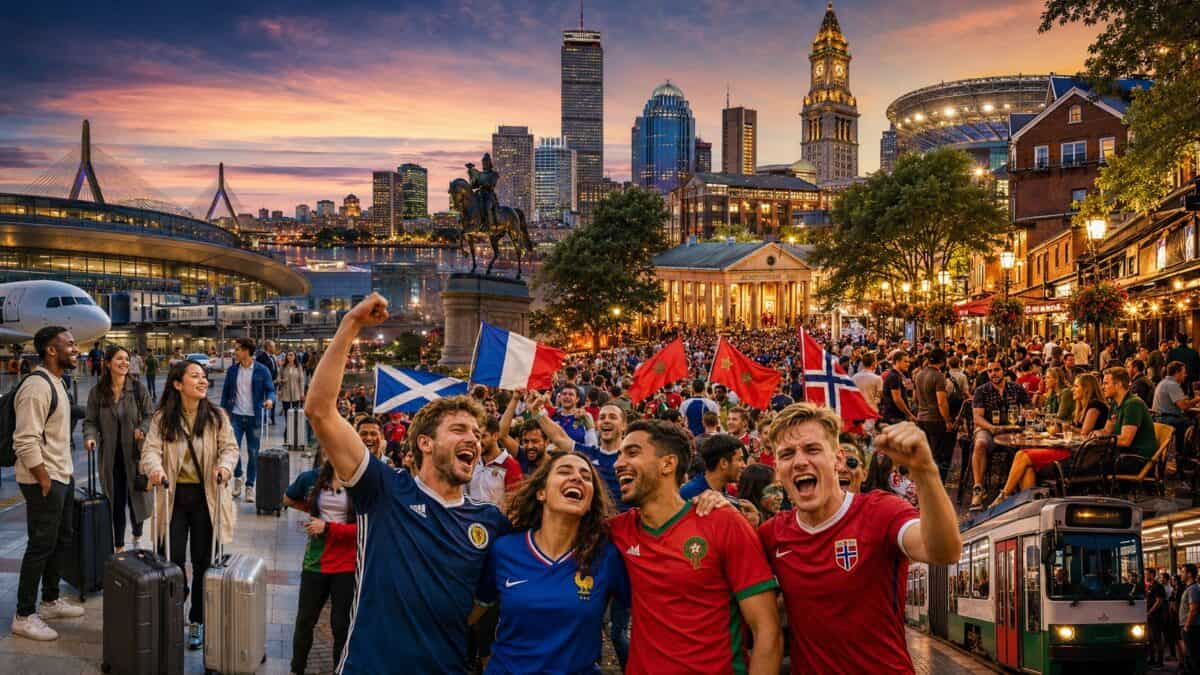
Image generated with Ai
The opening weeks of the FIFA World Cup 2026 have begun reshaping Boston’s tourism landscape, not by filling significantly more hotel rooms, but by encouraging visitors to spend considerably more throughout the destination. For a city facing softer inbound international demand and changing travel patterns across the United States, the tournament is increasingly demonstrating how a global sporting event can influence travel expenditure far beyond stadium gates. Higher hotel revenues, stronger visitor spending, thriving hospitality businesses and increased international arrivals are emerging as the first measurable indicators that Boston’s investment in hosting the world’s biggest football tournament could generate wider economic value for the regional travel industry.
While preliminary accommodation figures indicate that hotel occupancy has remained broadly in line with the same period last year, the financial picture tells a markedly different story. International supporters travelling from Europe and North Africa have significantly increased average visitor expenditure, boosting hotel revenues and supporting restaurants, pubs, transport operators and numerous small businesses across Greater Boston. For travel professionals, destination marketers and tourism investors, the early trend suggests that attracting high-value international travellers may prove more important than simply increasing visitor numbers. As the tournament progresses and post-event spending continues to filter through the economy, Boston’s experience could become an important case study for future sporting-event tourism strategies across North America.
Advertisement
Advertisement
International Football Tourism Is Changing How Boston Measures Success
Major sporting events have traditionally been judged by hotel occupancy, airport arrivals and ticket sales. However, Boston’s early World Cup performance illustrates a more sophisticated economic narrative.
Rather than witnessing a dramatic increase in occupied hotel rooms, the city is experiencing what tourism economists often describe as higher visitor yield—where each traveller contributes more to the local economy through accommodation, dining, entertainment, shopping and transport.
Advertisement
Advertisement
This distinction is particularly significant for the travel sector.
Advertisement
Advertisement
Hotels may accommodate roughly the same number of guests as during a normal summer period, yet those guests are spending considerably more on premium accommodation, extended stays, local experiences and hospitality services. For destinations competing globally for international visitors, higher average expenditure often delivers greater long-term economic benefits than simply attracting larger volumes of tourists.
Early tourism indicators suggest that football supporters arriving for World Cup matches have displayed spending behaviours that differ noticeably from conventional leisure travellers.
Many international supporters have planned longer itineraries combining multiple American destinations before or after attending matches in Boston. Others have chosen premium accommodation close to fan zones, city attractions and public transport networks, increasing overall tourism receipts.
Advertisement
Advertisement
Boston’s Hospitality Industry Sees Revenue Rise Despite Stable Occupancy
The most notable development during the tournament’s opening phase has been the divergence between occupancy and revenue.
Although hotel occupancy has remained broadly comparable with the previous summer season, accommodation providers have recorded substantially stronger revenues generated from higher room rates and increased visitor spending.
Advertisement
Advertisement
| Early Tourism Indicator | Trend During Opening World Cup Period | Importance for Travel Industry |
|---|---|---|
| Hotel Occupancy | Broadly unchanged year-on-year | Indicates stable accommodation demand |
| Hotel Revenue | Significant increase | Higher visitor spending boosts profitability |
| International Visitors | Increased presence | Diversifies Boston’s tourism market |
| Hospitality Spending | Strong upward trend | Benefits restaurants, pubs and local businesses |
| Tourism Yield | Higher average expenditure per visitor | Improves economic return without overcrowding |
For destination marketers, this represents an encouraging development.
High-value tourism frequently delivers stronger economic outcomes while placing comparatively less pressure on infrastructure than mass tourism. Visitors spending more per trip help strengthen tax revenues, improve business profitability and encourage further investment across hospitality sectors.
This model has become increasingly attractive as cities seek sustainable tourism growth rather than simply pursuing record visitor numbers.
International Supporters Bring New Spending Power to Boston’s Visitor Economy
One of the defining characteristics of the tournament has been the diversity of international visitors arriving in Boston.
Supporters travelling from Scotland, France, Morocco, Norway and several other football-loving nations have transformed neighbourhoods surrounding match venues, entertainment districts and hospitality centres into vibrant international gathering spaces.
Advertisement
Advertisement
Unlike domestic weekend visitors, overseas football supporters typically allocate larger travel budgets that extend beyond match tickets.
Their expenditure commonly includes:
- Premium or centrally located accommodation.
- Local public transport.
- Airport transfers.
- Guided sightseeing.
- Museum visits.
- Restaurants and cafés.
- Sports bars and nightlife.
- Retail shopping.
- Regional excursions.
- Multi-city travel across the United States.
For Boston’s tourism economy, this pattern creates a multiplier effect.
Money circulates through hotels before reaching restaurants, retail businesses, taxi operators, attraction providers and cultural venues, supporting employment throughout the wider visitor economy.
The impact is especially valuable because many international travellers remain in the destination for several days, increasing per-capita spending compared with domestic visitors attending only individual matches.
Advertisement
Advertisement
Small Businesses Could Become the Biggest Beneficiaries
Large hotel chains naturally attract attention during major sporting events, yet Boston’s independent businesses may ultimately experience the greatest relative gains.
Neighbourhood pubs, independent cafés, souvenir retailers, convenience stores and locally owned restaurants have benefited from concentrated clusters of supporters gathering before and after matches.
Many establishments have adapted quickly by extending opening hours, increasing staffing levels and expanding food and beverage inventories to accommodate football supporters arriving throughout the day.
The World Cup has also highlighted an important aspect of event tourism.
Visitors attending international sporting competitions rarely remain confined to official venues.
Advertisement
Advertisement
Instead, they actively seek authentic neighbourhood experiences, local cuisine and cultural attractions, distributing tourism spending across multiple districts rather than concentrating economic activity exclusively around stadiums.
For destination planners, this represents a valuable opportunity to spread tourism benefits more evenly throughout Greater Boston while encouraging repeat visitation beyond the tournament itself.
Analysis Table: How World Cup Visitors Differ from Traditional Summer Tourists
| Category | Traditional Summer Visitor | World Cup Visitor |
|---|---|---|
| Primary Purpose | Leisure sightseeing | Football tournament combined with tourism |
| Average Daily Spending | Moderate | Higher |
| Length of Stay | Short to medium | Often extended |
| Evening Activity | Mixed | Restaurants, fan zones and sports bars |
| Group Travel | Families and couples | Friends, supporter groups and organised tours |
| International Share | Moderate | Significantly higher |
| Spending Distribution | Attractions and shopping | Accommodation, dining, entertainment and transport |
These early trends indicate that Boston World Cup tourism is generating value through spending quality rather than sheer visitor volume.
As additional matches conclude and more comprehensive economic assessments become available, the city’s experience may provide one of the clearest examples of how global sporting events can reshape destination performance in an increasingly competitive international tourism market.
Boston’s World Cup Performance Offers Valuable Lessons for Global Tourism Destinations
The first phase of the FIFA World Cup has reinforced an increasingly important principle within the global tourism industry: hosting a mega sporting event is not simply about attracting crowds—it is about converting international attention into sustained visitor spending and long-term destination appeal. Boston’s early tourism indicators suggest the city is beginning to achieve that objective, even though comprehensive economic assessments will only become available after the tournament concludes.
Advertisement
Advertisement
Unlike many destinations that focus primarily on headline visitor numbers, Boston’s tourism ecosystem appears to be benefiting from higher-value international travellers who are contributing significantly across multiple sectors. Hotels, restaurants, neighbourhood cafés, transport providers and entertainment venues have all experienced increased commercial activity as overseas supporters spend more throughout their stay.
This pattern is especially important because tourism expenditure rarely remains confined to one business. A visitor who books accommodation also purchases meals, uses public transport, shops in local stores, visits attractions and often travels to nearby destinations. Economists refer to this as the tourism multiplier effect, where money circulates repeatedly through the local economy, supporting employment, tax revenues and investment.
Analysis Table: How Visitor Spending Moves Through Boston’s Tourism Economy
| Visitor Activity | Direct Beneficiary | Wider Economic Impact |
|---|---|---|
| Hotel bookings | Accommodation providers | Supports hospitality employment and local taxes |
| Restaurant dining | Food and beverage businesses | Strengthens local supply chains and staffing |
| Public transport | Transit operators | Generates fare revenue and eases mobility |
| Attraction visits | Museums, cultural sites and tours | Encourages longer visitor stays |
| Retail purchases | Local shops and boutiques | Benefits independent businesses |
| Entertainment spending | Bars, live venues and events | Increases evening economy activity |
Rather than concentrating economic gains within a limited number of businesses, the World Cup has encouraged broader participation across Boston’s visitor economy, illustrating why global sporting events are increasingly viewed as comprehensive tourism development opportunities.
Neighbourhood Businesses Stand to Gain Alongside Major Hospitality Brands
Although luxury hotels and international hotel chains often dominate headlines during global sporting tournaments, independent businesses frequently experience some of the most noticeable commercial benefits.
Boston’s neighbourhood hospitality districts have welcomed supporters from several countries, creating lively atmospheres that extend well beyond official match venues. Football fans typically spend hours gathering before fixtures, celebrating afterwards and exploring nearby districts between matches. This behavioural pattern naturally supports cafés, pubs, bakeries, souvenir retailers, convenience stores and locally owned restaurants.
Advertisement
Advertisement
For small businesses, these visitors often represent customers with relatively high discretionary spending. International travellers on once-in-a-lifetime holidays are generally more willing to purchase local food, regional products and memorable experiences than commuters or day visitors.
Importantly, these spending patterns also help distribute tourism income beyond central business districts, allowing residential neighbourhoods with established hospitality sectors to participate in the economic benefits generated by the tournament.
The World Cup Reinforces Boston’s Position Within the North American Travel Market
Boston has long occupied a distinctive position among major American destinations. It combines historical landmarks, prestigious universities, cultural institutions and a walkable urban environment with access to the wider New England region.
Hosting FIFA World Cup matches has further elevated that international profile.
For many overseas travellers, Boston serves not merely as a football destination but as the starting point for broader journeys across the northeastern United States. Visitors frequently combine the city with New York, Washington, Philadelphia, Niagara Falls or coastal New England, creating multi-destination itineraries that generate tourism spending across several regions.
Advertisement
Advertisement
This trend benefits airlines, rail operators, coach companies, car rental providers and regional tourism businesses while reinforcing Boston’s importance as an international gateway.
Boston’s Competitive Tourism Advantages During the FIFA World Cup
| Competitive Strength | Benefit for International Travellers |
|---|---|
| International airport connectivity | Convenient access from Europe and beyond |
| Compact city layout | Easier sightseeing between matches |
| Rich historical attractions | Adds cultural value to sporting trips |
| Strong public transport network | Reduced dependence on private vehicles |
| New England regional access | Opportunities for multi-destination holidays |
| Diverse hospitality sector | Wide range of accommodation and dining options |
These characteristics distinguish Boston from destinations where sporting venues remain geographically separated from principal tourism attractions.
Why the Full Economic Picture Will Take Time to Emerge
While preliminary tourism indicators are encouraging, the complete economic impact of the World Cup cannot yet be measured with certainty.
Several important variables remain under evaluation.
Hotels will continue analysing average room rates, occupancy trends and total revenue throughout the tournament. Restaurants and retailers will assess seasonal sales once visitor numbers return to more typical levels. Local authorities will also review tax receipts, transport usage and public service costs associated with hosting the event.
Advertisement
Advertisement
Equally significant is the question of net economic benefit.
Hosting a mega sporting event requires considerable investment in security, transport planning, temporary infrastructure, public services and event operations. Those expenditures will ultimately need to be compared against additional tourism revenue to determine the tournament’s overall financial return.
Travel economists also examine whether event visitors generate genuinely new tourism activity or simply replace travellers who might otherwise have visited during the same period. Understanding that distinction is essential when assessing the lasting value of hosting international sporting competitions.
For Boston, these longer-term evaluations will provide clearer evidence of whether the World Cup has delivered enduring economic benefits or primarily shifted existing seasonal tourism patterns.
A Defining Moment for Boston’s Future Tourism Strategy
Regardless of the final economic calculations, one outcome is already becoming apparent: Boston has demonstrated its ability to welcome large numbers of international visitors while maintaining a high-quality travel experience.
Advertisement
Advertisement
For destination marketing organisations, this capability carries value well beyond football.
Successfully hosting one of the world’s most-watched sporting events strengthens Boston’s credentials when competing to attract future international conferences, cultural festivals, sporting championships and business events. It also reinforces the city’s reputation among long-haul leisure travellers who may have discovered Boston for the first time through global World Cup coverage.
If tourism authorities continue capitalising on this heightened international visibility through targeted destination marketing, airline partnerships and regional travel promotion, the tournament’s legacy could extend well beyond 2026.
Rather than being remembered solely for matches played on the pitch, Boston World Cup tourism may ultimately be recognised as a turning point that demonstrated how global sporting events can stimulate visitor spending, support local businesses and reinforce a destination’s international competitiveness in an increasingly experience-driven travel market.
Advertisement
