
Spain Turns Sea Turtle Protection Into a New Coastal Travel Experience

Published
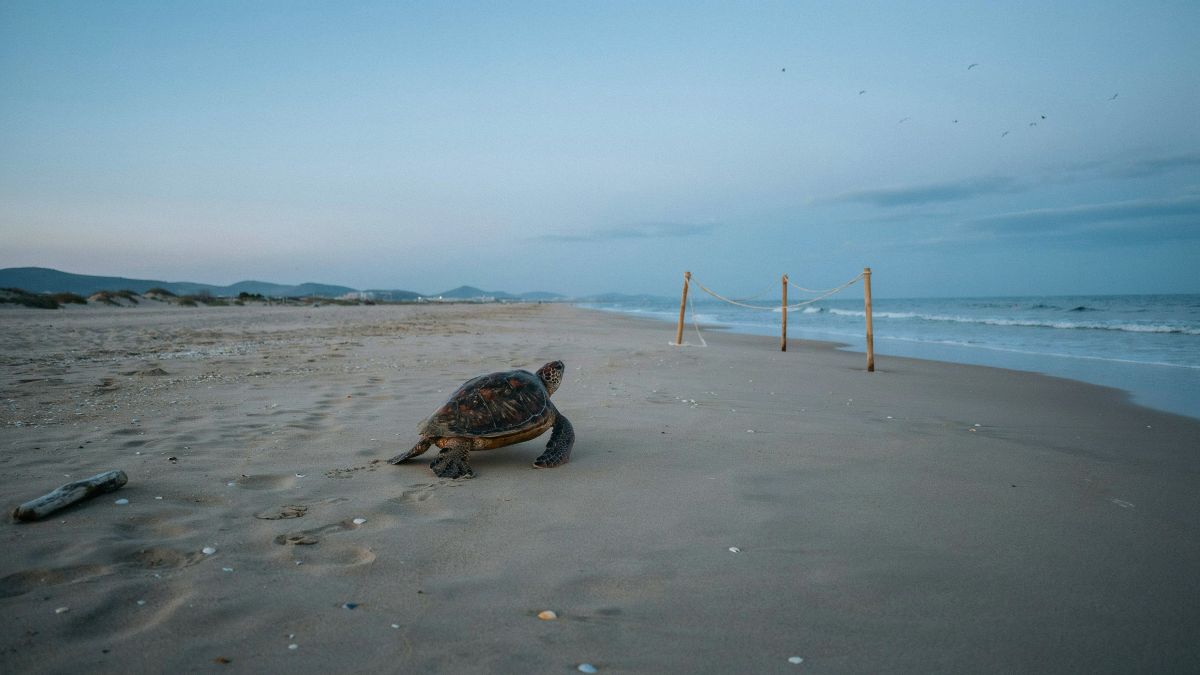
Spain uses sea turtle conservation efforts to create a novel beach touristic experience by allowing tourists to get to know the processes taking place on the beaches for nesting purposes. The efforts of conservationists and volunteers can be used to educate families about the processes that are happening on these beaches, as well as the importance of behaving properly. Such an experience will provide travelers with an opportunity to learn about beaches, engaging in approved activities and respecting wildlife. Nevertheless, the experience cannot guarantee a sighting of turtles, and the process of conservation must not turn into some kind of performance.
Italy’s Turtle Numbers Tell a More Complicated Story
Italy offers the clearest example of how quickly the picture can change. LIFE TURTLENEST recorded more than 700 loggerhead nests in Italy in 2025. The project recorded 601 in 2024 and 443 in 2023. Many of the 2025 nests were in Sicily, Calabria, Campania and Puglia. The project also reported a growing presence on the Ligurian coast in northern Italy. These figures describe the 2025 season. They are not a final count for 2026.
Advertisement
Advertisement
The next season began with a very different picture in Tuscany. Italy’s regional environmental agency, ARPAT, lists eight known nesting events for 2026 on its current tracker. The agency lists 37 nests in Tuscany for 2025. It cautions that changes between years are normal. A quieter season does not prove that turtles have disappeared. Nor does a busy season prove that the population has recovered.
The wider Italian count was also lower at the start of August 2026 than at the same point in the previous year. ARPAT reported around 280 nests counted around Italy then, compared with more than 700 recorded during the full 2025 season. These are different reporting periods, so they should not be compared as final annual totals. They do show why destinations need to plan for uncertainty.
Advertisement
Advertisement
Nest totals alone also miss an important part of the picture. Tuscany counted 37 nests and 2,888 eggs in 2025. It recorded 1,154 hatchlings and a reported reproductive success rate of 40 per cent. In 2024, the region recorded 24 nests and 1,244 hatchlings, with a 50.5 per cent success rate. More nests did not mean a higher share of eggs produced hatchlings.
This is a useful point for travel coverage. A destination should not advertise a “turtle boom” as proof that conservation is working. A nest is one stage in a long process. Eggs must incubate safely. Hatchlings then face further natural challenges. The figures help visitors understand why trained monitoring matters more than a promise of a wildlife spectacle.
Advertisement
Advertisement
Beach Care Is Becoming Part of Italy’s Visitor Experience
The changing nesting map is forcing beach operators to rethink routine work. LIFE TURTLENEST says that mechanical beach cleaning can crush eggs because turtles bury nests only a short distance below the sand. Artificial light can also disturb nesting females or lead hatchlings away from the sea. These risks matter where nesting sites overlap with busy resorts and developed shores.
Italy has started building practical links between conservation and beach operations. In a 2024 update, the national environmental research institute ISPRA reported more than 100 cooperation protocols with Italian administrations and protected areas. The programme included training for beach-cleaning staff, helping them recognise turtle tracks and respond if they found nests or hatchlings. Participating beach operators also shared information with visitors.
Advertisement
Advertisement
That approach can shape what a responsible beach holiday looks like. Visitors may see protected areas, signs or changes to beach cleaning. Such measures can help safeguard wildlife, though they may also affect where equipment can be placed or which areas people can enter. The reviewed sources do not quantify any effect on tourism income or bookings. The article should present improved habitat protection as the goal, not claim that it has already generated new revenue.
Italy also sits within a wider conservation effort. LIFE TURTLENEST connects work across Italy, France and Spain. Separately, Greek and Italian public agencies met in Calabria in May 2026 under the NATURES project, an Interreg Greece–Italy programme. Its work includes conservation planning, monitoring, pilot projects and training, with loggerhead turtles among the priority species. These are distinct initiatives. Together, they show how shared environmental challenges are encouraging cross-border cooperation.
Spain Turns Nest Protection into a Community Role
Spain’s strongest tourism angle is public participation. In June 2026, the Catalan Government invited people to register for a volunteer programme that supports the protection of turtle nests. The government said Catalonia recorded 11 nests in 2025. It also reported that around 1,300 volunteers registered across the region that year, nearly three times the number in 2024.
The Ebro Delta is becoming an important nesting area in Catalonia. The government reported that it held more than half of the region’s recorded nests in 2025. A separate Catalan Government bulletin stated that more than 1,000 eggs were laid in the region that year and 557 turtles hatched. In July 2026, that bulletin reported the first nest of the new season at L’Estartit. Each figure belongs to a specific place and reporting period.
Advertisement
Advertisement
Volunteer work can give local residents a direct role in conservation. It can also help explain why quiet beaches, protected nests and careful responses to sightings matter. The Catalan Government says volunteers help municipal staff protect nests and raise public awareness during the busy summer beach season.
Travel writers should still explain the limits. The announcement confirms a registration programme, but it does not say that every holidaymaker can join patrols on demand. Participation may require training, coordination and availability. Do not market volunteering as an instant tourist activity unless organisers confirm the requirements and places.
Spain also has examples of wildlife learning that do not depend on seeing a real turtle. Cubelles council advertised a free family workshop for World Tourism Day on 27 September 2026. It was designed especially for children aged five to twelve. The activity used a model nest and ping-pong balls to represent eggs. Children could learn about tracks, nesting and what to do if they found a turtle or a possible nest.
The event shows how a coastal destination can offer an educational activity without taking families close to a live nest. Its advertised date has passed, so it should be described as a 2026 example, not a current event. Still, it offers a useful idea for other destinations: conservation learning can become part of a family holiday while keeping wildlife undisturbed.
France Is Restoring the Beach Behind the Holiday Image
France’s Mediterranean coast brings the story from visitor behaviour to habitat restoration. Port-Cros National Park launched its CARET project in January 2026. The three-year programme focuses on sandy beaches and the land behind them. It involves five park-area communities: Hyères, Le Pradet, La Garde, La Croix-Valmer and Ramatuelle.
The project aims to restore damaged beach habitat, reduce human pressure, protect nests and young turtles, and monitor whether restoration works. The park has identified new nesting sites across its area since 2023. The work includes manual beach cleaning to avoid damage from mechanical equipment, removing selected artificial structures and invasive plants, and making nest-protection kits available.
Advertisement
Advertisement
These steps matter because nesting habitat extends beyond the strip of sand where visitors lay their towels. The condition of the back beach, vegetation and nearby structures can affect whether a beach remains suitable. CARET therefore gives France a strong angle for a travel report about restoring the coastal landscape rather than simply promoting wildlife sightings.
The French biodiversity agency lists a total project cost of €1,386,836 and a forecast grant of €800,000. These are conservation funding figures. They should not be presented as visitor spending, tourism revenue or proof that all planned work has been completed. The park describes the programme as a partnership involving public bodies, local communities and other organisations.
For travellers, the practical story is that protection measures may change how a beach is maintained or used. A visitor may see a cordoned area, less machinery or restored vegetation. These are signs of active management, not attractions to approach. A protected beach can remain part of a holiday destination while some areas are temporarily reserved for wildlife.
Greece Is Measuring the Effect of Light on Nesting Beaches
Greece provides a different kind of story: the impact of tourism after dark. In May 2026, Greece’s Natural Environment and Climate Change Agency, NECCA, published a procurement invitation for an assessment of light pollution at beaches where loggerhead nesting occurs sporadically. The work was intended for the management unit covering Zakynthos, Ainos and protected areas in the Ionian Islands.
NECCA’s management information shows that officials monitor more than turtle activity. They record visitor numbers, beach furniture such as umbrellas and sunbeds, the space used by visitors and lighting on nesting beaches. This makes the relationship between tourism infrastructure and wildlife a subject for practical measurement.
The distinction matters. The procurement notice confirms that the agency sought an assessment. It does not confirm that the work was completed, that a contract was awarded or that new lighting rules were adopted. The article can accurately report that Greece is examining the issue while avoiding claims about outcomes the source does not establish.
Advertisement
Advertisement
This angle can bring hotels, beachfront businesses and evening activities into the discussion. Artificial light is not only a technical environmental issue. It is part of the visitor experience and the design of coastal resorts. Greece’s assessment raises a useful question for the tourism sector: how can beachfront destinations remain welcoming at night while reducing light where turtles need darkness?
Zakynthos is already known for turtle-related experiences, including boat trips and sea observation. NECCA identifies boat tours, snorkelling, canoeing and other activities in the protected Laganas Bay area. Any article about such activities should distinguish regulated wildlife observation from guaranteed close encounters. The source supports the existence of activities in the area; it does not promise that visitors will see turtles.
Malta Shows Why Nesting Beaches Need Clear Visitor Rules
Malta and Gozo can serve as a supporting example of local protection. The Environment and Resources Authority lists six nests for 2025 at Ġnejna, Għadira and Ramla l-Ħamra in Gozo. It says that noise, trampling and light near a nest can harm eggs or hatchlings. It also directs the public to report turtle activity and notes that volunteers may be needed to help monitor nests.
Malta’s experience shows how a popular beach can become a protected site when a nest is found. The authority’s page lists emergency conservation orders for the 2025 nests, demonstrating that safeguards can apply to specific locations. However, the page does not provide a confirmed 2026 nesting total. Malta should therefore not be presented as part of a verified 2026 surge.
This distinction is important for travel advice. Rules can differ between countries, parks and individual beaches. Visitors should follow signs and instructions from local authorities. A European travel article should not imply one universal access rule or guarantee that every protected beach offers turtle viewing.
What Travellers Should Do if They See a Turtle or Nest
The safest advice is simple: do not touch a turtle, eggs or tracks, and do not shine a light or flash a camera at a nesting animal. Keep people away from the nest and report the sighting to the relevant local authority. The exact reporting route depends on the location.
Advertisement
Advertisement
On the French Gulf of Lion coast, the marine park advises people to stay about ten metres away from a turtle, avoid direct light, preserve tracks and report the sighting promptly. In Catalonia, the regional government directs people to call 112 if they see a turtle or tracks. Tuscany’s ARPAT directs reports through Coast Guard number 1530 or its reporting app. Malta’s ERA lists its own contact number and a separate Nature Trust Malta number.
These are location-specific instructions, not a single Europe-wide rule. Travellers should check local signs and official guidance before visiting nesting beaches. They should not cross barriers to take photographs or approach hatchlings. The best wildlife experience is one that leaves the animal free to complete its natural behaviour.
A New Nature-Based Tourism Story, with Limits
The changing turtle map of Europe is impacting the way coastal destinations communicate about their natural heritage. In Italy, Spain, France, Greece and Malta, groups work on nest monitoring, beach rehabilitation and educational efforts among tourists. Consequently, sea turtles become a good example for studying the surrounding environment under certain conditions, if tourists show respect and rely on facts. This can encourage people to participate in education, family activities and volunteering if it is approved. There are no facts that demonstrate an increase in visitors and income through sea turtle conservation. The only chance that remains is to illustrate how the community adapts, protects the nesting beaches and receives visitors.
Advertisement
