
Finnair Flight from Bangkok to Helsinki Makes Emergency Landing in Baku Due to Passenger Health Emergency, Latest Update For You

Published
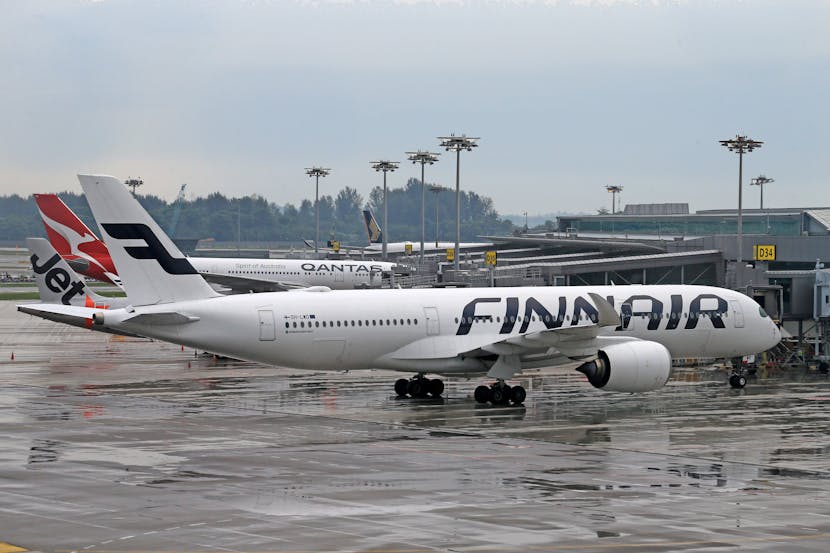 Image generated with Ai
Finnair Flight from Bangkok to Helsinki makes emergency landing in Baku due to passenger health emergency, and this latest update for you highlights why this unexpected mid-air event matters for travelers, aviation professionals, and global safety protocols alike. The incident involving Finnair Flight from Bangkok to Helsinki making an emergency landing in Baku due to a passenger health emergency draws attention to how airlines and airports respond when time-sensitive medical needs arise mid-flight. This latest update for you reflects not only on the decisions made by Finnair’s crew but also on the capability of Baku’s Heydar Aliyev International Airport to manage such emergencies efficiently.
Click Now: Discover any news about travel, tourism, trade shows at the Travel And Tour World, including breaking travel news and weekly travel updates for travel trade, airlines, cruise, railways, technology, travel association, DMCs, and video interviews and promotional videos.
The Finnair Flight from Bangkok to Helsinki was cruising along its long-haul path when a passenger’s health rapidly deteriorated, prompting the flight crew to initiate emergency protocols. The situation led to an emergency landing in Baku due to the seriousness of the passenger’s condition. The passenger received medical attention immediately upon landing, demonstrating how emergency preparedness on both the airline and airport sides can save lives.
This latest update for you is not just about a single emergency landing—it’s a broader narrative of operational precision, geographic importance, and medical readiness. Finnair Flight from Bangkok to Helsinki, diverted to Baku due to a passenger health emergency, reminds us of the unpredictable nature of air travel and the global aviation network’s capacity to respond. With this latest update for you, the focus remains on ensuring safety above all, wherever and whenever a crisis unfolds at 35,000 feet.
Advertisement
Advertisement
On April 19, 2025, the seamless choreography of international aviation was interrupted when a Finnair Airbus A350 en route from Bangkok to Helsinki made an emergency landing at Baku’s Heydar Aliyev International Airport. The reason? A sudden and severe health emergency involving one of the passengers mid-flight—one that demanded urgent medical attention beyond what could be provided onboard. While such diversions are rare, they’re a stark reminder of the unpredictable nature of air travel and the critical importance of in-flight and ground-based medical preparedness.
Get the latest news and real-time travel industry updates in 104 regional languages, with breaking travel news and live coverage across multilingual platforms.
Advertisement
Advertisement
According to reports confirmed by News.Az and the airport’s official press service, the Finnair flight crew contacted Baku air traffic control to request an emergency landing. The flight was given immediate clearance, and the aircraft touched down safely at 12:06 local time. Airport emergency medical teams were already on standby and responded with efficiency and precision. The passenger was stabilized at the airport and then transferred to a medical facility in Baku’s city center for further evaluation and care.
This event not only underscores the importance of rapid airport emergency response protocols but also highlights how global aviation hubs like Heydar Aliyev International Airport play a pivotal role beyond logistics—they’re lifelines during crisis. In the realm of air travel, particularly on long-haul international routes like Bangkok to Helsinki, medical emergencies can arise unexpectedly, and the ability of both airlines and airports to coordinate a swift response can mean the difference between life and death.
Get all the latest US travel news in English today, as well as the latest travel and tourism industry news from the UK, Europe, Asia, America, Africa, Australia, New Zealand, India and the rest of the world. Subscribe our Travel newsletter in your inbox.
The Incident: Finnair Airbus A350’s Mid-Flight Diversion
The Finnair aircraft involved in the incident was an Airbus A350, one of the airline’s flagship long-haul models known for its fuel efficiency, cabin comfort, and advanced safety systems. The flight had departed Bangkok with a scheduled arrival in Helsinki, a route that spans over 8,000 kilometers and typically takes around 11 hours. Midway through the journey, a passenger reportedly experienced a medical emergency significant enough to require immediate intervention that could not wait until arrival in Finland.
In such situations, airline protocols empower the captain to determine the closest viable airport for an emergency landing. In this case, Baku—geographically positioned between Southeast Asia and Northern Europe—was the most strategically and operationally suitable option.
For Latest Travel News: Find latest tourism industry news from every corner of the globe at Travel And Tour World, your only online source for breaking international travel news coverage.
Advertisement
Advertisement
Heydar Aliyev International Airport: A Beacon of Preparedness
Heydar Aliyev International Airport, Azerbaijan’s principal international gateway, is rapidly emerging as a central hub not only for East-West transit but also for operational excellence in aviation emergencies. The airport’s investment in infrastructure, personnel training, and simulation-based emergency drills has enhanced its reputation in handling urgent scenarios—whether mechanical, environmental, or medical.
In this incident, Baku’s response was textbook. From runway clearance to the deployment of paramedics, the airport’s emergency response team executed protocols designed to prioritize passenger well-being while minimizing disruption to airport operations. The passenger was administered first aid at the scene and promptly transported to a nearby hospital.
This level of preparedness positions Baku as more than just a regional connector—it’s a safety-critical node in global aviation. As international carriers continue to fly over Eurasian airspace, airports like Baku play a growing role in global contingency planning.
For more such breaking travel news, travel industry news, travel updates, travel alert, tourism insights and exclusive articles and the latest updates on tourism, download our all new Travel and Tour World Mobile Application. Download Now.
Finnair’s Role and In-Flight Medical Readiness
Finnair, Finland’s flag carrier and a member of the oneworld alliance, has long prioritized passenger health and safety, equipping its long-haul fleet with enhanced medical kits, trained staff, and connectivity with ground-based medical advisory services. Still, inflight emergencies challenge even the best-prepared airlines, especially when medical equipment and personnel are limited in what they can deliver at cruising altitude.
Finnair’s decision to divert showcases the airline’s strong safety culture and operational agility. In-flight decisions to divert, particularly when traversing vast regions with fewer alternate airports, are never taken lightly. Yet in this case, safety trumped schedule—reinforcing passenger-first values and the importance of global coordination.
Advertisement
Advertisement
Medical Diversions: Frequency and Risk Factors
Though rare, medical diversions occur in approximately 1 in every 600 commercial flights, according to studies by the International Air Transport Association (IATA). The most common causes include cardiac distress, respiratory issues, neurological incidents, and gastrointestinal complications. Longer flights tend to report higher rates of emergencies due to prolonged immobility, cabin pressure fluctuations, and passenger fatigue.
The Finnair flight, lasting nearly 11 hours, was operating in this high-risk category. Adding complexity, passengers often board with pre-existing conditions that may not be fully disclosed to airlines. The result is a persistent and unpredictable challenge for commercial airlines, who must always be ready for sudden inflight health emergencies.
Regional Impact: Azerbaijan’s Strategic Aviation Standing
The emergency landing places a spotlight on Azerbaijan’s aviation sector, which has been steadily investing in modernization, safety audits, and global accreditation. Baku’s Heydar Aliyev International Airport is not only a hub for AZAL (Azerbaijan Airlines) but also increasingly serves as an emergency landing option for European, Asian, and Middle Eastern carriers.
This geographic centrality and operational capability are shaping Baku’s role as a strategic support location in the Eurasian aviation corridor. As geopolitical dynamics shift and air traffic volumes grow between East and West, Baku’s ability to handle technical or medical diversions gives it a competitive edge among global midpoints.
Global Airline Protocols for Health Emergencies
Airlines like Finnair follow rigorous, standardized global protocols for medical incidents. These include:
- Immediate triage by flight attendants trained in CPR and first aid
- Onboard consultation with MedAire or similar ground-based telemedicine services
- Decision-making protocols for diversions based on medical severity, distance to nearest viable airport, and fuel management
- Coordination with airport medical teams and local emergency services
This ecosystem, although invisible to most passengers, is a testament to aviation’s quiet precision and cross-border collaboration.
Advertisement
Advertisement
Traveler Takeaways: What You Should Know
For international travelers, this incident is a reminder to:
- Disclose health conditions when booking, particularly for long-haul routes
- Carry necessary medications in hand luggage
- Understand the airline’s medical emergency policies
- Purchase travel insurance with emergency medical evacuation coverage
Passengers should also recognize the professionalism of flight crews and ground teams in turning a crisis into a manageable event—often without public visibility or recognition.
Conclusion: A Safe Landing, A Powerful Reminder
The Finnair flight’s emergency landing in Baku, prompted by a sudden health emergency, ended without further incident. But its implications are far-reaching. From reinforcing the importance of airport emergency preparedness to highlighting Finnair’s operational maturity, this event underscores how every node in global aviation—from Bangkok to Baku to Helsinki—must work seamlessly in the name of safety.
In a world where the margin between routine and crisis can be as thin as cabin air, this incident is both a case study and a quiet celebration of what aviation does best: protect lives in motion, no matter where they are in the sky.
What’s More in Travel And Tour World
Get the latest news and real-time travel industry updates in 104 regional languages, with breaking travel news and live coverage across multilingual platforms.
Get daily dose of news from Travel Industry, by subscribing to Travel And Tour World newsletters. Subscribe here.
Advertisement
Advertisement
Watch Travel And Tour World Interviews here.
Read more Travel News, Daily Travel Alert, and Travel Industry News on Travel And Tour World only.
Advertisement
