
Saudi Arabia Unites with UAE and More, Emerges as Leading Source of Qatar Tourism with Over Forty Percent Market Share for Seven Consecutive Months in 2026

Published
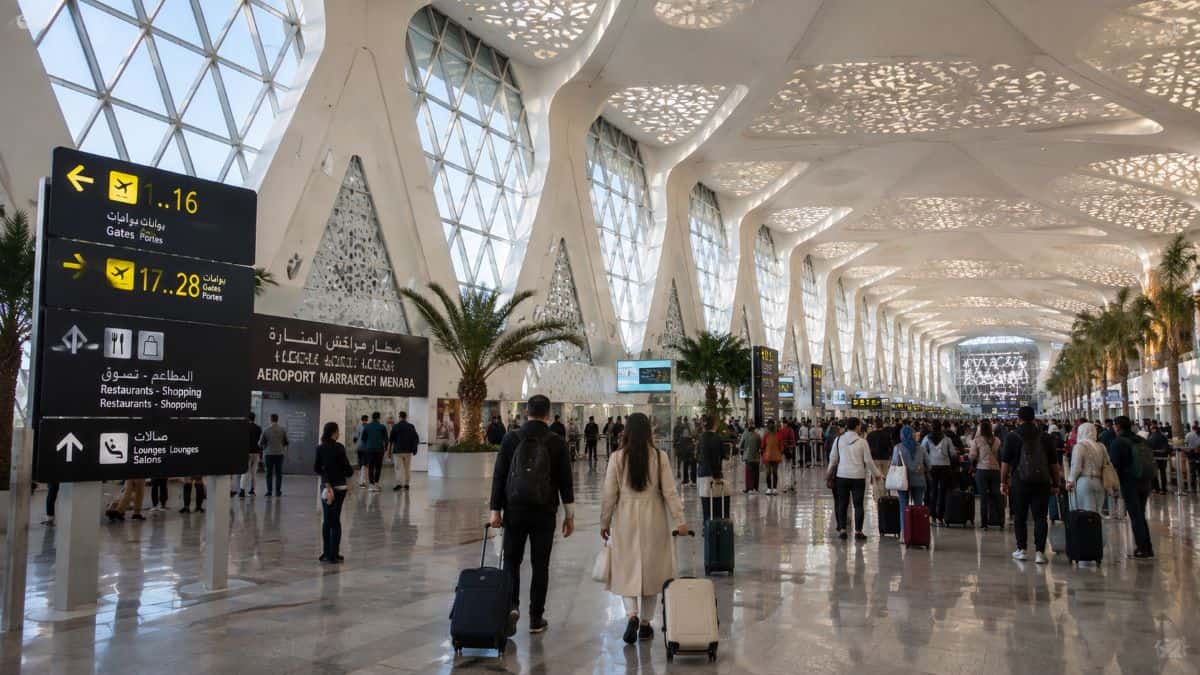
Saudi Arabia unites with the UAE and more regional markets as it emerges as a leading source of Qatar tourism, with GCC travellers driving over forty percent market share for seven consecutive months in 2026 due to strong connectivity, short travel distances, family holidays, events, shopping and Qatar’s growing year-round tourism experiences.
Qatar Records More Than Two Million International Arrivals
The 2026 arrivals distribution chart indicates approximately 2.03 million international arrivals across the reported period. The numbers underline the importance of regional travel while also showing Qatar’s increasingly diverse global visitor base.
Advertisement
Advertisement
Qatar International Arrivals by Source Region in 2026
| Source Market | Visitors | Share |
|---|---|---|
| GCC | 818,000 | 40.2% |
| Other Asia including Oceania | 438,000 | 21.5% |
| Europe | 428,000 | 21.0% |
| Americas | 144,000 | 7.1% |
| Other Africa | 61,000 | 3.0% |
| Other markets | Balance | Around 7% |
The figures demonstrate that Qatar is no longer dependent on one distant source market. GCC countries remain the foundation, but Europe and Asia-Oceania together account for more than four in ten international arrivals.
GCC Travellers Power Qatar’s Tourism Engine
The GCC is clearly Qatar’s dominant tourism market in the supplied 2026 data, accounting for 818,000 arrivals, or 40.2% of the total.
Advertisement
Advertisement
That concentration gives Qatar an important advantage. Travellers from Saudi Arabia, the UAE, Kuwait, Bahrain and Oman can reach the country relatively quickly, supporting weekend breaks, family holidays, shopping trips, sporting events and entertainment-led tourism.
The trend builds on Qatar Tourism’s official 2025 figures, when GCC countries collectively generated 35% of international visitors, the largest regional share.
Advertisement
Advertisement
Europe Emerges as Another Tourism Powerhouse
Europe represents another crucial pillar, producing around 428,000 visitors, equivalent to 21% of arrivals shown in the 2026 distribution.
The importance of Europe is not new. Qatar Tourism reported that European markets represented 25% of international visitors in 2025, placing the region second behind the GCC. Strong aviation connectivity through Doha, winter-sun appeal, stopover opportunities, luxury hotels, sporting events and cultural attractions continue to strengthen Qatar’s position among European travellers.
Advertisement
Advertisement
Asia and Oceania Deliver More Than 400,000 Visitors
Other Asian markets, including Oceania, contributed approximately 438,000 arrivals, representing 21.5% of the total in the supplied dashboard.
This is slightly ahead of Europe’s share and highlights Qatar’s geographic advantage between Asia, Europe and Africa. Doha’s position as a major international aviation hub gives travellers from South Asia, Southeast Asia and Australasia opportunities to combine transit journeys with short stays, while Qatar’s expanding entertainment and family-tourism products provide additional reasons to extend visits.
Americas Add Another 144,000 Travellers
Visitors from the Americas account for approximately 144,000 arrivals, representing 7.1% of the total.
Although considerably smaller than the GCC, European and Asian markets, the Americas provide Qatar with valuable long-haul demand. The market also demonstrates that Qatar’s tourism identity is increasingly reaching beyond neighbouring countries and traditional regional source markets.
Advertisement
Advertisement
African markets outside the GCC-related regional categories generated another 61,000 visitors, accounting for around 3% of arrivals.
January Opens 2026 With a Massive 646,000 Arrivals
The monthly data shows a striking start to 2026. International arrivals reached approximately 646,000 in January, the highest monthly total shown in the January-July dashboard.
February followed with around 423,000 visitors.
Together, January and February generated roughly 1.07 million arrivals, demonstrating the enormous importance of Qatar’s cooler winter period.
Monthly International Arrivals
| Month | Approximate Arrivals |
|---|---|
| January | 646,000 |
| February | 423,000 |
| March | 63,000 |
| April | 129,000 |
| May | 267,000 |
| June | 222,000 |
| July | 285,000 |
The monthly pattern also shows how Qatar’s tourism demand changes through the year. Arrivals fell sharply in March before beginning a substantial recovery through April and May.
July Recovery Gives Qatar Strong Summer Momentum
July’s approximately 285,000 international arrivals are particularly significant because summer has traditionally been a more challenging tourism period in Gulf destinations.
Advertisement
Advertisement
The figure represents an increase of roughly 28% from June’s 222,000 arrivals.
Qatar is attempting to turn summer into a stronger tourism season through indoor attractions, shopping, entertainment, hotels and family-focused experiences. Visit Qatar’s Hala Summer 2026 campaign runs from May until the end of September and includes festivals, concerts, shopping activities, water attractions and hotel packages.
Hala Summer Targets Qatar’s Traditional Seasonal Challenge
Qatar’s strategy is increasingly focused on giving visitors reasons to travel throughout the year rather than relying primarily on winter demand.
Hala Summer includes the Qatar Toy Festival, Minecraft World, Colorverse, Fontana Circus, Sneaker Con and concerts. Shopping centres, resorts, beach clubs, restaurants and indoor attractions are also part of the programme.
From July through September, Visit Qatar is additionally running family activities across malls and hotels. Children under 12 can receive selected complimentary benefits through participating Kids Go Free offers.
Events Are Becoming a Powerful Tourism Magnet
Qatar’s strategy increasingly treats events as a tourism demand generator rather than simply local entertainment.
Advertisement
Advertisement
The Qatar International Food Festival 2026 demonstrates the scale this model can achieve. Its 15th edition attracted 490,493 visitors over 10 days, making it the most attended edition in the festival’s history.
Attendance increased 36% compared with the previous edition, while international visitors represented 10% of total footfall. The festival hosted 200 local vendors, 46 international vendors and more than 50 chefs.
Business Tourism Opens Another Growth Channel
Qatar is simultaneously targeting the lucrative meetings, incentives, conferences and exhibitions sector.
Visit Qatar said in 2026 that the destination offers more than 41,000 hotel rooms and over 15 major event venues. Doha Exhibition and Convention Center and Qatar National Convention Centre form key parts of this infrastructure.
Major events include the Asian Infrastructure Investment Bank Annual Meeting 2026, ITU Plenipotentiary Conference 2026 and Mobile World Congress 2026, with further international events already secured for 2027.
Hotel Performance Shows Tourism Is Converting Into Real Demand
Visitor numbers alone do not reveal the complete tourism story. Accommodation performance provides another important indicator.
Advertisement
Advertisement
Qatar Tourism reported that hotel room nights sold exceeded 10.8 million in 2025, representing an 8.6% increase over 2024.
Average market-wide hotel occupancy reached 71%, up from 69% in 2024.
The 2024 figure itself represented an 11-percentage-point increase over 2023, while approximately 10 million room nights were sold that year, up 23% annually.
Qatar’s Recent Tourism Growth
| Indicator | 2024 | 2025 |
|---|---|---|
| International visitors | Nearly 5 million | 5.1 million |
| Annual visitor growth | 26% | 3.7% |
| Hotel occupancy | 69% | 71% |
| Room nights sold | Around 10 million | More than 10.8 million |
| GCC visitor share | Largest market | 35% |
Air Connectivity Remains Critical to Qatar’s Success
Aviation remains fundamental to Qatar’s tourism model.
In 2025, 61% of international visitors arrived by air, compared with 32% by land and 7% by sea. In 2024, air travel accounted for 57%, land for 36%, and sea for 7%.
The increasing air share reinforces Doha’s role as both a destination and international aviation gateway. Meanwhile, land access remains strategically important for the huge GCC visitor market.
Advertisement
Advertisement
World Cup Infrastructure Is Becoming a Long-Term Tourism Asset
The FIFA World Cup Qatar 2022 transformed Qatar’s international visibility, but the country’s tourism strategy has moved towards turning tournament infrastructure into permanent visitor assets.
Qatar Tourism describes the World Cup as a catalyst rather than an endpoint. The Doha Metro, museums, cultural districts, waterfront developments, resorts, entertainment venues and sporting infrastructure created around that period now support everyday tourism.
Doha’s designation as the 2026 GCC Tourism Capital adds another platform for promoting the city throughout the region.
Qatar Is Building a Broader Tourism Economy
The strongest message from the 2026 figures is diversification.
Qatar now combines:
- Regional GCC tourism
- International stopover travel
- Luxury tourism
- Family holidays
- Cultural and heritage experiences
- Shopping tourism
- Culinary tourism
- Sports tourism
- MICE and business travel
- Festivals and entertainment
- Beach and resort tourism
This broader portfolio reduces dependence on a single event or visitor segment.
Advertisement
Advertisement
Qatar’s Tourism Growth Story Is Moving Beyond the World Cup
Qatar’s tourism trajectory shows how the country is converting infrastructure created around the FIFA World Cup into a longer-term visitor economy. After nearly 5 million visitors in 2024 and 5.1 million in 2025, the supplied 2026 data indicates more than 2 million international arrivals through July.
The GCC’s 40.2% share, combined with strong European and Asian demand, gives Qatar a diversified foundation. Meanwhile, rising hotel occupancy, millions of room nights, major international conferences and increasingly ambitious summer campaigns demonstrate that Qatar is competing for travellers throughout the calendar.
The next challenge is sustaining this momentum beyond peak winter months. July’s recovery, the Hala Summer campaign and Qatar’s expanding events programme suggest that the country is actively addressing that challenge. If the strategy succeeds, Qatar’s next phase of tourism growth will be defined not by a single mega-event, but by its ability to turn Doha and the wider country into a year-round international destination.
Saudi Arabia unites with UAE and more markets as it emerges as a leading source of Qatar tourism with over forty percent market share for seven consecutive months in 2026, driven by strong regional connectivity, easy access, events, shopping and diverse visitor experiences.
In conclusion, Saudi Arabia unites with UAE and more regional markets as it emerges as a leading source of Qatar tourism, maintaining over forty percent market share for seven consecutive months in 2026 due to strong GCC connectivity, convenient travel links, shared cultural connections and Qatar’s expanding range of attractions. The continued strength of regional visitors highlights how neighbouring countries are becoming a powerful foundation for Qatar’s tourism growth. With events, shopping, family experiences, luxury stays and year-round tourism campaigns attracting more travellers, Qatar is building a more diversified visitor economy. The strong contribution from Saudi Arabia, UAE and other markets shows that Qatar’s tourism momentum is extending beyond major events and creating a sustainable destination appeal throughout the year.
Advertisement
